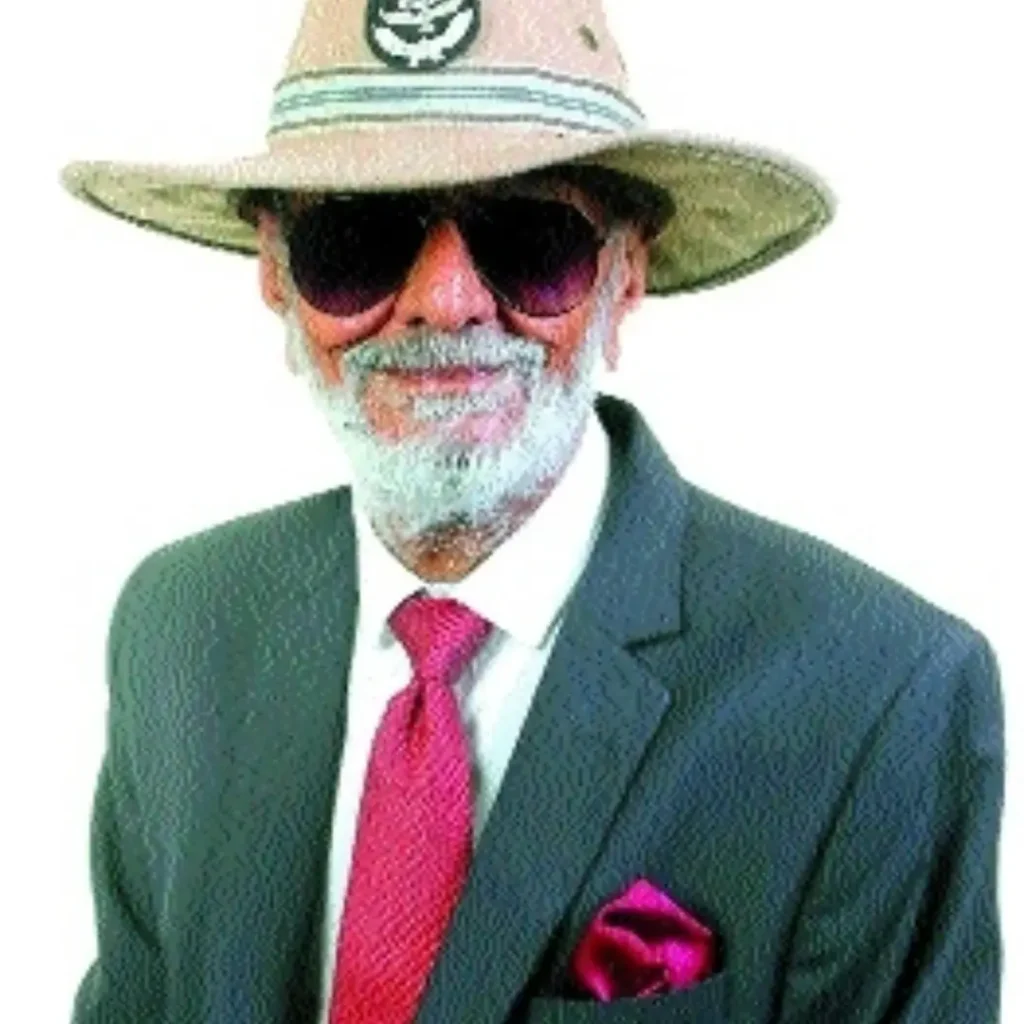
Vijay Karnik is a retired Indian Air Force officer who became widely known for his extraordinary contribution during the 1971 India-Pakistan War. His name is closely associated with the historic reconstruction of the Bhuj airstrip in Gujarat, which was damaged during Pakistani air attacks. At a time when the country was facing serious military challenges, he demonstrated remarkable leadership, courage and determination.
As the officer responsible for the Bhuj airbase, Karnik understood the importance of restoring the damaged runway so that Indian military aircraft could continue their operations. When regular construction workers were unwilling to return because of the danger, he sought assistance from the local community. Nearly 300 women from Madhapar village came forward and helped repair the airstrip under difficult wartime conditions.
Their extraordinary effort helped make the runway operational again in approximately 72 hours. The incident became an inspiring example of cooperation between the Indian armed forces and ordinary citizens. Vijay Karnik’s story later reached a wider audience through the Bollywood film Bhuj: The Pride of India, in which actor Ajay Devgn portrayed his character.
Although the Bhuj operation remains the most recognised chapter of his life, his contribution to the Indian Air Force extended beyond this single event. His military career, family background and experiences reflect the dedication of an officer who devoted several years to serving the nation.
Who Is Vijay Karnik?
Vijay Karnik is a former Indian Air Force officer best remembered for his leadership during the 1971 war, particularly the restoration of the Bhuj airstrip with assistance from local women. He served at Bhuj during one of the most challenging periods in India’s military history and played an important role in coordinating the emergency repair work.
His story is significant because it highlights how military leadership and civilian participation can work together during a national emergency. Instead of treating the damaged runway as an ordinary construction problem, Karnik recognised that its restoration was directly connected to India’s defence requirements.
During the operation, he worked with local administrators and village representatives to organise volunteers. Women from Madhapar village accepted the difficult responsibility of carrying construction materials, filling bomb craters and helping restore the damaged surface.
Vijay Karnik became a familiar name among Indian audiences after the release of Bhuj: The Pride of India in 2021. However, his real-life contribution is much more than a film character. His story also preserves the courage of the hundreds of women who participated in the operation.
Vijay Karnik Biography Overview
| Biography Details | Information |
|---|---|
| Full Name | Vijay Srinivas Karnik |
| Popular Name | Vijay Karnik |
| Date of Birth | 6 November 1939 (commonly listed) |
| Age | 86 years as of November 2026 |
| Birthplace | Nagpur, Maharashtra, India |
| Nationality | Indian |
| Profession | Retired Indian Air Force Officer |
| Military Service | Indian Air Force |
| Known For | 1971 Bhuj Airstrip Operation |
| Military Rank | Wing Commander (Retired) |
| Father | Srinivas Karnik |
| Mother | Tarabai Karnik |
| Wife | Usha Karnik |
| Son | Paresh Karnik |
| Daughter | Shalakaa Karnik |
| Brother | Vinod Karnik |
| Brother | Laxman Karnik |
| Brother | Ajay Karnik |
| Sister | Vasanti Karnik |
| Hobbies | Gardening, Travelling and Golf |
| Famous Film | Bhuj: The Pride of India |
| Portrayed By | Ajay Devgn |
Vijay Karnik Age and Birth Details
Vijay Karnik was born on 6 November 1939 in Nagpur, Maharashtra, India, according to commonly published biographical profiles. He spent his early years in Nagpur, where his family and educational environment helped shape his personality and interest in public service.
His childhood took place during a period when India was moving towards independence and subsequently developing its national institutions. Growing up in a family that valued education and discipline influenced his outlook towards life.
As of November 2026, he is 86 years old. His long life has included military service, participation in important historical events and recognition for his role in the 1971 Bhuj operation.
| Birth Details | Information |
|---|---|
| Date of Birth | 6 November 1939 |
| Birthplace | Nagpur |
| State | Maharashtra |
| Country | India |
| Nationality | Indian |
| Zodiac Sign | Scorpio |
| Age in 2026 | 86 Years |
Vijay Karnik Height, Weight and Physical Appearance
Vijay Karnik is recognised primarily for his military career and contribution during the 1971 war rather than his physical appearance. Some biographical profiles list his height as approximately 173 cm (5 feet 8 inches).
His appearance in later interviews reflects his age and experience as a retired military officer. However, reliable public information about his current weight and other physical measurements is not available.
| Physical Details | Information |
|---|---|
| Height | Approximately 173 cm |
| Height in Feet | 5 feet 8 inches |
| Weight | Not publicly confirmed |
| Eye Colour | Black |
| Hair Colour | White |
| Body Type | Not officially documented |
Early Life and Childhood
Vijay Karnik spent his childhood in Nagpur, Maharashtra, in a family that placed considerable importance on education, discipline and national service. His father, Srinivas Karnik, was a government officer, while his mother, Tarabai Karnik, was known for her involvement in social work.
Growing up in such an environment exposed him to values such as responsibility, dedication and helping others. His parents encouraged their children to develop confidence and pursue meaningful careers. These early influences played a role in shaping his interest in serving the country.
During his school years, Karnik also developed an interest in sports. He reportedly played cricket for the South Zone Schools XI team, showing that his interests were not limited to academics. Sports helped him develop teamwork, discipline and the ability to work towards shared goals.
His family members also participated in the National Cadet Corps (NCC), which provided exposure to organised training and national service. This environment may have strengthened his interest in a disciplined professional career.
As he grew older, he decided to pursue a career in the armed forces. His journey eventually led him to the Indian Air Force, where he served for several decades and became associated with one of the most memorable civilian-military cooperation stories of the 1971 war.
Vijay Karnik Family Background
Vijay Karnik belonged to a family in Nagpur where education, professional achievement and public service were highly valued. His parents encouraged their children to work hard and contribute positively to society.
His family is particularly interesting because several of his siblings also pursued careers connected with national service and professional responsibilities. This background helped create an environment where discipline and dedication were important parts of everyday life.
| Family Member | Details | |
|---|---|---|
| Father | Srinivas Karnik | Government officer |
| Mother | Tarabai Karnik | Social worker |
| Brother | Vinod Karnik | Reportedly served as Major General |
| Brother | Laxman Karnik | Reportedly served as Wing Commander |
| Brother | Ajay Karnik | Reportedly served as Air Marshal |
| Sister | Vasanti Karnik | Personal details not widely available |
| Wife | Usha Karnik | Vijay Karnik’s wife |
| Son | Paresh Karnik | His son |
| Daughter | Shalakaa Karnik | His daughter |
Vijay Karnik Parents – Srinivas Karnik and Tarabai Karnik
Father – Srinivas Karnik
Srinivas Karnik was Vijay Karnik’s father and worked as a government officer. He was regarded as an influential figure in the family because of his professional responsibilities and commitment to public life.
His work environment and disciplined approach to life helped create an atmosphere in which education and responsibility were encouraged. Vijay Karnik and his siblings grew up understanding the importance of building a meaningful career and contributing to society.
Srinivas Karnik also encouraged his children to participate in activities that developed confidence, leadership and discipline. These values became particularly relevant when Vijay decided to join the Indian Air Force.
Mother – Tarabai Karnik
Tarabai Karnik was Vijay Karnik’s mother and was known for her involvement in social work. She played an important role in maintaining the family’s values and encouraging her children to become responsible individuals.
Her interest in helping people influenced the family’s outlook towards community service. Vijay Karnik grew up in an environment where dedication to others and social responsibility were considered important qualities.
Although detailed public information about her personal life is limited, her contribution to the family’s upbringing remains an important part of Vijay Karnik’s background.
Vijay Karnik Brothers and Sister
Vijay Karnik grew up with several siblings, and his family is notable for the professional achievements associated with some of his brothers. Their careers demonstrate the importance placed on discipline and service within the family.
Vinod Karnik is reported to have served as a Major General, while Laxman Karnik is associated with the rank of Wing Commander. His brother Ajay Karnik is reported to have reached the rank of Air Marshal in the Indian Air Force.
His sister, Vasanti Karnik, is also mentioned in biographical accounts, although detailed information about her professional life is not widely available.
The achievements of his siblings make the Karnik family an interesting example of a household with strong connections to public and military service.
Vijay Karnik Education Qualification
Vijay Karnik completed his early education in Nagpur, Maharashtra. He studied at Patwardhan School, where he developed an interest in academics, sports and extracurricular activities. His school years also helped him build the discipline and confidence that later became useful in his military career.
After completing his schooling, he joined Hislop College in Nagpur for higher education. His educational background is commonly described as a bachelor’s degree in science, although detailed academic records and the exact year of graduation are not widely available.
During his younger years, Karnik also participated in the National Cadet Corps (NCC) along with his brothers. NCC activities introduced him to organised training, teamwork and the importance of discipline.
His decision to join the Indian Air Force eventually transformed his interest in national service into a professional military career. His education, family environment and early exposure to disciplined activities helped prepare him for the responsibilities he would later handle.
Vijay Karnik Wife – Usha Karnik
Usha Karnik is the wife of Vijay Karnik. She has remained an important part of his personal life throughout his long military career and subsequent retirement. While Vijay served in different professional responsibilities, family support would have been an important part of managing the demands of military life.
According to biographical profiles, Vijay Karnik and Usha Karnik got married on 20 February 1965. Their marriage took place during the early years of his Indian Air Force service.
Military families often experience challenges because of transfers, demanding schedules and periods of separation. The responsibilities associated with an officer’s career can also affect the routine of the entire family.
Usha Karnik has largely maintained a private life, and detailed information about her education, profession and personal interests is not widely available. The couple’s family life is generally kept away from unnecessary public attention.
Vijay Karnik Children – Son Paresh Karnik and Daughter Shalakaa Karnik
Vijay Karnik and his wife, Usha Karnik, have two children, a son named Paresh Karnik and a daughter named Shalakaa Karnik, according to published biographical profiles.
Although Vijay Karnik became a recognised personality because of his military service, his children have largely stayed away from the public spotlight. They are not widely associated with the entertainment industry or public-facing professional activities connected with their father’s popularity.
Growing up in a military household can involve a different lifestyle from that of many other families. Transfers, official responsibilities and the discipline associated with armed forces service can influence family routines and children’s upbringing.
However, detailed information about Paresh Karnik and Shalakaa Karnik, including their educational qualifications and professional careers, is not sufficiently documented in the public domain. Therefore, their personal details should not be assumed or presented without confirmation.
Vijay Karnik Personal Life and Interests
Beyond his military career, Vijay Karnik has maintained an interest in sports, travel and outdoor activities. His childhood in Nagpur played an important role in developing these interests, particularly his love for cricket.
He reportedly played cricket for the South Zone Schools XI team during his school years. In an interview, he recalled watching famous cricketers such as Wesley Hall, Garry Sobers, Vinoo Mankad and Subhash Gupte. These memories demonstrate how strongly cricket influenced his early life.
His personal interests also include gardening, travelling and golf. These activities reflect his preference for spending time outdoors and remaining connected with nature and physical recreation.
Vijay Karnik has also maintained a connection with Nagpur, the city where he spent his formative years. Even after building a long career in the Indian Air Force, he continued to speak fondly about the city’s people, places and childhood memories.
In a 2021 interview, he was described as having settled in Vadodara, Gujarat after retirement. His memories of Nagpur and his experiences in the armed forces remain important parts of his personal identity.
Vijay Karnik Indian Air Force Career
Vijay Karnik’s Indian Air Force career is the most important part of his professional life. He joined the service in 1962, beginning a military journey that would eventually make him associated with the historic Bhuj airstrip operation during the 1971 India-Pakistan War.
His decision to enter the Air Force was influenced by his family’s emphasis on national service. His father encouraged his sons to consider joining the armed forces, and all four brothers eventually served in India’s military services.
During his career, Karnik worked in different military assignments and gained experience in the responsibilities associated with Air Force operations. His service also placed him in important wartime situations, particularly during the 1971 conflict.
His most recognised assignment was at Bhuj Air Force Base in Gujarat, where he was responsible for managing the base during the Pakistan Air Force attacks. The damage to the runway created a serious operational challenge because military aircraft needed a usable airstrip.
Karnik’s leadership during the emergency repair operation became a defining moment in his career. He coordinated with local administration and village representatives to organise volunteers from Madhapar, helping restore the damaged runway.
His career demonstrates the importance of leadership, coordination and practical decision-making in military environments. Although his role at Bhuj made him widely known, his professional journey included many years of service beyond the 1971 conflict.
Vijay Karnik Military Career Timeline
The following timeline provides an overview of the major publicly documented stages of Vijay Karnik’s military career.
| Year / Date | Career Event |
|---|---|
| 1962 | Joined the Indian Air Force |
| 1962 onwards | Began his professional military service |
| 1965 | Served during the period of the India-Pakistan War |
| 1967 | Posted to Pune, according to biographical accounts |
| 1971 | Served at Bhuj Air Force Base during the India-Pakistan War |
| December 1971 | Led coordination for the Bhuj runway restoration |
| 1985 | Promoted to Wing Commander, according to published profiles |
| 1986 | Retirement date listed by some biography websites |
| 1993 | Retirement year given in a 2025 interview-based report |
Vijay Karnik Role in the 1962 India-China War
The 1962 India-China War was one of the earliest major military conflicts that shaped India’s modern defence history. It took place between India and China in October and November 1962, creating serious challenges for the country’s armed forces.
Vijay Karnik’s name is sometimes associated with the 1962 conflict in online biographical profiles. However, his publicly listed Indian Air Force commissioning date is 26 May 1962, and there is insufficient reliable information establishing a specific operational role or deployment during the war.
It is therefore important to distinguish between joining the armed forces in the same year as a conflict and actually participating in a particular military operation. Without documented evidence, a specific battlefield contribution should not be attributed to him.
His later career, particularly his responsibilities during the 1965 and 1971 India-Pakistan conflicts, is more closely associated with the available biographical accounts.
Vijay Karnik Role in the 1965 India-Pakistan War
The 1965 India-Pakistan War was a major military conflict that involved intense fighting across several sectors. The Indian Air Force played an important role in supporting ground forces, protecting strategic locations and carrying out military aviation operations.
Vijay Karnik had joined the Indian Air Force in 1962 and was therefore already serving when the 1965 conflict took place. His early military service during this period contributed to his overall professional experience as an Air Force officer.
However, detailed information about his exact aircraft assignments, missions, operational responsibilities or individual achievements during the 1965 war is not sufficiently established in the publicly available material considered here.
His later posting at Bhuj during the 1971 war is much better documented. Rather than adding unverified mission details to his biography, it is more accurate to recognise his early service as part of his wider military career.
Vijay Karnik and the 1971 India-Pakistan War
The 1971 India-Pakistan War was a historic conflict that changed the political map of South Asia. The war began in December 1971 and resulted in the creation of Bangladesh following the surrender of Pakistani forces in the eastern theatre.
During this conflict, the Indian Air Force played a major role in military operations. Airbases and runways were important strategic facilities because they supported the movement, deployment and operation of military aircraft.
Vijay Karnik was serving at Bhuj Air Force Base in Gujarat when the conflict intensified. His responsibility involved managing the airbase during a period of enemy attacks and dealing with the damage caused to its runway.
The Bhuj airstrip was strategically important, and its destruction created a serious challenge for the Indian military. Restoring the runway quickly was necessary to maintain operational readiness and support defence requirements in the region.
Karnik realised that conventional repair arrangements would not be sufficient after the workers left due to repeated attacks. He therefore approached the local administration and village leadership for assistance.
His efforts brought together the Indian Air Force, local officials and women from Madhapar village. Their cooperation became one of the most memorable civilian contributions associated with the 1971 war.
The incident also demonstrated that national defence is not limited to soldiers alone. Ordinary citizens can play an important role when a country faces an emergency.
Bhuj Airbase Attack on 8 December 1971
The Bhuj Air Force Base experienced repeated Pakistani air attacks during the 1971 war. An earlier attack on 4 December 1971 had already damaged the base, and repair work had begun to restore the airstrip.
However, the situation became more difficult following another major bombing during the intervening night of 8 and 9 December 1971. The attack left the runway unusable and frightened the construction workers who had been engaged in repairing it.
The Bhuj airstrip was approximately 4 kilometres long, and its restoration required considerable physical labour. Large bomb craters and damaged sections had to be filled and levelled before aircraft could safely use the surface.
The repeated attacks created an atmosphere of fear among the workers. Many were unwilling to return because they did not want to risk their lives during further enemy strikes.
For Vijay Karnik, the situation required an immediate solution. The runway could not remain unusable for an extended period, particularly when the country was involved in an active war.
The events of December 8–9 therefore became the starting point of an extraordinary community effort that would later be remembered across India.
How Vijay Karnik Saved the Bhuj Airbase
After the runway suffered serious damage, Vijay Karnik understood that restoring the airstrip was an urgent military requirement. The original construction workers had become frightened after the repeated bombing, and the repair work could not continue as planned.
Instead of waiting for the situation to improve, Karnik approached the local administration to find an alternative arrangement. He discussed the problem with the then Kutch Collector N. Gopalaswami and local village representatives.
The officials realised that bringing workers from distant locations would take time. Madhapar village, located around five kilometres from Bhuj, had residents familiar with construction-related labour and physical work.
The local leadership helped mobilise women who were willing to participate in the emergency operation. Their decision to volunteer made it possible to restart the runway repair work under difficult conditions.
Karnik also ensured that the volunteers understood basic safety procedures. They were instructed to take shelter when warning sirens sounded and to avoid remaining exposed during possible enemy aircraft activity.
His contribution was not simply about organising construction labour. It involved coordinating people, managing risks, communicating with local officials and maintaining confidence during an extremely stressful wartime situation.
The operation became a remarkable example of military leadership supported by civilian courage.
Role of 300 Madhapar Village Women in Rebuilding the Runway
One of the most extraordinary parts of the Bhuj airstrip story was the participation of nearly 300 women from Madhapar village. These women came forward when regular construction workers refused to return to the damaged airbase because of the danger of further bombing.
Their participation was not a symbolic gesture. They performed physically demanding construction work that required determination, teamwork and considerable courage.
On the morning of 9 December 1971, the first group of approximately 50 women arrived at the airbase. More women joined as the work continued, eventually bringing the total number of volunteers to nearly 300.
They worked in long shifts, generally from 7 am to 7 pm, for three consecutive days. Their responsibilities included carrying construction materials, filling damaged sections and helping level the runway surface.
Many of these women had families and household responsibilities. Some had to overcome objections from their husbands and other family members before participating in the operation.
Despite these difficulties, they decided that helping the country was more important than remaining at home. Their courage transformed a dangerous military repair assignment into a remarkable story of community participation.
The women also had to follow safety instructions because enemy aircraft could still be seen around the airbase. When the warning siren sounded, they were expected to leave the exposed work area and take shelter.
Their contribution remains an important part of India’s wartime history because it highlights the role of ordinary women in supporting national defence.
How the Bhuj Runway Was Repaired in 72 Hours
The repair of the Bhuj airstrip was a challenging construction operation because the runway had suffered extensive bombing damage. The airstrip measured approximately four kilometres, and the damaged areas needed to be restored quickly.
The women from Madhapar village worked alongside the personnel involved in the repair operation. Their work included carrying stones and other materials, filling bomb craters with suitable construction material and helping level the damaged surface.
The operation was organised around long working hours. The women reportedly worked for approximately 12 hours each day, from morning until evening, over three days.
The task was not easy because the workers had to remain alert to the possibility of further air attacks. Warning sirens were used to communicate danger, and volunteers were instructed to move to safer locations when necessary.
Local support also played an important role in sustaining the volunteers. Some women initially arrived without food because they followed dietary practices that prevented them from accepting food prepared outside their community.
After the issue became known, members of the local Swaminarayan community helped arrange traditional food, including sukhdi and chikki, for the workers.
Their collective effort helped restore the damaged runway to an operational condition within approximately 72 hours. The achievement became a symbol of determination and cooperation during wartime.
It is important to understand that the 72-hour figure describes the emergency reconstruction effort reported in historical accounts. It should not be confused with a claim that every part of the airbase was completely rebuilt during that period.
Challenges Faced by Vijay Karnik During the Bhuj Operation
Vijay Karnik faced several challenges while coordinating the restoration of the Bhuj airstrip. The operation took place during an active war, meaning that the possibility of further enemy attacks remained a constant concern.
1. Repeated Pakistani Air Attacks
The airbase had already experienced bombing before the major damage during the night of December 8–9. The threat of further attacks made it difficult to continue construction work without interruptions.
2. Shortage of Available Workers
The original labourers refused to return after witnessing the bombing. Karnik needed to find another group of workers quickly, as waiting for outside assistance could delay the restoration.
3. Coordination With Local Authorities
The repair operation required cooperation between the Air Force, district administration and village representatives. Bringing these groups together under wartime pressure was a significant responsibility.
4. Safety of Volunteers
The women who participated in the operation were not trained military personnel. They needed basic instructions about warning sirens, shelter locations and how to respond if enemy aircraft appeared.
5. Physical Difficulty of Construction
The damaged runway required heavy physical labour. Filling large craters, carrying stones and levelling the surface demanded considerable effort from the volunteers.
6. Maintaining Morale
Working under the threat of enemy attacks could create fear and uncertainty. Karnik had to maintain confidence among the people involved while ensuring that the operation continued.
His ability to coordinate the work and bring together local support became one of the most important aspects of his contribution during the 1971 war.
Vijay Karnik Awards and Achievements
Vijay Karnik’s most significant achievement is his contribution to the restoration of the Bhuj airstrip during the 1971 India-Pakistan War. His leadership helped coordinate an emergency operation that brought together military personnel, local officials and nearly 300 women from Madhapar village.
His contribution is particularly remembered because the runway was restored under difficult wartime conditions. The operation demonstrated how effective leadership and community participation could help overcome an urgent national challenge.
The women who participated in the reconstruction also received recognition for their work. Historical accounts mention that the group was felicitated after the war and received a collective award of ₹50,000, which was reportedly used for a community hall in Madhapar.
| Achievement / Recognition | Details |
|---|---|
| Bhuj Airstrip Operation | Led the coordination of emergency runway restoration |
| 1971 War Contribution | Served at Bhuj Air Force Base |
| Civilian Coordination | Mobilised support from Madhapar village |
| Military Rank | Retired as Wing Commander |
| Public Recognition | Became widely known through the Bhuj operation |
| Film Recognition | His story inspired Bhuj: The Pride of India |
There is limited publicly verified information about individual gallantry medals or other personal military decorations awarded specifically to Vijay Karnik. Therefore, his achievements should be discussed without attributing unverified awards to him.
Vijay Karnik Retirement and Life After the Indian Air Force
After serving in the Indian Air Force for several years, Vijay Karnik eventually retired from active military service. His career included important responsibilities and experiences during a period when India’s defence forces faced major challenges.
His retirement year is not consistently recorded in online biographies. Some profiles mention 1986, while a detailed 2025 interview-based report identifies 1993 as his retirement year. The latter is a more recent account, although official service documentation would be needed to establish the exact date conclusively.
Following retirement, Karnik remained connected with his memories of military service and his hometown of Nagpur. He also settled in Vadodara, Gujarat, as mentioned in a 2021 interview.
His contribution to the 1971 Bhuj operation gradually became more widely recognised, especially after renewed public interest in the story and the release of the film Bhuj: The Pride of India.
Even after leaving active service, his experiences continued to inspire discussions about military leadership, patriotism and civilian participation in national emergencies.
Vijay Karnik in Bhuj: The Pride of India Movie
The story of Vijay Karnik received widespread attention through the Bollywood war film Bhuj: The Pride of India, released in 2021. The film was directed by Abhishek Dudhaiya and featured Ajay Devgn in the role of Vijay Karnik.
The movie is based on the events surrounding the 1971 India-Pakistan War and the reconstruction of the damaged Bhuj airstrip. It highlights the contribution of the Indian Air Force and the women of Madhapar village.
The director, Abhishek Dudhaiya, had a personal connection with the story because his grandmother, Laxmi Parmar, was among the women who participated in rebuilding the runway. This family connection encouraged him to bring the historical incident to a wider audience.
The film also features several well-known actors, including Sanjay Dutt, Sonakshi Sinha, Nora Fatehi, Sharad Kelkar and Ammy Virk.
The movie helped introduce Vijay Karnik’s story to a younger generation. Many viewers who were previously unfamiliar with the Bhuj airstrip operation became interested in learning about the real historical events.
However, the film should be understood as a cinematic adaptation rather than a documentary. Some scenes and characters were dramatised for entertainment purposes.
Ajay Devgn as Vijay Karnik – Real Story vs Movie
Ajay Devgn portrayed Vijay Karnik in Bhuj: The Pride of India. His character represented the leadership and determination of the Air Force officer who coordinated the restoration of the Bhuj airstrip during the 1971 war.
The film focuses on the dramatic circumstances surrounding the attack and the efforts made to restore the airbase. It also presents the participation of local villagers as a major part of the story.
However, there are differences between the real historical events and their cinematic presentation.
| Real Vijay Karnik Story | Movie Representation |
|---|---|
| Vijay Karnik was an actual Indian Air Force officer. | Ajay Devgn portrayed his character. |
| He served at Bhuj during the 1971 war. | The film presents his wartime responsibilities dramatically. |
| He coordinated with local authorities and village leaders. | The film uses dramatic scenes to show his leadership. |
| Nearly 300 Madhapar women helped repair the airstrip. | Their contribution is presented through a cinematic storyline. |
| The runway was repaired through coordinated construction work. | Several action sequences dramatise the restoration. |
| The operation took approximately 72 hours. | The film uses dramatic storytelling to portray the urgency. |
The real story was already extraordinary without additional cinematic elements. The women who worked under dangerous conditions and the officer who coordinated the operation deserve recognition for their actual contributions.
The film’s main value is that it brought attention to an important historical incident. However, viewers should not treat every dialogue, action sequence or character detail as a verified historical fact.
Vijay Karnik Net Worth and Income Sources
Vijay Karnik’s exact net worth is not publicly available through reliable financial records. He spent much of his professional life serving in the Indian Air Force, where his primary source of income would have been his military salary and associated service benefits.
As a retired officer, he may also receive retirement-related benefits and pension entitlements, subject to applicable service rules. However, the exact amount of his pension or other financial assets has not been publicly confirmed.
His recognition increased considerably after the release of Bhuj: The Pride of India. Nevertheless, there is no reliable public information establishing his earnings from the film or any other commercial activity.
| Income Source | Details |
|---|---|
| Indian Air Force Salary | Professional earnings during military service |
| Military Pension | Retirement benefits, subject to service entitlements |
| Other Investments | Not publicly disclosed |
| Property and Assets | No verified public valuation |
| Film-Related Earnings | Not publicly confirmed |
| Estimated Net Worth | Not reliably available |
It would be misleading to publish a specific net worth figure without reliable financial information. His historical contribution and military service are much better documented than his personal wealth.
Vijay Karnik Social Media Presence
| Social Media Platform | Official Account Status |
|---|---|
| Not verified | |
| Not verified | |
| X (Twitter) | Not verified |
| YouTube | No confirmed personal channel |
| Other Platforms | No verified public profile |
Vijay Karnik Some Lesser-Known Facts
Vijay Karnik’s life includes several interesting details that go beyond his famous role during the 1971 war.
- Born in Nagpur: He spent his childhood and formative years in Nagpur, Maharashtra.
- Military Family: His father encouraged his sons to serve the country, and all four brothers eventually joined India’s armed forces.
- Cricket Enthusiast: During his school years, he played cricket for the South Zone Schools XI team.
- Hislop College: He attended Hislop College in Nagpur for higher education.
- NCC Participation: Vijay and his brothers participated in the National Cadet Corps during their younger years.
- Four Brothers in Defence Services: His brothers Vinod, Laxman and Ajay also achieved senior positions in the Indian armed forces.
- Bhuj Airbase Operation: He is best remembered for coordinating the restoration of the damaged Bhuj airstrip during the 1971 war.
- 300 Women Volunteers: Nearly 300 women from Madhapar village participated in the emergency runway reconstruction.
- 72-Hour Achievement: The repair effort became famous for restoring the airstrip in approximately three days.
- Love for Cricket: He has fond memories of watching legendary cricketers, including Garry Sobers and Vinoo Mankad.
- Interest in Gardening: Gardening is among his reported personal interests.
- Bollywood Connection: Ajay Devgn portrayed him in the 2021 film Bhuj: The Pride of India.
- Vadodara Connection: He was reported to be settled in Vadodara after his retirement.
- Indira Gandhi’s Visit: He recalled former Prime Minister Indira Gandhi visiting the Bhuj airbase on 24 December 1971 and meeting the women volunteers.
Vijay Karnik Legacy and Contribution to India
Vijay Karnik’s legacy is closely connected with the story of the Bhuj airstrip reconstruction. His contribution during the 1971 war represents the importance of leadership, quick decision-making and cooperation during a national emergency.
The incident is especially meaningful because it highlights the courage of ordinary citizens. Nearly 300 women from Madhapar village stepped forward when the regular workers were unwilling to return to the airbase. Their participation showed that national service can take many forms.
Karnik’s role in bringing together the military, local administration and village community helped make the operation possible. His leadership became an important part of the historical account of the Bhuj airbase.
The story also brought recognition to the women whose contribution might otherwise have remained limited to local memories. Their bravery became better known across India through newspaper reports, historical accounts and the 2021 Bollywood film.
Today, the Bhuj operation is remembered as an example of how a community can support the armed forces during difficult times. Vijay Karnik’s name remains associated with this remarkable episode in India’s military history.
His legacy is therefore not limited to his personal achievements. It also includes the courage and determination of the Madhapar women who helped restore the runway when the country needed their support.
Conclusion
Vijay Karnik is an important figure in the history of the Indian Air Force because of his contribution during the 1971 India-Pakistan War. His leadership at Bhuj Air Force Base and his efforts to coordinate the restoration of the damaged runway became an inspiring example of military and civilian cooperation.
The participation of nearly 300 women from Madhapar village made the operation particularly memorable. Working under difficult conditions, these women helped restore the damaged airstrip in approximately 72 hours.
His story gained national attention through Bhuj: The Pride of India, but the historical contribution of Vijay Karnik and the Madhapar women deserves recognition independently of cinema.
His life represents dedication, responsibility and the importance of standing together during difficult circumstances. The Bhuj operation remains a reminder that courage and patriotism are not limited to people in uniform; ordinary citizens can also make extraordinary contributions to their country.
FAQs
Who is Vijay Karnik?
Vijay Karnik is a retired Indian Air Force officer who became famous for his leadership during the 1971 India-Pakistan War and the restoration of the Bhuj airstrip.
What is Vijay Karnik famous for?
He is famous for coordinating the reconstruction of the damaged Bhuj airstrip with the help of nearly 300 women from Madhapar village during the 1971 war.
What is Vijay Karnik’s age in 2026?
Vijay Karnik is commonly reported to have been born on 6 November 1939. Based on this date, he is 86 years old in November 2026.
Where was Vijay Karnik born?
He was born in Nagpur, Maharashtra, India.
Who is Vijay Karnik’s wife?
His wife’s name is Usha Karnik. Published biographical profiles list their marriage date as 20 February 1965.
How many children does Vijay Karnik have?
Vijay Karnik has two children, a son named Paresh Karnik and a daughter named Shalakaa Karnik.
Who are Vijay Karnik’s parents?
His father’s name was Srinivas Karnik, and his mother’s name was Tarabai Karnik.
What was Vijay Karnik’s military rank?
He served in the Indian Air Force and retired with the rank of Wing Commander, according to published biographical accounts.
What happened at Bhuj Airbase in 1971?
During the 1971 India-Pakistan War, Pakistani air attacks damaged the Bhuj airstrip. The runway was subsequently repaired with the assistance of nearly 300 women from Madhapar village.
How many women helped Vijay Karnik rebuild the Bhuj runway?
Approximately 300 women from Madhapar village participated in the runway reconstruction operation.
Also, Read About: M. K. Chandrasekhar || Tanvi Marwaha || Shamsher Pathania || Simhakutty Varthaman || Pradeep Kumar Joshi || Air Chief Marshal Amar Preet Singh || Kartik Thakur || Jemi Manekshaw || Vivek Ram Chaudhari || Captain Manoj Kumar Pandey || Jaskirat Singh Rangi || RS Dhaliwal || Abhinandan Varthaman || Sanjay Kapoor || Mamman Khan || Dr. Indranil Khan || Brigadier Hoshiar Singh || Captain Pawan Kumar || Anil Deshmukh || Jahangir Khan TMC || Raghav Chadha || Suvendu Adhikari