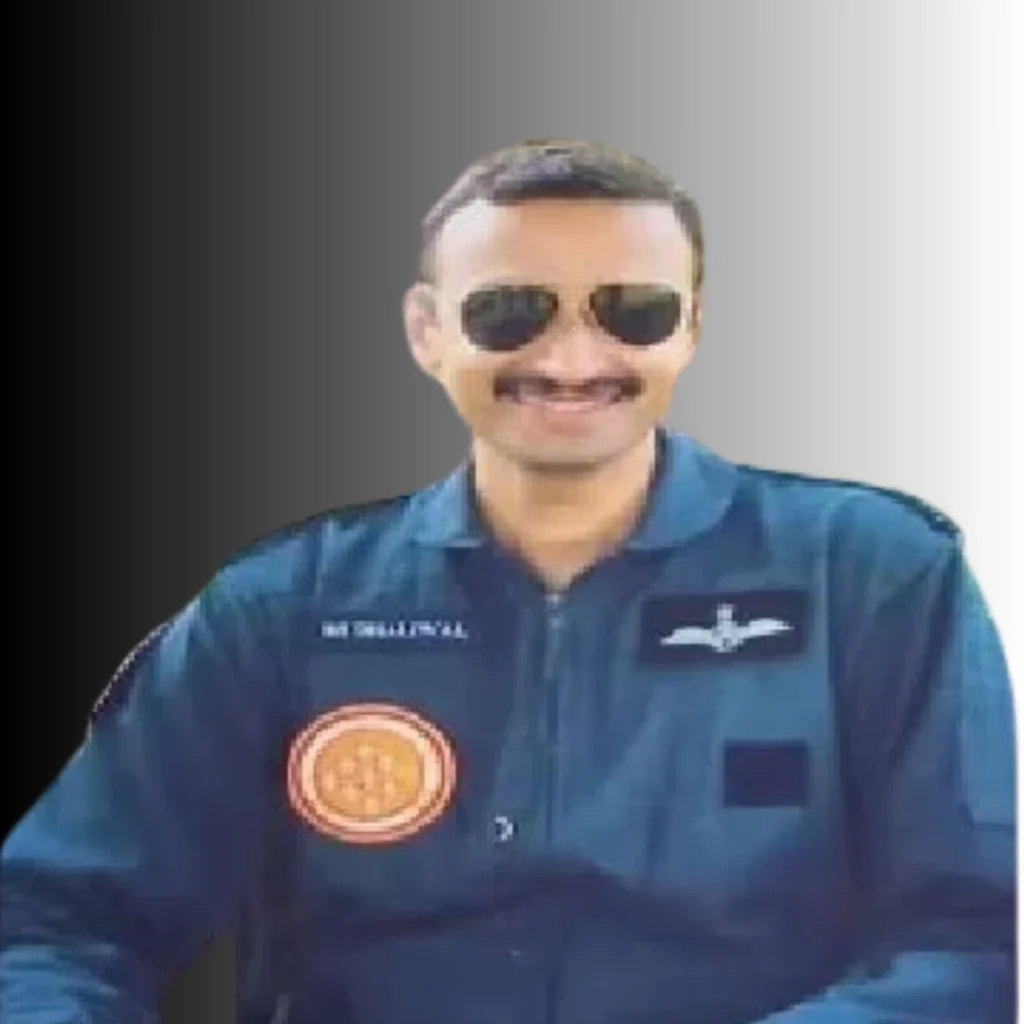
RS Dhaliwal, whose full name was Rajpal Singh Dhaliwal, was an Indian Air Force fighter pilot remembered for his contribution during the 1999 Kargil War and his service to the nation. He took part in challenging night-strike missions during Operation Safed Sagar, the Indian Air Force’s air campaign in the Kargil conflict. His courage and performance during these operations earned him the Vayu Sena Medal (Gallantry).
His military journey continued beyond the Kargil War. He later joined the Surya Kiran Aerobatic Team, known for its demanding formation flying and aerial displays. Unfortunately, his life ended on 21 January 2009, when a Kiran Mk-II aircraft crashed during a training flight near Bidar, Karnataka. He was 35 years old.
Interest in RS Dhaliwal’s life increased further following the portrayal of his story in the web series Operation Safed Sagar, in which actor Abhay Verma played his character. However, his real-life achievements extend beyond his screen portrayal. His service record, operational experience, gallantry award and dedication to aviation form the foundation of his legacy.
Who Is RS Dhaliwal?
RS Dhaliwal was an Indian Air Force officer and fighter pilot who served during one of the most demanding military operations in modern Indian history. He was associated with No. 17 Squadron during the Kargil conflict and completed four successful night-strike missions, according to his gallantry citation.
His operational duties required him to fly in difficult mountainous terrain under challenging night conditions. Such missions demanded careful navigation, coordination, discipline and the ability to execute instructions accurately. His performance during the Kargil War became the principal reason for his recognition as a gallantry award recipient.
After the conflict, Dhaliwal continued his career in the Indian Air Force and later joined the Surya Kiran Aerobatic Team. His service demonstrated the different responsibilities undertaken by military pilots, from operational combat missions to precision formation flying.
RS Dhaliwal is remembered for his contribution to Operation Safed Sagar, his Vayu Sena Medal (Gallantry), and his service as a member of the Surya Kiran Aerobatic Team.
RS Dhaliwal Biography Table
| Biography Detail | Information |
|---|---|
| Full Name | Rajpal Singh Dhaliwal |
| Commonly Known As | RS Dhaliwal |
| Nationality | Indian |
| Profession | Indian Air Force officer and fighter pilot |
| Date of Birth | 6 January 1974 |
| Birthplace | Punjab, India |
| Age at Death | 35 years |
| Military Service | Indian Air Force |
| Commissioning Date | 17 June 1995 |
| Pilots’ Course | 155th Pilots’ Course |
| Associated Squadron | No. 17 Squadron |
| Major Military Operation | Operation Safed Sagar |
| Notable Achievement | Four successful night-strike missions during the Kargil War |
| Gallantry Award | Vayu Sena Medal (Gallantry) |
| Promotion to Wing Commander | 17 June 2008 |
| Surya Kiran Assignment | Joined on 1 July 2007 |
| Wife | Rubina, according to biographical reports |
| Daughter | Rasha, according to biographical reports |
| Date of Death | 21 January 2009 |
| Place of Death | Bidar, Karnataka, India |
| Cause of Death | Aircraft crash during a training flight |
| Aircraft Involved | Kiran Mk-II |
| On-Screen Portrayal | Abhay Verma in Operation Safed Sagar |
RS Dhaliwal Age and Date of Birth
RS Dhaliwal was born on 6 January 1974. He died on 21 January 2009, shortly after his 35th birthday. His life was relatively short, but his military career included combat operations, professional advancement and service with an aerobatic display team.
His age at the time of his death is an important detail in his biography because it highlights how much he had accomplished during his years of service. By the time of his death, he had served in the Indian Air Force for more than 13 years and had reached the rank of Wing Commander.
The precise age and dates are more firmly documented than many aspects of his childhood or private life. Information about his personal milestones should therefore be separated from details established through military records.
RS Dhaliwal Birthplace and Early Life
Publicly available biographical information identifies Punjab as RS Dhaliwal’s birthplace. However, reliable public records do not consistently establish the exact town or village where he was born. His parents’ names, childhood residence and detailed family history are also not sufficiently documented to present as confirmed facts.
His early life ultimately led him towards a career in military aviation. Becoming a fighter pilot in the Indian Air Force requires academic preparation, competitive selection, intensive training and the ability to meet demanding professional standards. Dhaliwal’s commissioning in 1995 marked the beginning of his formal career as an officer.
Unlike many public personalities, he did not build his reputation through interviews, entertainment or personal publicity. Most of the available information about him concerns his professional service, operational achievements and military recognition.
His early years are best understood as the beginning of a journey that took him from his educational background to India’s military aviation system, where he developed the skills needed to serve as a fighter pilot.
RS Dhaliwal Family Background
RS Dhaliwal’s family background is an important part of his personal biography, but detailed information about his parents, siblings and extended family remains limited in publicly accessible records. His military profile and professional achievements are much better documented than his private family history.
He maintained a professional life centred on military aviation, and most public reporting about him focuses on his service, combat achievements and untimely death. Without reliable confirmation, the names and occupations of his parents or siblings should not be added to his biography.
His family is also remembered in connection with the personal loss caused by his death at a young age. His service in the Indian Air Force required demanding training schedules, operational responsibilities and frequent commitments that came with a military career.
RS Dhaliwal Wife Rubina and Daughter Rasha
RS Dhaliwal was married to Rubina, and the couple had a daughter named Rasha. These names are associated with his family in accounts of his life and death, although extensive independent biographical details about them are not widely available.
Dhaliwal’s career as an Air Force officer involved responsibilities that extended beyond his own personal ambitions. Military aviation requires discipline, demanding schedules and a willingness to undertake assignments that can involve considerable risk. Such professional commitments can also affect family life.
His death in the 2009 aircraft accident was a personal tragedy for his family as well as a loss for the Indian Air Force. However, information about his wife’s professional background, his daughter’s later life and other private family matters should not be treated as established unless supported by credible public reporting.
Rubina and Rasha are reported as his wife and daughter, respectively. A responsible biography should respect their privacy and avoid adding unverified personal details.
RS Dhaliwal Education and Schooling
Education played an important role in RS Dhaliwal’s journey towards becoming a fighter pilot. Indian Air Force officers must meet demanding academic, physical and aptitude standards before they can undertake professional flying training.
Publicly available service records confirm his commissioning date and course details, but they do not provide a complete, independently verified list of his school names, school examination results or all educational qualifications. Consequently, specific school names should not be presented as facts without further evidence.
His entry into the military aviation system demonstrates that he completed the selection and training requirements necessary to become an Air Force officer. The process involves more than classroom learning: aspiring pilots must develop technical understanding, situational awareness, decision-making ability and the discipline required to operate complex aircraft.
For Dhaliwal, education was the foundation of a career that eventually included frontline fighter squadron service, night-strike operations and precision flying with the Surya Kiran Aerobatic Team.
RS Dhaliwal National Defence Academy Journey
The National Defence Academy, commonly known as the NDA, is an important institution for candidates seeking to become commissioned officers in India’s armed forces. It provides joint military training before cadets proceed to their respective service academies.
Some biographical accounts associate Dhaliwal’s journey with the NDA and subsequent flying training at the Air Force Academy in Dundigal. However, the exact dates and complete sequence of his academy training are not comprehensively established in the publicly accessible service record reviewed for this article.
The distinction matters because military education typically involves several stages, including selection, academy training, service-specific preparation and professional qualification. These stages should not be confused with the date on which an officer receives a commission.
Dhaliwal’s confirmed commissioning date is 17 June 1995, and his service record identifies him with the 155th Pilots’ Course. This provides a reliable starting point for understanding his professional military career, even where some earlier educational details remain incomplete.
RS Dhaliwal Height, Weight and Physical Appearance
| Physical Detail | Information |
|---|---|
| Height | Not reliably documented |
| Weight | Not reliably documented |
| Eye Colour | Not reliably documented |
| Hair Colour | Not reliably documented |
| Build | No verified measurements available |
| Nationality | Indian |
| Profession | Fighter pilot and Air Force officer |
RS Dhaliwal’s Indian Air Force Career
RS Dhaliwal’s Indian Air Force career began with his commissioning in June 1995. He entered a profession in which pilots are expected to combine technical expertise, disciplined judgement and the ability to operate effectively under pressure.
His career included service with a fighter squadron, participation in the Kargil War and later assignment to the Surya Kiran Aerobatic Team. These responsibilities required different types of aviation expertise, from operational flying to precision formation manoeuvres.
The most widely documented part of his career is his performance during Operation Safed Sagar in 1999. His gallantry citation records that he flew four successful night-strike missions under challenging conditions, despite having limited prior experience of night flying and no previous exposure to night-strike operations.
His professional progression continued after the Kargil conflict. He joined the Surya Kiran team in July 2007 and was promoted to Wing Commander with effect from 17 June 2008, according to the available service record.
Dhaliwal’s career therefore represents more than one major wartime achievement. It reflects a progression through operational service, professional development and demanding flying assignments within the Indian Air Force.
RS Dhaliwal Commissioning and Pilot Training
RS Dhaliwal was commissioned into the Indian Air Force on 17 June 1995. His service record identifies him with the 155th Pilots’ Course, marking the formal beginning of his career as a commissioned officer.
Commissioning is a significant milestone in military service. It establishes an officer’s formal entry into the commissioned ranks, while operational flying duties require additional training, assessments and qualifications.
Military pilots must understand aircraft systems, flight procedures, navigation, communication protocols and emergency responses. Fighter pilots also need to make rapid decisions while managing aircraft performance, mission objectives and changing operational conditions.
Dhaliwal’s subsequent role in a fighter squadron indicates that he progressed into operational aviation duties. By the time of the Kargil War missions, his experience included substantial overall flying hours, although his night-flying experience was comparatively limited.
His successful performance under those circumstances became a defining feature of the gallantry citation that recognised his contribution during the 1999 conflict.
RS Dhaliwal’s Fighter Pilot Journey
Becoming a fighter pilot involves years of professional preparation and the development of skills that cannot be acquired through theoretical study alone. Pilots must learn to manage aircraft controls, interpret instruments, navigate accurately and respond to unexpected situations.
RS Dhaliwal’s fighter pilot journey brought him into operational squadron service during a period when the Indian Air Force maintained demanding responsibilities along India’s borders. His role required him to apply his training in real operational conditions.
The Kargil War became a major turning point in his career. The terrain and operating environment presented unusual challenges, particularly during missions flown at night over mountainous valleys. Such operations demanded accurate flying, coordination and the ability to deliver weapons in accordance with mission requirements.
His four successful night-strike missions distinguished him among the young officers who participated in these operations. His recognition with the Vayu Sena Medal (Gallantry) reflected the courage and professional performance described in his award citation.
Dhaliwal later took on the challenge of aerobatic formation flying. This progression demonstrates the breadth of responsibilities he undertook during his career, although operational fighter missions and aerobatic displays are distinct activities with different objectives.
RS Dhaliwal and No. 17 Squadron
RS Dhaliwal was associated with No. 17 Squadron of the Indian Air Force, which is identified in his gallantry citation. The squadron was assigned a night-strike role during the Kargil conflict, and its operational responsibilities placed pilots in demanding conditions.
The award citation records that the squadron’s night-strike task began on 27 July 1999. The missions required pilots to fly through mountainous valleys at night, maintaining a low altitude relative to the terrain while facing the threat of enemy anti-aircraft fire and low-level quick-reaction missiles.
Dhaliwal’s role was particularly significant because he had limited night-flying experience and had not previously undertaken night-strike missions. Nevertheless, he completed four successful missions and accurately delivered his weapons.
His service with the squadron is one of the best-documented parts of his biography because it is directly connected to the gallantry award he received. It provides concrete evidence of his operational contribution rather than relying on general descriptions of bravery.
RS Dhaliwal’s Role in the Kargil War
The Kargil War took place in 1999 after Indian forces discovered that Pakistani soldiers and armed personnel had occupied positions on the Indian side of the Line of Control in the Kargil sector of Jammu and Kashmir. The conflict involved difficult mountainous terrain, high-altitude military positions and challenging logistical conditions.
The Indian Air Force supported the Indian Army through air operations designed to strike enemy positions and support the wider military effort. These operations were conducted under difficult conditions because the mountainous environment complicated navigation, target identification and aircraft manoeuvres.
RS Dhaliwal participated in the air campaign associated with the conflict. His most notable contribution was his involvement in four successful night-strike missions, as documented in his gallantry citation.
Night operations presented particular challenges because pilots had to manage visibility limitations, terrain awareness and operational threats while carrying out their assigned tasks. Dhaliwal’s ability to deliver weapons accurately under these circumstances was specifically recognised.
His contribution should be understood within the broader effort of the Indian Air Force rather than in isolation. Operation Safed Sagar involved multiple pilots, aircraft, squadrons and support personnel working towards the objectives of the Kargil campaign.
Operation Safed Sagar and RS Dhaliwal
Operation Safed Sagar was the Indian Air Force’s air campaign during the Kargil War in 1999. Its operations supported India’s military response to the conflict and involved air strikes against enemy positions in extremely challenging high-altitude terrain.
The campaign required pilots to operate in an environment where mountains, narrow valleys and changing weather could make flying difficult. The threat from enemy air-defence weapons added another layer of risk to the missions.
RS Dhaliwal became associated with the operation through his service with No. 17 Squadron. His squadron was tasked with conducting night strikes over target areas from late July 1999 onwards.
His award citation highlights the difficulty of these operations and the precision required to complete them successfully. Dhaliwal flew four missions and delivered his weapons accurately, with the citation also noting that he could visually observe the impact points.
Operation Safed Sagar is the central event in RS Dhaliwal’s military biography because it connects his operational performance with his gallantry award and long-term recognition.
RS Dhaliwal’s Four Night-Strike Missions
One of the most important facts about RS Dhaliwal is that he completed four successful night-strike missions during the Kargil War. These missions were carried out under conditions that required precision, concentration and effective aircraft control.
His gallantry citation describes the mission profile as demanding accurate flying through valleys at night, at approximately one kilometre above terrain level. Enemy defences included anti-aircraft artillery and low-level quick-reaction missiles.
The missions were especially challenging because Dhaliwal had only 46 hours of night-flying experience and no prior exposure to night-strike operations. His overall flying experience at the time was recorded as 756 hours.
Despite these limitations, he completed all four missions successfully. The citation states that he accurately delivered his weapons and was able to visually sight the impact points.
These details explain why his actions were recognised as gallant service. The achievement was not simply the completion of four flights; it was the successful execution of operational missions in a hostile environment, under difficult visibility and terrain conditions.
RS Dhaliwal’s Flying Experience and Operational Skills
At the time described in his gallantry citation, RS Dhaliwal had accumulated 756 hours of total flying experience, including 46 hours of night flying. These figures provide a useful snapshot of his experience during the Kargil operations.
Flying at night over mountainous terrain requires careful attention to aircraft position, altitude, navigation and changing environmental conditions. Pilots must maintain situational awareness while following mission instructions and accounting for potential threats.
The citation notes that Dhaliwal was able to deliver his weapons accurately and visually identify their impact points. This detail is important because it describes a specific operational outcome rather than offering only a general assessment of his performance.
His role as a two-aircraft leader, as noted in the same citation, also indicates that he had responsibilities involving coordination within a formation. Formation flying requires pilots to maintain appropriate spacing, follow planned procedures and communicate effectively.
These documented details help explain the professional skills associated with his gallantry award. They also demonstrate why his Kargil missions remain the most significant part of his publicly recorded military service.
RS Dhaliwal Vayu Sena Medal (Gallantry)
RS Dhaliwal received the Vayu Sena Medal (Gallantry) in recognition of his courage, determination and devotion to duty during Operation Safed Sagar. His award was announced in connection with Independence Day in 1999, and the citation was subsequently recorded in the Gazette of India.
The medal recognises acts of courage or devotion to duty in the Indian Air Force. In Dhaliwal’s case, the award citation specifically describes his four successful night-strike missions and his accurate delivery of weapons in difficult operational circumstances.
The citation also highlights the fact that he had limited night-flying experience and no previous exposure to night-strike operations. Despite these challenges, he performed his assigned duties successfully.
His recognition was particularly notable because he had only about four years of commissioned service at the time. The citation described him as one of the youngest pilots in the history of the Indian Air Force to have taken part in night-strike operations.
The award remains one of the most important honours associated with his name and provides an official record of his contribution to the Kargil War.
RS Dhaliwal’s Promotion to Wing Commander
RS Dhaliwal’s service record lists his promotion to Wing Commander with effect from 17 June 2008. This promotion came nearly nine years after the Kargil War missions that brought him national military recognition.
Military promotion reflects progression through the officer ranks, subject to the applicable service rules, career requirements and professional assessments. It is an important part of an officer’s career history, although a promotion date alone does not reveal every aspect of the selection process.
Dhaliwal’s promotion demonstrates that his service continued well beyond the 1999 conflict. During the intervening years, he remained part of the Indian Air Force and developed his professional career.
His assignment to the Surya Kiran Aerobatic Team began on 1 July 2007, when his service record listed him as a Squadron Leader and Squadron Pilot. His later promotion to Wing Commander followed in June 2008.
This sequence is important for maintaining accuracy in his biography. It distinguishes the rank he held during the aerobatic-team assignment from the higher rank recorded at the time of his death.
RS Dhaliwal and the Surya Kiran Aerobatic Team
The Surya Kiran Aerobatic Team is one of the Indian Air Force’s most recognisable flying display teams. It is known for precision formation flying, coordinated manoeuvres and aerial displays that demonstrate the skill and discipline of military pilots.
RS Dhaliwal joined the Surya Kiran Aerobatic Team on 1 July 2007, according to his service record. At the time, he was listed as a Squadron Leader serving as Squadron Pilot. His subsequent promotion to Wing Commander took effect on 17 June 2008.
Joining an aerobatic team represents a different professional challenge from conducting operational fighter missions. Pilots must maintain exact positioning relative to other aircraft, respond to coordinated manoeuvres and operate with exceptional attention to timing and control.
Formation flying requires trust between pilots, consistent communication and extensive preparation. Even small deviations can matter when aircraft are flying close together, making training and coordination essential.
Dhaliwal’s assignment to the Surya Kiran team was an important stage of his career. It demonstrated that his service extended beyond his achievements during the Kargil War and included a role in the Indian Air Force’s public flying displays.
RS Dhaliwal’s Aircraft and Flying Career
RS Dhaliwal’s professional life involved military aircraft and the specialised skills required to operate them. His service during the Kargil War included night-strike missions, while his later assignment involved the Surya Kiran Aerobatic Team.
His final flight was aboard a Kiran Mk-II, also known as the HJT-16, an aircraft used by the Surya Kiran team for aerobatic flying and training. The aircraft was involved in the fatal accident near Bidar on 21 January 2009.
It is important to distinguish the aircraft associated with his final flight from the aircraft he may have flown at other stages of his career. A complete aircraft-by-aircraft history of Dhaliwal’s service is not established by the publicly available records discussed here.
| Aircraft or Flying Assignment | Connection to RS Dhaliwal |
|---|---|
| Fighter squadron operations | Associated with his service during Operation Safed Sagar |
| Night-strike missions | Completed four successful missions during the Kargil War |
| Surya Kiran Aerobatic Team | Joined the team on 1 July 2007 |
| Kiran Mk-II (HJT-16) | Aircraft involved in his fatal training-flight accident |
His flying career combined operational military duties with the precision and discipline required for aerobatic formation flying. Both roles demanded professional training, but their purposes and operational environments were different.
RS Dhaliwal Death and Cause of Death
RS Dhaliwal died on 21 January 2009, aged 35, in an aircraft accident near Bidar, Karnataka. He was serving with the Surya Kiran Aerobatic Team at the time.
His death was a major loss to the Indian Air Force because he was an experienced military pilot whose career had included gallantry-recognised service during the Kargil War. His passing also brought an end to a career that had continued to develop after his wartime achievements.
The publicly reported circumstances identify the incident as a training-flight crash involving a Kiran Mk-II aircraft. However, the exact technical cause should not be stated definitively without a verified accident-investigation finding.
Aircraft accidents can involve several factors, and identifying a precise cause requires evidence from the relevant investigation. A responsible account should therefore distinguish the confirmed occurrence of the crash from any unverified explanation of why it happened.
Dhaliwal’s death remains one of the most tragic aspects of his biography. He had served the nation during a major military conflict and was continuing his professional responsibilities when his life ended.
RS Dhaliwal’s Aircraft Crash in Bidar
The fatal accident occurred in the Bidar region of Karnataka on 21 January 2009. RS Dhaliwal was flying a Kiran Mk-II aircraft during a training activity associated with the Surya Kiran Aerobatic Team.
The accident was reported near Belur in the Bidar area. His service record identifies the aircraft type as the Kiran HJT-16 and records the incident under the Surya Kiran team’s flying activities.
The team operates in a demanding environment in which pilots must coordinate their movements and maintain precise aircraft positioning. Training is essential for developing the consistency and timing required for aerobatic manoeuvres.
Although the location and date of the crash are recorded, details about the aircraft’s precise mechanical condition and the definitive sequence of events should be treated carefully unless supported by an authoritative investigation report.
The incident ended Dhaliwal’s life at the age of 35. His death is remembered alongside his military achievements, particularly his role in Operation Safed Sagar and his subsequent service with the aerobatic team.
What Happened During the Surya Kiran Training Flight?
The crash took place during a Surya Kiran training flight involving a formation manoeuvre. Reports about the incident refer to a nine-aircraft formation and a manoeuvre known as the Barbed Wire Cross.
Aerobatic formations require pilots to coordinate their aircraft along planned flight paths. Such manoeuvres depend on accurate timing, consistent control inputs, situational awareness and communication between team members.
The Barbed Wire Cross is associated with the coordinated movement of aircraft within a formation. The manoeuvre’s name alone, however, does not establish the exact sequence of events that led to the crash.
Public reporting connects the incident with the training activity, but the technical explanation of the accident should be based on reliable investigation findings rather than assumptions about the manoeuvre.
The confirmed outcome is that Dhaliwal’s Kiran Mk-II aircraft crashed near Bidar on 21 January 2009, resulting in his death. His loss was particularly tragic because he was continuing a demanding military flying assignment after years of operational service.
RS Dhaliwal’s Last Flight and Final Mission
RS Dhaliwal’s last flight was part of his duties with the Surya Kiran Aerobatic Team. Unlike his Kargil missions, which involved operational night strikes, this flight was connected with aerobatic training and coordinated formation flying.
The two assignments represented different parts of his military career. During Operation Safed Sagar, he had flown under combat conditions and delivered weapons against designated targets. With the Surya Kiran team, his work involved precise manoeuvres and coordination with other aircraft.
His final flight ended in the fatal crash near Bidar. The circumstances of his death serve as a reminder that military aviation involves demanding responsibilities even outside active combat operations.
The phrase final mission is sometimes used informally when discussing his last flight, but it should not be confused with a combat mission. The available information identifies the incident as a training-flight accident.
Dhaliwal’s career is therefore remembered through two very different flying experiences: his successful night-strike missions during the Kargil War and his later assignment with the Indian Air Force’s aerobatic team.
RS Dhaliwal’s Legacy in the Indian Air Force
RS Dhaliwal’s legacy rests primarily on his service, courage and professional achievements. His four successful night-strike missions during Operation Safed Sagar remain the most significant documented example of his contribution during the Kargil War.
His Vayu Sena Medal (Gallantry) provides formal recognition of that contribution. The citation describes his ability to complete difficult missions despite limited experience of night flying and no prior exposure to night-strike operations.
His later service with the Surya Kiran Aerobatic Team also forms part of his legacy. It reflects the variety of flying responsibilities undertaken by Indian Air Force officers and the expertise needed for precision formation flying.
His death in 2009 ended his career prematurely, but it did not erase the record of his service. The documented facts of his military life continue to provide a basis for understanding his contribution.
RS Dhaliwal’s story is remembered not only because of his untimely death, but also because of the courage and professional skill he demonstrated during the Kargil War.
RS Dhaliwal in Operation Safed Sagar
Operation Safed Sagar remains the defining chapter in RS Dhaliwal’s military story. The campaign was launched by the Indian Air Force during the 1999 Kargil conflict to support India’s military objectives in the region.
The operation required aircrew to work in a challenging environment shaped by mountainous terrain, high-altitude targets and enemy air-defence threats. Night operations added further difficulties because pilots had to navigate and carry out their assigned tasks with limited visibility.
Dhaliwal’s role is particularly well documented through his gallantry citation. It records four successful night-strike missions and notes that he accurately delivered his weapons and visually observed the impact points.
His contribution is significant because the citation also describes his comparatively limited night-flying experience at the time. Despite having 46 hours of night flying and no previous night-strike experience, he completed his assigned missions successfully.
This documented record is more informative than exaggerated accounts that attribute unverified actions or individual victories to him. It explains the specific reasons his performance received official recognition.
Who Played RS Dhaliwal? Abhay Verma’s Role
Actor Abhay Verma portrayed RS Dhaliwal in the web series Operation Safed Sagar. The portrayal introduced the pilot’s story to viewers who may not have previously known about his role in the Kargil War or his later career with the Surya Kiran Aerobatic Team.
Dramatised military series often use individual characters to help audiences understand larger historical events. Through a character such as Dhaliwal, viewers can learn about the experiences of pilots who participated in difficult operations and the responsibilities they carried.
However, an actor’s performance should be distinguished from the documented life of the person being portrayed. Dialogue, personal interactions and scenes created for storytelling may not correspond directly to historical records.
Dhaliwal’s real-life achievements can be assessed through his military service record, gallantry citation and reliable biographical reporting. His participation in four successful night-strike missions and receipt of the Vayu Sena Medal (Gallantry) are central documented facts.
Abhay Verma’s portrayal provides a screen representation of his story, while the historical record remains the basis for understanding his actual service and achievements.
Real-Life RS Dhaliwal vs. His On-Screen Character
The real-life RS Dhaliwal was an Indian Air Force officer whose career involved operational flying, combat missions and later service with the Surya Kiran Aerobatic Team. His military record establishes the key dates, rank progression, award and circumstances of his death.
His on-screen character is a dramatic interpretation created for a television production. Such portrayals may compress timelines, combine events or use imagined dialogue to communicate the emotional and historical significance of a story.
| Aspect | Real-Life RS Dhaliwal | On-Screen Portrayal |
|---|---|---|
| Identity | Rajpal Singh Dhaliwal, Indian Air Force officer | Character portrayed by Abhay Verma |
| Kargil War role | Four successful night-strike missions recorded in his gallantry citation | Depiction shaped by the series’ storytelling |
| Gallantry recognition | Vayu Sena Medal (Gallantry) | May be presented through dramatic scenes |
| Career after Kargil | Joined the Surya Kiran Aerobatic Team in 2007 | Screen narrative may select particular career events |
| Death | Died in a Kiran Mk-II crash near Bidar in 2009 | Depiction depends on the series’ treatment of the event |
| Historical evidence | Service record and published biographical accounts | Performance and scripted scenes |
The most important distinction is that documented military facts should not be confused with dramatic scenes created for entertainment. Both can help audiences engage with the story, but they serve different purposes.
RS Dhaliwal’s Net Worth and Income Sources
RS Dhaliwal’s exact net worth has not been reliably established in public sources. There is no verified financial statement or credible public estimate that establishes his total assets, savings, investments or property holdings.
As an Indian Air Force officer, his professional income would have been governed by military pay rules, rank, applicable allowances and service entitlements. However, the precise salary he received at different stages of his career is not established by the biographical records discussed here.
| Financial Detail | Information |
|---|---|
| Estimated Net Worth | Not publicly verified |
| Main Profession | Indian Air Force officer |
| Likely Primary Income | Military salary and applicable allowances |
| Rank at the Time of Promotion | Wing Commander, effective 17 June 2008 |
| Investments and Property | No reliable public figures available |
| Other Business Income | No verified information available |
RS Dhaliwal’s Personal Life and Interests
RS Dhaliwal’s publicly documented life focuses mainly on his military service. Information about his hobbies, favourite activities, personal friendships and interests outside aviation is limited.
His career demonstrates a strong professional commitment to flying. Fighter aviation and aerobatic formation flying require sustained training, discipline and attention to detail. These demands were an important part of his working life, but they should not automatically be treated as proof of specific personal hobbies.
Biographical reports identify his wife as Rubina and his daughter as Rasha. Beyond these reported details, reliable information about his family routines and private life is limited.
His story has continued to attract attention because it combines wartime service, gallantry recognition, a later aviation assignment and an untimely death. These aspects explain the public interest in his life without requiring speculation about his personal preferences.
Lesser-Known Facts About RS Dhaliwal
RS Dhaliwal’s biography contains several important facts that are less widely known than his association with the Kargil War.
- His full name was Rajpal Singh Dhaliwal. The initials RS are commonly used in reporting about his life, while his military record identifies him by his full name.
- RS Dhaliwal was commissioned on 17 June 1995. His service record identifies him with the 155th Pilots’ Course.
- RS completed four successful night-strike missions during the Kargil War. This is the central achievement described in his gallantry citation.
- Dhaliwal had 756 total flying hours at the time described in the citation. The same record lists 46 hours of night flying.
- RS Dhaliwal had no prior exposure to night-strike operations before the missions described in the citation. Despite this, he successfully completed the four assigned missions.
- RS received the Vayu Sena Medal (Gallantry). The award recognised his courage, determination and devotion to duty.
- Dhaliwal joined the Surya Kiran Aerobatic Team on 1 July 2007. This assignment came years after his participation in Operation Safed Sagar.
- RS Dhaliwal was promoted to Wing Commander in June 2008. His service record lists the effective date as 17 June 2008.
- Dhaliwal died at the age of 35. The fatal aircraft accident occurred near Bidar on 21 January 2009.
- His final aircraft was a Kiran Mk-II. The service record identifies the aircraft type as HJT-16.
- Abhay Verma portrayed him in Operation Safed Sagar. The series brought his story to a wider entertainment audience.
Several details of his private life remain undocumented. His parents’ names, exact school history, physical measurements and net worth should not be presented as confirmed facts without reliable evidence.
Conclusion
RS Dhaliwal, born Rajpal Singh Dhaliwal on 6 January 1974, was an Indian Air Force officer whose life was defined by military service, professional dedication and courage under demanding conditions. His participation in four successful night-strike missions during the 1999 Kargil War remains the most important documented achievement of his career.
His Vayu Sena Medal (Gallantry) recognised the performance described in his official award citation. He subsequently continued his career, joined the Surya Kiran Aerobatic Team in July 2007 and was promoted to Wing Commander in June 2008.
His death in a Kiran Mk-II aircraft crash near Bidar on 21 January 2009 ended his career at the age of 35. Although the loss was tragic, his service record preserves the details of his contribution to India’s military aviation history.
His portrayal by Abhay Verma in Operation Safed Sagar has introduced his story to more viewers. Ultimately, however, Dhaliwal’s legacy rests on his real-life service and documented achievements. His story offers a reminder of the skill, discipline and commitment required of military pilots.
FAQs
Who was RS Dhaliwal?
RS Dhaliwal was the commonly used name of Rajpal Singh Dhaliwal, an Indian Air Force officer and fighter pilot. He participated in night-strike missions during the Kargil War and later served with the Surya Kiran Aerobatic Team.
What was RS Dhaliwal’s full name?
His full name was Rajpal Singh Dhaliwal. His military service record identifies him by this name.
What was RS Dhaliwal’s date of birth?
RS Dhaliwal was born on 6 January 1974.
How old was RS Dhaliwal when he died?
He was 35 years old when he died on 21 January 2009.
What was RS Dhaliwal famous for?
He was known for his participation in Operation Safed Sagar during the Kargil War, particularly his four successful night-strike missions. He received the Vayu Sena Medal (Gallantry) for his performance.
Which award did RS Dhaliwal receive?
He received the Vayu Sena Medal (Gallantry) for his courage, determination and devotion to duty during the Kargil operations.
How many night-strike missions did RS Dhaliwal complete?
According to his gallantry citation, he completed four successful night-strike missions during Operation Safed Sagar in 1999.
When did RS Dhaliwal join the Indian Air Force?
He was commissioned into the Indian Air Force on 17 June 1995 and was associated with the 155th Pilots’ Course.
Which squadron was RS Dhaliwal associated with during the Kargil War?
His gallantry citation identifies him with No. 17 Squadron, which was assigned a night-strike role during the Kargil conflict.
When was RS Dhaliwal promoted to Wing Commander?
His service record lists his promotion to Wing Commander with effect from 17 June 2008.
Also, Read About: Abhinandan Varthaman || Sanjay Kapoor || Mamman Khan || Dr. Indranil Khan || Brigadier Hoshiar Singh || Captain Pawan Kumar || Anil Deshmukh || Jahangir Khan TMC || Raghav Chadha || Suvendu Adhikari || G. Marimuthu || V. D. Satheesan || Uma Shankar Singh || Ponguleti || Munirathna || Samrat Choudhary || Nana Patole || C. Joseph Vijay