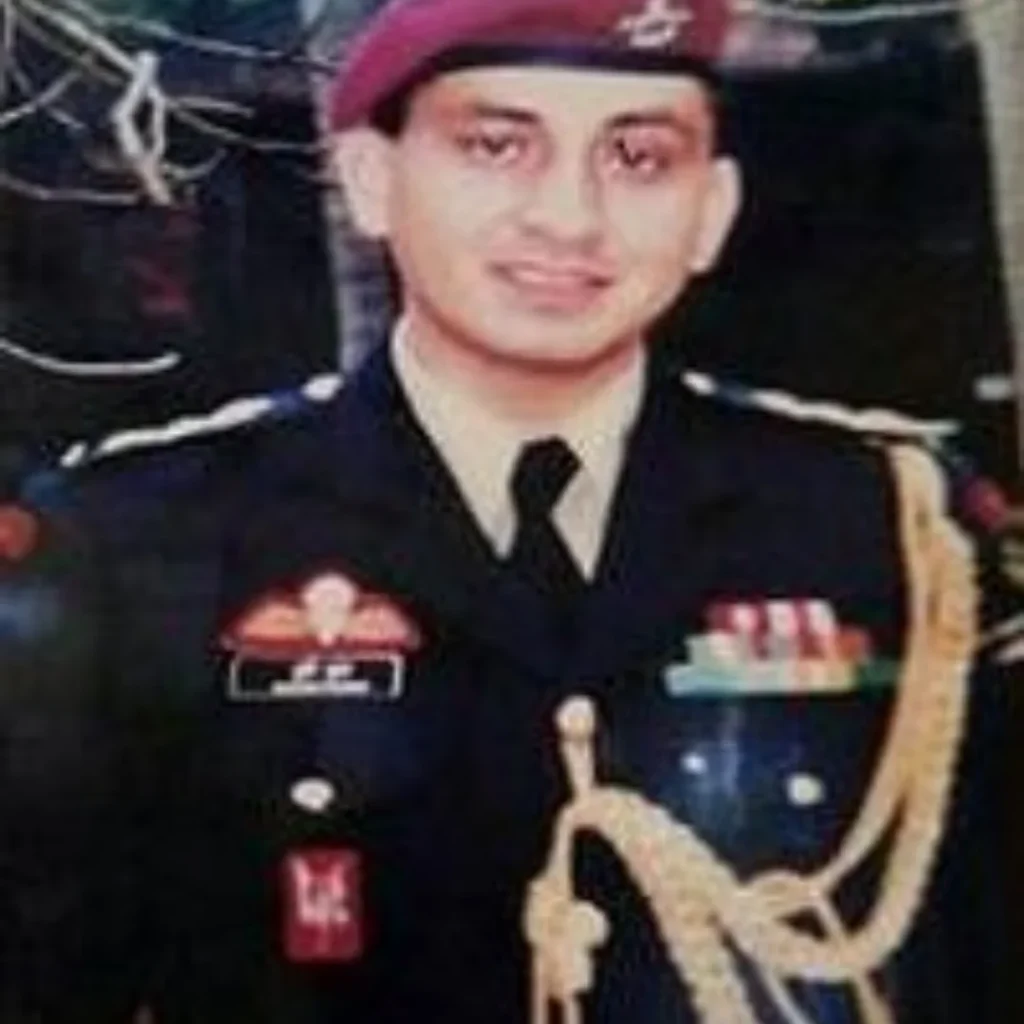
Major Sudhir Kumar Walia was one of the most courageous officers in the Indian Army, known for his valorous acts and loyalty towards his country. Being an officer of the Special Forces from 9 Para (Special Forces), he showed tremendous bravery while conducting various counter insurgency operations and Kargil War. His last operation in the jungles of Kupwara in 1999 turned out to be the epitome of selflessness and ultimate sacrifice. For his unparalleled acts of valour, he was conferred with Ashok Chakra which is the peacetime gallantry award of India.
In spite of dying at such a young age of 31, the legacy of Major Sudhir Walia still motivates soldiers, defense aspirants, and all Indians who respect courage and patriotism.
Who Was Major Sudhir Walia?
Sudhir Kumar Walia, an officer of the Indian Army, had the rare honor of serving with the legendary 9 Para (Special Forces), which is considered one of India’s best special forces units. Prior to joining the Special Forces, Major Sudhir served in the 4 Jat Regiment and was a part of the IPKF operation in Sri Lanka. His outstanding leadership and operational skills brought him into notice very early in his service in the Army.
He served in several highly sensitive missions in Jammu and Kashmir where he killed many terrorists and led his men from the front. He was known for his courageous attitude, sound judgment, and his dedication to every mission that he undertook. His supreme sacrifice in the Kupwara mission in August 1999 is among the greatest acts of bravery in Indian Army history.
Major Sudhir Walia Biography
| Particular | Details |
|---|---|
| Full Name | Major Sudhir Kumar Walia |
| Rank | Major |
| Birth Date | 24 May 1968 |
| Age at Martyrdom | 31 Years |
| Birthplace | Jodhpur, Rajasthan, India |
| Native Place | Banuri Village, Palampur, Kangra, Himachal Pradesh |
| Nationality | Indian |
| Profession | Indian Army Officer |
| Regiment | 4 Jat Regiment |
| Special Forces Unit | 9 Para (Special Forces) |
| Father | Subedar Major Rulia Ram Walia |
| Mother | Rajeshwari Devi |
| Brother | Arun Kumar |
| Sister | Bindiya |
| Education | Government School Banuri, Sainik School Sujanpur Tira, NDA, IMA Dehradun |
| Major Awards | Ashok Chakra (Posthumous), Sena Medal, Sena Medal (Bar) |
| Date of Martyrdom | 29 August 1999 |
| Place of Martyrdom | Haphruda Forest, Kupwara, Jammu & Kashmir |
Major Sudhir Walia Date of Birth, Age and Birth Place
Major Sudhir Kumar Walia was born on 24th May 1968 in Jodhpur, Rajasthan. It was the place where his father was serving in the Indian Army. Though he was born in Rajasthan, the place of his birth, his native village is Banuri which is located in the Kangra district of Himachal Pradesh. Childhood of Sudhir Walia was greatly influenced by army culture and patriotism.
Sudhir lost his life in the battle against terrorism while he was just 31 years old. His death took place on 29 August 1999 in an anti-terror operation. Despite of being so young, he has accomplished an excellent military career and gained the respect of both seniors and fellow soldiers.
Major Sudhir Kumar Walia Early Life
During his early life in Banuri village, Sudhir developed some very important qualities including discipline, determination and physical fitness in his early age. Born into an Army family, Sudhir used to hear many stories of bravery and service and it motivated him more to put on the Army uniform.
He used to actively participate in sports, outdoor games and school functions and was known for his leadership and confident nature among teachers and classmates.
Major Sudhir Kumar Walia Family Background
Major Sudhir Walia belonged to a reputed Army family that was known for its disciplined nature. Father of Sudhir was Subedar Major Rulia Ram Walia who was a soldier in the Indian Army and was the greatest inspiration for him. Mother of Sudhir was Rajeshwari Devi who continued to encourage him in his studies as well as career.
His siblings include a younger brother Arun Kumar and a sister Bindiya. Even after becoming a nationally recognized hero, he remained very much connected to his family and native village.
| Family Member | Details |
|---|---|
| Father | Subedar Major Rulia Ram Walia |
| Mother | Rajeshwari Devi |
| Brother | Arun Kumar |
| Sister | Bindiya |
| Native Village | Banuri, Palampur, Kangra, Himachal Pradesh |
Major Sudhir Walia Education (Sainik School, NDA & IMA)
Major Sudhir Walia started his academic journey from the Government School at Banuri and then entered Sainik School Sujanpur Tira, Himachal Pradesh. His life at Sainik School made him familiar with the concepts of military training and physical fitness. His ambition of becoming an officer in the Indian Army became clearer during these years.
Upon finishing his schooling, he succeeded in clearing the examination for the National Defence Academy (NDA) in his very first attempt in 1984. He underwent his training successfully at the 72nd NDA Course and thereafter went on to join the Indian Military Academy (IMA) in Dehradun. He undertook training at the Cariappa Battalion of IMA and was commissioned as a Second Lieutenant in the Indian Army.
| Qualification | Institution |
|---|---|
| School Education | Government School, Banuri |
| Military School | Sainik School Sujanpur Tira |
| Officer Training | National Defence Academy (NDA) |
| Final Military Training | Indian Military Academy (IMA), Dehradun |
Indian Army Journey
Commissioned as Major Sudhir Walia, he served in one of the Indian Army’s most honored infantry regiments called 4 Jat Regiment. He got acquainted with the real face of military life in his very first posting in which he proved his mettle as an officer to his seniors through discipline, valor, and acceptance of hard postings.
He constantly polished his military expertise through advanced military courses in commando, mountain, counter-insurgency, and airborne warfare. In this way, he won a reputation of becoming one of the Army’s best Special Forces officers through dedication and hard work.
From 4 Jat Regiment to 9 Para (Special Forces)
His Army journey began with service in the 4 Jat Regiment as an infantry officer, from which regiment he learned many lessons. Shortly after his commissioning, he was sent to Sri Lanka as part of the Indian Peace Keeping Force (IPKF). While serving there, he came into close contact with soldiers of 9 Para (Special Forces) and got impressed by their professionalism, endurance, and operational skills.
His resolve to join the Special Forces inspired him. On his return from Sri Lanka, he successfully joined 9 Para (Special Forces) in 1990. He had been dreaming of such an opportunity as he was destined to take part in challenging tasks for the Indian Army as a Special Forces Officer.
In 9 Para (SF), he received specialized training in commando warfare, mountain operations, airborne and counter-insurgency missions. His exceptional physical fitness, good decision-making, and fearless attitude soon made him one of the most capable officers of his unit.
Sri Lanka (IPKF) Operations
Shortly after being commissioned into the 4 Jat Regiment, Major Sudhir Walia was sent to Sri Lanka as a part of the Indian Peace Keeping Force (IPKF). Mission was launched in accordance with Indo-Sri Lanka Accord to restore peace in the region and tackle militant activities.
Deployment to Sri Lanka was a big challenge for a young officer in terms of testing his courage and leadership. He took part in several field missions in difficult conditions of combat. Working in difficult terrain made him understand the art of jungle and counter-insurgency warfare.
Performance in the IPKF mission earned him the admiration of his seniors and strengthened his resolve to serve in the Special Forces.
Joining 9 Para (Special Forces)
After returning from Sri Lanka, Major Sudhir Walia cleared the rigorous selection process of 9 Para (Special Forces) in 1990. It was one of the elite Special Forces of the Indian Army known for undertaking difficult missions in harsh environments.
Selection for 9 Para (SF) required excellent physical fitness, mental toughness, and endurance on his part. He did well in the process and became one of the most reliable members of the unit because of his fearless attitude and ability to lead from the front.
Specialized Military Training
As a Special Forces officer, Major Sudhir Walia undertook several advanced military courses that increased his combat skills.
Some of his major training courses included:
| Training Course | Institution |
|---|---|
| Commando Course | Belgaum |
| Counter Insurgency & Jungle Warfare | CIJW School, Vairengte (Mizoram) |
| Para Training | Para Training School (PTS) |
| Mountain Warfare Course | High Altitude Mountain Warfare School, Gulmarg |
| Officers Transport Management Course | Bangalore |
These courses helped him master special operations, survival techniques, mountain combat, and leadership under extreme conditions.
Counter-Insurgency Operations in Kashmir
Upon joining 9 Para (Special Forces), Major Sudhir Walia took part in various counter-terrorism missions all through the Jammu and Kashmir regions. In such operations, the team would often plan its actions based on intelligence gathered to identify terrorist hideouts, prevent infiltration of terrorists into India, and destroy heavily armed militants.
In July 1993, during an anti-insurgency mission in the Kandi village, Rajouri district, he demonstrated exceptional courage in the elimination of three hardcore terrorists. Because of his exemplary leadership and courageous behavior in the mission, Major Sudhir Walia was awarded the Sena Medal (Gallantry), which is one of the most highly regarded gallantry awards in the Indian Army.
Major Sudhir Walia became famous for the meticulously planned missions, his fast thinking and ability to instill confidence in his team members. As a result of his fearlessness, Major Sudhir Walia became one of the most respected Special Forces officers in the Valley.
The Sena Medal and Sena Medal (Bar)
Major Sudhir Walia was awarded the Sena Medal (Gallantry) for his distinguished conduct while performing a counter-insurgency operation in Jammu and Kashmir. He was honored for his exemplary leadership, dedication and devotion to duty while dealing with armed terrorists.
A Sena Medal Bar was later bestowed on him in recognition of distinguished services rendered to the nation during another military expedition to Brammah II Peak of the Kishtwar area in Jammu and Kashmir.
| Award | Reason |
|---|---|
| Sena Medal (Gallantry) | Heroic action during the 1993 Kandi counter-terrorism operation |
| Sena Medal (Bar) | Distinguished performance during the Brammah II military expedition |
Overseas Military Training & Pentagon Visit
During the year 1997, Major Sudhir Walia was chosen to undergo a special military course in the US. This honour was bestowed on very few officers. In the course, he interacted with military personnel from different nations and performed very well representing the Indian Army.
His excellent knowledge and leadership skills helped him get a chance to deliver a speech to the officials of the Pentagon. People from different nations admired him for his professional qualities and addressed him as “Colonel” whereas his comrades in the Indian Army fondly called him “Rambo” due to his amazing physical stamina and brave personality.
ADC to General V.P. Malik
He then joined as the Aide-de-Camp (ADC) to General Ved Prakash Malik who was the Chief of the Army Staff. Being ADC is an esteemed position for those having outstanding service record.
Although it was an honoured job, Major Walia used to prefer to undertake duties than administrative ones. When the Kargil war started in 1999, he asked General Malik to send him back to the battlegrounds to join his unit and fight along with them.
Kargil War Role (Zulu Top)
His request was granted by General V.P. Malik and Major Sudhir Walia once again rejoined 9 Para (Special Forces) during the Kargil war. He joined the operations without any hesitation and took up many operational duties.
Within few days of reaching the battlefields, he and his team captured Zulu Top, which is a strategic location situated at the height of around 5,200 meters in Mushkoh valley region. This mission proved to be a milestone in his career.
The capture of Zulu Top added to the operational strength of India during the conflict period and improved the reputation of Major Sudhir Walia as one of the best Special Forces Officers of the Indian Army.
Death of Major Sudhir Walia
On 29 August 1999, Major Sudhir Kumar Walia was critically wounded during a daring counter-terrorism operation in the Haphruda forest of Kupwara, Jammu & Kashmir. Despite being hit by several bullets, he declined to leave the mission and started guiding his team over the radio so that the rest of the militants would not be able to escape.
After the situation was brought under control, he agreed to be evacuated. But unfortunately, despite the efforts of his fellow soldiers, he died with a radio set in his hand. His last moments were full of immense courage, leadership and dedication to the duty.
At the time of martyrdom, Major Sudhir Walia was just 31 years old. His sacrifice was one of the most inspirational incidents of bravery in the entire history of the Indian Army.
Final Operation in Kupwara (29 August 1999)
On the morning of 29 August 1999, Major Sudhir Kumar Walia along with a five man team entered the thick Haphruda forest of Kupwara district, Jammu & Kashmir. It was believed that there was a group of heavily armed militants hiding in the forest. This operation required patience, stealth and courage because the forest was one of the strongest hideouts of the militants.
While moving cautiously through the forest, he caught some voices ahead. Along with a comrade, he crawled upward to investigate the source of the sound. From a short distance, he identified two militants guarding a secret hideout. Before allowing them any reaction, he fired and killed one of the militants.
But the other terrorist ran away towards the hideout, informing others about the presence of soldiers. Major Walia understood the situation and ran forward to the bunker without any support except that of his companion. Nearly 20 heavily armed militants rushed out of their hiding and a gun battle ensued.
But despite facing such odds, he kept on firing with remarkable bravery and killed four terrorists standing before him. He got gunshot injuries in his face, chest and arm during the battle. Still collapsed near the entrance of the hideout, he never gave up and started to remain in constant contact with his commanders over the radio and ordered the nearby teams to block all the escape routes.
He also insisted that not even a single militant should escape. After nearly 35 minutes of continuous battle, he agreed to be evacuated. By that time, he was sure that the mission had been accomplished successfully. And finally, he died holding the radio set in his hand. His action was one of the finest examples of bravery, leadership and sacrifice in the history of the Indian Army.
Ashok Chakra Citation
On account of his exemplary bravery and ultimate sacrifice made during the Kupwara operation, the Ashok Chakra was posthumously awarded to Major Sudhir Kumar Walia on 26 January 2000. It is an honour that recognizes his courageous leadership, superb fighting qualities, and commitment to achieving success in spite of receiving mortal wounds.
The citation mentions that he took on the challenge all alone by engaging a large number of terrorists, killing many at close quarters and giving instructions for the completion of the task via his radio communication while himself being wounded fatally. His determination ensured that the rest of the terrorists couldn’t escape and encouraged his comrades to accomplish the mission.
The Ashok Chakra received by Major Sudhir Walia is regarded as one of the greatest awards for bravery in the Indian armed forces.
Nickname “Rambo”
In the Indian Army, Major Sudhir Walia was commonly known by the nickname “Rambo.” This nickname was attributed to his superb physical fitness, fearlessness, and capacity to carry out tasks under the most adverse conditions whether it was mountain warfare, jungle warfare, or anti-insurgency operations. He was always ready to undertake the toughest tasks.
In the specialized course of military training in the United States, people from other countries were amazed by his confidence and leadership skills. Participants of the course used to call him “Colonel” although he was a major, in appreciation of his excellent military acumen and personality.
Major Sudhir Walia Height, Weight & Physical Appearance
| Attribute | Details |
|---|---|
| Full Name | Major Sudhir Kumar Walia |
| Height | Approximately 5 feet 10 inches (178 cm) |
| Weight | Around 72 kg (Approx.) |
| Eye Colour | Black |
| Hair Colour | Black |
| Build | Athletic and Well-trained |
| Profession | Indian Army Officer |
| Unit | 9 Para (Special Forces) |
Awards & Honours
Major Sudhir Walia received several prestigious military honours during his career for his outstanding courage and service to the nation. His gallantry awards reflect the bravery he displayed in some of the Indian Army’s most challenging operations.
| Award | Year | Details |
|---|---|---|
| Ashok Chakra (Posthumous) | 2000 | India’s highest peacetime gallantry award for the Kupwara operation |
| Sena Medal (Gallantry) | 1994 | Awarded for bravery during the Kandi counter-insurgency operation |
| Sena Medal (Bar) | 1993 | Recognized for distinguished performance during the Brammah II military expedition |
Major Sudhir Walia Net Worth
As an Indian Army officer, Major Sudhir Kumar Walia’s net worth is not publicly available. Serving the nation was his foremost duty, and his career was defined by honour, discipline, and sacrifice rather than financial achievements.
| Category | Details |
|---|---|
| Net Worth | Not Publicly Available |
| Profession | Indian Army Officer |
| Income Source | Salary and Service Benefits |
| Financial Status | Official records not disclosed |
Legacy & Memorials
COURAGE OF MAJOR SUDHIR WALIA still inspires generations of Indians. Some memorials have been made in his honour in order to maintain the legacy of Major Sudhir Walia and make people aware of the supreme sacrifice of the nation.
The Banuri Primary Health Center has been established in his honour by the Government of Himachal Pradesh. He is also honoured by his statue placed in Sainik School Sujanpur Tira, where he studied, motivating cadets to serve the nation.
There are portraits of him placed in the Sudan Block and Motivation Hall of Juliet Squadron of the National Defence Academy at Khadakwasla. Moreover, his memorial statue is placed at the State War Memorial and Yol Cantonment of Dharamshala. The road and bus stand to his ancestral village of Banuri have also been named after him.
MAJOR SUDHIR WALIA Famous Quotes
Major Sudhir Walia is remembered for a powerful statement that reflected his fearless attitude towards life and duty:
“I won’t die in an accident or die of any disease. I will go down in glory.”
This quote has become one of the most inspiring lines associated with the Indian Army and perfectly captures his courage, determination, and commitment to serving the nation until his last breath.
Major Sudhir Walia Wife & Children
Major Sudhir Kumar Walia was a married man however, he used to maintain his personal affairs completely confidential throughout his career. Unlike many other public personalities, hardly any confirmed facts about his wife have been made public yet.
No public record or confirmation can be found anywhere in regard to the names or other information related to Major Sudhir Walia’s wife or his children. So it would be better not to believe in any information found through social media or any other unofficial source. He will forever be known for his exceptional service in the army.
Lesser Known Facts About Major Sudhir Walia
- Major Sudhir Walia was born on 24 May 1968 in Jodhpur, Rajasthan, while his family belonged to Banuri village in Himachal Pradesh.
- Major Sudhir Walia studied at Sainik School Sujanpur Tira, where his dream of joining the Indian Army became stronger.
- Major Sudhir cleared the National Defence Academy (NDA) examination on his first attempt.
- Before joining 9 Para (Special Forces), he served in the 4 Jat Regiment.
- Walia participated in the Indian Peace Keeping Force (IPKF) mission in Sri Lanka.
- Major Sudhir Walia completed several elite military courses, including Commando, Para, Mountain Warfare, and Counter-Insurgency training.
- Major Sudhir served as Aide-de-Camp (ADC) to General Ved Prakash Malik, the then Chief of the Army Staff.
- During the Kargil War, he voluntarily requested to return to the battlefield from his staff appointment.
- Walia successfully led the operation to capture Zulu Top in the Mushkoh Valley.
- Major Sudhir Walia was popularly known as “Rambo” among fellow soldiers because of his exceptional courage and physical endurance.
- Even after being critically injured in Kupwara, he continued guiding his troops through his radio set until his last moments.
- He was posthumously awarded the Ashok Chakra, India’s highest peacetime gallantry award.
FAQs
Who was Major Sudhir Walia?
Major Sudhir Kumar Walia was an officer of the Indian Army’s 9 Para (Special Forces) who was posthumously awarded the Ashok Chakra for his exceptional bravery during an anti-terror operation in Kupwara in 1999.
When was Major Sudhir Walia born?
He was born on 24 May 1968 in Jodhpur, Rajasthan.
Where was Major Sudhir Walia’s native village?
His ancestral home is in Banuri village, near Palampur in Kangra district, Himachal Pradesh.
Which regiment did Major Sudhir Walia belong to?
He was initially commissioned into the 4 Jat Regiment and later joined the elite 9 Para (Special Forces).
Why was Major Sudhir Walia awarded the Ashok Chakra?
He received the Ashok Chakra (Posthumously) for displaying extraordinary courage during the 29 August 1999 Kupwara operation, where he eliminated several terrorists despite suffering fatal injuries.
What was Major Sudhir Walia’s nickname?
His fellow soldiers affectionately called him “Rambo” because of his fearless personality, physical fitness, and exceptional combat skills.
Did Major Sudhir Walia serve in the Kargil War?
Yes. During the Kargil War, he voluntarily returned from his ADC appointment to rejoin his unit and played an important role in capturing Zulu Top.
Where did Major Sudhir Walia study?
He studied at Government School Banuri, Sainik School Sujanpur Tira, National Defence Academy (NDA), and Indian Military Academy (IMA), Dehradun.
When did Major Sudhir Walia attain martyrdom?
He made the supreme sacrifice on 29 August 1999 during an anti-terror operation in the Haphruda Forest, Kupwara, Jammu and Kashmir.
Conclusion
The life of Major Sudhir Kumar Walia is an inspiring saga of courage, self-discipline, and selfless service to the nation. Be it at the prestigious Sainik School or when he became an exceptional Special Forces officer, he displayed qualities of leadership, dedication, and above all, an unflinching loyalty to his motherland. His feats in Sri Lanka, Jammu and Kashmir, and especially during the Kargil war earned him recognition as one of the best officers of the Indian Army.
The last assignment of Major Sudhir Walia at Kupwara will forever be remembered as a great act of heroism in face of impossible odds. Even after getting grievously injured, he kept on leading his troops and made sure that the mission was successfully completed before laying down his life for his countrymen. Posthumously awarded the Ashok Chakra, the memory of Major Sudhir Walia will always remain fresh in the minds of millions of Indians.
Also, Read About: Major Kuldip Singh Chandpuri || Major Somnath Sharma || Major Anuj Sood || Major Mukund Varadarajan || Major Gaurav Chaudhary Wife || Major Gaurav Chaudha