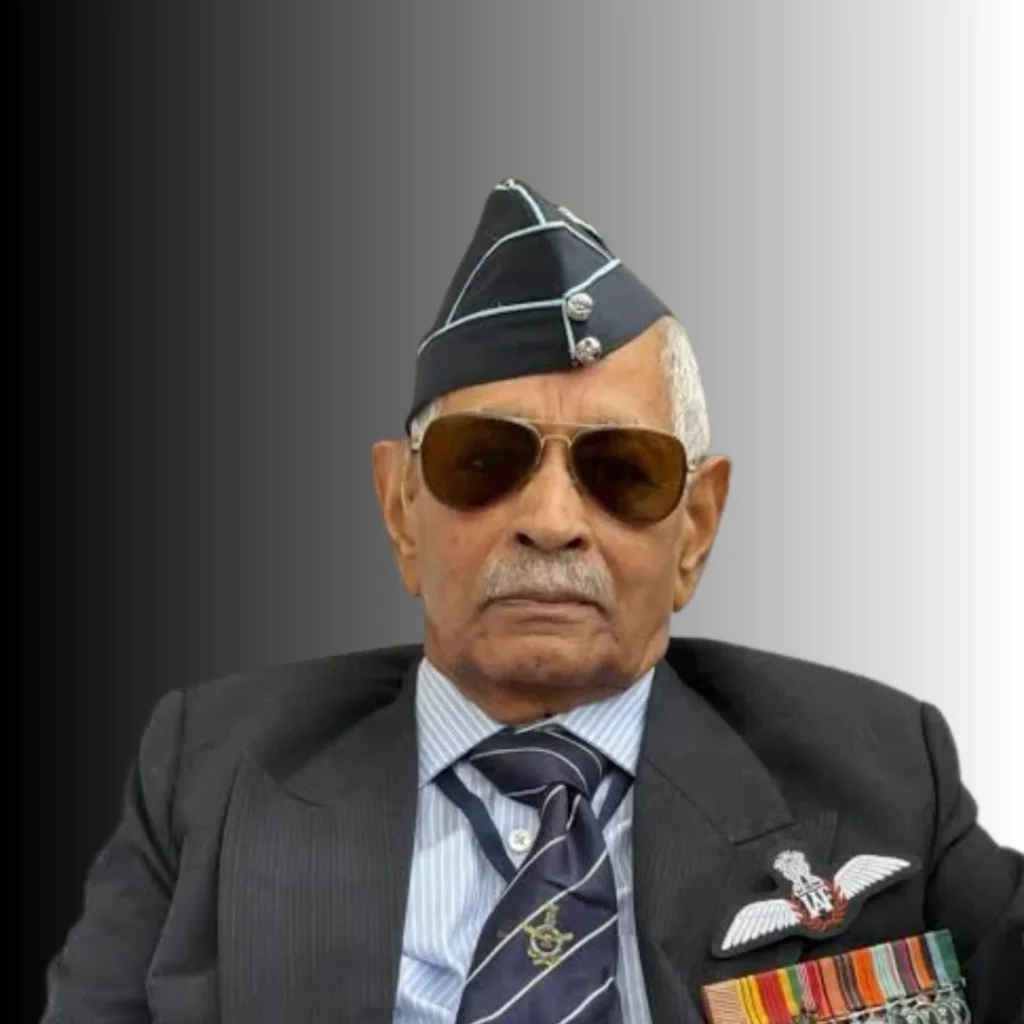
M. K. Chandrasekhar was a distinguished Indian Air Force veteran who dedicated more than three decades of his life to serving the nation. Known for his experience as a military pilot, professional discipline and contribution to India’s aviation history, he held the prestigious rank of Air Commodore in the Indian Air Force (IAF). His career reflected the importance of courage, technical knowledge, leadership and commitment to national security.
He became widely known outside military circles as the father of Indian politician and entrepreneur Rajeev Chandrasekhar. However, his own identity was built through years of military service and extensive flying experience. He joined the Indian Air Force in 1954 and retired in 1986, leaving behind a remarkable professional journey.
Chandrasekhar was particularly associated with the Douglas DC-3 Dakota, an aircraft that played an important role in the history of the Indian Air Force. His experience with this aircraft and his long flying career made him an important part of India’s military aviation heritage.
He received prestigious military honours, including the Vishisht Seva Medal (VSM) and the Vayu Sena Medal (VM). His life also became connected with an effort to preserve India’s aviation history through the restoration and donation of a vintage Dakota aircraft to the Indian Air Force.
Who Is M. K. Chandrasekhar?
M. K. Chandrasekhar was a retired Indian Air Force officer who served the country as a military pilot for more than 30 years. He reached the rank of Air Commodore and became known for his experience flying transport aircraft, particularly the Dakota.
He was born into a Malayali family with roots in Desamangalam, Thrissur district, Kerala. During his military career, he travelled to different parts of India and served in an environment that required professional discipline, adaptability and technical expertise.
He was also the father of Rajeev Chandrasekhar, who became a well-known entrepreneur, former Union Minister and political leader. His family background and military upbringing influenced Rajeev’s childhood and his understanding of the armed forces.
M. K. Chandrasekhar passed away on 29 August 2025 in Bengaluru at the age of 92. His contribution to the Indian Air Force and his association with the country’s aviation heritage remain important parts of his life story.
M. K. Chandrasekhar Biography Overview
| Details | Information |
|---|---|
| Full Name | M. K. Chandrasekhar |
| Popular Name | Air Commodore M. K. Chandrasekhar |
| Profession | Former Indian Air Force Officer |
| Nationality | Indian |
| Hometown Roots | Desamangalam, Thrissur, Kerala |
| Date of Birth | Exact date not publicly confirmed |
| Birth Year | Around 1932–1933 |
| Age at Death | 92 Years |
| Date of Death | 29 August 2025 |
| Place of Death | Bengaluru, Karnataka |
| Military Organisation | Indian Air Force |
| Year of Joining | 1954 |
| Year of Retirement | 1986 |
| Final Rank | Air Commodore |
| Known Aircraft Association | Douglas DC-3 Dakota |
| Flying Experience | More than 11,000 hours |
| Military Honours | VM and VSM |
| Wife | Anandavalli |
| Son | Rajeev Chandrasekhar |
| Daughter | Dr. Daya Menon |
| Family Background | Malayali family |
M. K. Chandrasekhar Age, Birth Details and Death
M. K. Chandrasekhar was born around 1932–1933, although his exact birth date has not been independently established. He belonged to a Malayali family whose ancestral roots were in Desamangalam, Thrissur district, Kerala.
His early years took place during a period when India was moving towards independence and the importance of developing a strong national defence system was increasing. The Indian Air Force was also expanding its capabilities, particularly in military transportation and aviation operations.
He joined the Indian Air Force in 1954, beginning a military career that continued for more than three decades. During this period, he developed considerable experience in military aviation and eventually reached the rank of Air Commodore.
Death and Final Years
M. K. Chandrasekhar passed away on 29 August 2025 in Bengaluru, Karnataka, while undergoing medical treatment at a hospital. He was 92 years old at the time of his death.
His passing was a significant loss for his family and the Indian Air Force veteran community. He was survived by his wife Anandavalli, son Rajeev Chandrasekhar, daughter Dr. Daya Menon, and their respective families.
His life is remembered through his military service, professional achievements and contribution to preserving the history of Indian military aviation.
Early Life and Childhood
M. K. Chandrasekhar came from a Malayali family associated with Desamangalam in Thrissur district, Kerala. Although detailed accounts of his childhood are not widely available, his family background connects him with the cultural and social traditions of Kerala.
He grew up during a transformative period in Indian history. The country was approaching independence, and the development of national institutions, including the armed forces, was becoming increasingly important.
The Indian Air Force offered opportunities for young Indians interested in aviation, engineering and military service. For someone who eventually developed a long career as a pilot, joining the Air Force became a defining professional decision.
Unlike many public personalities, Chandrasekhar maintained a relatively private personal profile. Most publicly available information about him focuses on his military career rather than his childhood experiences.
His later achievements demonstrate the professional commitment and discipline that characterised his years in uniform.
Family Background
M. K. Chandrasekhar belonged to a Malayali family with ancestral connections to Kerala. His family later became known nationally because of the professional and political achievements of his son, Rajeev Chandrasekhar.
He was married to Anandavalli, and together they raised their children while he served in the Indian Air Force. Military families often experience frequent transfers, changes in locations and adjustments to new environments. His family also experienced the travelling lifestyle associated with an armed forces career.
His children include Rajeev Chandrasekhar and his daughter, Dr. Daya Menon, who lives in the United States.
| Family Member | Details |
|---|---|
| M. K. Chandrasekhar | Former Air Commodore |
| Wife | Anandavalli |
| Son | Rajeev Chandrasekhar |
| Daughter | Dr. Daya Menon |
Education and Academic Qualifications
Detailed information about M. K. Chandrasekhar’s school education, college qualifications and early academic institutions is not widely documented in publicly accessible biographies.
However, his professional career required specialised military training, aviation knowledge and the ability to operate complex aircraft. Becoming a military pilot involves extensive theoretical and practical instruction, including aircraft systems, navigation, meteorology, communication and flight safety.
His long career indicates considerable technical experience and professional development within the Indian Air Force.
It is important to distinguish his educational background from that of his son, Rajeev Chandrasekhar, whose engineering and postgraduate qualifications are publicly documented. Rajeev studied electrical engineering at Manipal Institute of Technology and completed a master’s degree in computer science at the Illinois Institute of Technology.
Although detailed academic records of M. K. Chandrasekhar remain limited, his achievements demonstrate the specialised expertise required for a senior military aviation career.
Interest in Aviation and Decision to Join the Indian Air Force
Aviation became the defining element of M. K. Chandrasekhar’s professional identity. He chose a career in the Indian Air Force at a time when military aviation was developing rapidly in independent India.
The Air Force was responsible for several important duties, including national defence, transportation of military personnel, logistical support and operations in geographically difficult regions.
Joining the Indian Air Force in 1954 provided him with an opportunity to work in a highly specialised profession. Military aviation demanded physical fitness, technical understanding, concentration and the ability to make important decisions under pressure.
His professional association with the Dakota aircraft became particularly significant. The aircraft was widely used for transportation and logistical operations and played an important role in the history of the Indian Air Force.
Over the years, his aviation experience developed into a distinguished military career that continued until his retirement in 1986.
M. K. Chandrasekhar’s Indian Air Force Career
The Indian Air Force was the central part of M. K. Chandrasekhar’s professional life. He joined the organisation in 1954 and remained associated with it until 1986. His service extended across an important period in the development of India’s military aviation capabilities.
During his career, he worked as a military pilot and gained extensive experience in transport aviation. Transport pilots have an important responsibility within the armed forces because they help move personnel, equipment and essential supplies between military locations.
His career was particularly connected with operations involving the Douglas DC-3 Dakota. This aircraft was one of the most recognised transport aircraft in the early decades of the Indian Air Force.
Chandrasekhar’s professional responsibilities required him to understand aircraft performance, navigation, weather conditions and operational safety. Flying in different geographical environments also demanded the ability to adapt to changing conditions.
His service eventually brought him to the senior rank of Air Commodore, reflecting his long experience and professional standing within the organisation.
Military Training and Initial Flying Experience
Military aviation requires a combination of theoretical knowledge, practical training and continuous professional development. Pilots must understand aircraft systems, flight procedures, navigation techniques and emergency management before they can undertake operational responsibilities.
M. K. Chandrasekhar entered the Indian Air Force in 1954 and began his professional journey in this demanding environment.
His early military training would have formed the foundation for his later flying responsibilities. However, specific details about his training academy, instructors, initial aircraft and first operational posting have not been reliably documented in the public information available about him.
As he progressed in his career, he developed extensive experience in transport aviation. This required more than the ability to operate an aircraft. Military transport pilots also needed to understand operational planning, aircraft loading, route selection and coordination with ground personnel.
His later association with the Dakota became one of the defining features of his professional identity.
The experience he accumulated over several decades helped him become an experienced pilot and a respected member of the Indian Air Force veteran community.
Career Journey and Professional Growth
M. K. Chandrasekhar’s professional journey can be understood through three important stages: joining the Air Force, developing transport aviation expertise and reaching a senior military rank.
Beginning of Military Service (1954)
His career began when he joined the Indian Air Force in 1954. This decision placed him in a profession where discipline, teamwork and technical expertise were essential.
Development as a Military Pilot
As his service progressed, he gained extensive flying experience. His association with the Dakota aircraft became an important part of his aviation career.
Transport aviation required pilots to undertake responsibilities involving personnel movement, military logistics and operations across different geographical regions.
Senior Military Responsibilities
After years of military service, Chandrasekhar reached the rank of Air Commodore. This was the highest rank he held during his career.
His progression reflected his long-standing association with the Indian Air Force and the experience he developed through years of flying and military responsibilities.
Retirement in 1986
After more than three decades of service, he retired from the Indian Air Force in 1986. Retirement marked the end of his active military career but not the end of his connection with aviation history.
Aircraft Flown by M. K. Chandrasekhar
One of the most notable aspects of M. K. Chandrasekhar’s aviation career was his association with the Douglas DC-3 Dakota.
The Dakota was a twin-engine transport aircraft that became an important part of India’s military aviation history. It was widely used for transporting soldiers, equipment and essential supplies.
The aircraft gained historical importance during the 1947–1948 Jammu and Kashmir operations, when transport aircraft played a crucial role in moving troops to Srinagar following the invasion of Jammu and Kashmir.
The Dakota continued to serve the Indian Air Force for many years. Its ability to operate in challenging environments made it particularly useful for transportation and logistical support.
Chandrasekhar became closely associated with this aircraft during his military career. His experience with the Dakota also influenced his family’s later efforts to preserve the aircraft as part of India’s aviation heritage.
Were Other Aircraft Flown by Him?
Although he is particularly remembered for his Dakota experience, a complete verified list of all aircraft he flew is not publicly available. Therefore, it would be inaccurate to attribute specific aircraft types to him without supporting records.
13,000 Flying Hours: A Remarkable Aviation Achievement
Flying experience is one of the most important measures of a military pilot’s professional journey. It represents the time spent operating aircraft and developing the skills required for safe and effective aviation operations.
M. K. Chandrasekhar accumulated more than 11,000 flying hours during his distinguished career, according to information published following his death.
This was an exceptional achievement that reflected his extensive experience in military aviation.
His flying experience was particularly associated with transport aircraft and the Dakota fleet. Flying military transport aircraft required considerable knowledge of aircraft handling, navigation, route planning and operational coordination.
Transport pilots also had to work in different weather conditions and geographical environments. Their responsibilities were important for maintaining military connectivity and supporting operations in remote locations.
His extensive flying record became one of the most significant highlights of his professional life.
It is worth noting that some informal references mention 13,000 flying hours, but the more clearly documented figure is more than 11,000 hours.
Important Missions and Contributions to the Indian Air Force
M. K. Chandrasekhar’s military career was closely connected with the development and operation of India’s transport aviation capabilities.
The Indian Air Force relies on transport aircraft for several essential responsibilities. These include moving military personnel, supplying remote locations, supporting operational units and carrying out logistical activities.
His association with the Dakota is particularly important when discussing his contribution to the Air Force.
Transport Aviation and Military Logistics
Military transport aviation plays an essential role in connecting different military bases and operational areas. Aircraft such as the Dakota were used to move personnel and supplies over long distances.
Flying in Mountainous Regions
The Dakota was particularly valuable in difficult geographical environments. Chandrasekhar’s experience with the aircraft included flying in mountainous regions, where pilots had to pay close attention to weather, terrain and operational conditions.
Training and Mentoring Other Pilots
One notable aspect of his professional legacy was his association with the training of other pilots. He was reported to have trained several prominent pilots, including Rajesh Pilot, who later became an Indian politician.
Training other pilots requires experience, patience and an understanding of aviation procedures. His contribution in this area extended his influence beyond his own flying career.
Preserving Military Aviation History
Even after retirement, his association with the Dakota remained meaningful. His family’s initiative to restore and donate a vintage Dakota aircraft to the Indian Air Force helped preserve an important part of the country’s aviation heritage.
Rank, Designation and Military Responsibilities
M. K. Chandrasekhar achieved the rank of Air Commodore in the Indian Air Force.
Air Commodore is a senior commissioned officer rank in the Indian Air Force. It is equivalent to Brigadier in the Indian Army and Commodore in the Indian Navy.
Reaching this rank represents a significant professional achievement within the military hierarchy.
His long experience in transport aviation, professional service and military responsibilities formed the foundation of his career.
| Military Detail | Information |
|---|---|
| Organisation | Indian Air Force |
| Date of Joining | 1954 |
| Final Rank | Air Commodore |
| Aviation Specialisation | Transport Aviation |
| Notable Aircraft Association | Douglas DC-3 Dakota |
| Flying Experience | More than 11,000 hours |
| Retirement Year | 1986 |
| Military Honours | VM and VSM |
His career demonstrated the importance of experienced pilots within military transportation and operational support systems.
Awards and Honours
M. K. Chandrasekhar received important military honours during his career in the Indian Air Force.
Two of the most notable decorations associated with his name are the Vishisht Seva Medal (VSM) and the Vayu Sena Medal (VM).
These awards recognise distinguished service and contributions within the Indian armed forces.
Military decorations are an important part of an officer’s professional history because they recognise dedication, commitment and exceptional service.
Chandrasekhar’s honours reflected the professional recognition he received during his years in uniform.
Vishisht Seva Medal (VSM)
The Vishisht Seva Medal (VSM) is an Indian military decoration awarded for distinguished service of a high order.
It recognises exceptional service in the armed forces and is awarded to personnel who demonstrate outstanding professional performance and dedication to their responsibilities.
M. K. Chandrasekhar was a recipient of this prestigious decoration. The award forms an important part of his military legacy.
For an Air Force officer, receiving such recognition represents professional achievement and the value of dedicated service to the nation.
Vayu Sena Medal (VM)
The Vayu Sena Medal (VM) is a military decoration associated with distinguished service in the Indian Air Force.
It recognises individuals for exceptional contributions and professional performance in the Air Force.
M. K. Chandrasekhar received the Vayu Sena Medal during his military career. The honour is particularly significant because his professional life was closely connected with military aviation and transport flying.
His name is also recorded with the post-nominal honours VM and VSM, reflecting the military decorations associated with his service.
Together, these awards represent an important recognition of his contribution to the Indian Air Force.
Retirement from the Indian Air Force
After serving the Indian Air Force for more than three decades, M. K. Chandrasekhar retired in 1986.
His retirement marked the conclusion of a long military career that began in 1954. During those years, he developed extensive experience in transport aviation and achieved the senior rank of Air Commodore.
Retirement from active military service did not mean that his professional identity as an aviator disappeared. His experience, memories and association with the Dakota remained important to his family.
His son Rajeev Chandrasekhar later took an active interest in preserving the history of the Indian Air Force, particularly the Dakota aircraft that his father had flown.
This connection between military service and aviation heritage became one of the most memorable aspects of Chandrasekhar’s life after retirement.
His contribution continued to receive attention through initiatives aimed at recognising the history and sacrifices of India’s armed forces.
M. K. Chandrasekhar’s Wife and Married Life
M. K. Chandrasekhar was married to Anandavalli, who remained an important part of his family life. Although he spent much of his professional career serving in the Indian Air Force, his family provided an important personal foundation throughout his military journey.
The life of an Air Force family is often different from that of an ordinary household. Military postings, transfers and professional responsibilities can require families to relocate frequently. Children of serving officers often grow up in different cities and become familiar with the disciplined environment of military establishments.
His family experienced this lifestyle while he served across different parts of the country.
Anandavalli and M. K. Chandrasekhar raised two children, Rajeev Chandrasekhar and Dr. Daya Menon. Their family maintained a relatively private lifestyle, and detailed information about their marriage and personal relationship is not widely available.
Despite his demanding professional responsibilities, his family remained an important part of his life.
M. K. Chandrasekhar’s Son – Rajeev Chandrasekhar
Rajeev Chandrasekhar is the son of M. K. Chandrasekhar and became a prominent Indian entrepreneur and politician.
Who Is Rajeev Chandrasekhar?
Rajeev Chandrasekhar was born on 31 May 1964 in Ahmedabad, Gujarat. He grew up in an Air Force family and experienced a childhood shaped by military postings and transfers.
His father’s professional career meant that the family lived in different parts of India. Rajeev attended various schools, including Kendriya Vidyalayas, before pursuing higher education.
He studied electrical engineering at Manipal Institute of Technology and completed a master’s degree in computer science from the Illinois Institute of Technology, Chicago.
After working in the technology industry, he returned to India and entered business. He became associated with the telecommunications sector and founded BPL Mobile in 1994.
He later established Jupiter Capital, an investment company with interests in different business sectors.
His career subsequently expanded into politics. He served as a Member of Parliament in the Rajya Sabha and became a Union Minister of State in the Government of India.
He also became associated with the Bharatiya Janata Party’s political organisation in Kerala.
Rajeev’s professional journey made the Chandrasekhar family widely recognised in Indian public life.
Relationship with Rajeev Chandrasekhar
The relationship between M. K. Chandrasekhar and his son Rajeev was shaped by the experiences of growing up in a military household.
Rajeev has spoken about his childhood memories of accompanying his father to Air Force stations and watching him fly military aircraft. These experiences helped develop his early interest in aviation.
One particularly memorable childhood experience involved watching his father prepare for a flight at an Air Force airfield in Mohanbari, Assam. Rajeev recalled seeing his father in uniform enter the aircraft cockpit, wave to the family and take off.
This memory remained meaningful to him even after he became a successful entrepreneur and politician.
The Dakota Aircraft Connection
The strongest public example of their shared interest in aviation history was Rajeev’s initiative to restore and donate a vintage Dakota aircraft to the Indian Air Force.
The aircraft was restored to airworthy condition and later donated in honour of his father’s military service.
The project reflected Rajeev’s respect for his father’s career and his desire to preserve an important chapter of Indian military aviation history.
It also demonstrated how Chandrasekhar’s professional experiences influenced the next generation of his family.
Personal Life and Lifestyle
M. K. Chandrasekhar maintained a relatively private personal life. Unlike his son, who became active in business and politics, he was primarily known for his military background and aviation experience.
His professional career required discipline, punctuality and a strong sense of responsibility. These qualities are essential in military aviation, where pilots must follow strict safety procedures and make decisions carefully.
His life was also closely connected with the traditions of the Indian Air Force. The experience of working with military personnel, operating transport aircraft and travelling across different parts of India shaped his professional identity.
After retirement, he remained associated with the aviation heritage of the country. His family later became involved in preserving the Dakota aircraft, which had played an important role in his military career.
Although detailed information about his hobbies, daily routine and personal interests is limited, his connection with aviation remained one of the most recognisable aspects of his life.
Contribution to the Nation
M. K. Chandrasekhar’s contribution to India can be understood through his military service, aviation experience and connection with the preservation of military heritage.
Service in the Indian Air Force
He served the Indian Air Force from 1954 to 1986. More than three decades of military service represent a significant commitment to the country’s defence establishment.
Contribution to Transport Aviation
His career was associated with transport aircraft, particularly the Dakota. Military transport aviation supports national defence by helping move personnel and supplies to important locations.
Experience in Mountainous Regions
His association with Dakota flying included operations in mountainous regions. Such environments require pilots to understand challenging weather and geographical conditions.
Training Other Pilots
He was also recognised for training other pilots, including Rajesh Pilot. Experienced military pilots play an important role in passing aviation knowledge and professional skills to younger generations.
Preserving Aviation Heritage
His family’s initiative to restore and donate a vintage Dakota aircraft helped bring attention to the historical importance of military transport aviation.
His contribution therefore extended beyond his years of active military service.
Legacy and Recognition
M. K. Chandrasekhar’s legacy is closely associated with the Indian Air Force and the history of the Dakota aircraft.
His professional life represents the dedication of military pilots who worked behind the scenes to support India’s defence and transportation requirements.
The Dakota became a particularly important symbol of his aviation journey. The aircraft was associated with several historical military operations and remained an important part of the Indian Air Force’s transport fleet for decades.
One of the most significant efforts connected with his legacy was the restoration and donation of the Dakota aircraft named Parashurama.
The aircraft was donated by his son Rajeev Chandrasekhar and formally inducted into the Indian Air Force’s vintage aircraft fleet in May 2018.
The aircraft carried the tail number VP 905, recalling the historical role of the Dakota in the 1947 Jammu and Kashmir operations.
The initiative helped preserve an important piece of aviation history and recognised the contribution of pilots who had flown the aircraft during their military careers.
His legacy also lives through his family, particularly his son Rajeev, who publicly acknowledged his father’s military service and worked to preserve the history of the Indian Air Force.
Some Lesser-Known Facts About M. K. Chandrasekhar
- M. K. Chandrasekhar served the Indian Air Force for more than three decades, joining in 1954 and retiring in 1986.
- Chandrasekhar achieved the rank of Air Commodore, becoming a senior officer in the Indian Air Force.
- M. K. had more than 11,000 flying hours, reflecting extensive experience as a military pilot.
- The Dakota aircraft was an important part of his career, particularly his experience in transport aviation.
- He received the Vayu Sena Medal and Vishisht Seva Medal, two important military honours.
- He was associated with training Rajesh Pilot, who later became a prominent Indian politician.
- His family had ancestral roots in Desamangalam, located in Kerala’s Thrissur district.
- His son Rajeev Chandrasekhar restored a vintage Dakota aircraft in recognition of his father’s association with the aircraft.
- The donated aircraft was named Parashurama, and it became part of the Indian Air Force’s vintage fleet in 2018.
- M. K. Chandrasekhar passed away in Bengaluru in August 2025, at the age of 92.
M. K. Chandrasekhar Net Worth and Financial Background
There is no reliable publicly available information confirming the personal net worth of M. K. Chandrasekhar.
He was a career military officer who spent more than 30 years serving in the Indian Air Force. His professional income would have primarily come from his military salary, allowances and retirement-related benefits.
Unlike his son Rajeev Chandrasekhar, who established a successful business career and became involved in investment activities, M. K. Chandrasekhar maintained a relatively private financial profile.
His financial details, property holdings, pension amount and other personal assets have not been publicly verified.
Therefore, assigning him a specific net worth would be misleading.
His most recognised achievements were connected with military service, aviation experience and national contribution rather than business or commercial activities.
FAQs
Who was M. K. Chandrasekhar?
M. K. Chandrasekhar was a retired Indian Air Force officer who served as a military pilot and achieved the rank of Air Commodore. He was also the father of politician and entrepreneur Rajeev Chandrasekhar.
What was the full name of M. K. Chandrasekhar?
He was publicly known as M. K. Chandrasekhar, or Air Commodore M. K. Chandrasekhar (Retd.). A reliably established expanded form of his name is not available.
What was M. K. Chandrasekhar’s age?
He was 92 years old when he passed away on 29 August 2025.
When did M. K. Chandrasekhar join the Indian Air Force?
He joined the Indian Air Force in 1954.
When did M. K. Chandrasekhar retire?
He retired from the Indian Air Force in 1986 after serving for more than three decades.
What was M. K. Chandrasekhar’s rank?
His final military rank was Air Commodore.
How many flying hours did M. K. Chandrasekhar complete?
He completed more than 11,000 flying hours during his distinguished aviation career.
Which aircraft was M. K. Chandrasekhar associated with?
He was particularly associated with the Douglas DC-3 Dakota, a historic transport aircraft used by the Indian Air Force.
Which awards did M. K. Chandrasekhar receive?
He received the Vayu Sena Medal (VM) and Vishisht Seva Medal (VSM) for his distinguished military service.
Who was M. K. Chandrasekhar’s wife?
His wife’s name was Anandavalli.
Who is M. K. Chandrasekhar’s son?
His son is Rajeev Chandrasekhar, an Indian entrepreneur, politician and former Union Minister.
Who was M. K. Chandrasekhar’s daughter?
His daughter was Dr. Daya Menon, who lives in the United States.
Where was M. K. Chandrasekhar from?
His family had ancestral roots in Desamangalam, Thrissur district, Kerala.
When did M. K. Chandrasekhar die?
He passed away on 29 August 2025 in Bengaluru, Karnataka.
What was the name of the Dakota aircraft donated in his honour?
The restored vintage Dakota aircraft was named Parashurama. It was donated by his son Rajeev Chandrasekhar to the Indian Air Force in recognition of his father’s association with the aircraft.
Did M. K. Chandrasekhar train Rajesh Pilot?
Yes. He was associated with training Rajesh Pilot, who later became a prominent Indian politician.
Conclusion
M. K. Chandrasekhar was an accomplished Indian Air Force veteran whose life was defined by discipline, dedication and service to the nation. From joining the Indian Air Force in 1954 to retiring as an Air Commodore in 1986, he built a distinguished military career spanning more than three decades.
His experience with transport aviation, particularly the Dakota aircraft, became an important part of India’s military aviation history. With more than 11,000 flying hours and honours such as the Vayu Sena Medal and Vishisht Seva Medal, he earned recognition for his professional contribution.
Beyond his military achievements, his life also influenced his family. His son Rajeev Chandrasekhar’s effort to restore and donate the vintage Dakota aircraft demonstrated the lasting connection between his father’s service and India’s aviation heritage.
Although M. K. Chandrasekhar passed away in August 2025, his contribution to the Indian Air Force remains an important part of his legacy. His journey represents the dedication of military personnel who devoted their lives to protecting and serving the country.
Also, Read about: Tanvi Marwaha || Shamsher Pathania || Simhakutty Varthaman || Pradeep Kumar Joshi || Air Chief Marshal Amar Preet Singh || Kartik Thakur || Jemi Manekshaw || Vivek Ram Chaudhari || Captain Manoj Kumar Pandey || Jaskirat Singh Rangi || RS Dhaliwal || Abhinandan Varthaman || Sanjay Kapoor || Mamman Khan || Dr. Indranil Khan || Brigadier Hoshiar Singh || Captain Pawan Kumar || Anil Deshmukh || Jahangir Khan TMC || Raghav Chadha || Suvendu Adhikari