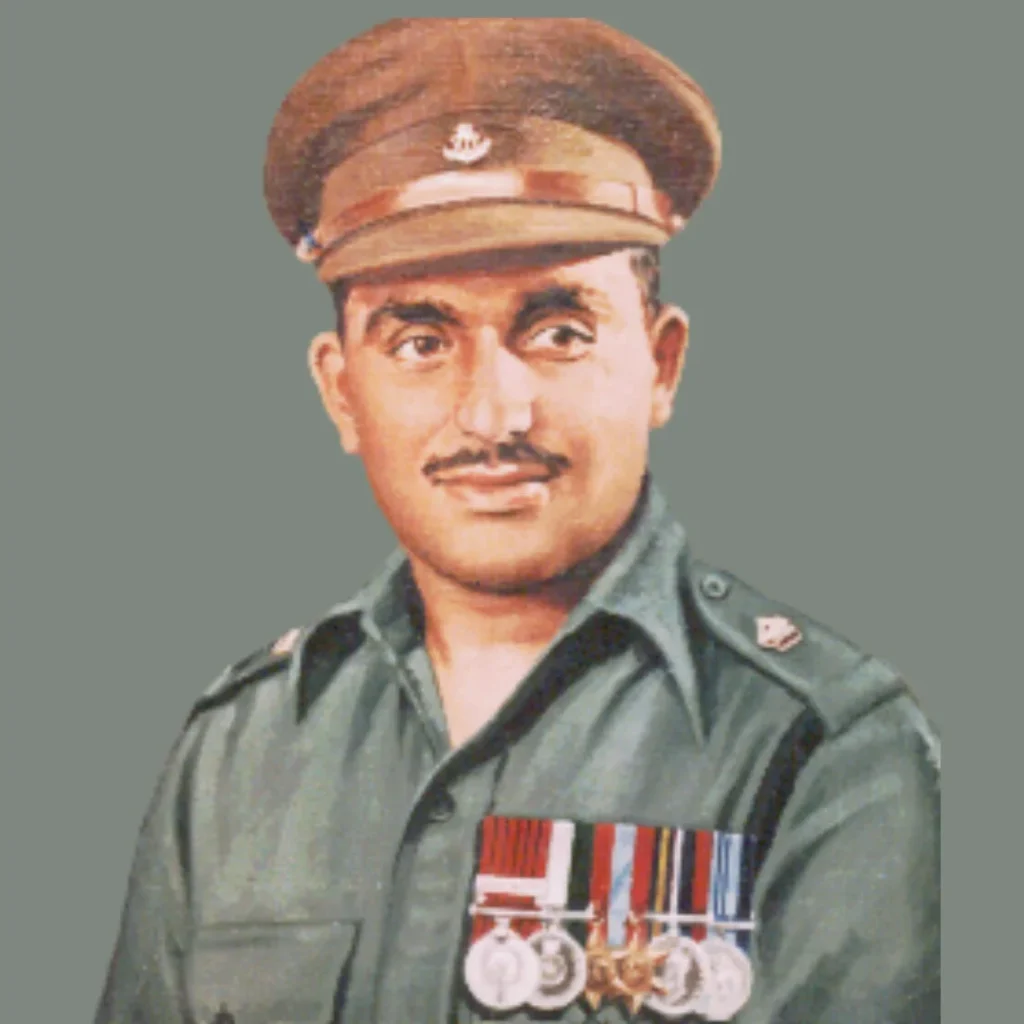
Major Somnath Sharma is remembered as one of the bravest soldiers in Indian military history. His extraordinary courage, exceptional leadership, and unwavering commitment to duty during the Battle of Badgam on 3 November 1947 played a decisive role in defending Srinagar when the future of Jammu and Kashmir was at a critical turning point. Despite suffering from a fractured left arm, he refused to remain behind and insisted on leading his men into combat.
For his unmatched bravery and supreme sacrifice, he became the first recipient of the Param Vir Chakra, India’s highest wartime gallantry award. His story continues to inspire generations of soldiers, students, and citizens, representing the highest ideals of patriotism, courage, and selfless service.
Major Somnath Sharma’s legacy extends beyond a single battle. His life reflects years of discipline, dedication, and professional excellence. From growing up in a distinguished military family to serving with honor during World War II and later making the ultimate sacrifice in the 1947 Indo-Pak War, every stage of his journey demonstrates remarkable character and determination.
This detailed biography explores his early life, family background, education, military career, heroic stand at Badgam, Param Vir Chakra award, leadership qualities, and the lasting impact he has left on the Indian Army and the nation.
Who Was Major Somnath Sharma?
Major Somnath Sharma was a distinguished officer of the 4th Battalion, Kumaon Regiment, and the first soldier to receive the Param Vir Chakra, India’s highest military decoration for extraordinary bravery in wartime.
He earned everlasting recognition during the 1947 Indo-Pak War, when Pakistan-backed tribal forces attempted to capture Srinagar soon after Jammu and Kashmir acceded to India. His company was assigned the vital responsibility of defending the strategic village of Badgam, where they faced an enemy force that greatly outnumbered them.
Although his left arm was in plaster because of a recent sports injury, Major Sharma refused to be relieved from operational duty. Throughout the fierce battle, he moved among his soldiers, encouraged them to fight, distributed ammunition, and maintained communication with headquarters despite relentless enemy fire.
His fearless leadership delayed the enemy advance long enough for Indian reinforcements to secure Srinagar Airfield, preventing the capture of the Kashmir Valley. His sacrifice became a defining moment in Indian military history and established him as one of the nation’s greatest war heroes.
Major Somnath Sharma Biography
| Particular | Details |
|---|---|
| Full Name | Major Somnath Sharma |
| Popular Name | Major Somnath Sharma PVC |
| Rank | Major |
| Regiment | Kumaon Regiment |
| Battalion | 4th Battalion (4 Kumaon) |
| Date of Birth | 31 January 1923 |
| Birthplace | Dadh Village, Kangra District (present-day Himachal Pradesh), India |
| Nationality | Indian |
| Religion | Hindu |
| Father | Major General Amar Nath Sharma |
| Mother | Saraswati Sharma |
| Education | Sherwood College, Nainital |
| Military Education | Prince of Wales Royal Indian Military College, Dehradun |
| Commissioned | 22 February 1942 |
| War Participation | World War II, 1947 Indo-Pak War |
| Famous Battle | Battle of Badgam |
| Date of Martyrdom | 3 November 1947 |
| Age at Death | 24 Years |
| Gallantry Award | Param Vir Chakra (Posthumous) |
| Known For | First Param Vir Chakra Recipient |
Major Somnath Sharma Full Name, Nickname & Rank
Major Somnath Sharma was officially known as Major Somnath Sharma, PVC. Although he was not popularly known by a specific nickname, fellow officers admired him for his calm nature, discipline, and outstanding leadership on and off the battlefield.
As an officer of the Kumaon Regiment, he steadily progressed through the ranks because of his professionalism, determination, and ability to lead by example. Rather than directing operations from a safe distance, he always believed in standing alongside his soldiers during difficult situations.
Holding the rank of Major during the early years of independent India carried immense responsibility. He fulfilled this responsibility with exceptional courage and became an enduring symbol of military excellence.
Major Somnath Sharma Date of Birth, Birthplace & Age
Major Somnath Sharma was born on 31 January 1923 in Dadh Village, located in the Kangra district of present-day Himachal Pradesh, India.
He grew up during a period of significant political and social change. Raised in a family deeply connected with the armed forces, he learned the importance of discipline, integrity, and service to the nation from an early age.
At the time of his martyrdom on 3 November 1947, he was only 24 years old. Despite his young age, he displayed extraordinary maturity, courage, and leadership that earned him a permanent place among India’s greatest military heroes.
Early Life and Childhood of Major Somnath Sharma
Major Somnath Sharma spent his early years in a disciplined military environment where patriotism and public service were considered the highest responsibilities. Growing up in such an atmosphere shaped his personality and inspired him to pursue a career in the armed forces.
From childhood, he showed a strong interest in sports, physical fitness, and outdoor activities. His teachers and friends regarded him as sincere, responsible, and courageous. These qualities gradually developed into the leadership skills that later defined his military career.
His family emphasized moral values, honesty, discipline, and respect for others. These principles remained with him throughout his life and influenced every decision he made as an army officer.
During his school years, he became known for his determination and competitive spirit. His participation in sports helped him develop physical endurance and mental resilience, qualities that proved invaluable during wartime. Even under the most challenging circumstances, he remained calm, confident, and committed to the mission, earning the trust and respect of everyone who served alongside him.
Major Somnath Sharma Family Background (Father, Mother, Brothers, Sisters)
Major Somnath Sharma was born into one of India’s most distinguished military families. His household was deeply rooted in the tradition of serving the nation, and this environment played a vital role in shaping his values, discipline, and commitment to duty. From an early age, he was surrounded by examples of courage, integrity, and selfless service, which inspired him to pursue a career in the armed forces.
His father, Major General Amar Nath Sharma, was a highly respected officer in the Indian Army and later served in senior leadership positions. Under his guidance, Somnath learned the importance of honesty, discipline, and responsibility. His mother, Saraswati Sharma, was known for her strong character and unwavering support for her family, encouraging her children to uphold moral values and national pride.
The Sharma family produced several members who went on to serve the country with distinction. His younger brother, General Vishwanath Sharma, later became the 14th Chief of the Army Staff of the Indian Army. Another brother also served in the armed forces, continuing the family’s remarkable military legacy. Their commitment to national service made the Sharma family one of the most respected military families in India.
The influence of his parents and siblings helped Major Somnath Sharma develop into a fearless officer who always placed duty above personal safety. His family’s tradition of military excellence remains an important part of his inspiring life story.
| Family Member | Details |
|---|---|
| Father | Major General Amar Nath Sharma |
| Mother | Saraswati Sharma |
| Brother | General Vishwanath Sharma (Former Chief of Army Staff) |
| Other Siblings | Members of the Sharma family also served in the armed forces |
| Family Background | Distinguished military family with generations of service |
Major Somnath Sharma Education & Qualification
Major Somnath Sharma received his early education in an environment that emphasized discipline, leadership, and academic excellence. His schooling helped build the strong character and confidence that later became defining qualities of his military career.
He studied at Sherwood College, Nainital, one of India’s most prestigious residential schools. During his time there, he excelled not only in academics but also in sports and extracurricular activities. His teachers recognized him as a disciplined, responsible, and determined student who consistently demonstrated leadership qualities among his classmates.
Life at Sherwood College encouraged physical fitness, teamwork, and moral responsibility. These experiences prepared him for the demanding challenges of military life. His interest in sports, particularly hockey and cricket, strengthened his endurance and competitive spirit, qualities that proved valuable on the battlefield.
After completing his school education, he joined the Prince of Wales Royal Indian Military College (now Rashtriya Indian Military College), Dehradun. The institution was known for producing future military leaders through rigorous academic and military-oriented training. Here, he developed a deeper understanding of military discipline, strategy, and leadership.
His educational journey laid the foundation for a successful military career. The combination of academic learning, physical training, and leadership development prepared him to become one of India’s most respected army officers.
| Qualification | Institution |
|---|---|
| School Education | Sherwood College, Nainital |
| Military Education | Prince of Wales Royal Indian Military College, Dehradun |
| Professional Training | Indian Army Officer Training |
Military Training of Major Somnath Sharma
Major Somnath Sharma underwent intensive military training that prepared him for the challenges of active service during one of the most turbulent periods in Indian history. His training focused on physical endurance, tactical planning, leadership, weapon handling, and battlefield decision-making.
After completing his military education, he received officer training before being commissioned into the British Indian Army on 22 February 1942. The rigorous training program emphasized discipline, courage, teamwork, and the ability to make quick decisions under pressure.
He quickly earned the respect of his instructors and fellow officers because of his professionalism, dedication, and calm approach to difficult situations. His willingness to learn and lead by example distinguished him from many of his contemporaries.
Military exercises exposed him to various combat scenarios, preparing him for real battlefield conditions. These experiences proved invaluable during World War II and later during the 1947 Indo-Pak War, where his tactical awareness and leadership became crucial to the success of his missions.
The confidence and competence he displayed throughout his military career were direct results of the rigorous training he received. His preparation enabled him to remain composed even while facing overwhelming enemy forces, ultimately making him one of the most celebrated officers in Indian military history.
Major Somnath Sharma Indian Army Career Journey
Major Somnath Sharma began his military career after receiving his commission on 22 February 1942 during the Second World War. He was posted to the 4th Battalion of the Kumaon Regiment, a regiment known for its discipline, courage, and distinguished service record.
In the early years of his career, he gained valuable combat experience while serving in the Arakan Campaign in Burma. Operating in difficult jungle terrain against experienced enemy forces taught him the importance of planning, teamwork, and decisive leadership. His performance during these operations earned the confidence of his senior officers and the respect of the soldiers under his command.
Following India’s independence in 1947, the newly formed Indian Army faced immediate security challenges. One of the most critical situations emerged in Jammu and Kashmir after armed tribal forces, supported from across the border, launched an invasion of the region. Major Sharma and his battalion were quickly deployed to defend strategic locations around Srinagar.
Even though he had suffered a fractured left arm during a sports activity shortly before deployment, he refused to remain behind. Believing that his men needed their commanding officer, he insisted on joining the operation despite medical advice to rest. This decision reflected his exceptional sense of duty and personal courage.
Throughout his career, Major Somnath Sharma demonstrated the qualities of an outstanding military leader. His professionalism, determination, and willingness to lead from the front earned him the admiration of both his superiors and fellow soldiers. His final mission at Badgam would ultimately immortalize his name in the history of the Indian Army.
World War II Service (Arakan Campaign)
Before becoming a national hero during the 1947 Indo-Pak War, Major Somnath Sharma had already gained valuable combat experience in the Second World War. Soon after receiving his commission in 1942, he was deployed to the Arakan Campaign in Burma (now Myanmar), one of the most challenging theatres of the war in Southeast Asia.
The Arakan region was known for its dense forests, steep hills, heavy rainfall, and extremely difficult supply routes. Soldiers had to fight not only enemy forces but also disease, exhaustion, and harsh weather conditions. Serving in such an environment demanded exceptional physical endurance, mental toughness, and disciplined leadership.
During these operations, Major Sharma displayed remarkable courage and professionalism. He learned how to command troops under intense pressure, make quick tactical decisions, and maintain the morale of his soldiers despite adverse conditions. His ability to remain calm in dangerous situations earned him the respect of both his senior officers and fellow soldiers.
The lessons he learned in Burma played a crucial role in shaping his leadership style. His battlefield experience during World War II prepared him for the even greater challenge that awaited him in Kashmir a few years later. The confidence, tactical awareness, and resilience he developed during the Arakan Campaign would ultimately help him lead his men with extraordinary bravery during the Battle of Badgam.
World War II Service Overview
| Particular | Details |
|---|---|
| Conflict | Second World War |
| Campaign | Arakan Campaign |
| Location | Burma (Present-day Myanmar) |
| Regiment | Kumaon Regiment |
| Role | Infantry Officer |
| Key Experience | Jungle warfare, leadership, tactical operations |
| Importance | Developed combat and command experience before the 1947 war |
Role in the 1947 Indo-Pak War
The partition of India in August 1947 created one of the most difficult periods in the country’s history. Soon after independence, Pakistan-backed tribal raiders entered the princely state of Jammu and Kashmir with the objective of capturing Srinagar before Indian forces could establish effective control.
After Maharaja Hari Singh signed the Instrument of Accession, the Indian Army was immediately airlifted to Srinagar to defend the region. Among the officers deployed during this critical operation was Major Somnath Sharma of the 4 Kumaon Regiment.
Despite having his left arm in plaster because of a recent sports injury, Major Sharma insisted on accompanying his company. He believed that a commander should never leave his soldiers during a mission, especially when the security of the nation depended upon their success. His determination reflected his unwavering commitment to duty and inspired everyone serving under him.
His company was assigned the responsibility of protecting the approaches to Srinagar by occupying defensive positions around the village of Badgam. The mission appeared to be a routine patrol at first, but it soon became one of the most decisive engagements of the war. The information gathered and the resistance offered by his troops proved vital in delaying the advancing enemy and allowing additional Indian forces to reinforce Srinagar.
Major Sharma’s leadership during these early operations demonstrated exceptional courage, tactical awareness, and an unwavering sense of responsibility. His actions directly contributed to preventing the enemy from reaching the strategically important Srinagar Airfield, ensuring that Indian reinforcements and supplies could continue arriving by air.
Major Somnath Sharma in the 1947 War
| Particular | Details |
|---|---|
| Conflict | Indo-Pak War of 1947–48 |
| Battalion | 4 Kumaon Regiment |
| Operational Area | Srinagar, Jammu & Kashmir |
| Key Objective | Defend approaches to Srinagar |
| Strategic Importance | Protect Srinagar Airfield and delay enemy advance |
| Condition During Battle | Left arm in plaster due to injury |
| Leadership Style | Led from the front despite injury |
Battle of Badgam (3 November 1947)
The Battle of Badgam, fought on 3 November 1947, remains one of the most significant battles in Indian military history. It was during this engagement that Major Somnath Sharma demonstrated unparalleled bravery and leadership, changing the course of the Kashmir conflict.
Major Sharma’s company was deployed near the village of Badgam to monitor enemy movement and prevent hostile forces from advancing toward Srinagar. Initially, the area appeared relatively quiet, but by the afternoon, thousands of Pakistan-backed tribal raiders began surrounding the Indian positions from multiple directions.
Outnumbered by several times, Major Sharma and his soldiers came under intense rifle, machine-gun, and mortar fire. Despite the overwhelming odds, he refused to withdraw. Instead, he moved fearlessly from one defensive position to another, encouraging his men, distributing ammunition with his uninjured hand, and ensuring that every soldier continued fighting with determination.
Throughout the battle, he remained in constant communication with headquarters, providing accurate information about enemy movements. His reports enabled Indian commanders to understand the scale of the attack and dispatch reinforcements to defend Srinagar.
As the fighting intensified, enemy forces closed in from every direction. Major Sharma repeatedly inspired his men to hold their ground, emphasizing that their mission was critical to the safety of Srinagar and the nation. His leadership transformed a small defensive force into a determined shield against a vastly superior enemy.
Eventually, an enemy mortar shell exploded near his position, killing him instantly along with several of his comrades. Even after his death, the resistance offered by his company had achieved its objective. The delay inflicted upon the advancing enemy allowed Indian reinforcements to secure Srinagar Airfield, preventing the capture of the Kashmir Valley.
Military historians widely regard the Battle of Badgam as one of the turning points of the 1947 Indo-Pak War. The courage displayed by Major Somnath Sharma and his men became an enduring example of sacrifice, leadership, and devotion to duty.
| Particular | Details |
|---|---|
| Date | 3 November 1947 |
| Location | Badgam (Budgam), Jammu & Kashmir |
| Indian Unit | D Company, 4 Kumaon Regiment |
| Commanding Officer | Major Somnath Sharma |
| Enemy | Pakistan-backed tribal raiders |
| Enemy Strength | Several hundred to over 700 attackers (estimated) |
| Indian Objective | Delay enemy advance towards Srinagar |
| Result | Indian strategic success; enemy advance delayed |
| Historical Significance | Helped secure Srinagar Airfield and protect the Kashmir Valley |
Major Somnath Sharma Final Radio Message
As the Battle of Badgam reached its most intense phase, Major Somnath Sharma remained in communication with headquarters while enemy forces continued closing in on his position. Despite suffering heavy casualties and being vastly outnumbered, he refused to abandon his mission or order a withdrawal.
Realizing the importance of holding the defensive line, he transmitted one of the most inspiring messages in Indian military history:
“The enemy are only 50 yards from us. We are heavily outnumbered. We are under devastating fire. I shall not withdraw an inch but will fight to the last man and the last round.”
These words perfectly reflected his courage, determination, and unwavering commitment to duty. The message was not only an update on the battlefield situation but also a declaration that the defense of Srinagar would continue regardless of the odds.
His final transmission has since become a symbol of supreme sacrifice and is frequently quoted in military academies, commemorative ceremonies, and discussions on leadership. It continues to inspire generations of Indian soldiers to place duty, honor, and the nation above personal safety.
Death and Supreme Sacrifice
The Battle of Badgam reached its most critical stage during the afternoon of 3 November 1947. Major Somnath Sharma and his company had been surrounded by a much larger enemy force that continued advancing from multiple directions. Even though casualties were increasing and ammunition was running low, he refused to abandon his position or retreat.
While moving between defensive posts, encouraging his soldiers and helping distribute ammunition with his uninjured hand, an enemy mortar shell exploded close to his position. The powerful blast claimed his life instantly along with several brave soldiers fighting beside him. He was only 24 years old, yet his leadership had already changed the course of the battle.
Although Major Sharma made the ultimate sacrifice, his mission was successful. The fierce resistance offered by his company delayed the enemy long enough for additional Indian troops to reach Srinagar and strengthen its defenses. Their determination prevented the capture of the strategically important Srinagar Airfield, ensuring that reinforcements, weapons, and supplies could continue arriving by air.
His sacrifice became one of the defining moments of the 1947 Indo-Pak War. Military historians widely agree that without the courage shown by Major Somnath Sharma and his men at Badgam, the outcome of the Kashmir campaign could have been very different. His supreme sacrifice remains one of the greatest examples of devotion to duty in the history of the Indian Army.
| Particular | Details |
|---|---|
| Date of Martyrdom | 3 November 1947 |
| Age | 24 Years |
| Place | Badgam (Budgam), Jammu & Kashmir |
| Cause | Mortar shell explosion during combat |
| Rank | Major |
| Battalion | 4 Kumaon Regiment |
| Legacy | One of India’s greatest war heroes |
Param Vir Chakra Award (First Recipient)
For displaying extraordinary courage, exceptional leadership, and complete disregard for his own safety, Major Somnath Sharma was awarded the Param Vir Chakra, India’s highest wartime gallantry award. The decoration was awarded posthumously, making him the first recipient in the history of independent India.
The Param Vir Chakra recognizes acts of the most conspicuous bravery or supreme sacrifice in the presence of the enemy. Major Sharma fulfilled these ideals in every respect. Despite carrying a fractured arm in plaster, he insisted on leading his company during one of the most dangerous operations of the war and continued fighting until his final moments.
His award citation praised his fearless leadership, determination under overwhelming enemy pressure, and refusal to withdraw despite impossible odds. His actions inspired his soldiers to continue resisting until reinforcements reached Srinagar, ultimately helping secure the Kashmir Valley.
More than just a military decoration, the Param Vir Chakra awarded to Major Somnath Sharma symbolizes courage, patriotism, and selfless service. His name continues to stand at the very beginning of the distinguished list of India’s highest wartime heroes.
| Particular | Details |
|---|---|
| Award | Param Vir Chakra (PVC) |
| Awarded | Posthumously |
| Position in History | First Recipient |
| Awarded For | Exceptional bravery during the Battle of Badgam |
| Date of Battle | 3 November 1947 |
| Significance | India’s highest wartime gallantry award |
Why He Is Called the Hero Who Saved Srinagar
Major Somnath Sharma is often remembered as “The Hero Who Saved Srinagar” because his actions during the Battle of Badgam played a decisive role in preventing enemy forces from capturing the city during the opening phase of the 1947 Indo-Pak War.
At the time, Srinagar Airfield was the only reliable route through which Indian troops and military supplies could reach the Kashmir Valley. If the enemy had captured the airfield, India’s ability to reinforce its forces would have been severely affected, potentially changing the outcome of the conflict.
By refusing to retreat and holding his defensive position against overwhelming enemy numbers, Major Sharma and his company delayed the advancing raiders for several crucial hours. This valuable time enabled additional Indian troops to land safely at Srinagar Airfield and strengthen the city’s defenses.
Military historians regard this delay as one of the most significant tactical achievements of the war. His courage not only protected Srinagar but also safeguarded the future of Jammu and Kashmir within the Indian Union.
For this reason, Major Somnath Sharma is remembered not simply as a gallantry award winner but as the officer whose leadership helped preserve one of the most strategically important regions of independent India.
Leadership Qualities
Major Somnath Sharma demonstrated leadership qualities that continue to be studied in military institutions across India. His ability to inspire confidence under extreme pressure and lead from the front made him an exceptional officer.
One of his greatest strengths was his unwavering sense of responsibility. Even though he had suffered a fractured arm, he believed that a commander should never abandon his soldiers during a difficult mission. This commitment earned the complete trust and respect of the men serving under him.
He also possessed remarkable courage and composure. Throughout the Battle of Badgam, he remained calm despite heavy enemy fire and overwhelming odds. Instead of focusing on his own safety, he concentrated on motivating his troops, coordinating defensive positions, and ensuring that ammunition reached the soldiers who needed it most.
Major Sharma was equally known for his integrity and selflessness. He placed the mission above personal comfort and consistently demonstrated that true leadership is built on service rather than authority. His actions proved that courage is not the absence of fear but the determination to do what is right despite danger.
These qualities have made him an enduring role model for officers, cadets, and young leaders across the country.
Leadership Traits
| Quality | Description |
|---|---|
| Courage | Continued fighting despite overwhelming enemy strength |
| Leadership | Led his men from the front throughout the battle |
| Selflessness | Placed duty above personal safety |
| Determination | Refused to retreat despite severe odds |
| Discipline | Maintained professionalism under intense pressure |
| Patriotism | Dedicated his life to protecting the nation |
Major Somnath Sharma Legacy and National Recognition
Major Somnath Sharma’s legacy extends far beyond the battlefield. More than seven decades after his martyrdom, he remains one of the most respected names in Indian military history and an enduring symbol of patriotism, sacrifice, and courage.
His story is taught in military academies, discussed in history classrooms, and remembered during national ceremonies honoring India’s fallen heroes. Young officers often study his actions at Badgam as an example of battlefield leadership, tactical decision-making, and unwavering commitment to duty.
The Indian Army continues to celebrate his contribution through commemorative events, regimental traditions, and educational programs that preserve the memory of his sacrifice. His Param Vir Chakra citation remains one of the finest examples of military valor in independent India.
For countless Indians, Major Somnath Sharma represents the ideals of honor, courage, and service before self. His life reminds every generation that the security and freedom of a nation are often protected through the extraordinary sacrifices of its soldiers.
Memorials, Museums and Statues
The memory of Major Somnath Sharma has been preserved through various memorials and commemorative sites across India. His name is prominently featured at the National War Memorial in New Delhi, where the nation’s fallen heroes are honored for their sacrifice and service.
The Kumaon Regiment proudly commemorates his achievements through regimental museums and historical displays that preserve artifacts, photographs, and records related to his distinguished military career. These exhibits help educate future generations of soldiers about his courage and leadership.
His name is also remembered at war memorials dedicated to the 1947–48 Jammu and Kashmir operations. Several educational institutions, roads, and public places have been named in his honor, reflecting the nation’s gratitude for his contribution.
Every year, military personnel, veterans, students, and citizens pay tribute to Major Somnath Sharma on the anniversary of the Battle of Badgam, ensuring that his sacrifice continues to inspire future generations.
Books and Films Based on Him
Major Somnath Sharma’s remarkable life has inspired numerous books, documentaries, and historical publications focusing on the early years of independent India and the 1947 Indo-Pak War. His story frequently appears in books dedicated to the recipients of the Param Vir Chakra and the history of the Indian Army.
Several military historians have written detailed accounts of the Battle of Badgam, highlighting his leadership and the strategic importance of his actions in protecting Srinagar. These works are widely used as reference material for students, researchers, and defense enthusiasts.
His bravery has also been portrayed in television documentaries and special programs produced around national commemorations such as Independence Day, Republic Day, and Vijay Diwas. These productions help introduce younger audiences to one of India’s greatest military heroes.
Although many documentaries and historical series have featured his story, his legacy continues to inspire calls for more dedicated films and biographical works that showcase his extraordinary contribution to the nation.
Interesting Facts About Major Somnath Sharma
- Major Somnath Sharma was the first recipient of the Param Vir Chakra, India’s highest wartime gallantry award.
- He fought the Battle of Badgam with his left arm in plaster after suffering a sports injury but refused to stay away from the battlefield.
- Before the 1947 Indo-Pak War, he served in the Arakan Campaign during World War II, gaining valuable combat experience.
- His courageous stand at Badgam delayed the enemy advance and helped protect Srinagar Airfield, playing a crucial role in saving the Kashmir Valley.
- He belonged to a distinguished military family; his father was Major General Amar Nath Sharma, and his younger brother, General Vishwanath Sharma, later became the Chief of the Army Staff.
- His famous final radio message, declaring that he would “not withdraw an inch”, remains one of the most inspiring statements in Indian military history.
- Major Somnath Sharma attained martyrdom at the age of 24, and his sacrifice continues to inspire generations of Indian soldiers and citizens.
Timeline of Major Somnath Sharma’s Life
| Year / Date | Event |
|---|---|
| 31 January 1923 | Born in Dadh Village, Kangra District |
| Childhood | Raised in a distinguished military family |
| School Years | Studied at Sherwood College, Nainital |
| Military Education | Joined Prince of Wales Royal Indian Military College |
| 22 February 1942 | Commissioned into the British Indian Army |
| 1942–1945 | Served in the Arakan Campaign during World War II |
| 1947 | Deployed to defend Jammu and Kashmir |
| 3 November 1947 | Led D Company during the Battle of Badgam |
| 3 November 1947 | Attained martyrdom while defending Srinagar |
| Posthumously | Awarded the first Param Vir Chakra |
Quotes
“The enemy are only 50 yards from us. We are heavily outnumbered. We are under devastating fire. I shall not withdraw an inch but will fight to the last man and the last round.”
This final battlefield message has become one of the most powerful examples of courage and determination in Indian military history.
“Duty comes before self.”
Although often associated with the values he lived by rather than a documented quotation, this phrase perfectly reflects Major Somnath Sharma’s character and lifelong commitment to the nation.
Conclusion
Major Somnath Sharma’s life is a timeless example of courage, honor, and unwavering patriotism. His fearless leadership during the Battle of Badgam not only changed the course of the 1947 Indo-Pak War but also secured a place for him among the greatest military heroes of independent India.
His willingness to fight despite serious injury, his determination to protect his soldiers, and his refusal to retreat under impossible circumstances continue to inspire generations of Indians. As the first recipient of the Param Vir Chakra, he established a standard of bravery that remains unmatched.
More than seventy years after his supreme sacrifice, Major Somnath Sharma’s legacy lives on through the Indian Army, national memorials, military history, and the countless people who draw inspiration from his extraordinary life. His story is a powerful reminder that true heroes are remembered not for the length of their lives but for the greatness of their actions.
FAQs
Who was Major Somnath Sharma?
Major Somnath Sharma was an Indian Army officer of the 4th Battalion, Kumaon Regiment, and the first recipient of the Param Vir Chakra for his exceptional bravery during the Battle of Badgam in 1947.
Why is Major Somnath Sharma famous?
He is famous for defending Badgam against overwhelming enemy forces and helping protect Srinagar during the 1947 Indo-Pak War.
When was Major Somnath Sharma born?
He was born on 31 January 1923 in Dadh Village, Kangra District, present-day Himachal Pradesh.
Which regiment did Major Somnath Sharma belong to?
He served in the 4th Battalion of the Kumaon Regiment.
What was Major Somnath Sharma’s final radio message?
His famous message declared that although his company was heavily outnumbered, he would not withdraw and would fight to the last man and the last round.
Why did Major Somnath Sharma receive the Param Vir Chakra?
He received the Param Vir Chakra posthumously for displaying extraordinary courage and leadership during the Battle of Badgam on 3 November 1947.
How old was Major Somnath Sharma when he died?
He was 24 years old at the time of his martyrdom.
Why is he called the Hero Who Saved Srinagar?
His company’s resistance delayed the enemy advance long enough for Indian reinforcements to secure Srinagar Airfield, preventing the fall of the city and safeguarding the Kashmir Valley.
Also, Read About: Major Anuj Sood || Major Mukund Varadarajan || Major Gaurav Chaudhar