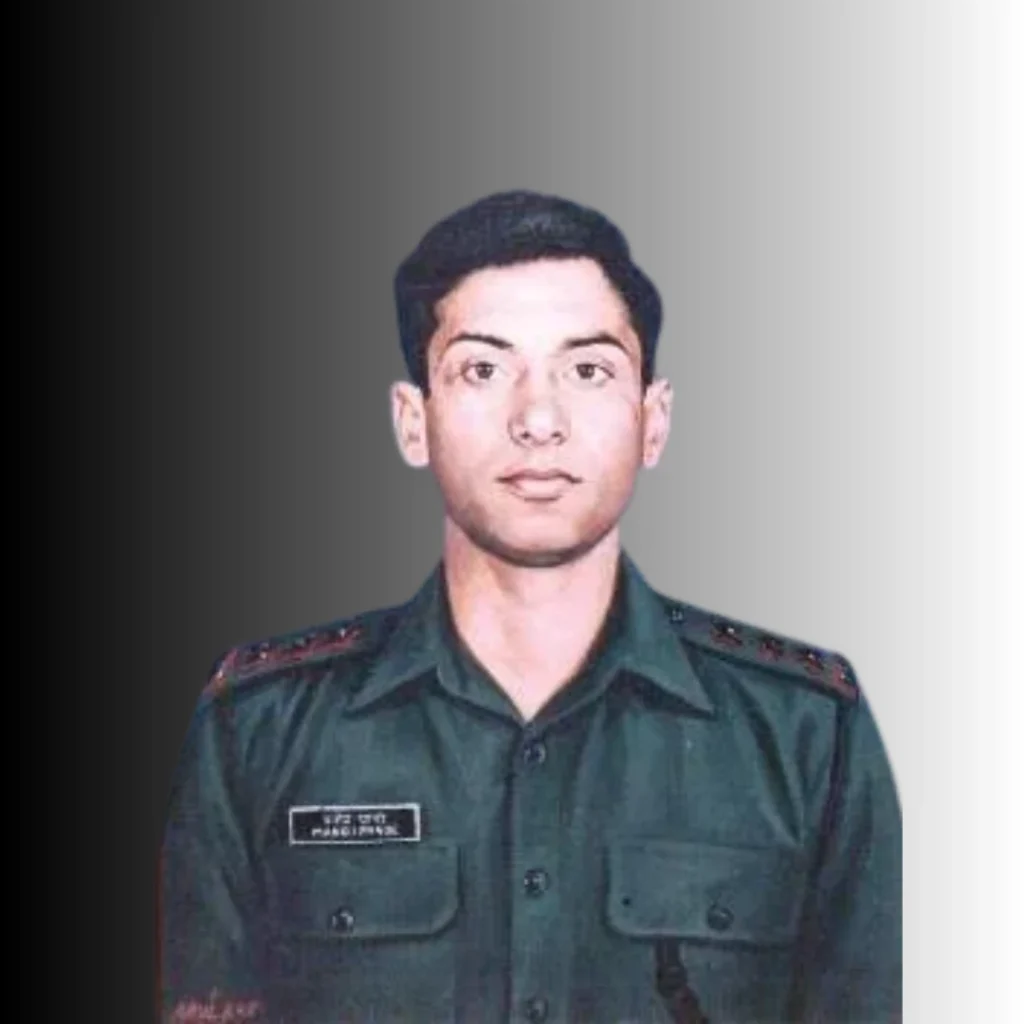
Captain Manoj Kumar Pandey was one of India’s most courageous Army officers, remembered for his extraordinary bravery during the Kargil War of 1999. He served in the 1/11 Gorkha Rifles and made the supreme sacrifice while leading his soldiers in the battle to capture Khalubar Ridge in the Batalik sector. His determination, leadership and commitment to his mission made him an enduring symbol of courage in Indian military history.
Born on 25 June 1975 in Uttar Pradesh, Manoj Pandey grew up with a strong desire to join the Indian Army. His journey from school in Lucknow to the National Defence Academy and, later, the battlefields of Kargil reflects years of preparation, discipline and dedication. He was only 24 years old when he laid down his life for the country.
For his exceptional courage during Operation Vijay, Captain Manoj Kumar Pandey was awarded the Param Vir Chakra posthumously, India’s highest wartime gallantry award. His story is not only about a soldier’s sacrifice but also about leadership under pressure, loyalty to fellow soldiers and the determination to fulfil a difficult mission.
Who Is Captain Manoj Kumar Pandey?
Captain Manoj Kumar Pandey was an officer of the Indian Army who served with the 1st Battalion of the 11 Gorkha Rifles. He became widely known for his actions during the Kargil War, particularly the operation to capture enemy positions around Khalubar Ridge in July 1999.
His leadership during a dangerous mountain assault earned him the Param Vir Chakra after his death. Today, his name is associated with courage, duty, sacrifice and the military tradition of placing the mission and the welfare of fellow soldiers above personal safety.
Captain Manoj Kumar Pandey Biography Overview
| Biography Detail | Information |
|---|---|
| Full Name | Manoj Kumar Pandey |
| Rank | Captain |
| Popular Name | Captain Manoj Pandey |
| Date of Birth | 25 June 1975 |
| Birthplace | Rudha village, Sitapur district, Uttar Pradesh, India |
| Nationality | Indian |
| Father | Gopi Chand Pandey |
| Mother | Mohini Pandey |
| Schooling | Schools in Lucknow, including UP Sainik School |
| Military Education | National Defence Academy and Indian Military Academy |
| Regiment | 1/11 Gorkha Rifles |
| War | Kargil War, 1999 |
| Operation | Operation Vijay |
| Major Battle | Khalubar Ridge, Batalik sector |
| Date of Martyrdom | 3 July 1999 |
| Age at Martyrdom | 24 years |
| Highest Gallantry Award | Param Vir Chakra, posthumously |
| Known For | Courageous leadership during the Kargil War |
Captain Manoj Kumar Pandey Age, Birth Date and Birthplace
Captain Manoj Kumar Pandey was born on 25 June 1975 in Rudha village in Sitapur district, Uttar Pradesh. He later pursued his education in Lucknow, where his interest in military service developed into a clear career ambition. His early years were shaped by family values, education, sports and a strong sense of responsibility.
He died on 3 July 1999 during the Kargil War, aged 24. Although his military career was brief, his actions during the battle for Khalubar Ridge became an important part of India’s modern military history. His sacrifice continues to be remembered as an example of courage and devotion to duty.
Captain Manoj Kumar Pandey Height and Physical Appearance
| Physical Detail | Information |
|---|---|
| Height | Not reliably documented |
| Weight | Not reliably documented |
| Eye Colour | No verified public record available |
| Hair Colour | No verified public record available |
| Fitness Interests | Boxing and bodybuilding |
| Other Sports Interests | Hockey, swimming and athletics |
| Profession | Indian Army officer |
Captain Manoj Kumar Pandey Family Background
Captain Manoj Pandey belonged to a family from Rudha village in Uttar Pradesh. His father, Gopi Chand Pandey, and mother, Mohini Pandey, played important roles in his upbringing. His father’s recollections describe Manoj as an affectionate son who remained aware of the family’s circumstances and shared a close bond with relatives.
Family members remembered him for his cheerful personality, sense of responsibility and interest in learning. His upbringing provided the foundation for the discipline and determination that later became visible during his military service.
Father, Mother, Brother and Sister
| Family Member | Name or Detail |
|---|---|
| Father | Gopi Chand Pandey |
| Mother | Mohini Pandey |
| Brothers | Mohit Pandey and Manmohan Pandey |
| Sister | Pratibha Pandey |
| Family’s Native Place | Rudha village, Sitapur district, Uttar Pradesh |
| Family’s Connection with Lucknow | Manoj pursued his schooling in Lucknow, and his father was associated with the city |
Captain Manoj Kumar Pandey Early Life and Childhood
Manoj Pandey’s childhood combined academic ambition, sports and a growing interest in the armed forces. He was known in family accounts as an affectionate child who enjoyed being around relatives and maintained a cheerful disposition. He also showed curiosity about different subjects and interests beyond his regular schoolwork.
His father recalled that Manoj understood the family’s financial circumstances and sometimes helped with the family business. This account offers a glimpse of his sense of responsibility at a young age. Rather than treating military service as a sudden decision, his life story suggests that discipline, ambition and concern for others developed over time.
Captain Manoj Kumar Pandey School Education in Lucknow
Lucknow played a significant role in Captain Manoj Pandey’s formative years. His education there gave him opportunities to develop academically, participate in sports and prepare for the competitive selection process required to enter the National Defence Academy.
Two institutions commonly associated with his school years are Rani Laxmi Bai School and Uttar Pradesh Sainik School. The latter has since been renamed in his honour, reflecting the lasting connection between the decorated officer and the institution that helped shape his ambitions.
Rani Laxmi Bai School and UP Sainik School
Biographical accounts describe Manoj Pandey as having studied at Rani Laxmi Bai School before attending Uttar Pradesh Sainik School in Lucknow. His education brought together classroom learning, physical activities and the disciplined environment associated with preparing students for a future in the armed forces.
Uttar Pradesh Sainik School was established to encourage students to pursue careers in the Armed Forces. Manoj’s later achievement as a Param Vir Chakra awardee gave the institution a particularly strong association with military courage and service. In July 2017, the school was renamed Captain Manoj Kumar Pandey Uttar Pradesh Sainik School.
Academic Performance and Scholarships
Accounts based on his father’s recollections describe Manoj as a capable student who earned recognition for his academic performance. His father also stated that scholarships helped support his education, reducing the financial pressure on the family.
One account recalls that he performed well in his Class 10 examinations despite being seriously ill around that period. While detailed mark sheets and a complete academic record are not widely available, these recollections portray a student who remained committed to his studies even when circumstances were difficult.
Sports, Hockey, Swimming and Athletics
Sports were an important part of Manoj Pandey’s school life. Biographical accounts mention hockey, swimming and athletics among his interests, while boxing and bodybuilding are also frequently associated with him. These activities encouraged physical fitness, coordination, persistence and the ability to work toward a goal.
For a future Army officer, sporting experience could also help develop qualities such as teamwork and resilience. Although sports alone cannot explain his battlefield performance, they formed a meaningful part of the preparation and personality described by people who knew him.
NCC and Best Cadet Recognition
The National Cadet Corps provides young people with opportunities to develop discipline, leadership, teamwork and an understanding of military life. Accounts of Manoj Pandey’s early achievements state that he was recognised as a Best Cadet in the NCC’s junior division in the Uttar Pradesh directorate in 1990.
This recognition is an important detail in his biography because it reflects an early connection with organised military-style training. It also preceded his later selection for the National Defence Academy and commissioning into the Indian Army.
Childhood Dream of Joining the Indian Army
Manoj Pandey wanted to join the Indian Army from a young age. His ambition was more than a general interest in a uniform or a military career; his family’s recollections describe it as a goal he pursued seriously through education and preparation.
His selection for the National Defence Academy marked a major step toward fulfilling that ambition. His subsequent training and service in the Gorkha Rifles placed him in the professional environment he had worked toward since his school years.
Inspiration Behind Joining the Army
The available biographical accounts connect his decision to join the Army with personal ambition, family values and an attraction to the infantry. One frequently repeated story describes him expressing a desire to earn the Param Vir Chakra during his Services Selection Board interview. This anecdote is widely associated with his life, but it is best treated as a reported recollection rather than a verified transcript of the interview.
What is firmly established is that he went on to demonstrate extraordinary courage during the Kargil War and received the award posthumously. His life therefore became linked with the ambition and determination described in those accounts.
Captain Manoj Kumar Pandey National Defence Academy (NDA) Training
The National Defence Academy in Khadakwasla, near Pune, trains cadets for commissioned service in the Indian Armed Forces. Admission and training require academic preparation, physical fitness, discipline and the ability to work within a structured military environment.
For Manoj Pandey, the NDA was a decisive stage in his journey from school student to officer cadet. It gave him the professional foundation required before his further training at the Indian Military Academy in Dehradun.
90th NDA Course and Mike Squadron
Biographical accounts identify Manoj Pandey as a member of the NDA’s 90th course and Mike Squadron. Squadron life forms an important part of the academy experience, encouraging cadets to develop teamwork, leadership, physical fitness and pride in their unit.
He completed his NDA training in 1996. This achievement brought him closer to his long-held goal of serving in the Indian Army and prepared him for the next stage of officer training.
Indian Military Academy (IMA), Dehradun
After the NDA, Manoj Pandey continued his military training at the Indian Military Academy in Dehradun. The IMA prepares officer cadets for the responsibilities of leadership, tactical decision-making, physical endurance and service under demanding conditions.
This phase of training was especially important for a future infantry officer. Infantry leadership can require officers to make decisions in rapidly changing situations while maintaining communication, coordination and confidence among their soldiers.
Commissioning into the Indian Army
Manoj Pandey was commissioned into the Indian Army on 7 June 1997, according to commonly published biographical records. He joined the 1st Battalion of the 11 Gorkha Rifles, generally written as 1/11 Gorkha Rifles. His commissioning marked the transition from training to professional service as a commissioned officer.
1/11 Gorkha Rifles Regiment
The 11 Gorkha Rifles is an infantry regiment of the Indian Army. Manoj Pandey served with its 1st Battalion, where his responsibilities involved leading soldiers and carrying out military tasks under operational conditions.
Infantry officers must understand terrain, coordinate movement, maintain discipline and make decisions while exposed to risk. His service in this regiment placed him in the kind of demanding environment in which those skills would later be tested during Operation Vijay.
First Posting in Kashmir Valley
Biographical accounts state that Manoj Pandey’s early service included a posting in the Kashmir Valley. Such a posting provided experience in a challenging operational environment and introduced him to the responsibilities of serving in an active field area.
For a young officer, early postings can be an important stage in learning how to apply academy training to real military duties. They also demand close coordination with experienced soldiers and fellow officers.
Service in the Siachen Glacier
Some accounts state that Manoj Pandey subsequently served in the Siachen Glacier region. Siachen presents severe environmental challenges, including extreme cold, high altitude, difficult movement and the need for careful survival procedures.
His father’s recollections describe Manoj sharing experiences of the glacier and the difficulties faced by soldiers operating there. These accounts emphasise the physical demands of military service in high-altitude areas, where the environment itself can be a major challenge.
Military Skills, Leadership and Discipline
An infantry officer’s role involves more than personal bravery. It requires planning, an understanding of terrain, clear communication, tactical judgement and the ability to keep soldiers focused when conditions become dangerous.
Captain Manoj Pandey’s actions at Khalubar Ridge demonstrated several of these qualities. He moved his platoon toward an advantageous position, directed part of the force to approach from one side and led the advance from another. His conduct during the assault showed the importance of initiative and personal leadership under pressure.
Early Military Operations Before the Kargil War
Before the final battle at Khalubar Ridge, Manoj Pandey participated in operations in the Batalik sector during Operation Vijay. Biographical accounts also associate him with the capture of Jubar Top, a strategically important position in the region.
These earlier actions formed part of the wider effort to dislodge intruding forces from mountain positions. They also placed his unit in the operational sequence that led to the advance toward Khalubar Ridge in early July 1999.
Kargil War 1999: Overview
The Kargil War of 1999 was fought between India and Pakistan after Indian forces discovered that Pakistani soldiers and armed intruders had occupied positions on the Indian side of the Line of Control in the Kargil region. Many of these positions were located on high mountain ridges overlooking important routes and areas of military movement.
India launched Operation Vijay to remove the intruders and regain control of the occupied positions. The operation required soldiers to attack enemy-held heights in difficult terrain, often under intense fire and in harsh weather conditions. Captain Manoj Kumar Pandey’s service in the Batalik sector became one of the memorable stories of courage from this conflict.
Captain Manoj Pandey’s Role in Operation Vijay
During Operation Vijay, Manoj Pandey’s unit took part in attacks intended to clear enemy positions and secure strategically important ground. His role involved leading soldiers through dangerous terrain and helping his formation advance toward its objectives.
His actions at Khalubar Ridge became particularly significant because enemy positions were obstructing the advance. His continued leadership during the assault helped create the conditions for other Indian soldiers to capture the post.
Deployment in the Batalik Sector
The Batalik sector was one of the important areas of fighting during the Kargil conflict. Its mountainous terrain gave forces occupying the heights a considerable tactical advantage, making the task of dislodging them particularly difficult.
Manoj Pandey’s battalion operated in this sector during the campaign. The task involved moving across exposed slopes and narrow ridges while dealing with enemy fire from elevated positions. Success depended on coordinated movement, tactical judgement and the determination to continue despite serious risks.
Strategic Importance of Jubar Top
Jubar Top was one of the strategically important positions associated with the operations in the Batalik sector. Control of elevated ground could influence movement through the surrounding area and provide a better position from which to observe or defend nearby approaches.
Biographical accounts credit Manoj Pandey and his men with playing a leading role in capturing Jubar Top during the Kargil operations. The action formed part of the larger effort to regain control of enemy-held heights and advance toward further objectives.
Capture of Jubar Top
The operation to capture Jubar Top required soldiers to move against positions protected by the natural advantages of the mountains. Attacking troops faced the challenge of approaching the objective while exposed to observation and fire from higher ground.
Manoj Pandey’s leadership during operations in this area helped establish his reputation as an officer willing to take responsibility at the front. The wider campaign then continued toward Khalubar Ridge, where his actions would become the defining event of his military career.
Mission to Capture Khalubar Ridge
Khalubar Ridge was an important objective in the Batalik sector. Enemy positions around the ridge threatened the progress of Indian forces, and the terrain made a direct advance dangerous. The soldiers had to approach through narrow mountain routes while facing intense fire from surrounding heights.
Manoj Pandey was tasked with clearing enemy positions that were interfering with the advance. His platoon needed to overcome these obstacles so that the larger formation could continue its movement without remaining exposed in a vulnerable position.
Battle of Khalubar Ridge on 2–3 July 1999
The decisive assault associated with Manoj Pandey took place during the night of 2–3 July 1999. As his platoon approached its objective, it came under heavy enemy fire from the surrounding heights. The attack was stalled, and the enemy positions had to be cleared before the advance could continue.
Rather than remaining behind his men, Manoj Pandey moved forward and led the assault. He attacked the enemy positions one after another, helping his soldiers overcome the defensive obstacles. During the battle, he killed enemy personnel, destroyed bunkers and continued directing the attack despite his wounds.
Captain Manoj Pandey’s Battle Strategy
Manoj Pandey quickly assessed the situation and moved his platoon to an advantageous position under heavy fire. He sent one section to clear enemy positions from the right while he personally led the advance from the left.
This approach divided the assault into coordinated elements rather than leaving the entire platoon dependent on a single direction of attack. By taking the lead himself, he also helped maintain momentum when enemy fire threatened to halt the advance. His actions demonstrated tactical initiative and personal leadership under pressure.
Enemy Bunkers and Fierce Fighting
The enemy positions on Khalubar Ridge were protected by bunkers and the natural advantages of the mountainous terrain. Each position had to be cleared before the Indian troops could continue toward their final objective. The combination of steep ground, limited approaches and heavy fire made the assault extremely dangerous.
During the fighting, Manoj Pandey attacked enemy positions, killed four enemy personnel and destroyed two bunkers. His actions helped remove obstacles that were preventing the advance and provided a base from which other companies could ultimately capture the post.
Injuries Sustained During the Battle
During the assault, Manoj Pandey sustained serious injuries to his shoulder and legs. These wounds came while he was clearing enemy positions and leading his soldiers forward. Despite the injuries, he continued to take part in the attack rather than withdrawing from the mission.
He later received a fatal burst of fire to his forehead during the final phase of the assault. His injuries proved fatal, but his actions had already helped his men make progress against the enemy positions.
His Leadership Despite Being Wounded
One of the most significant aspects of Manoj Pandey’s actions was his decision to continue leading the assault after being wounded. In a battle where the enemy’s defensive positions threatened to stop the advance, his example helped sustain the attack.
Leadership in combat is not simply about giving orders. It also involves maintaining the confidence of soldiers when a situation becomes uncertain or dangerous. His conduct during the Khalubar Ridge operation demonstrated the kind of personal commitment that the Indian Army’s highest gallantry award recognises.
Final Assault and Supreme Sacrifice
Manoj Pandey continued advancing toward the remaining enemy positions despite his serious injuries. During the final phase of the assault, he attacked the remaining position and destroyed a bunker with a grenade before receiving the fatal injury.
He succumbed to his wounds on 3 July 1999. His men, inspired by his courage, continued the assault and ultimately captured the post. His sacrifice therefore became inseparable from the success of the operation at Khalubar Ridge.
Captain Manoj Pandey’s Last Words
The words “Na chodnu,” commonly translated as “Do not spare them” or “Do not let them go,” are widely attributed to Manoj Pandey during his final battle. They appear in biographical accounts describing the Khalubar Ridge assault.
The phrase is best understood as a widely reported account rather than a quotation confirmed in every official military record. It has nevertheless become closely associated with his story because it reflects the determination attributed to him during the final assault.
Why Captain Manoj Pandey Received the Param Vir Chakra
The Param Vir Chakra is India’s highest military decoration for conspicuous bravery in the presence of the enemy. It recognises exceptional courage, self-sacrifice and devotion to duty during wartime operations.
Manoj Pandey received this award posthumously for his actions during the operation to clear Khalubar Ridge on 3 July 1999. His conduct under intense enemy fire, his destruction of enemy positions and his continued leadership after being wounded formed the central reasons for the honour.
Param Vir Chakra Citation and Gallantry
The official gallantry account describes an officer who advanced against enemy positions under heavy fire, killed enemy personnel, destroyed bunkers and continued leading his men despite serious wounds. His actions helped establish the base from which other Indian companies ultimately captured the post.
The award recognised both his personal courage and the military importance of his leadership. His conduct reflected the highest traditions of the Indian Army, where officers are expected to lead by example and remain committed to their mission even in the most difficult circumstances.
Posthumous Award and Family’s Role
The Param Vir Chakra was awarded to Manoj Pandey after his death. His father, Gopi Chand Pandey, received the award from the President of India on 15 August 1999.
The posthumous honour recognised Manoj Pandey’s extraordinary courage during the Kargil War. For his family, the award represented national recognition of his sacrifice, while for the country it became a lasting reminder of the price paid by soldiers during the conflict.
Captain Manoj Pandey’s Achievements and Honours
Although his service lasted only a few years, Manoj Pandey’s achievements remain significant in India’s military history. His most important recognition was the Param Vir Chakra, awarded for his actions at Khalubar Ridge. He is also remembered through educational institutions and military memorials that preserve his name and story.
| Achievement or Honour | Details |
|---|---|
| Military Commission | Joined the Indian Army in June 1997 |
| Regiment | 1/11 Gorkha Rifles |
| Major Campaign | Operation Vijay, 1999 |
| Notable Operations | Jubar Top and Khalubar Ridge |
| Highest Gallantry Award | Param Vir Chakra, posthumously |
| Educational Recognition | UP Sainik School renamed in his honour |
| NDA Recognition | Manoj Pandey Block |
| Residential Memorial | Manoj Vihar, Ghaziabad |
Memorials Built in His Honour
Captain Manoj Pandey’s memory is preserved through institutions and memorials that connect his story with future generations. These tributes recognise his service and sacrifice while reminding students, cadets and visitors of the responsibilities associated with national service.
His name is particularly associated with the National Defence Academy and Uttar Pradesh Sainik School in Lucknow. His legacy also lives on through accounts of the Kargil War and the official recognition of his bravery.
Manoj Pandey Block at NDA
The National Defence Academy named a science block the Manoj Pandey Block in his honour, according to biographical accounts. The association is especially meaningful because the NDA was a major stage in his journey toward becoming an Army officer.
The name connects his memory with the institution where young cadets prepare for service in the armed forces. For future officers, his story offers a reminder that military leadership requires knowledge, discipline, sound judgement and the willingness to accept responsibility.
Captain Manoj Pandey Chowk and Other Memorials
Several places and institutions have been associated with Manoj Pandey’s memory. These include public memorials bearing his name and the Manoj Vihar residential complex in Ghaziabad, which was developed for military veterans by the Army Welfare Housing Organisation.
His most prominent educational legacy is the Uttar Pradesh Sainik School in Lucknow, which was renamed Captain Manoj Kumar Pandey Uttar Pradesh Sainik School in July 2017. The institution continues to connect his name with the preparation of young people for leadership and service.
His Legacy in the Indian Army
Within the context of the Kargil War, Manoj Pandey is remembered for taking the lead when his platoon encountered intense enemy fire. His conduct at Khalubar Ridge illustrates the importance of personal example in combat, especially when soldiers must continue advancing against strongly defended positions.
His legacy is not limited to the medal he received. It also lies in the story of how he assessed the situation, organised his men and continued the mission despite serious injuries. Those actions remain a powerful example of the values associated with military service.
Captain Manoj Pandey’s Relationship with His Family
Family accounts describe Manoj Pandey as affectionate toward his parents, grandparents and other relatives. He was remembered as a cheerful young man who maintained close relationships with family members even while pursuing a demanding career goal.
His family also remembered his awareness of their financial circumstances. His father’s recollections describe him as willing to help when the family business faced difficulties, reflecting a sense of responsibility that began before his military career.
His Father’s Memories and Statements
Gopi Chand Pandey’s recollections offer a personal view of Manoj beyond the battlefield. He described his son as someone with a strong desire to join the Army, a serious approach to education and an affectionate nature toward family members.
His father also recalled Manoj’s academic efforts and the support provided by scholarships. These memories help explain the personal side of a man who is often remembered primarily for his final battle. They show a young person whose military ambition developed alongside family responsibilities and everyday experiences.
Captain Manoj Pandey’s Personal Diary and Famous Quote
A quotation commonly attributed to Manoj Pandey’s personal diary is:
“Some goals are so worthy, it’s glorious even to fail.”
The line is often shared because it expresses the idea that some objectives are worth pursuing even when success is uncertain. It is associated with his determination and the ambition he carried throughout his life.
The quotation is commonly presented as a diary entry rather than a statement from his military award citation. Its continuing popularity reflects how people connect his life with perseverance, duty and the willingness to face difficult challenges.
His Personality, Courage and Patriotism
Descriptions of Manoj Pandey portray him as cheerful, physically active, curious and determined. His interests included several sports, and his education and military training required sustained discipline. Family recollections also describe a young man who cared about his relatives and remained conscious of the sacrifices required to achieve his ambitions.
His courage became most visible during the Khalubar Ridge operation, but the qualities behind that action had developed over years of preparation. His story shows how personal discipline, professional training and commitment to others can come together in moments of extreme pressure.
Lessons We Can Learn from His Life
Captain Manoj Pandey’s life offers several lessons that are relevant to students, professionals and anyone working toward a difficult goal.
- Set clear goals: He pursued his ambition to join the Indian Army through education and training.
- Build discipline: Academic preparation, sports and military training all required consistent effort.
- Take responsibility: Family recollections describe his awareness of the difficulties faced by those around him.
- Lead by example: At Khalubar Ridge, he personally led the assault rather than relying only on orders.
- Remain committed under pressure: He continued the mission after sustaining serious injuries.
- Value teamwork: His actions supported a wider military objective that required coordinated effort.
- Serve with integrity: His career remains associated with duty, courage and commitment to the country.
These lessons should not reduce his sacrifice to a simple motivational story. His actions took place in the realities of war, where courage involved serious risks and irreversible consequences.
Captain Manoj Pandey’s Contribution to India’s Military History
Captain Manoj Pandey’s role in the Kargil War forms part of the wider history of Operation Vijay. His actions during the assault on Khalubar Ridge helped Indian forces overcome enemy positions that were obstructing their advance.
His gallantry is remembered through the concrete military actions associated with the battle: he attacked enemy positions, destroyed bunkers and continued leading his men after being wounded. These details explain why his story occupies a lasting place in the history of Indian military bravery.
His legacy is also carried forward through the institutions that bear his name and the continued remembrance of Kargil War personnel. For military cadets and civilians alike, his story provides a historical example of leadership and sacrifice during one of India’s most challenging mountain campaigns.
Conclusion
Captain Manoj Kumar Pandey’s biography is the story of a young man who pursued his ambition of joining the Indian Army and ultimately became one of the most recognised heroes of the Kargil War. From his childhood in Uttar Pradesh and education in Lucknow to his training at the National Defence Academy and service in the 1/11 Gorkha Rifles, his journey was shaped by discipline, determination and commitment.
His actions during the battle for Khalubar Ridge on 3 July 1999 demonstrated extraordinary courage. Despite serious injuries, he continued to lead his soldiers against enemy positions and made the supreme sacrifice. The Param Vir Chakra awarded to him posthumously recognised those actions and ensured that his bravery would remain part of India’s military history.
Today, Captain Manoj Pandey is remembered not only for how he died but also for the ambition, preparation and leadership that shaped his life. His story continues to inspire people to approach their responsibilities with courage, discipline and a sense of purpose.
FAQs
Who was Captain Manoj Kumar Pandey?
Captain Manoj Kumar Pandey was an Indian Army officer of the 1/11 Gorkha Rifles who received the Param Vir Chakra posthumously for his bravery during the Kargil War of 1999.
When was Captain Manoj Kumar Pandey born?
He was born on 25 June 1975 in Rudha village, Sitapur district, Uttar Pradesh.
How old was Captain Manoj Pandey when he died?
He was 24 years old when he died on 3 July 1999 during the battle for Khalubar Ridge.
Who were Captain Manoj Pandey’s parents?
His parents were Gopi Chand Pandey and Mohini Pandey. His father later received the Param Vir Chakra awarded to him posthumously.
Which school did Captain Manoj Pandey attend?
He studied in Lucknow, including at Uttar Pradesh Sainik School. The school was renamed Captain Manoj Kumar Pandey Uttar Pradesh Sainik School in July 2017.
Which regiment did Captain Manoj Pandey serve in?
He served in the 1st Battalion of the 11 Gorkha Rifles, commonly written as 1/11 Gorkha Rifles.
What was Captain Manoj Pandey’s role in the Kargil War?
He led soldiers in operations in the Batalik sector during Operation Vijay. His most notable actions took place during the assault on enemy positions at Khalubar Ridge on the night of 2–3 July 1999.
Why did Captain Manoj Pandey receive the Param Vir Chakra?
He received the award posthumously for exceptional bravery and leadership while clearing enemy positions at Khalubar Ridge. Despite being seriously wounded, he continued leading the assault, destroyed enemy bunkers and helped his troops capture the post.
What were Captain Manoj Pandey’s last words?
“Na chodnu” is widely reported as his last words. However, the phrase is best treated as a reported account rather than an officially confirmed quotation.
What is Captain Manoj Pandey’s famous quote?
A quotation commonly attributed to his personal diary is, “Some goals are so worthy, it’s glorious even to fail.” It is associated with his determination and commitment to difficult goals.
Also, Read About: Jaskirat Singh Rangi || RS Dhaliwal || Abhinandan Varthaman || Sanjay Kapoor || Mamman Khan || Dr. Indranil Khan || Brigadier Hoshiar Singh || Captain Pawan Kumar || Anil Deshmukh || Jahangir Khan TMC || Raghav Chadha || Suvendu Adhikari || G. Marimuthu || V. D. Satheesan || Uma Shankar Singh || Ponguleti || Munirathna || Samrat Choudhary || Nana Patole || C. Joseph Vijay