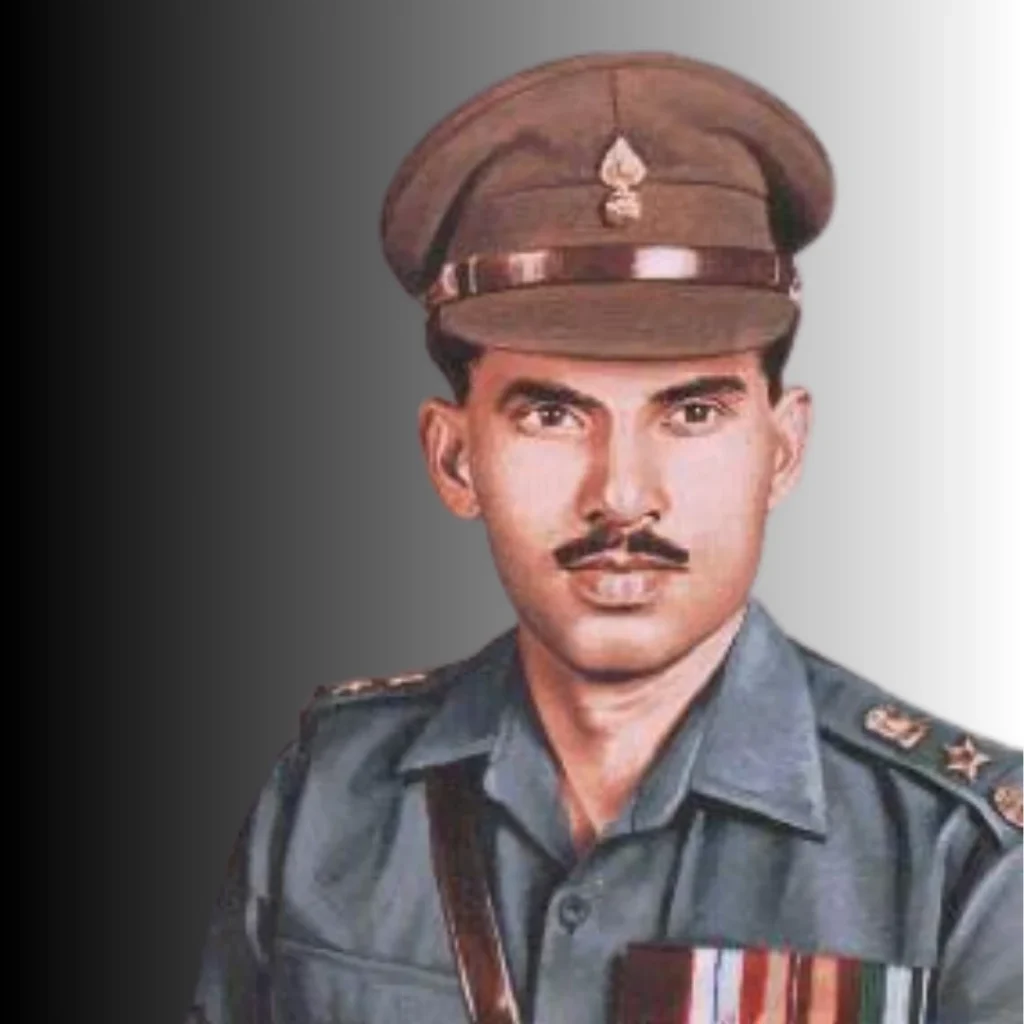
Hoshiar Singh Dahiya was a brave Indian Army officer. He will be best remembered for his excellent bravery in the Indo-Pakistan war of 1971. He played a significant part in the victory at the Battle of Basantar and defending the Jarpal position. Despite getting wounded in the course of the battle, he did not leave and continued encouraging his troops amidst heavy enemy firing.
Due to his courage, strong fighting spirit and leadership qualities, he earned the Param Vir Chakra, the most prestigious award of wartime gallantry in India. Later, he attained the rank of Colonel and served the Indian Army till his retirement in 1988.
What makes his life all the more interesting is the fact that although he was initially a soldier in the Indian Army, he eventually went on to become a commissioned officer. And, his career in the Army and his actions at Basantar made him the epitome of a brave leader.
Who Is Major Hoshiar Singh?
Major Hoshiar Singh Dahiya was an Indian Army officer and a Param Vir Chakra awardee who became famous for his involvement in the Battle of Basantar during the 1971 Indo-Pak War. He was associated with the Grenadiers Regiment and had been commanding the forward company of 3 Grenadiers during the crucial Battle of Jarpal.
During this battle, his company had to face the artillery firing, machine gunning, tank attacks and counter-attacks. He kept moving from one soldier to another to encourage them.
Although Hoshiar Singh is known as Major Hoshiar Singh because he was at the time of receiving the Param Vir Chakra in the rank of Major, yet he had gone on to achieve a higher rank in his army career and finally retired as Colonel Hoshiar Singh Dahiya.
Major Hoshiar Singh Biography Overview
| Details | Information |
|---|---|
| Full Name | Hoshiar Singh Dahiya |
| Popular Name | Major Hoshiar Singh |
| Later Rank | Colonel |
| Date of Birth | 5 May 1937 |
| Birthplace | Sisana, present-day Sonipat district, Haryana |
| Nationality | Indian |
| Profession | Indian Army Officer |
| Regiment | The Grenadiers |
| Battalion | 3rd Battalion, The Grenadiers |
| Commissioned | 30 June 1963 |
| Major War | Indo-Pak Wars of 1965 and 1971 |
| Famous Battle | Battle of Basantar |
| Famous Objective | Jarpal |
| Highest Award | Param Vir Chakra |
| Wife | Smt Dhano/Dhanno Devi |
| Children | Three sons |
| Retirement | 31 May 1988 |
| Date of Death | 6 December 1998 |
| Age at Death | 61 years |
| Death Reason | Cardiac arrest |
Major Hoshiar Singh Age and Birth Details
Hoshiar Singh Dahiya was born on 5th May 1937 in the Sisana village located in the current day state of Haryana. He hailed from a rural family which was known for hard work and respect for self-respect.
Hoshiar Singh was aged 34 years during the Battle of Basantar in December 1971. Hoshiar Singh died on 6th December 1998 when he was 61 years old almost two decades after the battle that gave him fame in the military history of India.
Major Hoshiar Singh Early Life & Childhood
Hoshiar Singh was born in the Sisana village in a farming environment in the rural Haryana. The environment of his childhood played an important role in the development of his traits of physical stamina, discipline and determination which would become very important for his career as a soldier.
His parents were Shri Chaudhary Hira Singh and Smt Mathuri Devi. Hoshiar Singh was described as an intelligent boy with academic aptitude and love for physical activities.
These qualities which Hoshiar Singh developed in his childhood were reflected in his future attitude towards soldiering. Rather than choosing easy civilian path, he chose military service.
Education & Student Life of Major Hoshiar Singh Dahiya
Hoshiar Singh studied in Jat Heroes Memorial High School at Rohtak before going to study in Jat College. He was considered a disciplined and competent student.
In addition to academic performance, he was also participating in sports activities which made him physically fit and taught him competitiveness – qualities which proved to be helpful for his military career.
His educational career was followed by much bigger aspirations of joining the Indian Army.
Major Hoshiar Singh Family Background
Major Hoshiar Singh was born in a Jat family in the Haryana region. While growing up in rural environment, he also got involved in military service in future.
| Family Member | Details |
|---|---|
| Father | Shri Chaudhary Hira Singh |
| Mother | Smt Mathuri Devi |
| Wife | Smt Dhano/Dhanno Devi |
| Children | Three sons |
| Native Village | Sisana, Haryana |
| Family Connection With Army | Two sons reportedly followed him into the Indian Army |
Major Hoshiar Singh Dahiya Wife
The name of Colonel Hoshiar Singh Dahiya’s wife is Smt Dhano Devi. However, she is also referred to as Dhanno Devi in various accounts regarding his family background. She kept herself engaged with all the efforts of maintaining the legacy left behind by her husband. For example, unveiling of Colonel Hoshiar Singh bust in the Indian Military Academy gymnasium was done by his wife.
Several decades after the 1971 war she still keeps herself engaged in representing the personal part of this legacy of one of India’s Param Vir Chakra awardees.
Major Hoshiar Singh Dahiya Son Name
Colonel Hoshiar Singh Dahiya and his wife had three sons. According to the information provided, two of them have followed their father’s career steps and joined the Indian Army. They have become Grenadiers regiment officers.
But the provided information does not contain the verified names of all three sons. Therefore, it would be misleading to publish these names only to complete this paragraph. But even without the names it is obvious that the military service tradition has been carried on in the family of Colonel Hoshiar Singh.
Path From Sepoy To Army Officer
The most inspiring aspect of Hoshiar Singh’s military career is that it started as a Sepoy. Working together with other soldiers Hoshiar has learned firsthand about their problems. It has helped him in the future as a commander to understand his troops better.
The discipline and leadership skills of Hoshiar have been noticed and he was given the opportunity to study as an officer. From being a Sepoy he has managed to go on the way to being an army officer and then a colonel.
Army Cadet College And IMA Training
Hoshiar Singh was sent to Army Cadet College where officers-to-be are trained from the soldiers. After attending Army Cadet College, Hoshiar was sent to the Indian Military Academy in Dehradun. The challenging training program has prepared him for the responsibilities of commanding soldiers in tough operational situations. But his connection with IMA did not end there because many years later he returned to the institution as a training officer.
Commission Into The Grenadiers
Hoshiar Singh was commissioned into The Grenadiers and became a part of 3rd Battalion of the regiment on 30 June 1963. The Grenadiers has become an integral part of his military career. It was in 3 Grenadiers where he performed the actions during the 1971 war which earned him the Param Vir Chakra.
Early Military Career And NEFA Posting
One of the earliest postings of Hoshiar Singh was to NEFA, North-East Frontier Agency, an area later mostly reorganized into Arunachal Pradesh.
Difficult geography, remoteness and tough conditions gave much needed operational experience. Such postings require great physical and mental toughness, adaptability and skills of leading soldiers far away from any help. Such postings have helped him to become a field officer who could function well under pressure.
Role in the Indo-Pak War of 1965
Hoshiar Singh gained invaluable combat experience in the Indo-Pak War of 1965.
During the conflict, he showed bravery and professionalism. He gained first-hand experience of what battlefield leadership entails such as uncertainty, fire from the enemy side and responsibility for one’s subordinates under fire. However, the soldier’s efforts were not wasted.
Mention in Despatches
During the Indo-Pak War of 1965, Hoshiar Singh earned himself the Mention in Despatches.
This honour is awarded for good or distinguished service in military operations. It preceded the Param Vir Chakra many years later. Also, it shows that Hoshiar Singh was already considered to be courageous at the time of this award.
Major Hoshiar Singh in the 1971 Indo-Pak War
In 1971, Hoshiar Singh was already a Major in charge of Charlie Company of 3 Grenadiers.
Fierce clashes took place in the Shakargarh sector during the Indo-Pak War. The sector was strategically important due to the fact that there were key Indian communication routes going towards Jammu and Kashmir. 3 Grenadiers was involved in difficult operations near the Basantar River. Major Hoshiar Singh and his company would get an assignment which would change the course of his military career.
Battle of Basantar
The Battle of Basantar is one of the important battles that took place on the western front of the Indo-Pak War of 1971.
The approaches to the Basantar River were heavily fortified by the Pakistanis and littered with minefields and artillery positions. The establishment of a bridgehead in this sector was very difficult. 3 Grenadiers was supposed to participate in the advance. Major Hoshiar Singh’s company received the important assignment of capturing the enemy’s strong position in Jarpal. The battle which was to come would be a test not only for the amount of the troops’ firepower, but also for their endurance and leadership.
Major Hoshiar Singh 1971 Mission to Capture Jarpal
On 15 December 1971, 3 Grenadiers was ordered to establish a bridgehead on the Basantar River in the Shakargarh sector. Major Hoshiar Singh led the left forward company. His company was ordered to capture the enemy strong point in Jarpal. The enemy positions were well-fortified and could offer effective fire from machine-guns and artillery onto the attacking Indian troops. However, Major Hoshiar Singh decided to move forward despite these conditions.
Capture of Jarpal on 15 December 1971
During the assault on Jarpal, Hoshiar Singh’s company faced heavy shelling and efficient crossfire from enemy medium machine-guns. Major Hoshiar Singh did not allow the fire to stop the operation. Instead, he bravely led from the front. A violent fight ensued. The defenders were eventually overwhelmed and the objective was captured. However, the capture of Jarpal was not the end of Major Hoshiar Singh’s efforts. The position still had to be defended from the enemy’s counter-attacks.
Enemy Counter-Attacks on 16 December
On 16 December 1971, the Pakistani forces made three attacks on Major Hoshiar Singh’s position. Out of these three attacks, two were supported by tanks.
The company received intense shelling and tank fire. During the battle, Major Hoshiar Singh was constantly changing positions and moving from trench to trench instead of staying safe in a command position. He inspired and encouraged his soldiers to fight and resist the enemy. His bravery and courage helped the company defend from all attacks while killing many of their attackers.
Major Hoshiar Singh is Wounded in Battle
The next attack by the enemy took place on 17 December when they launched a new massive attack under support of massive artillery. During the shelling, Major Hoshiar Singh received serious injuries. The injury could have been a good reason for evacuation. Instead, Major Hoshiar Singh decided to stay at his position when the battle was not finished. His presence reassured his soldiers in the most dangerous time during the battle.
Major Hoshiar Singh and Medium Machine Gun Post
The crucial point of the battle happened when a shell landed near a medium machine gun post. The soldiers at the post were hurt and the gun was out of action. Hoshiar Singh instantly realized the danger. The machine gun was vital to stop the advancing enemy forces. Serious injury didn’t prevent him from going there and operating the machine gun personally.
This action resulted in heavy losses of the enemy forces. Eventually, the enemy had to retreat. According to the citation of his Param Vir Chakra, the enemy left 85 dead soldiers including their commanding officer and three other officers.
Refusal to Evacuate until Ceasefire
The wounds of Major Hoshiar Singh were serious enough to evacuate him immediately. However, the commander decided not to leave his soldiers until the battle ended. Therefore, he stayed at his position and commanded his soldiers. Major Hoshiar Singh was evacuated only after the ceasefire.
The refusal to evacuate became one of the most memorable events in his war-time career as it reflected his conviction about the commander staying with his soldiers during difficult times.
Param Vir Chakra
For his heroic actions at the Battle of Basantar, Major Hoshiar Singh was awarded Param Vir Chakra.
| Award Detail | Information |
|---|---|
| Award | Param Vir Chakra |
| Recipient | Major Hoshiar Singh Dahiya |
| War | Indo-Pak War of 1971 |
| Battle | Battle of Basantar |
| Sector | Shakargarh |
| Objective | Jarpal |
| Unit | 3 Grenadiers |
| Key Dates | 15–17 December 1971 |
| Recognition | Exceptional gallantry, fighting spirit and leadership |
The Param Vir Chakra is India’s highest military decoration for gallantry in the presence of the enemy. Hoshiar Singh’s award recognised sustained leadership over several days rather than a single isolated moment of bravery.
Major Hoshiar Singh Param Vir Chakra Citation
The citation talks about how Major Hoshiar Singh bravely commanded his company to capture the heavily fortified Jarpal position on 15 December 1971 amid shelling and crossfires with machine guns. Post capture, he had to repel several counter-attacks on 16 December that even involved use of armour. He kept on moving from one trench to another, inspiring his troops to stand firm.
On 17 December, yet another major assault was mounted with the aid of artillery. Even when he got seriously wounded, Hoshiar Singh stayed outside inspiring his men. On one occasion, when a shell damaged the medium machine gun position and left its crew wounded, he immediately rushed to operate the machine gun himself.
Counter-attack was beaten back and enemy suffered many casualties. Hoshiar Singh did not want any help until the ceasefire. His citation highlighted how he displayed conspicuous bravery, indomitable fighting spirit and outstanding leadership in line with the best traditions of the Indian Army.
33 Fallen Heroes of 3 Grenadiers in the Battle of Basantar
The victory at Basantar came with a huge human cost. As per the material available for writing this biography, 33 soldiers of 3 Grenadiers gave their lives in the process.
Their names need to be mentioned with those of their commanders and decorated heroes.
| No. | Name |
|---|---|
| 1 | 2nd Lt AS Chauhan |
| 2 | Hav Basti Ram |
| 3 | Hav Sardari Lal, AC |
| 4 | CHM Satya Pal |
| 5 | Hav Mani Ram |
| 6 | L/Hav Bhagirath Singh |
| 7 | Nk Arjan Ram |
| 8 | Nk Udmi Ram |
| 9 | Nk Hawa Singh |
| 10 | L/Nk Har Lal Singh |
| 11 | L/Nk Jagat Ram |
| 12 | Gdr Vakil Singh |
| 13 | Gdr Jit Singh |
| 14 | Gdr Bajrang Ram |
| 15 | Gdr Rohtash Singh |
| 16 | Gdr Ram Kumar |
| 17 | Gdr Mohan Lal |
| 18 | Gdr Prabhu Dayal |
| 19 | Gdr Mahal Singh |
| 20 | Gdr Daryao Singh |
| 21 | Gdr Kirpal Singh |
| 22 | Gdr Daya Ram |
| 23 | Gdr Puran Singh |
| 24 | Gdr Devi Dass |
| 25 | Gdr Satbir Singh |
| 26 | Gdr Biddi Singh |
| 27 | Gdr Babu Singh |
| 28 | Gdr Hazura Ram |
| 29 | Gdr Dilbagh Singh |
| 30 | Gdr Shiri Kishan |
| 31 | Gdr Desh Ram |
| 32 | Gdr M.S. Payal |
| 33 | Gdr Ram Karan |
Military Career After the 1971 War
However, Hoshiar Singh’s services to India’s military didn’t come to an end with Param Vir Chakra award. He continued his services to the Indian Army and started gaining prominence gradually in more responsible positions. His experience in battles made him an indispensable asset in such positions where leadership and training were highly required.
He got the rank of Major as substantive on 30th June 1976 and then moved ahead in the ranks of officers.
Instructor at Indian Military Academy Dehradun
After some time, Hoshiar Singh was posted back to the Indian Military Academy in Dehradun, but this time as an instructor rather than a trainee. He did his job of instruction there for a period of two years.
For young officers training under a veteran officer who had led the battle of his life in the 1971 war couldn’t be just academic training only. This association of Hoshiar Singh with the Indian Military Academy is marked permanently now.
Command of 3rd Battalion, The Grenadiers
On 8th April 1983, Hoshiar Singh was promoted to the rank of Lieutenant Colonel. Then he received the honor of Command of 3rd Battalion, The Grenadiers, which battalion had made the name of Hoshiar Singh due to his services during the Battle of Basantar.
Being the commander of one’s parent battalion is quite a milestone for any Army officer. Hoshiar Singh achieved it with distinction as well.
Promotion From Major to Colonel
Hoshiar Singh continued advancing through the Army after receiving the Param Vir Chakra.
| Stage | Details |
|---|---|
| Early Service | Began military journey as a sepoy |
| Commission | Commissioned on 30 June 1963 |
| 1971 War Rank | Major |
| Substantive Major | 30 June 1976 |
| Lieutenant Colonel | 8 April 1983 |
| Battalion Command | 3rd Battalion, The Grenadiers |
| Highest Rank Reached | Colonel |
This distinction is important when discussing his biography. Major Hoshiar Singh is the name associated with his 1971 gallantry because he was a Major during the Battle of Basantar. He later became Colonel Hoshiar Singh Dahiya.
Retirement From the Indian Army
After approximately 25 years of active service, Colonel Hoshiar Singh retired from the Indian Army on 31 May 1988. His military career had taken him from the rank of sepoy to Colonel and included combat experience in two Indo-Pak wars. He left uniform carrying the Param Vir Chakra and a reputation as one of the Army’s distinguished battlefield leaders.
Life After Retirement
Following retirement, Colonel Hoshiar Singh settled in Jaipur. Retirement did not completely separate him from military life. He maintained his connection with the armed forces community and continued visiting his native village of Sisana.
According to the supplied biographical account, he encouraged young people from his village to consider careers in the armed forces. His influence therefore continued beyond his years of active service.
Major Hoshiar Singh Dahiya Death Reason
Colonel Hoshiar Singh Dahiya died on 6 December 1998 following a cardiac arrest. He was 61 years old. He was cremated in Jaipur with full military honours. His death came almost exactly 27 years after the 1971 war in which his courage had earned him the Param Vir Chakra.
Awards and Military Honours
Colonel Hoshiar Singh’s military career included recognition for service in both the 1965 and 1971 conflicts.
| Honour | Details |
|---|---|
| Param Vir Chakra | Awarded for gallantry during the 1971 Battle of Basantar |
| Mention in Despatches | Recognition associated with his service during the 1965 Indo-Pak War |
| Military Honours at Funeral | Cremated with full military honours |
| IMA Tribute | Bust installed at Indian Military Academy, Dehradun |
| Public Commemoration | Hoshiar Singh Marg in Jaipur |
Among all these recognitions, the Param Vir Chakra remains the highest and most significant military honour attached to his name.
IMA Dehradun Tribute and Bust
The Indian Military Academy, Dehradun, honoured Colonel Hoshiar Singh by installing his bust at the academy’s gymnasium. According to the supplied material, the bust was unveiled by his wife, Smt Dhanno Devi.
The location carries particular significance because Hoshiar Singh had once trained at IMA before returning later in his career as an instructor. The memorial therefore connects different stages of his remarkable Army journey.
Hoshiar Singh Marg in Jaipur
Jaipur also commemorated Colonel Hoshiar Singh’s contribution to the country. On 30 March 2021, Queen’s Road was officially renamed Hoshiar Singh Marg in his honour, according to the material supplied for this biography. The naming provides a permanent civic reminder of his gallantry and military service in the city where he spent his post-retirement years.
Major Hoshiar Singh in 1971: Beyond Borders
Colonel Hoshiar Singh’s battlefield story has also influenced popular representations of the 1971 war. In the Malayalam war film 1971: Beyond Borders, Mohanlal portrays Major Mahadevan/Sahadevan in a narrative drawing inspiration from Indian military experiences associated with the 1971 conflict.
The material supplied for this article specifically connects the character’s Battle of Basantar elements with the gallantry of Hoshiar Singh Dahiya.
It is safer, however, to describe the character as inspired by aspects of his battlefield story rather than a direct biographical portrayal, because the film uses fictionalised characters and cinematic storytelling.
Border 2 Major Hoshiar Singh
Major Hoshiar Singh Dahiya received renewed attention through the Hindi war film Border 2. Unlike a loosely inspired fictional character, Border 2 explicitly identifies Hoshiar Singh Dahiya as one of the real-life military figures represented in the story. The film is set against the backdrop of the 1971 Indo-Pak War and brings Hoshiar Singh’s military story before a new generation of viewers. The film was released theatrically on 23 January 2026.
Varun Dhawan Major Hoshiar Singh Dahiya
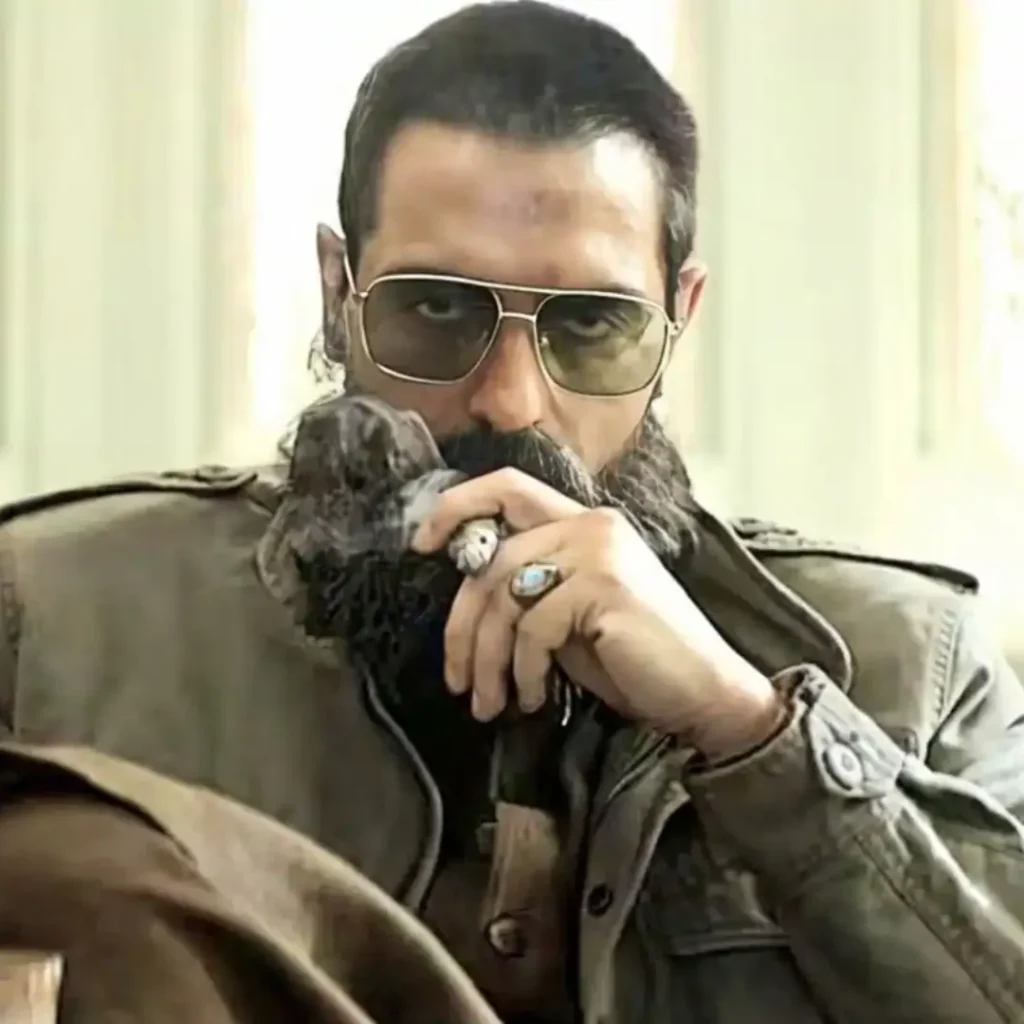
Actor Varun Dhawan portrays Major Hoshiar Singh Dahiya in Border 2. The portrayal focuses attention on the courage and leadership associated with Hoshiar Singh during the 1971 war. The real soldier’s family was also publicly connected with the film’s portrayal.
Before the film’s release, Hoshiar Singh Dahiya’s wife publicly praised and blessed Varun Dhawan for the sincerity with which he had brought her husband’s legacy to the screen. For younger audiences who may not have previously studied the Battle of Basantar, the film has helped bring the name of Major Hoshiar Singh back into mainstream discussion.
Legacy of Colonel Hoshiar Singh Dahiya
Colonel Hoshiar Singh Dahiya’s legacy extends far beyond the Param Vir Chakra displayed beside his name. His story represents a particular philosophy of battlefield leadership: a commander should share the dangers faced by his soldiers.
At Jarpal, this philosophy was visible repeatedly. He moved through trenches while they were being shelled, continued commanding after being wounded, personally operated a machine gun when its crew was incapacitated and refused evacuation while his soldiers remained in danger.
His career after the war was equally meaningful. He trained future officers, commanded his own battalion and eventually retired as a Colonel.
The Government of India has continued commemorating his legacy. In January 2023, one of the 21 large unnamed islands of the Andaman and Nicobar Islands was named in honour of Major Hoshiar Singh as part of an initiative commemorating India’s 21 Param Vir Chakra awardees. For the Indian Army, his story remains a reminder that leadership is demonstrated most powerfully when circumstances are at their worst.
Interesting Facts About Major Hoshiar Singh
- Hoshiar Singh’s military journey began as a sepoy before he became a commissioned officer.
- He was born on 5 May 1937 in Haryana.
- He was commissioned into The Grenadiers on 30 June 1963.
- He experienced combat during both the 1965 and 1971 Indo-Pak Wars.
- He received a Mention in Despatches for his earlier wartime service.
- He commanded Charlie Company of 3 Grenadiers during the Battle of Basantar.
- His company captured the strategically important position of Jarpal on 15 December 1971.
- Pakistani forces repeatedly attempted to retake the position.
- Hoshiar Singh was seriously wounded during the fighting but continued commanding his troops.
- He personally manned a medium machine gun after its crew was incapacitated.
- He refused evacuation until the ceasefire.
- He received India’s highest wartime gallantry decoration, the Param Vir Chakra.
- He later served as an instructor at the Indian Military Academy.
- He eventually commanded his parent battalion, 3 Grenadiers.
- Although widely remembered as Major Hoshiar Singh, he eventually rose to the rank of Colonel.
- He retired from the Indian Army on 31 May 1988.
- He died on 6 December 1998, aged 61.
- His wife and three sons survived him, and the supplied biographical account states that two sons followed the family’s military tradition.
- Jaipur has a road named Hoshiar Singh Marg in his honour.
- Varun Dhawan portrayed him in the 2026 film Border 2.
Conclusion
Major Hoshiar Singh Dahiya’s biography is not simply the story of a Param Vir Chakra recipient. It is the story of a soldier who rose from the ranks, became an officer and ultimately proved his leadership in one of the most difficult battles of the 1971 Indo-Pak War.
The capture and defence of Jarpal demonstrated what made him exceptional. Heavy shelling did not force him into cover, repeated counter-attacks did not weaken his resolve, and even serious wounds could not persuade him to abandon his soldiers.
His actions at the machine-gun post and his refusal to evacuate before the ceasefire became enduring examples of courage under fire. Yet his life continued beyond Basantar. He trained young officers at IMA, commanded 3 Grenadiers, rose to Colonel and remained connected with the military community after retirement.
Decades after his death, memorials, military commemorations and cinematic portrayals continue introducing new generations to his story. The enduring legacy of Colonel Hoshiar Singh Dahiya rests not only on the Param Vir Chakra he received but on the leadership, duty and courage through which he earned it.
FAQs
Who was Major Hoshiar Singh?
Major Hoshiar Singh Dahiya was an Indian Army officer of The Grenadiers who received the Param Vir Chakra for extraordinary gallantry during the Battle of Basantar in the 1971 Indo-Pak War.
When was Major Hoshiar Singh born?
Major Hoshiar Singh was born on 5 May 1937 in Sisana village in present-day Haryana.
What was Major Hoshiar Singh famous for?
He is best known for leading his company during the capture and defence of Jarpal in the Battle of Basantar and continuing to fight despite being seriously wounded.
Which regiment did Major Hoshiar Singh belong to?
He belonged to The Grenadiers and served with the 3rd Battalion, The Grenadiers.
When did Hoshiar Singh join as a commissioned officer?
He was commissioned into The Grenadiers on 30 June 1963.
Which award did Major Hoshiar Singh receive?
He received the Param Vir Chakra, India’s highest wartime gallantry decoration.
Why did Major Hoshiar Singh receive the Param Vir Chakra?
He received the award for exceptional courage and leadership during operations around Jarpal in December 1971. Despite being seriously wounded, he continued leading his soldiers and personally operated a machine gun during a critical enemy attack.
Was Major Hoshiar Singh wounded in the Battle of Basantar?
Yes. He was seriously wounded during enemy shelling but refused to leave his position while the battle continued.
Did Major Hoshiar Singh refuse evacuation?
Yes. Despite his injuries, he refused evacuation until the ceasefire.
What was Major Hoshiar Singh’s rank during the 1971 war?
He held the rank of Major during the Battle of Basantar. He later rose to the rank of Colonel.
Who was Major Hoshiar Singh’s wife?
His wife was Smt Dhano Devi, whose name is also rendered as Dhanno Devi in accounts.
How many sons did Major Hoshiar Singh have?
He had three sons. The supplied biographical material states that two of them followed their father into the Indian Army.
What was Major Hoshiar Singh Dahiya’s death reason?
Colonel Hoshiar Singh Dahiya died following a cardiac arrest on 6 December 1998.
How old was Major Hoshiar Singh when he died?
He was 61 years old.
When did Major Hoshiar Singh retire?
He retired from the Indian Army on 31 May 1988.
What is the connection between Major Hoshiar Singh and Border 2?
The 2026 Hindi war film Border 2 features Major Hoshiar Singh Dahiya as one of its military characters.
Also, Read About: Major Shaitan Singh Son || Major Sudhir Walia || Major Iqbal || Major Mohit Sharma Wife || Major Mohit Sharma Story