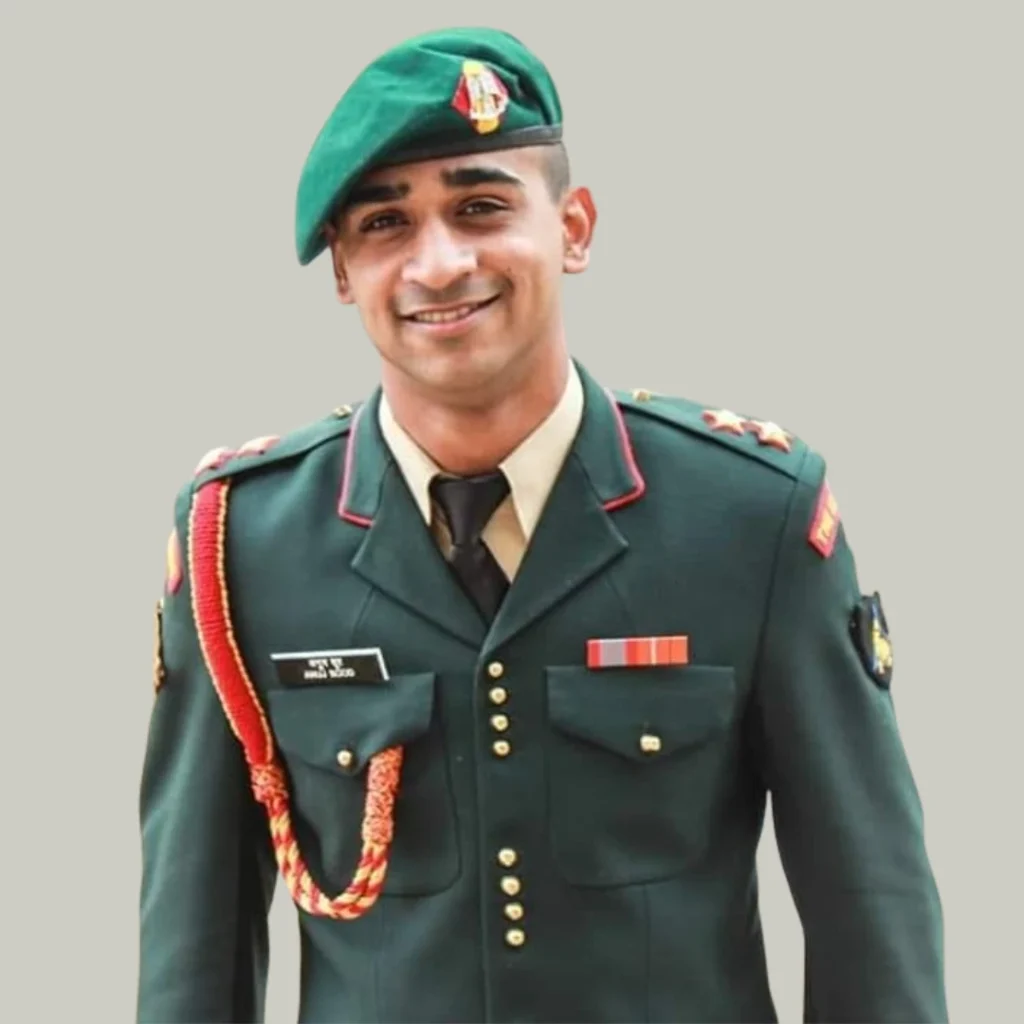
Major Anuj Sood was a courageous Indian Army officer whose life reflected discipline, leadership, professional excellence and an unwavering commitment to duty. Serving with the 21 Rashtriya Rifles in Jammu and Kashmir, he was involved in demanding counter-insurgency operations and became known for leading from the front. His military journey, however, had begun years earlier with a childhood ambition to wear the Army uniform.
Born into a family with a strong military background, Anuj Sood grew up with a close understanding of Army life. From his school years at Punjab Public School, Nabha, to training at the National Defence Academy and Indian Military Academy, he steadily worked toward becoming an officer. He was commissioned into the Brigade of the Guards and went on to serve in several important appointments.
On 2 May 2020, Major Anuj Sood made the supreme sacrifice during an operation in the Chanjimulla area of Handwara, Jammu and Kashmir. During the operation, he and his team entered a house to rescue civilians trapped in a dangerous situation involving terrorists. His extraordinary courage and self-sacrifice were later recognised with the Shaurya Chakra (Posthumous).
The story of Major Anuj Sood is therefore much more than the account of one military operation. It is the story of a young man who chose a demanding profession, developed into a capable Army leader and remained committed to protecting others even when his own life was at extreme risk.
Who Was Major Anuj Sood?
Major Anuj Sood, SC, was an officer of the Indian Army who served with the Brigade of the Guards and was later deputed to 21 Rashtriya Rifles (21 RR) for counter-insurgency duties in Jammu and Kashmir. At the time of the Handwara operation in May 2020, he was serving as one of the Company Commanders of 21 RR.
He was commissioned into the Army on 9 June 2012 after completing his training at the Indian Military Academy, Dehradun. His parent battalion was 19 Guards, and during his military career he handled responsibilities including those of Platoon Commander, Adjutant and Aide-de-Camp.
Major Sood was only 30 when he lost his life in the Handwara operation. His decision to enter a target house with his Commanding Officer and other personnel to rescue civilians became one of the defining acts of his service. For his conspicuous gallantry, extraordinary valour and self-sacrifice, he was awarded the Shaurya Chakra posthumously.
Major Anuj Sood Biography / Wiki
| Biography Detail | Information |
|---|---|
| Full Name | Major Anuj Sood |
| Known As | Major Anuj Sood, SC |
| Service Number | IC-76429H |
| Date of Birth | 17 December 1989 |
| Age at Martyrdom | 30 years |
| Place of Birth | Bengaluru, Karnataka |
| Family Roots | Kangra district, Himachal Pradesh |
| Nationality | Indian |
| Profession | Indian Army Officer |
| Service | Indian Army |
| Last Rank | Major |
| Parent Unit | 19 Guards |
| Regiment | The Brigade of the Guards |
| Rashtriya Rifles Unit | 21 Rashtriya Rifles |
| School | Punjab Public School, Nabha |
| NDA Selection | 2008 |
| NDA Course | 120th Course |
| Military Academy | Indian Military Academy, Dehradun |
| Commissioned | 9 June 2012 |
| Father | Brigadier Chandrakant Sood (Retd.) |
| Mother | Ragini Sood |
| Wife | Akriti Singh Sood |
| Major Operational Area | Jammu and Kashmir |
| Operation | Counter-Insurgency and Internal Security Operations |
| Date of Martyrdom | 2 May 2020 |
| Place Associated with Final Operation | Chanjimulla, Handwara, Jammu and Kashmir |
| Gallantry Award | Shaurya Chakra (Posthumous) |
Major Anuj Sood Age and Date of Birth
Major Anuj Sood was born on 17 December 1989. According to biographical records, he was born at the Air Force Command Hospital in Bengaluru, Karnataka. He was 30 years old at the time of his supreme sacrifice on 2 May 2020.
Despite his relatively young age, he had already accumulated considerable military experience. By 2020, his service included regimental appointments, an ADC tenure, professional military training and operational responsibilities with Rashtriya Rifles in Jammu and Kashmir.
His progression demonstrates how much responsibility Army officers can assume comparatively early in their careers. At 30, Major Sood was already serving as a Company Commander in an operational environment where leadership required quick decisions, tactical judgement and responsibility for soldiers on the ground.
Major Anuj Sood Birthplace and Hometown
Major Anuj Sood was born in Bengaluru, Karnataka, while his family had roots in Kangra district of Himachal Pradesh. His family later settled around the Chandigarh region.
Because he came from an Army family, his upbringing was influenced by military life rather than being confined to a single geographical location. Such an environment exposed him to the discipline, traditions and responsibilities associated with the armed forces from an early age.
His Himachal roots remained an important part of his family identity, while his education and military career connected him with several parts of India, including Punjab, Maharashtra, Uttarakhand and Jammu and Kashmir.
Major Anuj Sood Family Background
Major Anuj Sood belonged to a family with a strong connection to India’s armed forces. His father had served as a senior Army officer, while his mother provided a strong support system throughout his upbringing and career.
Available biographical records identify his immediate family as follows:
| Family Member | Details |
|---|---|
| Father | Brigadier Chandrakant Sood (Retired) |
| Father’s Service | Indian Army, Corps of EME |
| Mother | Ragini Sood |
| Wife | Akriti Singh Sood |
| Sister | Shruti |
| Brother-in-Law | Arjun |
| Niece | Meera |
| Family Roots | Kangra district, Himachal Pradesh |
Military Background of His Family
Military service was already part of Major Anuj Sood’s family history before he earned his commission. His father, Brigadier Chandrakant Sood, served in the Corps of Electronics and Mechanical Engineers and retired as a Brigadier.
Contemporary reporting following the Handwara encounter also described Anuj as coming from a multi-generation military family. His father later recalled that Anuj had a clear calling toward the Army even though other professional opportunities were available to him.
This background meant that Anuj understood both the prestige and the difficulties associated with an Army career. He had seen that military life involved frequent movement, separation from family, demanding training and operational risks. Yet these realities did not discourage him from choosing the profession.
Major Anuj Sood Education
Education played an important role in preparing Anuj Sood for his military career. During his senior school years, he studied at the prestigious Punjab Public School (PPS), Nabha, an institution with a long tradition of students aspiring to enter the armed forces.
After school, he joined the National Defence Academy (NDA) in 2008. He subsequently trained at the Indian Military Academy (IMA), Dehradun, before receiving his commission in the Indian Army.
His professional education continued even after commissioning. During his Army career, he attended the Junior Command Course at Army War College, Mhow, where accounts of his service record indicate that he performed strongly.
| Education / Training | Details |
|---|---|
| Senior School | Punjab Public School, Nabha |
| NDA Selection | 2008 |
| National Defence Academy | 120th Course |
| NDA Graduation | June 2011 |
| Pre-Commission Training | Indian Military Academy, Dehradun |
| Commission Date | 9 June 2012 |
| Professional Military Course | Junior Command Course |
| Institution | Army War College, Mhow |
School Life at Punjab Public School, Nabha
Major Anuj Sood’s years at Punjab Public School, Nabha, offer an interesting insight into his personality before he became an Army officer.
He joined PPS Nabha during his senior-school years. The school has historically had a strong connection with military education and has produced students who later entered the National Defence Academy and armed forces.
Teachers remembered Anuj as well-behaved, soft-spoken, friendly and disciplined. His school memories also show that he enjoyed films, friendships and normal student life while remaining serious about his long-term ambition.
One particularly revealing record came from a classmate’s diary in which students had written about their ambitions before leaving school. Anuj’s entries clearly indicated that he dreamed of becoming an Army officer and was eagerly awaiting his NDA joining letter. His school life therefore represents an important stage in his biography because his future profession was already becoming a concrete goal rather than an uncertain career choice.
Dream of Joining the Indian Army
For Anuj Sood, joining the Indian Army was a deeply held ambition. Coming from a military family certainly exposed him to Army life, but available accounts suggest that the decision ultimately came from his own determination. His father later described him as a talented all-rounder who could potentially have pursued a successful civilian career, yet Anuj remained committed to the armed forces.
By Class 12, he had already cleared the examination required for entry into the National Defence Academy. His school writings provide unusually direct evidence of how strongly he wanted the Army career. That clarity of purpose helped shape the next phase of his life. Instead of viewing the NDA simply as an educational institution, he saw it as the gateway to the profession he had chosen for himself.
NDA Journey and Selection in 2008
In 2008, Anuj Sood was selected to join the National Defence Academy, one of India’s premier tri-service military training institutions.
The NDA environment is designed to develop future officers through academics, physical conditioning, military training, discipline and leadership development. For Anuj, entering the academy marked the transformation of a schoolboy’s ambition into professional military preparation.
He became part of the 120th NDA Course and graduated in June 2011. Years later, following his martyrdom, the National Defence Academy honoured him at its Hut of Remembrance, where the names and memories of fallen alumni are preserved.
His journey through NDA was therefore significant not merely because he graduated from the academy, but because he eventually came to embody its ideal of “Service Before Self.”
Training at Indian Military Academy (IMA), Dehradun
After completing his NDA training, Anuj Sood moved to the Indian Military Academy in Dehradun for the final stage of his preparation to become a commissioned Army officer.
Training at IMA focuses on transforming officer cadets into leaders capable of commanding soldiers under demanding conditions. Tactical training, physical endurance, weapon handling, field exercises, discipline and leadership form central parts of this process.
Anuj successfully completed this demanding phase and was commissioned into the Indian Army on 9 June 2012.
He was inducted into 19 Guards, part of the prestigious Brigade of the Guards. This marked the formal beginning of the military career that would eventually take him from regimental responsibilities to counter-insurgency operations in Jammu and Kashmir.
Major Anuj Sood’s Indian Army Career
Major Anuj Sood’s Army career was marked by a steady progression through command, staff and operational responsibilities. After being commissioned in 2012, he developed his fieldcraft and regimental experience with the Brigade of the Guards.
During his early service, he held appointments including Platoon Commander and Adjutant. These roles helped him gain experience both in leading soldiers directly and in handling important administrative and organisational responsibilities within a military unit.
His professional ability later resulted in his appointment as Aide-de-Camp to the General Officer Commanding of 14 RAPID Division, a responsibility he reportedly held for around 13 months.
He also completed the Junior Command Course at Army War College, Mhow. In March 2018, his career entered an especially important operational phase when he was deputed to 21 Rashtriya Rifles in Jammu and Kashmir.
Commission into the Indian Army in 2012
On 9 June 2012, Anuj Sood was commissioned from the Indian Military Academy into the Indian Army. Receiving a commission represented the fulfilment of an ambition he had openly expressed during his school days. He was no longer preparing to become an Army officer; he now carried direct responsibility for leading soldiers.
He joined 19 Guards of the Brigade of the Guards. The experience he gained in the following years provided the foundation for the greater responsibilities he would later assume as a Major and Company Commander.
19 Guards and Brigade of the Guards
Major Anuj Sood was commissioned into 19 Guards, belonging to the Brigade of the Guards. The Brigade of the Guards is one of the distinguished infantry regiments of the Indian Army. For a newly commissioned officer, joining a battalion involves learning regimental traditions, understanding the strengths of soldiers under command and developing practical leadership skills beyond academy training.
Major Sood proved himself through regimental duties and gradually took on increasingly responsible appointments. His association with 19 Guards remained part of his military identity even when he was subsequently deputed to Rashtriya Rifles for counter-insurgency operations.
Service as Platoon Commander and Adjutant
Among the important appointments Major Anuj Sood held during his early Army career were those of Platoon Commander and Adjutant. As a Platoon Commander, a young officer is directly responsible for leading soldiers, maintaining training standards, understanding their capabilities and preparing them for operational tasks. It is one of the earliest opportunities for an officer to translate academy lessons into practical leadership.
His appointment as Adjutant brought a different set of responsibilities. An Adjutant plays an important role in the administration, discipline and coordination of a military unit. Experience in both appointments helped Major Sood develop a balanced understanding of field leadership and organisational responsibility, qualities that became increasingly important as his career progressed.
Appointment as Aide-de-Camp (ADC)
As Major Anuj Sood progressed in his military career, he was selected for the important appointment of Aide-de-Camp (ADC) to the General Officer Commanding of the 14 RAPID Division. According to available accounts of his service, he performed this responsibility for approximately 13 months.
An ADC works closely with a senior military commander and handles responsibilities that require discipline, coordination, professionalism and attention to detail. Being selected for such an appointment at a relatively early stage of an officer’s career also provides valuable exposure to higher military formations and command structures.
For Anuj Sood, the ADC tenure added another dimension to his experience. He had already worked closely with soldiers at the unit level, while this appointment gave him an opportunity to observe military leadership and decision-making from the perspective of a senior formation headquarters.
The experience contributed to his development as a well-rounded officer before he moved into more demanding professional training and operational assignments.
Junior Command Course at Army War College, Mhow
Professional military education continued to be an important part of Major Anuj Sood’s career. He attended the Junior Command Course at the Army War College, Mhow, an important professional course for Army officers preparing for higher command and operational responsibilities.
The Junior Command Course focuses on areas such as tactical planning, leadership, operational decision-making and command responsibilities. Major Sood reportedly performed exceptionally well during the course and received an Instructor Grading, reflecting his professional competence.
The course became particularly relevant to the next phase of his career. Soon afterward, he was sent to Jammu and Kashmir, where leadership was not limited to exercises or classroom scenarios. Decisions had to be made in an active counter-insurgency environment where soldiers and civilians could be exposed to immediate danger.
Posting to 21 Rashtriya Rifles
In March 2018, Major Anuj Sood was deputed to 21 Rashtriya Rifles (21 RR) in Jammu and Kashmir.
Rashtriya Rifles is a specialised counter-insurgency force of the Indian Army with extensive operational responsibilities in Jammu and Kashmir. Officers and soldiers serving with RR units operate in environments that demand high levels of vigilance, tactical awareness and coordination with security forces and local communities.
For Major Sood, the posting represented a major operational phase in his Army career. He brought with him the experience acquired through 19 Guards, his appointments as Platoon Commander and Adjutant, his ADC tenure and professional training at Army War College.
By 2020, he was serving as a Company Commander in 21 Rashtriya Rifles. This placed him in a significant leadership position and required him to command troops involved in demanding counter-insurgency operations.
Role as Company Commander
Major Anuj Sood served as one of the Company Commanders of 21 Rashtriya Rifles. A Company Commander carries responsibility not only for accomplishing operational objectives but also for the soldiers serving under his command.
In counter-insurgency environments, this role can become particularly complex. Operations may take place in populated villages and residential areas, meaning commanders must consider civilian safety while responding to an armed threat.
Major Sood’s role required tactical awareness, leadership and the ability to make decisions under pressure. The qualities developed throughout his earlier Army appointments became especially valuable during this period.
The Handwara operation of May 2020 ultimately demonstrated the risks associated with this responsibility. Rather than directing the operation only from a safer position, Major Sood was part of the team that physically entered the target area when civilians were believed to be in danger.
Counter-Insurgency Operations in Jammu & Kashmir
Major Anuj Sood’s tenure with 21 Rashtriya Rifles placed him in the challenging operational environment of Jammu and Kashmir.
Counter-insurgency operations differ considerably from conventional battlefield warfare. Security personnel may have to operate in villages and residential areas where militants and civilians can be located close to one another. This makes intelligence, restraint, identification of threats and protection of civilians particularly important.
Major Sood’s responsibilities included leading soldiers in such an environment. His approximately two years with 21 RR before the Handwara encounter gave him significant operational exposure.
The final operation of his life reflected one of the greatest difficulties of counter-insurgency warfare: confronting an armed threat while attempting to protect civilians trapped in the same area.
Major Anuj Sood Service Details
The following table summarises key publicly documented details of Major Anuj Sood’s Indian Army service.
| Service Detail | Information |
|---|---|
| Name | Major Anuj Sood |
| Service Number | IC-76429H |
| Armed Force | Indian Army |
| Regiment | The Brigade of the Guards |
| Parent Battalion | 19 Guards |
| Commission Date | 9 June 2012 |
| Early Appointment | Platoon Commander |
| Regimental Appointment | Adjutant |
| Special Appointment | Aide-de-Camp to GOC, 14 RAPID |
| Professional Course | Junior Command Course |
| Training Institution | Army War College, Mhow |
| Course Achievement | Instructor Grading |
| Rashtriya Rifles Unit | 21 Rashtriya Rifles |
| Joined 21 RR | March 2018 |
| Operational Role | Company Commander |
| Operational Area | Jammu and Kashmir |
| Nature of Operations | Counter-Insurgency Operations |
| Final Operation | Chanjimulla/Handwara Operation |
| Date of Martyrdom | 2 May 2020 |
| Gallantry Award | Shaurya Chakra (Posthumous) |
Major Anuj Sood Wife – Akriti Singh Sood
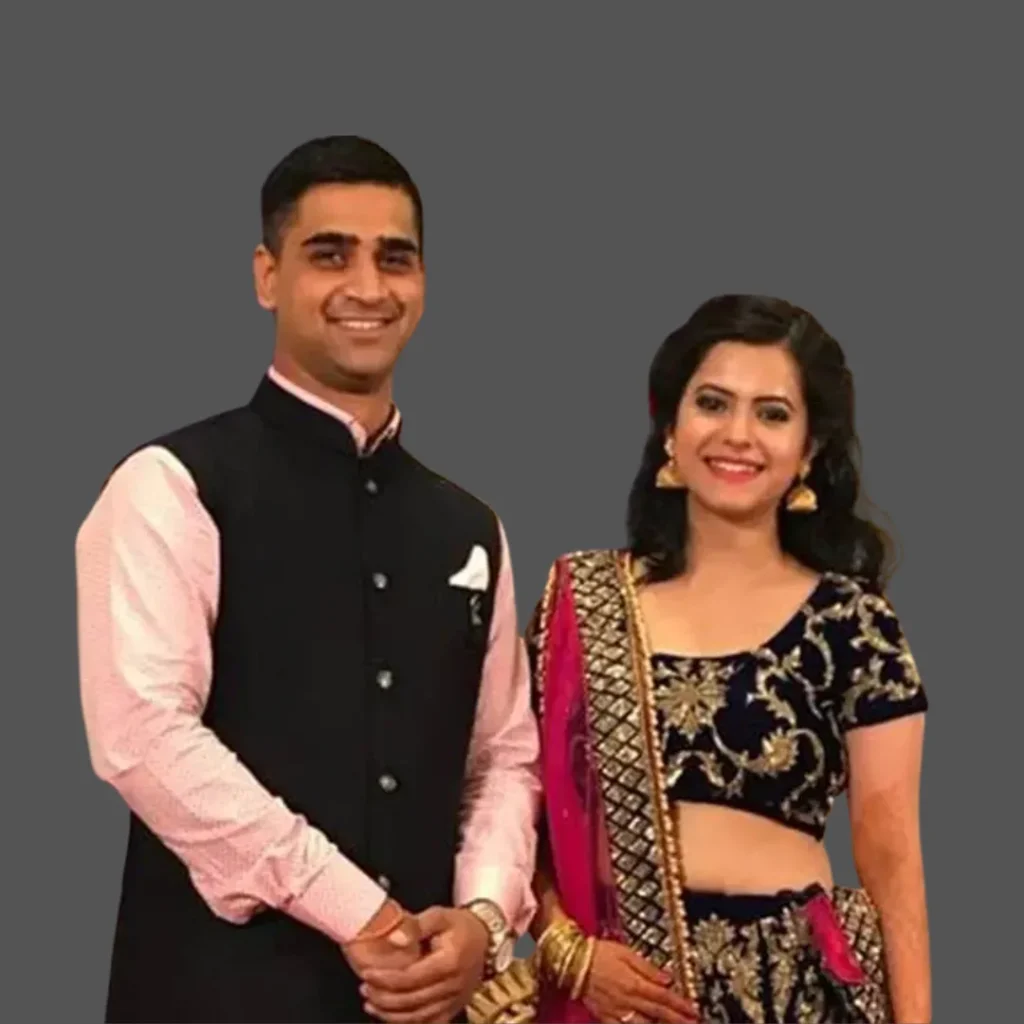
Major Anuj Sood was married to Akriti Singh Sood. Available biographical accounts describe Akriti as a software engineer. Their marriage reflected a reality familiar to many military families: professional duties can require long periods of separation, especially when an officer is serving in an operational area.
Major Sood’s deployment with 21 Rashtriya Rifles in Jammu and Kashmir meant that military responsibility occupied an important part of his married life. Public accounts following his death highlighted the immense loss experienced by his wife and family.
Major Anuj Sood Personality and Leadership Qualities
Major Anuj Sood was remembered for a combination of discipline, intelligence, humility and leadership. Accounts from his school years describe him as soft-spoken and well-mannered. His later military career demonstrated another side of that personality: the ability to take responsibility and operate in high-pressure environments.
His selection for important appointments, strong performance during professional military training and eventual role as a Company Commander indicate the confidence placed in his professional capabilities.
One of the clearest examples of his leadership emerged during his final operation. When civilians were trapped in a dangerous situation, Major Sood accompanied the team that moved into the target house. His Shaurya Chakra recognition specifically highlighted his courage and concern for civilian lives.
Rather than viewing leadership simply as authority over others, his career demonstrates a form of leadership based on responsibility. His final actions became a powerful example of an officer placing mission, civilians and fellow personnel ahead of his own safety.
Handwara Operation 2020
The Handwara operation of May 2020 became the final chapter of Major Anuj Sood’s military career and one of the most widely remembered episodes associated with his name. The operation took place in Chanjimulla village in the Handwara area of Kupwara district, Jammu and Kashmir. Security forces had received information about the presence of terrorists in a residential area.
The situation was particularly dangerous because civilians were present near the suspected location. This meant that security personnel had to deal with an armed threat while simultaneously attempting to protect people caught in the area. Major Sood was involved in the operation alongside his Commanding Officer, Colonel Ashutosh Sharma, and other security personnel.
As the situation developed, a joint team entered the area. What followed became an intense encounter in which five members of the security forces, including Major Sood, eventually made the supreme sacrifice.
What Happened During the Handwara Encounter?
The Handwara encounter developed after security forces received intelligence regarding terrorists hiding in the Chanjimulla area. Troops of 21 Rashtriya Rifles and personnel from Jammu and Kashmir Police launched an operation to locate the suspected terrorists. The residential nature of the area made the situation complicated because civilians could not simply be treated as being outside the combat zone.
As the operation progressed, information indicated that civilians were trapped in a house where terrorists had taken shelter. A team led by senior officers moved toward the location with the objective of rescuing them.
According to the official gallantry citation associated with Major Anuj Sood, he volunteered to accompany his Commanding Officer in entering the target house to evacuate civilian hostages.
The team succeeded in evacuating three civilians from the house. However, the danger had not ended. During efforts involving the remaining civilians, the terrorists opened heavy fire and threw grenades at the security personnel. The encounter became extremely intense and communication with the team was subsequently lost.
Chanjimulla Village Operation
The operation took place at Chanjimulla, a village in the Handwara region of north Kashmir. The built-up environment presented a serious tactical challenge. Unlike an open battlefield, houses, narrow approaches and the presence of residents restricted how security forces could respond.
Major Sood and Colonel Ashutosh Sharma were among the personnel who moved inside the target house. Their objective was not simply to neutralise the terrorists; the immediate priority also involved bringing trapped civilians to safety.
This distinction is important when understanding Major Sood’s gallantry award. His Shaurya Chakra citation emphasised his voluntary decision to enter the house and his efforts to rescue hostages despite the direct danger. The team successfully brought three civilians out. The situation then deteriorated rapidly when terrorists engaged the security personnel with heavy firing and grenades.
Major Anuj Sood’s Role in Rescuing Civilians
Major Anuj Sood’s actions during the rescue attempt form the central reason his bravery is remembered. When it became necessary to enter the target house, he volunteered to accompany his Commanding Officer. Entering a structure occupied by armed terrorists carried an extraordinary level of risk, particularly when civilians were also inside.
Major Sood and the team entered with the objective of evacuating the hostages. Their actions resulted in three civilians being successfully rescued. The operation, however, was not complete. As efforts continued to rescue the remaining hostages, the terrorists launched heavy fire and used grenades.
Major Sood was hit by multiple gunshots during the exchange. Despite being under direct attack, the team had already demonstrated that civilian protection remained central to their mission. This willingness to expose himself to extreme danger while attempting to save civilians was specifically recognised when Major Anuj Sood was awarded the Shaurya Chakra posthumously.
Final Moments During the Operation
The final phase of the Handwara operation was marked by intense firing and an extremely dangerous close-quarter situation.
After Major Sood, Colonel Ashutosh Sharma and other members of the team entered the target house, three civilians were successfully evacuated. The team then continued its effort to deal with the threat and protect the remaining civilians. During this stage, the terrorists opened heavy fire and threw grenades. Major Sood suffered multiple gunshot wounds.
Communication with the team was eventually lost, creating uncertainty about their condition as the encounter continued. By the conclusion of the operation, five members of the security forces had made the supreme sacrifice. Among them were Major Anuj Sood and Colonel Ashutosh Sharma of 21 Rashtriya Rifles. Major Sood was 30 years old.
His final actions transformed an already distinguished military career into a lasting example of courage under fire. The official recognition that followed focused particularly on his voluntary decision to enter the target house, his contribution to rescuing civilians and his determination in the face of extraordinary danger.
Major Anuj Sood Martyrdom
Major Anuj Sood made the supreme sacrifice during the Handwara counter-insurgency operation in Jammu and Kashmir in May 2020. His death came while he was serving with 21 Rashtriya Rifles and participating in an operation where the safety of civilians had become a major concern.
Major Sood was part of the team that entered the target area after receiving information about civilians trapped in a house where terrorists were present. The team managed to evacuate civilians, but during the operation the security personnel came under intense fire.
Major Sood suffered multiple gunshot wounds during the encounter. Along with four other members of the joint security team, he lost his life in the line of duty.
His sacrifice was particularly significant because the operation was not simply an attempt to engage terrorists. Major Sood and his fellow personnel knowingly entered an extremely dangerous situation to protect civilian lives. His courage during these final moments was subsequently recognised by the Government of India through the award of the Shaurya Chakra posthumously.
Major Anuj Sood Death Date and Age
Major Anuj Sood was martyred during the Handwara operation on 2 May 2020, with the deaths of the personnel officially confirmed as the encounter concluded in the early hours of 3 May. He was 30 years old at the time of his death, having been born on 17 December 1989.
| Detail | Information |
|---|---|
| Date of Birth | 17 December 1989 |
| Date of Martyrdom | 2 May 2020 |
| Age at Martyrdom | 30 years |
| Operation | Handwara Counter-Insurgency Operation |
| Location | Chanjimulla, Handwara, Kupwara, Jammu and Kashmir |
| Unit | 21 Rashtriya Rifles |
| Rank | Major |
| Recognition for Final Action | Shaurya Chakra (Posthumous) |
Other Brave Personnel Martyred in the Handwara Operation
Major Anuj Sood was not alone during his final operation. Five members of the joint Army and Jammu and Kashmir Police team made the supreme sacrifice during the encounter. The team included senior Army officers, soldiers and a police officer who had entered the dangerous area as part of the effort to protect civilians and engage the terrorists.
| Personnel | Rank / Organisation |
|---|---|
| Ashutosh Sharma | Colonel, Indian Army |
| Anuj Sood | Major, Indian Army |
| Rajesh Kumar | Naik, Indian Army |
| Dinesh Singh | Lance Naik, Indian Army |
| Sageer Ahmad Pathan | Sub-Inspector, Jammu and Kashmir Police |
Colonel Ashutosh Sharma was the Commanding Officer of 21 Rashtriya Rifles. Major Anuj Sood was serving as a Company Commander in the same battalion.
Naik Rajesh Kumar and Lance Naik Dinesh Singh were also part of the Army team, while Sub-Inspector Sageer Ahmad Pathan of the Jammu and Kashmir Police participated in the joint operation.
The sacrifice of all five personnel is an inseparable part of the history of the Handwara encounter. Their mission demonstrated the extraordinary risks security personnel can face while conducting counter-insurgency operations in populated areas.
Funeral and Final Tribute
Following the Handwara encounter, the Indian Army paid tribute to Major Anuj Sood and the other fallen soldiers in Srinagar before their mortal remains were sent to their respective families.
Major Sood’s mortal remains were subsequently brought to the Chandigarh-Panchkula area. They were kept overnight at Command Hospital, Chandimandir, before being taken to his family home at Amrawati Enclave.
On 5 May 2020, Major Anuj Sood was cremated at the Manimajra cremation ground in Chandigarh with full military honours.
His family, Army personnel and others gathered to bid farewell to the young officer. The Army presented a guard of honour, and soldiers fired three volleys as part of the military tribute.
His wife Akriti Singh Sood, father Brigadier Chandrakant Sood, mother Ragini Sood and other family members faced an unimaginable personal loss, while the wider country remembered an officer who had died while carrying out an operational mission.
The final farewell reflected both grief and military pride. Major Sood had dreamed of becoming an Army officer while still at school. His last journey was made with the honours accorded to a soldier who had given his life in service.
Shaurya Chakra Award
Major Anuj Sood was awarded the Shaurya Chakra posthumously for his extraordinary courage during the Handwara operation.
The Shaurya Chakra is one of India’s important peacetime gallantry awards. It recognises acts of exceptional bravery that occur away from conventional warfare, including counter-insurgency and other operations involving serious danger. Major Sood’s recognition was based specifically on his actions during the operation at Chanjimulla.
The award ensured that the circumstances of his final mission were formally recorded as an act of gallantry. It recognised not simply that he died during an encounter, but that he voluntarily exposed himself to exceptional danger while participating in the effort to rescue civilians.
Why Major Anuj Sood Was Awarded the Shaurya Chakra
Major Anuj Sood received the Shaurya Chakra because of the exceptional courage, initiative and disregard for personal safety he demonstrated during the Handwara operation. When information indicated that civilians were trapped inside the target house, Major Sood volunteered to accompany his Commanding Officer into the structure. Entering a building occupied by armed terrorists presented an immediate threat to life. Nevertheless, protecting the civilians became a priority.
Major Sood and the team successfully helped evacuate three civilians. The danger intensified when the terrorists opened heavy fire and used grenades against the security personnel. Major Sood sustained multiple gunshot wounds during this confrontation. His decision to move into the target house despite knowing the risks, his contribution to rescuing civilians and his courage under direct enemy fire formed the basis for the gallantry recognition.
The Shaurya Chakra therefore represents official recognition of the qualities that defined his final operation: courage, leadership, concern for civilian lives and self-sacrifice.
Shaurya Chakra Citation and Act of Bravery
The official account associated with Major Anuj Sood’s Shaurya Chakra provides a clearer understanding of why his actions were considered extraordinary. During the operation, terrorists were located inside a house with civilians. Major Sood volunteered to accompany his Commanding Officer into the target house for the evacuation of civilian hostages. The team entered despite the possibility of close-range hostile fire.
Three civilians were successfully evacuated. However, as the team continued dealing with the dangerous situation, the terrorists subjected them to heavy firing and grenades. Major Sood was struck by multiple gunshots. His actions demonstrated an exceptional willingness to place himself in danger for others. Instead of remaining in a comparatively protected command position, he personally participated in the rescue effort.
The gallantry recognition highlighted his courage and self-sacrifice while carrying out the mission. His Shaurya Chakra is therefore not merely an award associated with his name. It is a permanent record of the actions he took during the final hours of his military service.
Major Anuj Sood Awards and Honours
Major Anuj Sood’s most prominent gallantry honour was the Shaurya Chakra, awarded posthumously for his actions during the Handwara operation.
| Award / Honour | Details |
|---|---|
| Shaurya Chakra | Awarded Posthumously |
| Category | Peacetime Gallantry Award |
| Reason | Exceptional courage and self-sacrifice during the Handwara operation |
| Associated Operation | Chanjimulla, Handwara, May 2020 |
| Military Funeral | Full Military Honours |
| Institutional Remembrance | Remembered at NDA’s Hut of Remembrance |
The Shaurya Chakra became the most significant formal recognition of Major Sood’s courage. His memory has also been preserved through tributes by the Army, his alma mater, family members and people who continue to share his story.
Major Anuj Sood’s Legacy
Major Anuj Sood’s legacy extends beyond the Handwara encounter itself. His story begins with a school student who knew that he wanted to become an Army officer. He then successfully entered NDA, trained at IMA, joined the Brigade of the Guards and gradually developed into a professional military leader.
His career demonstrated continuous growth. He served as a Platoon Commander and Adjutant, worked as an Aide-de-Camp, completed professional military training and eventually assumed operational responsibility as a Company Commander with 21 Rashtriya Rifles. But his final mission gave his life story a deeper meaning.
Major Sood had reached a position where he was responsible for leading others. During the Handwara operation, however, leadership meant personally entering a dangerous location rather than simply directing soldiers from behind.
His sacrifice illustrates an important principle of military leadership: responsibility often requires a commander to accept the same or even greater risks than the people being led.
How Major Anuj Sood Is Remembered Today
Major Anuj Sood continues to be remembered as a courageous young officer who placed duty and the lives of civilians ahead of his personal safety. His name is closely associated with the Handwara operation and with the four other security personnel who made the supreme sacrifice alongside him.
His alma mater, the National Defence Academy, has also honoured his memory. The NDA’s Hut of Remembrance preserves the memory of former cadets who sacrificed their lives in service to the nation.
For young defence aspirants, Major Sood’s journey offers an example of what military service involves beyond uniforms and rank. His career required years of preparation, continuous professional development, separation from family and ultimately the willingness to face extraordinary danger.
For his family, however, his legacy remains far more personal. Behind the military rank and gallantry award was a son, husband, brother and loved one whose absence could never be replaced by public recognition. This combination of professional honour and personal sacrifice is central to understanding how Major Anuj Sood is remembered.
Lesser-Known Facts About Major Anuj Sood
- His Army dream began early: Major Anuj Sood had expressed his desire to become an Army officer while he was still a school student.
- Major Anuj Sood belonged to a military family: His father, Brigadier Chandrakant Sood, served in the Indian Army’s Corps of Electronics and Mechanical Engineers.
- Anuj Sood studied at Punjab Public School: His years at Punjab Public School, Nabha, played an important role in preparing him for his defence career.
- Major Anuj Sood joined NDA in 2008: Anuj Sood entered the National Defence Academy after clearing its competitive selection process.
- Major Anuj was part of the 120th NDA Course: He graduated from NDA in June 2011 before moving ahead with his pre-commission military training.
- Sood was commissioned in 2012: After completing his training at the Indian Military Academy, he was commissioned into the Indian Army on 9 June 2012.
- His parent unit was 19 Guards: He belonged to the Brigade of the Guards and later served on deputation with 21 Rashtriya Rifles.
- Anuj Sood served as an ADC: Before his Rashtriya Rifles tenure, he served as Aide-de-Camp to the General Officer Commanding of 14 RAPID.
- Major Anuj performed strongly in professional training: During the Junior Command Course at Army War College, Mhow, he earned an Instructor Grading.
- He joined 21 RR in 2018: Major Sood was deputed to 21 Rashtriya Rifles in March 2018 and subsequently served as a Company Commander.
- Anuj volunteered during his final mission: During the Handwara operation, he volunteered to accompany his Commanding Officer into the target house to help rescue civilians.
- Three civilians were evacuated: The team successfully rescued three civilians before coming under intense hostile fire.
- He was only 30: Major Sood had not yet reached his 31st birthday when he made the supreme sacrifice.
- His bravery received national recognition: He was awarded the Shaurya Chakra posthumously for his gallantry and self-sacrifice.
Conclusion
Major Anuj Sood’s biography is the story of a childhood ambition that developed into a life of military service, leadership and sacrifice. Born on 17 December 1989, he grew up in an Army family and developed an early desire to follow a career in uniform.
His journey took him from Punjab Public School, Nabha, to the National Defence Academy and Indian Military Academy. After receiving his commission in 2012, he joined 19 Guards of the Brigade of the Guards and gradually handled increasingly important responsibilities.
His service as a Platoon Commander, Adjutant and Aide-de-Camp, followed by professional training at Army War College, prepared him for the operational challenges that awaited him with 21 Rashtriya Rifles in Jammu and Kashmir.
The Handwara operation on 2 May 2020 became the defining moment of his military career. Major Sood voluntarily entered a dangerous target house alongside his Commanding Officer as part of an effort to rescue civilians. The team successfully evacuated civilians before coming under intense fire.
Major Anuj Sood made the supreme sacrifice at the age of 30.
His posthumous Shaurya Chakra formally recognised the exceptional courage and selflessness he demonstrated during his final mission. Yet his legacy cannot be understood through an award alone. It lives equally in the example he left for soldiers, defence aspirants and future generations.
From dreaming about the Army as a school student to giving his life while protecting others as a Company Commander, Major Anuj Sood remained committed to the profession he had deliberately chosen.
His life remains a powerful reminder that military courage is not simply about confronting danger. At its highest level, it is about accepting personal risk when the lives and safety of others depend on it.
FAQs
Who was Major Anuj Sood?
Major Anuj Sood was an Indian Army officer belonging to the Brigade of the Guards who was serving with 21 Rashtriya Rifles in Jammu and Kashmir. He made the supreme sacrifice during the Handwara operation in May 2020.
When was Major Anuj Sood born?
Major Anuj Sood was born on 17 December 1989 in Bengaluru, Karnataka.
What was Major Anuj Sood’s age?
Major Anuj Sood was 30 years old when he was martyred during the Handwara operation in May 2020.
Who was Major Anuj Sood’s father?
His father is Brigadier Chandrakant Sood (Retired), who served in the Indian Army’s Corps of Electronics and Mechanical Engineers.
Who was Major Anuj Sood’s wife?
Major Anuj Sood was married to Akriti Singh Sood, who has been described in contemporary reporting as a software professional.
Where did Major Anuj Sood study?
He studied at Punjab Public School, Nabha, before joining the National Defence Academy. He later underwent pre-commission training at the Indian Military Academy, Dehradun.
When did Major Anuj Sood join NDA?
Major Anuj Sood was selected for the National Defence Academy in 2008 and became part of the 120th NDA Course.
When was Major Anuj Sood commissioned into the Indian Army?
He was commissioned into the Indian Army on 9 June 2012 after completing his training at the Indian Military Academy.
Which regiment did Major Anuj Sood belong to?
Major Anuj Sood belonged to 19 Guards of the Brigade of the Guards. He later served with 21 Rashtriya Rifles in Jammu and Kashmir.
What was Major Anuj Sood’s role in 21 Rashtriya Rifles?
He served as a Company Commander with 21 Rashtriya Rifles and participated in counter-insurgency operations in Jammu and Kashmir.
Also, Read About: Major Mukund Varadarajan || Major Gaurav Chaudhary Wife || Major Gaurav Chaudhary || Major Shaitan Singh || Major Rishabh Singh Sambyal Wife || Major Rishabh Singh Sambyal