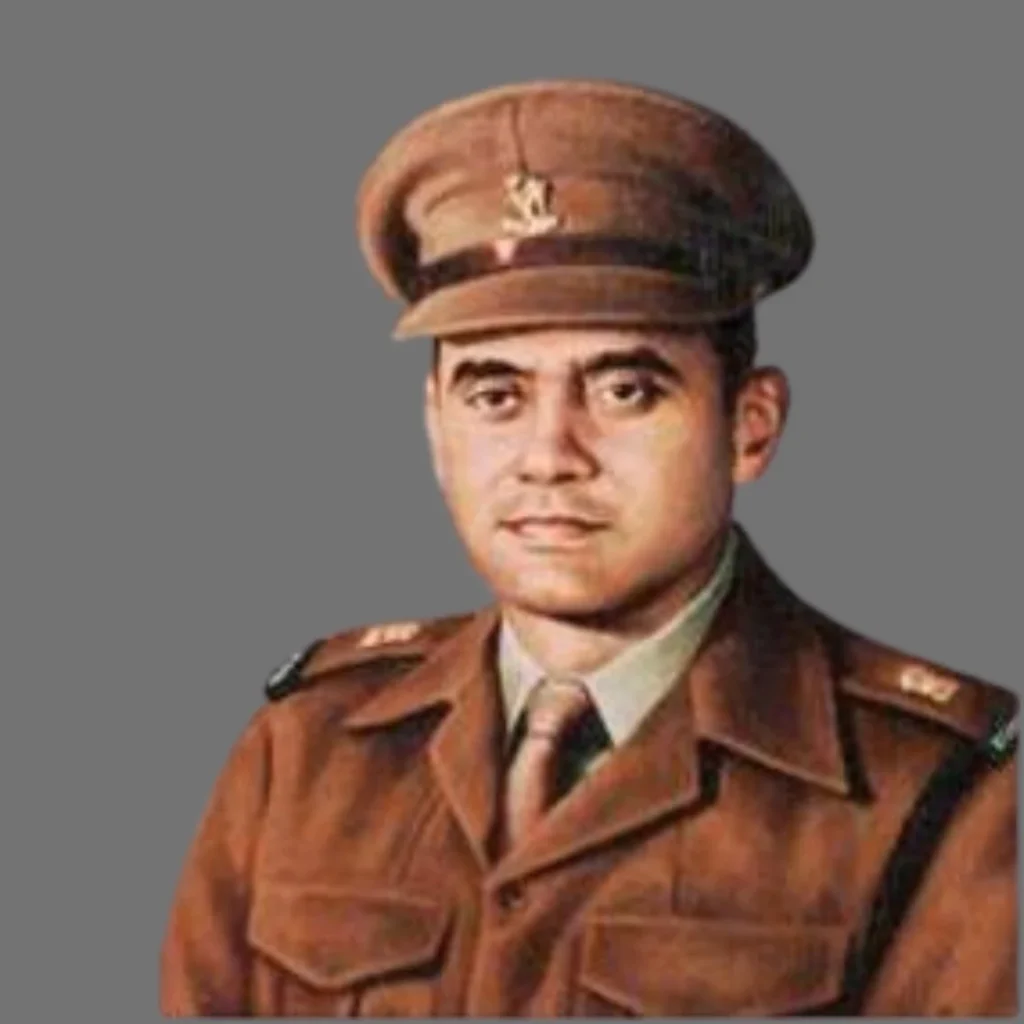
India’s military history is filled with stories of extraordinary courage, unwavering determination, and selfless sacrifice. Among these inspiring heroes, Major Shaitan Singh Bhati holds a special place. He became a symbol of fearless leadership during the 1962 Sino-Indian War, where he led C Company of the 13 Kumaon Regiment in the historic Battle of Rezang La. Despite facing overwhelming odds, freezing temperatures, and a numerically superior enemy, Major Shaitan Singh refused to abandon his men or his position. His leadership transformed one of the toughest battles in Indian military history into an everlasting example of bravery.
The Battle of Rezang La is remembered not because India won the war, but because a small group of Indian soldiers displayed unmatched courage against impossible circumstances. Major Shaitan Singh inspired every soldier under his command to fight until the very end. His sacrifice earned him India’s highest wartime gallantry award, the Param Vir Chakra, making him one of the nation’s most respected military heroes.
Even decades after his martyrdom, his life continues to inspire soldiers, students, historians, and every Indian who values patriotism and courage. His story is not just about war it is about leadership, duty, resilience, and putting the nation above oneself.
This comprehensive biography explores Major Shaitan Singh’s early life, family, military journey, leadership, achievements, and the remarkable legacy that continues to inspire generations.
Who Is Major Shaitan Singh?
Major Shaitan Singh Bhati was an officer of the Indian Army who became immortal for his heroic leadership during the Battle of Rezang La in the 1962 Sino-Indian War. As the commander of C Company, 13 Kumaon Regiment, he led approximately 120 soldiers in defending one of the highest and most strategically important positions in Ladakh against repeated Chinese attacks.
What makes Major Shaitan Singh exceptional is not merely that he fought bravely, but that he continued moving from one platoon position to another under intense enemy fire, personally motivating his soldiers and directing the battle. Even after suffering severe injuries, he refused evacuation until every possible effort had been made to defend the position. His actions inspired his company to fight with extraordinary determination despite overwhelming numerical disadvantage.
Military historians widely regard the Battle of Rezang La as one of the greatest examples of defensive warfare in modern military history. The courage displayed by Major Shaitan Singh and his men has been studied as an example of leadership, discipline, and commitment to duty under extreme conditions.
Today, Major Shaitan Singh is remembered as one of India’s greatest war heroes whose sacrifice continues to symbolize the highest ideals of military service.
Major Shaitan Singh Biography
| Particular | Details |
|---|---|
| Full Name | Major Shaitan Singh Bhati |
| Popular Name | Major Shaitan Singh |
| Rank | Major |
| Service | Indian Army |
| Regiment | 13 Kumaon Regiment |
| Company | Charlie (C) Company |
| Arm/Branch | Infantry |
| Date of Birth | 1 December 1924 |
| Birthplace | Banasar Village, Jodhpur State (present-day Rajasthan), India |
| Nationality | Indian |
| Father | Lieutenant Colonel Hem Singh Bhati |
| Mother | Information not officially documented |
| Religion | Hindu |
| Marital Status | Married |
| Wife | Officially acknowledged, but limited public records are available regarding her personal life |
| Children | Public information is limited |
| Famous For | Leadership during the Battle of Rezang La (1962) |
| War | Sino-Indian War (1962) |
| Highest Gallantry Award | Param Vir Chakra (Posthumous) |
| Date of Martyrdom | 18 November 1962 |
| Place of Martyrdom | Rezang La, Chushul Sector, Ladakh |
| Legacy | One of India’s greatest military heroes and Param Vir Chakra awardees |
Early Life of Major Shaitan Singh
Major Shaitan Singh was born on 1 December 1924 in Banasar village of the former princely state of Jodhpur, which is now part of Rajasthan. He was born into a respected Rajput family with a proud military tradition. Growing up in an environment where patriotism, courage, and discipline were deeply valued had a lasting influence on his personality.
His father, Lieutenant Colonel Hem Singh Bhati, served in the military and was widely respected for his dedication to duty. Seeing his father’s commitment to the armed forces inspired young Shaitan Singh to dream of serving the nation from an early age. Stories of bravery, honour, and sacrifice were a natural part of his upbringing, shaping the values that later defined his military career.
Unlike many children of his time who had limited opportunities, Shaitan Singh was encouraged to pursue education while also developing qualities such as physical fitness, responsibility, and discipline. Those who knew him described him as calm, humble, determined, and capable of making thoughtful decisions under pressure.
His childhood in Rajasthan’s rugged landscape also contributed to his physical endurance and resilience—qualities that would later become invaluable during his service in the high-altitude regions of Ladakh.
Although history remembers him primarily for his heroism in war, the foundations of that courage were built during these formative years through strong family values, disciplined upbringing, and an unwavering sense of duty.
Major Shaitan Singh Age & Birth Details
Major Shaitan Singh was born on 1 December 1924 in Banasar village, located in the former princely state of Jodhpur. At the time of his birth, India was still under British rule, and many princely states maintained their own military forces. Growing up during this period exposed him to a culture where military service was considered a matter of honour and responsibility.
When the Sino-Indian War broke out in October 1962, Major Shaitan Singh was 37 years old. Despite being relatively young, he had already earned the trust and respect of both his seniors and the soldiers under his command through years of dedicated military service.
His age reflected the perfect balance between youthful energy and professional experience. During the Battle of Rezang La, he demonstrated exceptional maturity, tactical judgment, and composure while leading his men in one of the most challenging combat situations faced by the Indian Army.
| Birth Details | Information |
|---|---|
| Date of Birth | 1 December 1924 |
| Birthplace | Banasar Village, Jodhpur State (Present-day Rajasthan, India) |
| Age at Martyrdom | 37 Years |
| Zodiac Sign | Sagittarius |
| Nationality | Indian |
Major Shaitan Singh Family Background
Major Shaitan Singh belonged to the distinguished Bhati Rajput family, which had a long tradition of military service. His family’s commitment to protecting the nation and serving with honour greatly influenced his personality and future career.
His father, Lieutenant Colonel Hem Singh Bhati, served with distinction in the military and became one of the strongest role models in his life. The values of integrity, discipline, courage, and loyalty were deeply rooted within the family and became guiding principles for young Shaitan Singh.
Although official records provide very little publicly available information about his mother and siblings, historical accounts consistently highlight the significant influence of his father’s military background. This environment encouraged him to pursue a life dedicated to serving the country.
Even after achieving national recognition, Major Shaitan Singh remained known for his humility and simplicity. His family background instilled in him the belief that leadership is demonstrated through action rather than words—a principle clearly reflected during the Battle of Rezang La.
| Family Member | Details |
|---|---|
| Father | Lieutenant Colonel Hem Singh Bhati |
| Mother | Not officially documented in public records |
| Family Heritage | Bhati Rajput |
| Native Place | Banasar, Rajasthan |
| Family Tradition | Military Service |
Education of Major Shaitan Singh
Major Shaitan Singh received his early education in Rajasthan, where he developed a reputation as a disciplined and sincere student. While detailed records about the names of his schools and colleges are not extensively documented in publicly available historical sources, it is well established that his education emphasized character, discipline, and responsibility alongside academic learning.
During his youth, physical fitness and leadership qualities were considered essential for those aspiring to join the armed forces. Shaitan Singh displayed these traits from an early age, making military service a natural career choice.
His upbringing and education prepared him not only intellectually but also mentally for the challenges of military life. The ability to remain calm under pressure, communicate effectively with his troops, and make quick battlefield decisions reflected the strong foundation he had developed during his formative years.
After completing his education, he chose to follow the path of military service rather than pursuing a civilian profession, continuing his family’s proud tradition of serving the nation.
| Education Details | Information |
|---|---|
| Schooling | Completed in Rajasthan (specific institution not widely documented) |
| Higher Education | Historical records are limited |
| Military Training | Completed after joining military service |
| Known For | Discipline, leadership, courage, and dedication |
Major Shaitan Singh Height, Weight & Physical Appearance
| Physical Appearance | Details |
|---|---|
| Height | Not officially documented |
| Weight | Not officially documented |
| Eye Colour | Black |
| Hair Colour | Black |
| Build | Athletic and Physically Fit |
| Personality | Courageous, Calm, Disciplined, Inspirational |
Major Shaitan Indian Army Career (Beginning)
Major Shaitan Singh’s military career began during a period of significant transition in Indian history. Before becoming an officer in the Indian Army, he first served in the military forces of the princely state of Jodhpur. This early experience gave him valuable exposure to military discipline, field operations, and leadership at a time when India was approaching independence.
Following the integration of princely state forces after Independence, Shaitan Singh continued his service with the Indian Army. His professionalism, tactical understanding, and ability to motivate soldiers quickly earned him recognition among his seniors. Over the years, he served in various operational assignments that strengthened his experience as an infantry officer.
Known for leading from the front rather than directing from behind, he developed a reputation as an officer who always placed the welfare and morale of his soldiers above personal comfort. His leadership style emphasized discipline, teamwork, and unwavering commitment to duty—qualities that would later define his actions during the Battle of Rezang La.
As his military career progressed, he was eventually posted to the 13 Kumaon Regiment, where destiny would place him at the center of one of the most extraordinary battles in Indian military history.
Journey from the Jodhpur State Forces to the Indian Army
Major Shaitan Singh Bhati’s military journey reflects the transformation of India’s armed forces after Independence. Before joining the Indian Army, he began his career with the Jodhpur State Forces, the military establishment maintained by the princely state of Jodhpur. During the British era, many princely states had their own trained armies responsible for protecting their territories and supporting larger military operations when required.
Growing up in a family with a strong military background, Shaitan Singh was naturally drawn toward a life of discipline and national service. His father, Lieutenant Colonel Hem Singh Bhati, had already earned respect through his own military career, and this inspired the young officer to follow a similar path.
After completing his education, Shaitan Singh joined the Jodhpur State Forces, where he underwent rigorous military training. He quickly gained recognition for his calm temperament, physical endurance, and ability to lead soldiers in demanding situations. Senior officers appreciated his professionalism, while fellow soldiers respected him for treating everyone with fairness and dignity.
The years immediately following India’s independence in 1947 brought major changes to the country’s defence structure. Hundreds of princely states were integrated into the Republic of India, and their military units gradually became part of the newly organized Indian Army. This integration was a complex process involving administrative reforms, standardization of training, and modernization of command structures.
Shaitan Singh adapted exceptionally well to these changes. Instead of viewing the transition as a challenge, he embraced the opportunity to serve a united India. His previous experience, combined with his willingness to learn modern military practices, made him a valuable officer during this period of restructuring.
As he progressed through his career, he earned a reputation for maintaining discipline without compromising compassion. Soldiers who served under him often remembered him as an officer who believed that trust between a commander and his troops was the foundation of battlefield success. He regularly interacted with his men, understood their concerns, and ensured they remained motivated even in difficult field conditions.
His dedication, tactical understanding, and leadership abilities eventually led to his appointment in one of the Indian Army’s respected infantry battalions—the 13 Kumaon Regiment. This posting would define his legacy forever.
Transition from Jodhpur State Forces to the Indian Army
| Particular | Details |
|---|---|
| Initial Military Service | Jodhpur State Forces |
| Period | Before and immediately after Indian Independence |
| Military Background | Infantry Service |
| Integration | Became part of the Indian Army after the merger of princely state forces |
| Leadership Qualities | Discipline, Courage, Tactical Thinking, Humility |
| Later Posting | 13 Kumaon Regiment |
13 Kumaon Regiment
The 13 Kumaon Regiment occupies a unique and distinguished place in Indian military history. While the Kumaon Regiment itself traces its origins back to the British Indian Army, the 13th Battalion became globally recognized because of the extraordinary courage displayed during the Battle of Rezang La in 1962.
At the time of the Sino-Indian War, Major Shaitan Singh was serving as the commander of Charlie (C) Company of the 13 Kumaon Regiment. The company was largely composed of soldiers from the Ahir community of Haryana, many of whom came from farming families. These soldiers were known for their physical toughness, determination, and strong sense of duty.
Although many of them had never experienced combat at such extreme altitudes, they quickly adapted to the harsh conditions of Ladakh. Operating above 16,000 feet meant facing freezing temperatures, strong winds, limited oxygen, and difficult supply routes. Despite these hardships, the soldiers remained committed to defending every inch of Indian territory.
Major Shaitan Singh understood that success in such conditions depended not only on weapons but also on morale. He built a close relationship with his troops, encouraging them to maintain confidence despite logistical challenges and the growing threat from Chinese forces.
Unlike commanders who relied solely on formal authority, he inspired his company by sharing their hardships. He inspected defensive positions personally, motivated his soldiers regularly, and ensured every platoon understood its responsibilities. His leadership created a strong sense of unity that later became one of the defining factors during the Battle of Rezang La.
Even today, military academies study the conduct of the 13 Kumaon Regiment during the battle as an example of courage, discipline, and battlefield leadership under impossible circumstances.
13 Kumaon Regiment at a Glance
| Particular | Details |
|---|---|
| Regiment | Kumaon Regiment |
| Battalion | 13 Kumaon |
| Company Commanded by Major Shaitan Singh | Charlie (C) Company |
| Company Strength | Approximately 120 Soldiers |
| Majority Composition | Ahir Soldiers from Haryana |
| Role | Infantry Battalion |
| Area of Deployment (1962) | Rezang La, Chushul Sector, Ladakh |
| Historic Achievement | Heroic stand during the Battle of Rezang La |
1962 Sino-Indian War
The Sino-Indian War of 1962 was one of the most significant conflicts in India’s post-independence history. The war erupted due to long-standing disagreements over the Himalayan border between India and China. The western sector, including Aksai Chin, and the eastern sector, then known as the North-East Frontier Agency (NEFA), became the principal areas of confrontation.
Tensions between the two countries had been increasing for several years. China had constructed a strategic road through Aksai Chin, an area claimed by India, while both nations maintained differing interpretations of the Line of Actual Control. Diplomatic negotiations failed to resolve these disputes, and military confrontations gradually intensified.
In October 1962, Chinese forces launched coordinated attacks across multiple sectors. Indian troops, many stationed in isolated and high-altitude locations, faced severe logistical challenges. Roads were limited, supplies were difficult to transport, and winter conditions made military operations even more demanding.
Despite these disadvantages, Indian soldiers displayed exceptional courage in numerous engagements. One of the most remarkable examples occurred in the Chushul sector of Ladakh, where Major Shaitan Singh and his company defended Rezang La against overwhelming odds.
The conflict officially lasted for about a month before China announced a unilateral ceasefire in November 1962. Although India suffered territorial setbacks, the bravery displayed by its soldiers during battles such as Rezang La, Walong, and Nuranang became lasting symbols of national courage.
1962 Sino-Indian War Overview
| Particular | Details |
|---|---|
| Conflict | Sino-Indian War |
| Duration | 20 October – 21 November 1962 |
| Countries Involved | India and China |
| Main Western Sector | Ladakh (Aksai Chin) |
| Main Eastern Sector | NEFA (Present-day Arunachal Pradesh) |
| Major Indian Formation at Rezang La | 13 Kumaon Regiment |
| Famous Battle | Battle of Rezang La |
| Gallantry Award | Param Vir Chakra to Major Shaitan Singh (Posthumous) |
Background Before the Battle of Rezang La
By November 1962, the military situation in Ladakh had become increasingly tense. Chinese forces had already achieved success in several sectors and were attempting to strengthen their control over strategically important mountain passes.
Among these positions, Rezang La held exceptional military importance. Located at an altitude of approximately 16,000 feet (about 4,900 metres) near the Chushul Valley, the pass overlooked approaches that could provide access to the Chushul airfield—one of India’s most important logistical bases in eastern Ladakh.
Indian military planners recognized that if Rezang La fell, Chinese troops would gain a significant tactical advantage in advancing toward Chushul. Consequently, the responsibility for defending this critical position was assigned to Charlie Company of the 13 Kumaon Regiment, commanded by Major Shaitan Singh.
The challenge before the company was enormous. The soldiers occupied exposed defensive positions spread across rocky mountain slopes with limited natural cover. The extreme altitude affected breathing, movement, and endurance. Temperatures frequently dropped far below freezing, while strong winds increased the physical strain on every soldier.
Supplying ammunition, food, and winter clothing to the forward positions was difficult because of the rugged terrain. Heavy artillery support was limited, and communication between platoon positions could become difficult during intense fighting. Despite these operational challenges, the soldiers remained determined to defend their assigned sector.
Major Shaitan Singh spent considerable time inspecting each platoon, encouraging his men, and strengthening defensive preparations. Rather than focusing on the disadvantages they faced, he emphasized discipline, confidence, and mutual trust.
His leadership ensured that every soldier clearly understood the importance of holding Rezang La, regardless of the enemy’s numerical strength.
Strategic Importance of the Chushul Sector
The Chushul Valley was one of the most strategically sensitive regions during the 1962 conflict. Its airfield served as a vital supply hub for Indian forces operating in eastern Ladakh. Reinforcements, equipment, ammunition, and essential supplies could be transported to the area through this airfield.
Rezang La formed part of the defensive shield protecting Chushul. Any successful Chinese advance through this mountain pass could threaten the valley and complicate India’s defensive operations.
For this reason, the defence of Rezang La carried significance far beyond the local battlefield. Holding the position meant delaying enemy movement, protecting the Chushul airfield, and safeguarding one of India’s key operational bases in Ladakh.
Major Shaitan Singh and his soldiers understood the importance of their mission. They knew they were not merely defending a mountain pass—they were protecting an essential gateway whose security had implications for the broader defence of Ladakh.
Although they were heavily outnumbered and operating under extremely difficult conditions, their determination remained unshaken. Their steadfast resolve laid the foundation for one of the most celebrated acts of courage in Indian military history.
Battle of Rezang La – The Complete Story
The Battle of Rezang La was fought on 18 November 1962 during the Sino-Indian War in the Chushul sector of Ladakh at an altitude of about 16,000 feet (4,900 metres). Major Shaitan Singh, commanding C Company of the 13 Kumaon Regiment, led around 120 Indian soldiers in defending the strategically important Rezang La Pass against a much larger Chinese force. Despite freezing temperatures, limited support, and difficult terrain, the company refused to retreat and fought until the last.
Battle of Rezang La Overview
| Particular | Details |
|---|---|
| Battle | Battle of Rezang La |
| Date | 18 November 1962 |
| Location | Rezang La, Chushul Sector, Ladakh |
| Altitude | Approx. 16,000 feet (4,900 m) |
| Indian Commander | Major Shaitan Singh |
| Indian Unit | C Company, 13 Kumaon Regiment |
| Indian Strength | Around 120 Soldiers |
| Opponent | People’s Liberation Army (China) |
| Significance | One of the greatest last stands in Indian military history |
The Situation Before the Attack
Before the battle, Chinese troops had increased military activity around Chushul. Rezang La was a key defensive position protecting the Chushul Valley and its airfield. Major Shaitan Singh’s company occupied isolated hill positions with limited artillery support, but every soldier was prepared to defend the post despite extreme weather and logistical challenges.
Battlefield Conditions
| Factor | Information |
|---|---|
| Weather | Freezing temperatures and strong winds |
| Terrain | Rocky mountains and steep slopes |
| Oxygen Level | Very low due to high altitude |
| Artillery Support | Limited |
| Mission | Defend Rezang La and stop enemy advance |
The Chinese Offensive Begins
In the early hours of 18 November 1962, Chinese forces opened the attack with heavy mortar and artillery fire before launching repeated infantry assaults. Indian soldiers remained in their bunkers and waited until the enemy came within range before opening accurate rifle and machine-gun fire. Several early attacks were successfully repulsed.
Chinese Assault
| Particular | Details |
|---|---|
| Date of Attack | 18 November 1962 |
| Initial Assault | Mortar and artillery bombardment |
| Enemy Strategy | Multi-directional infantry attacks |
| Indian Response | Accurate rifle and LMG fire |
| Result | Initial Chinese attacks were repelled |
Indian Soldiers Refused to Retreat
As the battle intensified, communication lines were damaged and ammunition became limited. Even under constant attack, no platoon abandoned its position. Many soldiers continued fighting with rifles, grenades, and bayonets until their last breath, displaying extraordinary courage and discipline.
Indian Defence
| Particular | Details |
|---|---|
| Communication | Damaged during battle |
| Ammunition | Became limited |
| Retreat Ordered | No |
| Fighting Continued With | Rifles, LMGs, grenades, bayonets |
| Spirit of Soldiers | Determined to defend their positions |
Major Shaitan Singh’s Leadership and Bravery
Major Shaitan Singh led from the front throughout the battle. He moved between platoon positions under heavy enemy fire, encouraged his soldiers, and coordinated the defence. Even after being seriously wounded, he refused evacuation and continued leading his company. His fearless leadership inspired every soldier to keep fighting despite overwhelming odds.
Leadership Highlights
| Leadership Quality | Description |
|---|---|
| Led from the Front | Personally visited every platoon |
| Courage | Continued despite heavy enemy fire |
| Motivation | Encouraged soldiers throughout the battle |
| Sacrifice | Refused evacuation after being wounded |
| Legacy | Symbol of fearless military leadership |
The Final Phase of the Battle
As Chinese troops surrounded several positions, the fighting became increasingly intense. Major Shaitan Singh was seriously wounded while moving between platoons. His soldiers tried to evacuate him, but he ordered them to return to the battle and continue defending their positions. He later succumbed to his injuries, becoming one of India’s greatest war heroes.
Final Moments
| Particular | Details |
|---|---|
| Major Injured | During active leadership on the battlefield |
| Evacuation | Refused |
| Final Order | Continue fighting and defend the position |
| Date of Martyrdom | 18 November 1962 |
| Place | Rezang La, Ladakh |
Outcome of the Battle
Although C Company suffered heavy casualties, its extraordinary resistance delayed the Chinese advance and became a symbol of unmatched bravery. When Indian search teams reached the battlefield after the ceasefire, many soldiers were found in their fighting positions with their weapons still in hand.
Battle Outcome
| Particular | Details |
|---|---|
| Indian Soldiers | Around 120 |
| Indian Martyrs | 114 |
| Survivors | A few, many seriously wounded |
| Chinese Casualties | Official figures not confirmed; believed to be heavy |
| Historical Importance | One of the finest examples of defensive warfare |
Param Vir Chakra Citation and Award
For his exceptional courage, outstanding leadership, and supreme sacrifice during the Battle of Rezang La, Major Shaitan Singh was posthumously awarded the Param Vir Chakra, India’s highest wartime gallantry award. The honour recognized his determination to lead from the front and inspire his soldiers even after sustaining critical injuries.
Param Vir Chakra
| Particular | Details |
|---|---|
| Award | Param Vir Chakra |
| Awarded To | Major Shaitan Singh |
| Award Type | India’s Highest Wartime Gallantry Award |
| Awarded | Posthumously |
| Reason | Extraordinary bravery and leadership at Rezang La |
Major Shaitan Singh Death and Martyrdom
Major Shaitan Singh attained martyrdom on 18 November 1962 while defending Rezang La. He placed the safety of his soldiers and the success of the mission above his own life. His sacrifice remains one of the most inspiring chapters in Indian military history.
Martyrdom Details
| Particular | Details |
|---|---|
| Date | 18 November 1962 |
| Place | Rezang La, Chushul Sector, Ladakh |
| Cause | Fatal injuries during the Battle of Rezang La |
| Remembered For | Supreme sacrifice and fearless leadership |
| National Honour | Param Vir Chakra (Posthumous) |
Major Shaitan Singh Wife, Children & Personal Life
Major Shaitan Singh was known for maintaining a private personal life. Historical records mainly focus on his military service and bravery, while very little verified information about his wife and children has been made public. Despite spending much of his career in challenging field postings, he remained a dedicated family man who valued discipline, honesty, and service to the nation above personal recognition.
| Particular | Details |
|---|---|
| Marital Status | Married |
| Wife | Name not widely documented in official public records |
| Children | Public information is limited |
| Profession | Indian Army Officer |
| Personality | Brave, Humble, Disciplined, Dedicated |
| Known For | Leadership, Patriotism, Selfless Service |
Memorials, Museums & Statues
Major Shaitan Singh’s sacrifice is commemorated through several memorials across India. The most famous is the Rezang La War Memorial near Chushul in Ladakh, built in honour of the brave soldiers of C Company, 13 Kumaon Regiment. His statue and memorials can also be found in Rajasthan and at military establishments, where they continue to inspire visitors and young soldiers.
Every year, the Indian Army and citizens pay tribute to Major Shaitan Singh and his comrades on 18 November, remembering their extraordinary courage at Rezang La.
Major Memorials
| Memorial | Location |
|---|---|
| Rezang La War Memorial | Chushul, Ladakh |
| Major Shaitan Singh Memorial | Rajasthan |
| Param Vir Chakra Memorial Displays | Various Indian Army establishments |
| Military Museums | Featured in several Indian military museums |
Legacy and Honours
Major Shaitan Singh’s legacy extends far beyond the Battle of Rezang La. His leadership has become a benchmark for courage and battlefield command in the Indian Army. Military academies study his actions as an example of leading from the front under extreme conditions.
His supreme sacrifice earned him the Param Vir Chakra, India’s highest wartime gallantry award. His story is regularly included in military history books, documentaries, and educational materials to inspire future generations.
| Honour | Details |
|---|---|
| Highest Gallantry Award | Param Vir Chakra (Posthumous) |
| Famous Battle | Battle of Rezang La |
| Regiment | 13 Kumaon Regiment |
| Remembered As | Hero of Rezang La |
| Inspiration For | Indian Armed Forces and Youth |
Unknown Facts About Major Shaitan Singh
- He was born into a family with a proud military tradition.
- Before joining the Indian Army, he served in the Jodhpur State Forces.
- He personally visited forward positions during the battle instead of remaining at a command post.
- He continued leading his company even after being seriously wounded.
- He instructed his soldiers to leave him behind and continue fighting rather than risk their own lives.
- His leadership during Rezang La is studied in Indian military training institutions.
- The Battle of Rezang La is considered one of the greatest last stands in modern military history.
Inspirational Quotes by and About Major Shaitan Singh
Although no officially verified personal quotations of Major Shaitan Singh are available in public records, these lines reflect the values for which he is remembered.
“True leadership begins where personal safety ends.”
“Duty to the nation is greater than duty to oneself.”
“Courage is not measured by survival, but by standing firm when defeat seems certain.”
“Heroes may fall in battle, but their courage lives forever.”
“The story of Rezang La reminds every generation that bravery has no limits.”
Major Shaitan Singh Timeline
| Year/Date | Event |
|---|---|
| 1 December 1924 | Born in Banasar, Jodhpur State (Present-day Rajasthan) |
| Early Years | Completed education and prepared for military service |
| Before Independence | Joined Jodhpur State Forces |
| After 1947 | Integrated into the Indian Army |
| 1962 | Posted with 13 Kumaon Regiment |
| 18 November 1962 | Led C Company during the Battle of Rezang La |
| 18 November 1962 | Attained martyrdom |
| 1963 | Awarded Param Vir Chakra (Posthumously) |
FAQs
Who was Major Shaitan Singh?
Major Shaitan Singh Bhati was an Indian Army officer who commanded C Company of the 13 Kumaon Regiment during the Battle of Rezang La in the 1962 Sino-Indian War. He was posthumously awarded the Param Vir Chakra for his extraordinary bravery.
What was Major Shaitan Singh famous for?
He is famous for leading about 120 Indian soldiers against a much larger Chinese force at Rezang La on 18 November 1962 and fighting with exceptional courage until his martyrdom.
Which regiment did Major Shaitan Singh belong to?
He served in the 13 Kumaon Regiment of the Indian Army.
When was Major Shaitan Singh born?
He was born on 1 December 1924 in Banasar village, present-day Rajasthan.
Which award did Major Shaitan Singh receive?
He was posthumously awarded the Param Vir Chakra, India’s highest wartime gallantry award.
Where did Major Shaitan Singh attain martyrdom?
He attained martyrdom at Rezang La in the Chushul sector of Ladakh on 18 November 1962.
Why is the Battle of Rezang La famous?
The battle is remembered as one of the greatest examples of defensive warfare, where a small company of Indian soldiers fought courageously against overwhelming odds.
How many soldiers were in C Company?
C Company of the 13 Kumaon Regiment consisted of approximately 120 soldiers during the Battle of Rezang La.
Conclusion
Major Shaitan Singh’s life is a remarkable example of courage, leadership, and unwavering devotion to duty. From his early days in Rajasthan and service in the Jodhpur State Forces to his distinguished career in the Indian Army, every chapter of his journey reflected discipline and selfless commitment to the nation.
His heroic leadership during the Battle of Rezang La transformed an impossible military situation into one of the finest examples of battlefield courage in modern history. Even after suffering severe injuries, he continued to inspire his soldiers and placed the mission above his own life.
More than six decades later, Major Shaitan Singh remains one of India’s most respected military heroes. His story continues to inspire soldiers, students, historians, and every Indian who believes that true patriotism is demonstrated through courage, sacrifice, and service. The legacy of the Hero of Rezang La will forever remain an enduring symbol of honour in India’s military history.
Also, Read About: Major Rishabh Singh Sambyal Wife || Major Rishabh Singh Sambyal || Major Sandeep Unnikrishnan Wife || Major Mohit Sharma Story || Major Sandeep Unnikrishnan