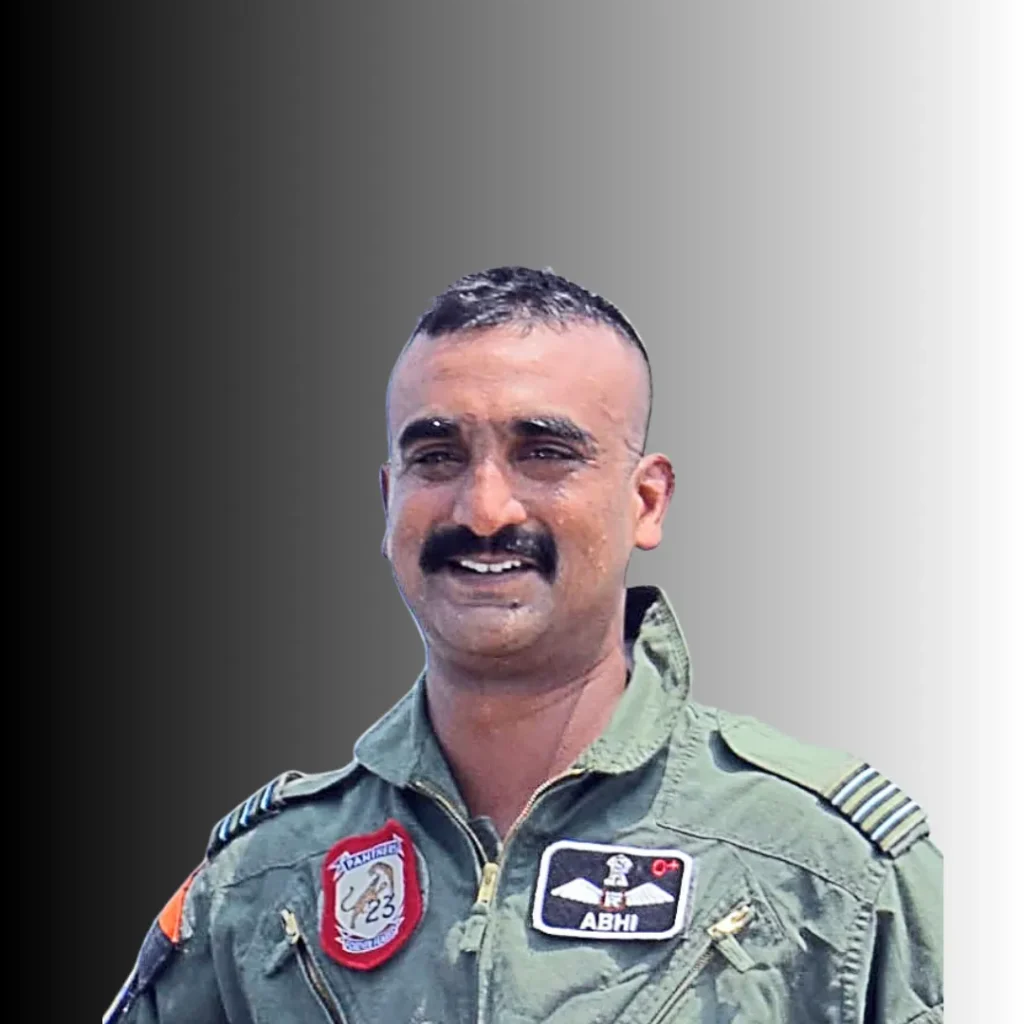
Abhinandan Varthaman is a former Indian Air Force fighter pilot who became internationally known after the India-Pakistan aerial engagement on 27 February 2019. His involvement in the incident, capture in Pakistan and return to India on 1 March 2019 made him one of the most recognisable military figures in modern Indian history. He later received the Vir Chakra for his actions during the aerial engagement.
Born on 21 June 1983 in Chennai, Tamil Nadu, Abhinandan grew up in a family closely connected with the Indian Air Force. His father, Simhakutty Varthaman, served as an Air Marshal, while his mother, Shobha Varthaman, worked as a doctor. Growing up in this environment gave him early exposure to discipline, responsibility and professional service.
Abhinandan pursued his education at Sainik School, Amaravathinagar, and the National Defence Academy before joining the Indian Air Force. His military career involved specialised flying training, fighter-aircraft operations and several promotions. Over the years, he developed experience with aircraft including the Su-30MKI and MiG-21 Bison.
Although the events of February 2019 brought him widespread recognition, his career extended well beyond that incident. He continued serving in the Indian Air Force, attained the rank of Group Captain and received one of India’s important wartime gallantry awards.
In 2026, Abhinandan entered a new professional chapter after retiring from the Indian Air Force and moving into civilian aviation with Goa-based regional airline FLY91. His journey from military fighter aviation to commercial aviation adds another important dimension to his life story.
Who Is Abhinandan Varthaman?
Abhinandan Varthaman is an Indian former fighter pilot who served in the Indian Air Force for approximately 22 years. He became internationally recognised after flying a MiG-21 Bison during the aerial engagement between Indian and Pakistani military aircraft on 27 February 2019.
During the engagement, his aircraft was hit, forcing him to eject over territory controlled by Pakistan. He was taken into Pakistani custody and returned to India two days later, on 1 March 2019, through the Wagah border crossing.
His actions during the engagement earned him the Vir Chakra, India’s third-highest wartime gallantry award. His career continued after his return, and he was promoted to Group Captain in December 2021.
Abhinandan comes from a military family. His father, Simhakutty Varthaman, served as an Air Marshal in the Indian Air Force, while his wife, Tanvi Marwaha, has also served in the force. This family background forms an important part of his personal history.
Beyond his military achievements, Abhinandan is known for maintaining a relatively private personal life. He rarely features in celebrity-style public appearances, and detailed information about his family, finances and daily activities remains limited.
Abhinandan Varthaman Biography Overview
| Biography Detail | Information |
|---|---|
| Full Name | Abhinandan Varthaman |
| Profession | Former Indian Air Force fighter pilot; civilian aviation career |
| Date of Birth | 21 June 1983 |
| Age in 2026 | 43 years |
| Birthplace | Chennai, Tamil Nadu, India |
| Nationality | Indian |
| Father | Simhakutty Varthaman |
| Mother | Shobha Varthaman |
| Wife | Tanvi Marwaha |
| Children | Two children |
| School | Sainik School, Amaravathinagar |
| Military Education | National Defence Academy |
| Military Branch | Indian Air Force |
| Date of Commission | 19 June 2004 |
| Former Military Rank | Group Captain |
| Military Specialisation | Fighter aviation |
| Aircraft Experience | Su-30MKI and MiG-21 Bison |
| Major Event | India-Pakistan aerial engagement, 27 February 2019 |
| Military Award | Vir Chakra |
| Promotion to Group Captain | 1 December 2021 |
| Indian Air Force Retirement | 31 March 2026 |
| Civilian Aviation Career | FLY91 |
| Current Career Direction | Commercial aviation |
| Known For | His role in the 2019 aerial engagement and return to India after captivity |
Abhinandan Varthaman Age and Birth Details
Abhinandan Varthaman was born on 21 June 1983 in Chennai, Tamil Nadu, India. He is 43 years old as of October 2026. His family has strong connections with Tamil Nadu and the Indian Air Force, particularly through his father, Simhakutty Varthaman, who served as a senior military officer.
His early years were shaped by family responsibilities, structured education and exposure to a professional environment in which discipline and public service were important. His birthplace and military background are among the most frequently discussed aspects of his biography.
Although he became nationally recognised in 2019, his professional journey began many years earlier with his education and preparation for a career in military aviation.
Abhinandan Varthaman Height, Weight and Physical Stats
| Physical Attribute | Details |
|---|---|
| Height | 170 cm (5 feet 7 inches) |
| Weight | 75 kg |
| Eye Colour | Black |
| Hair Colour | Black |
| Distinctive Feature | Handlebar-style moustache |
| Body Measurements | Not publicly available |
| Fitness Background | Military aviation training |
| Public Appearance | Commonly seen in military uniform during his IAF career |
Early Life and Childhood
Abhinandan Varthaman’s early life was influenced by a family environment closely connected with military service. His father, Simhakutty Varthaman, served in the Indian Air Force and eventually attained the rank of Air Marshal. Growing up in such a household would have given him familiarity with the responsibilities and professional expectations associated with a military career.
His childhood was also shaped by education and structured development. He attended Sainik School, Amaravathinagar, in Tamil Nadu, an institution known for its disciplined educational environment and preparation for future careers, including service in the armed forces.
Aviation requires more than an interest in aircraft. It demands technical understanding, sound judgement, concentration, physical preparation and the ability to make decisions under pressure. These qualities become especially important for fighter pilots, whose responsibilities can involve complex aircraft systems and rapidly changing operational conditions.
Abhinandan’s path towards military aviation developed through formal education and specialist training rather than public recognition. For years, his professional life remained largely within the Indian Air Force, where his work involved flying, training and operational duties.
His family background and educational experience provide useful context for understanding his career. The events of 2019 brought him into the public spotlight, but his foundation as a military aviator had been built over many years of preparation and service.
Abhinandan Varthaman Education and Military Training
Abhinandan Varthaman attended Sainik School, Amaravathinagar, before continuing his military education at the National Defence Academy. The NDA prepares cadets for commissioned service in India’s armed forces through academic instruction, physical development and military training. Abhinandan was commissioned into the fighter stream of the Indian Air Force on 19 June 2004.
His professional preparation included specialised flying instruction and training associated with Indian Air Force establishments, including Bathinda and Halwara. Fighter-pilot training covers aircraft handling, navigation, aerodynamics, communication, emergency procedures and mission planning. Pilots must also learn to operate within formations, coordinate with ground control and respond to unexpected situations. This combination of technical education and operational preparation established the foundation for Abhinandan’s subsequent career with fighter aircraft.
Abhinandan Varthaman Family Background
Abhinandan Varthaman belongs to a family with a strong connection to professional service. His father built a career in the Indian Air Force, his mother worked in medicine, and his wife has a military aviation background. Despite his public recognition, Abhinandan has generally kept his personal and family life away from media attention.
Father: Simhakutty Varthaman
Simhakutty Varthaman is Abhinandan’s father and a retired Air Marshal of the Indian Air Force. He served in senior military positions during his career and became an important figure in the family’s history of military service.
His professional experience provides context for Abhinandan’s early exposure to aviation and military life. However, Abhinandan established his own career through education, selection, specialist training and operational service.
Simhakutty Varthaman’s career also means that the family understands many of the professional demands associated with military service, including discipline, responsibility and the importance of following established procedures.
Mother: Shobha Varthaman
Shobha Varthaman is Abhinandan’s mother and a doctor. Her profession represents a different field of service, centred on medical knowledge and patient care.
She has largely remained outside the public spotlight. Detailed information about her medical specialisation and private life is limited, and her public identity is primarily connected with her family.
Wife: Tanvi Marwaha
Abhinandan Varthaman is married to Tanvi Marwaha, a former Squadron Leader in the Indian Air Force. Her own military background gives the couple a shared connection with aviation and the demands of service in the armed forces.
The couple maintains a private personal life. Information about their wedding, relationship history and everyday routine is limited, and they do not regularly share personal details through widely recognised public channels.
Their professional backgrounds also highlight that military life can involve demanding schedules, intensive training and changing assignments. However, the precise details of how these responsibilities affect their family life remain private.
Abhinandan Varthaman Children and Family Life
Abhinandan and Tanvi have two children. Their names, ages and other identifying details are not necessary to understand Abhinandan’s public career, and the family has generally kept these matters private.
Military aviation can involve long working hours, regular training and responsibilities that sometimes require personnel to spend time away from home. These are common features of military service, although specific details of Abhinandan’s family routine are not publicly established.
Despite the attention he received in 2019, Abhinandan has not turned his personal life into a public platform. His family background remains an important part of his biography, but it is best described through established information rather than speculation.
| Family Member | Name | Details |
|---|---|---|
| Father | Simhakutty Varthaman | Retired Air Marshal, Indian Air Force |
| Mother | Shobha Varthaman | Doctor |
| Wife | Tanvi Marwaha | Former Indian Air Force Squadron Leader |
| Children | Two children | Personal details kept private |
| Family Background | Varthaman family | Strong connection with military and professional service |
Abhinandan Varthaman Military Career
Abhinandan Varthaman’s military career began in 2004 and continued for more than two decades. His service involved formal flying training, fighter-aircraft experience, operational duties and progression through the officer ranks. Although the 2019 aerial engagement became the defining event in his public life, it was one part of a much longer professional journey.
Joining the Indian Air Force
Abhinandan joined the Indian Air Force’s fighter stream on 19 June 2004. His commissioning marked the beginning of his career as a military officer and aviator.
Military pilots must develop a detailed understanding of their aircraft, flight procedures, navigation systems and communication protocols. They also need to work effectively with other pilots, ground personnel and operational commanders.
The early years of service are particularly important because pilots must build flying experience while maintaining high safety and performance standards. Abhinandan’s career developed through this structured military environment.
Early Years as a Fighter Pilot
Fighter pilots undergo continuous training to maintain their flying skills and prepare for different operational situations. Their responsibilities can include interception missions, tactical exercises, formation flying and readiness duties.
Abhinandan progressed through several officer ranks during his career. He became a Flight Lieutenant in 2006, a Squadron Leader in 2010 and a Wing Commander in 2017.
Each promotion represented a further stage in his professional development. His career included increasing responsibility and continued experience within the Indian Air Force.
Experience with Fighter Aircraft
Abhinandan’s aviation career included experience with the Su-30MKI and MiG-21 Bison.
The Su-30MKI is a twin-engine multirole fighter used by the Indian Air Force for a range of operational missions. The MiG-21 Bison is an upgraded version of the MiG-21, featuring modernised avionics and other improvements over earlier versions.
Although both aircraft serve military purposes, they have different systems, capabilities and operational characteristics. Pilots require specific training and familiarity with the aircraft they fly.
In May 2018, Abhinandan was posted to a MiG-21 Bison squadron. He was flying this aircraft during the aerial engagement of February 2019.
Promotion to Group Captain
Abhinandan Varthaman was promoted to Group Captain with effect from 1 December 2021. This is a senior officer rank in the Indian Air Force, above Wing Commander.
His promotion came after his return from Pakistan and his receipt of the Vir Chakra. The milestone reflected his continued professional career rather than being part of the same process as the gallantry award.
His years of military service included flying duties, training, operational responsibilities and progression through the officer ranks. By the time of his retirement in 2026, he had spent approximately 22 years in the Indian Air Force.
Abhinandan Varthaman and the 2019 India-Pakistan Aerial Engagement
The aerial engagement of 27 February 2019 changed Abhinandan Varthaman’s public life. It took place during a period of heightened tension between India and Pakistan following the Pulwama attack and India’s airstrike at Balakot on 26 February 2019.
The following day, Pakistani military aircraft approached the Line of Control, prompting a response from the Indian Air Force. The resulting engagement involved fighter aircraft and military operations in a sensitive region.
Abhinandan was flying a MiG-21 Bison when his aircraft became involved in the encounter. After his aircraft was hit, he ejected over territory controlled by Pakistan and was taken into custody. His return to India on 1 March became a major international news event.
Background of the February 2019 Incident
Tensions between India and Pakistan increased after a suicide bombing in Pulwama, Jammu and Kashmir, on 14 February 2019, killed Indian security personnel. India carried out an airstrike at Balakot on 26 February, and Pakistan conducted an aerial operation the following day.
The events unfolded in a region where military aircraft operate under complex tactical and political conditions. The Line of Control separates areas administered by India and Pakistan in Jammu and Kashmir, making military activity in the area particularly sensitive.
India and Pakistan presented different accounts of some aspects of the aerial engagement. Understanding the incident requires distinguishing established events, official statements and disputed claims.
The MiG-21 Bison Mission
On 27 February 2019, Abhinandan was flying a MiG-21 Bison as part of the Indian Air Force response to the approaching Pakistani aircraft.
His aircraft became involved in the aerial engagement and was hit. The aircraft could no longer be safely flown, and he was forced to eject.
The Indian account of the engagement credited Abhinandan with shooting down a Pakistani F-16 before his own aircraft was hit. Pakistan disputed aspects of India’s account, and the claimed F-16 loss remains contested.
These distinctions are important when describing the incident. The established sequence includes Abhinandan’s participation in the engagement, the loss of his aircraft, his ejection and his subsequent capture.
Ejection and Landing in Pakistan
After his MiG-21 Bison was hit, Abhinandan ejected from the aircraft and landed in territory controlled by Pakistan.
Ejecting from a fighter aircraft is an emergency procedure that can involve serious physical risks. Once on the ground in hostile territory, a pilot may also face the risk of capture and the challenge of dealing with unfamiliar circumstances.
Abhinandan was surrounded by local people before Pakistani military personnel took him into custody. Images and videos of the incident quickly circulated, making him widely recognisable in India and abroad.
His distinctive moustache became a familiar feature of his public image, but the central event was his capture following the aerial engagement.
Capture and Time in Pakistani Custody
Abhinandan remained in Pakistani custody for approximately two days. His situation became an important diplomatic issue during a period of heightened tension between the two countries.
Pakistan announced that it would release him, and arrangements were made for his return to India through the Wagah border crossing.
Videos recorded during his captivity attracted considerable public attention. However, individual clips did not necessarily provide the full context of his circumstances, and the broader incident must be understood within the diplomatic and military situation of the time.
The episode also highlighted the importance of procedures governing the treatment and return of captured military personnel during hostilities.
Return to India on 1 March 2019
Abhinandan Varthaman returned to India on 1 March 2019 through the Wagah border crossing. His return received extensive television, newspaper and online coverage.
The event brought an end to two days of uncertainty following his capture. It also became a significant moment in public discussion about the aerial engagement and the broader relationship between India and Pakistan.
After returning to India, Abhinandan continued his military career. He later received the Vir Chakra and was promoted to Group Captain.
The 2019 incident became the most widely recognised chapter of his life, but it did not mark the end of his professional service. He remained in the Indian Air Force for several more years before retiring in 2026.
Abhinandan Varthaman Awards and Achievements
Abhinandan Varthaman’s most prominent military honour is the Vir Chakra, awarded for his actions during the aerial engagement of 27 February 2019. His professional achievements also include progression through the officer ranks, experience with fighter aircraft and more than two decades of service.
Vir Chakra
The Vir Chakra is India’s third-highest wartime gallantry award, following the Param Vir Chakra and the Maha Vir Chakra. It recognises acts of gallantry in the presence of the enemy on land, at sea or in the air.
Abhinandan was announced as a recipient of the Vir Chakra in August 2019. The award was formally presented in November 2021 by then-President Ram Nath Kovind.
The official citation recognised his actions during the aerial engagement. The award became a major milestone in his career and an important part of his public identity.
Military Recognition
Abhinandan’s recognition extended beyond the Vir Chakra. His continued service after returning to India and his promotion to Group Captain in December 2021 were important professional milestones.
Gallantry awards and promotions serve different purposes. The Vir Chakra recognised actions associated with the 2019 engagement, while promotion reflected his continuing career progression within the Indian Air Force.
Career Milestones
| Year | Achievement |
|---|---|
| 1983 | Born in Chennai, Tamil Nadu |
| 2004 | Commissioned into the fighter stream of the Indian Air Force |
| 2006 | Promoted to Flight Lieutenant |
| 2010 | Promoted to Squadron Leader |
| 2017 | Promoted to Wing Commander |
| 2018 | Posted to a MiG-21 Bison squadron |
| 2019 | Participated in the February aerial engagement and returned to India after captivity |
| 2019 | Announced as a recipient of the Vir Chakra |
| 2021 | Formally received the Vir Chakra |
| 2021 | Promoted to Group Captain |
| March 2026 | Retired from the Indian Air Force |
| August 2026 | Began a new professional chapter with FLY91 |
Abhinandan Varthaman Life After the 2019 Incident
Returning to India in March 2019 marked a major turning point in Abhinandan Varthaman’s public life. Before the aerial engagement, he was a serving fighter pilot whose professional activities largely took place within the military. After the incident, his name became familiar to millions of people.
Public attention focused on his participation in the aerial engagement, his capture and his return to India. His distinctive moustache also became a recognisable feature, and images of him circulated widely in newspapers and on television.
However, public recognition did not mean that every aspect of his life became public knowledge. Abhinandan continued his military service and maintained a relatively private personal life.
His professional career progressed after the incident. He received the Vir Chakra, continued his service and was promoted to Group Captain in December 2021. These milestones demonstrate that his career involved more than the events of February 2019.
He also remained connected with military aviation until his retirement. His work continued within the professional structure of the Indian Air Force, where training, operational readiness and service responsibilities remained important.
Abhinandan’s life after 2019 reflects the continuation of a military career after a highly publicised event, rather than a sudden departure from professional service.
Abhinandan Varthaman Retirement and Career After the Indian Air Force
Abhinandan Varthaman retired from the Indian Air Force on 31 March 2026 after approximately 22 years of service. At the time of retirement, his military rank was Group Captain.
His retirement marked the end of a long career that included fighter-aircraft operations, specialist training, military responsibilities and the 2019 aerial engagement. However, leaving the military did not mean leaving aviation.
Joining FLY91
In August 2026, Abhinandan joined FLY91, a regional airline based in Goa, to pursue a civilian aviation career.
FLY91 operates regional passenger services and uses ATR 72-600 turboprop aircraft. The airline connects destinations through short- and medium-distance regional routes.
The move from military fighter aviation to commercial passenger operations involves adapting to a different working environment. Commercial pilots must follow civil aviation regulations, airline procedures, passenger-safety requirements and aircraft-specific training standards.
Abhinandan’s military flying experience provides a foundation for this transition, but military aircraft experience does not automatically authorise a pilot to operate a commercial aircraft. Appropriate training, licensing and operational clearances remain essential.
Training for Commercial Aviation
The ATR 72-600 is a twin-engine turboprop aircraft designed for regional passenger transport. Its operating procedures differ from those of fighter aircraft such as the MiG-21 Bison and Su-30MKI.
Commercial aviation requires pilots to follow standardised procedures for flight planning, passenger operations, weather assessment, fuel management, navigation and communication with civil air traffic control.
Moving into this field represents a change in professional responsibilities while maintaining a connection with aviation.
Specific details about Abhinandan’s commercial flight schedule, individual routes and salary have not been publicly established. His transition to civilian aviation is the important career development, while the details of his daily work remain private.
Abhinandan Varthaman Wife and Married Life

Abhinandan Varthaman’s wife is Tanvi Marwaha, a former Squadron Leader in the Indian Air Force. Her professional background connects the family with military aviation and the responsibilities associated with service in the armed forces.
The couple generally maintains a private personal life. They do not regularly share details about their relationship, wedding, private celebrations or everyday routine through widely recognised public channels.
Their marriage is an important part of Abhinandan’s biography because it provides context about his family life outside his military duties. However, reliable information about their relationship history is limited, so personal stories should not be invented.
Abhinandan and Tanvi have two children. Their names, ages and other personal details are kept private, and there is little need to include identifying information about them in a biography focused on Abhinandan’s public career.
Military aviation can involve intensive training, irregular schedules and periods away from home. These conditions are common in military service, although the exact effect on Abhinandan’s family life is not publicly documented.
Overall, Abhinandan and Tanvi have maintained a low public profile while pursuing their professional and family responsibilities.
Abhinandan Varthaman Net Worth and Income Sources
Abhinandan Varthaman’s exact net worth is not publicly established. There is no comprehensive financial statement confirming his assets, savings, investments, property holdings or liabilities. Consequently, assigning him a specific net-worth figure would be misleading.
During his military career, his income came from his Indian Air Force salary and applicable allowances. Military pay depends on rank, service rules, eligibility and other factors.
After retiring from the Indian Air Force in 2026, Abhinandan moved into civilian aviation with FLY91. His new professional position provides a potential source of employment income, but his individual salary and employment contract have not been publicly disclosed.
Abhinandan Varthaman Income Sources
| Income Source | Details |
|---|---|
| Indian Air Force Salary | Earned during his military service |
| Military Allowances | Depended on eligibility, duties and service conditions |
| Military Benefits | Governed by applicable service rules |
| Civilian Aviation Salary | Employment with FLY91 |
| Investments and Assets | No comprehensive public financial disclosure |
| Exact Net Worth | Not publicly established |
Abhinandan Varthaman Social Media Presence
| Social Media Platform | Personal Account Information |
|---|---|
| No verified personal account established | |
| No verified personal account established | |
| X | No verified personal account established |
| YouTube | No verified personal channel established |
| No verified personal profile established |
Lesser-Known Facts About Abhinandan Varthaman
- Born in Chennai: Abhinandan Varthaman was born on 21 June 1983 in Chennai, Tamil Nadu.
- Military family background: His father, Simhakutty Varthaman, served as an Air Marshal in the Indian Air Force.
- Doctor in the family: His mother, Shobha Varthaman, is a doctor.
- Sainik School education: He attended Sainik School, Amaravathinagar, before continuing his military education.
- National Defence Academy: His education included training at the NDA.
- Joined the Indian Air Force in 2004: He was commissioned into the fighter stream on 19 June 2004.
- Fighter-aircraft experience: His career included flying the Su-30MKI and MiG-21 Bison.
- International recognition in 2019: The aerial engagement of 27 February 2019 brought him widespread public attention.
- Returned to India after captivity: He crossed back into India through the Wagah border on 1 March 2019.
- Received the Vir Chakra: The award recognised his actions during the 2019 aerial engagement.
- Reached Group Captain rank: His promotion took effect on 1 December 2021.
- Continued serving after 2019: He remained in the Indian Air Force for several years after the incident.
- Recognisable moustache: His handlebar-style moustache became one of his best-known physical features.
- Retired in 2026: He left the Indian Air Force after approximately 22 years of service.
- Continued in aviation: He joined regional airline FLY91 in August 2026 to pursue a civilian aviation career.
Abhinandan Varthaman’s Legacy and Public Recognition
Abhinandan Varthaman holds a distinctive place in contemporary Indian military history because his professional career became the subject of international attention during a tense period in India-Pakistan relations.
The aerial engagement of February 2019, his capture and his return to India brought the risks of fighter-pilot operations into public discussion. His experience also highlighted the demands placed on military personnel working in complex operational environments.
His professional journey demonstrates the importance of training and preparation in military aviation. Fighter pilots must understand sophisticated aircraft systems, follow operational procedures and make decisions in challenging circumstances. Abhinandan’s career involved these responsibilities long before his name became widely known.
The Vir Chakra remains a central part of his public legacy. The award recognised his actions during the 2019 engagement, while his subsequent promotion to Group Captain marked another stage in his military career.
His return to India on 1 March 2019 became a major public event, attracting extensive media attention. At the same time, the differing accounts of certain technical details from the aerial engagement show why historical events should be described carefully and without exaggeration.
His reported transition to civilian aviation in 2026 adds a new chapter to his professional journey. Moving from military flying to commercial passenger aviation involves a different set of responsibilities but maintains his connection with the field of aviation.
Abhinandan’s legacy includes his military service, the Vir Chakra, his role in the 2019 aerial engagement and his continued professional journey after that event. These different stages provide a fuller picture of his life than focusing only on one incident.
Conclusion
Abhinandan Varthaman’s biography combines military education, fighter-pilot training, family background and a defining moment in modern Indian history. Born in Chennai in 1983, he pursued a career in the Indian Air Force after studying at Sainik School, Amaravathinagar, and the National Defence Academy.
He was commissioned into the fighter stream in June 2004 and progressed through the officer ranks during his service. The aerial engagement of 27 February 2019 brought him international attention after his MiG-21 Bison was hit, forcing him to eject over Pakistani territory. He was taken into custody and returned to India on 1 March 2019.
His subsequent career included the Vir Chakra, promotion to Group Captain in December 2021 and continued military service. In March 2026, he retired from the Indian Air Force after approximately 22 years of service.
His move into civilian aviation with FLY91 in August 2026 represents a new stage in his professional life. While details of his salary, private finances and family routine remain undisclosed, his wider career provides a clear account of his journey through military and civilian aviation.
Abhinandan Varthaman’s story is not limited to the events of February 2019. It also reflects years of preparation, professional service, military recognition and a continuing connection with aviation.
FAQs
Who is Abhinandan Varthaman?
Abhinandan Varthaman is a former Indian Air Force fighter pilot who became internationally known after the India-Pakistan aerial engagement of February 2019. He received the Vir Chakra for his actions during the incident and later attained the rank of Group Captain.
What is Abhinandan Varthaman’s age in 2026?
Abhinandan Varthaman is 43 years old as of October 2026. He was born on 21 June 1983.
Where was Abhinandan Varthaman born?
He was born in Chennai, Tamil Nadu, India. His family’s roots are associated with Thirupanamoor in Tamil Nadu.
Who is Abhinandan Varthaman’s father?
His father is Simhakutty Varthaman, a retired Air Marshal of the Indian Air Force.
Who is Abhinandan Varthaman’s mother?
His mother is Shobha Varthaman, a doctor.
Who is Abhinandan Varthaman’s wife?
Abhinandan Varthaman is married to Tanvi Marwaha, a former Squadron Leader in the Indian Air Force.
How many children does Abhinandan Varthaman have?
Abhinandan and Tanvi have two children. Their personal details are kept private.
When did Abhinandan Varthaman join the Indian Air Force?
He was commissioned into the fighter stream of the Indian Air Force on 19 June 2004.
Which aircraft did Abhinandan Varthaman fly?
His military career included experience with the Su-30MKI and MiG-21 Bison. He was flying a MiG-21 Bison during the aerial engagement of 27 February 2019.
What happened to Abhinandan Varthaman on 27 February 2019?
He participated in an aerial engagement involving Indian and Pakistani military aircraft. His MiG-21 Bison was hit, forcing him to eject over territory controlled by Pakistan, where he was taken into custody.
Also, Read About: Sanjay Kapoor || Mamman Khan || Dr. Indranil Khan || Brigadier Hoshiar Singh || Captain Pawan Kumar || Anil Deshmukh || Jahangir Khan TMC || Raghav Chadha || Suvendu Adhikari || G. Marimuthu || V. D. Satheesan || Uma Shankar Singh || Ponguleti || Munirathna || Samrat Choudhary || Nana Patole || C. Joseph Vijay