Blog

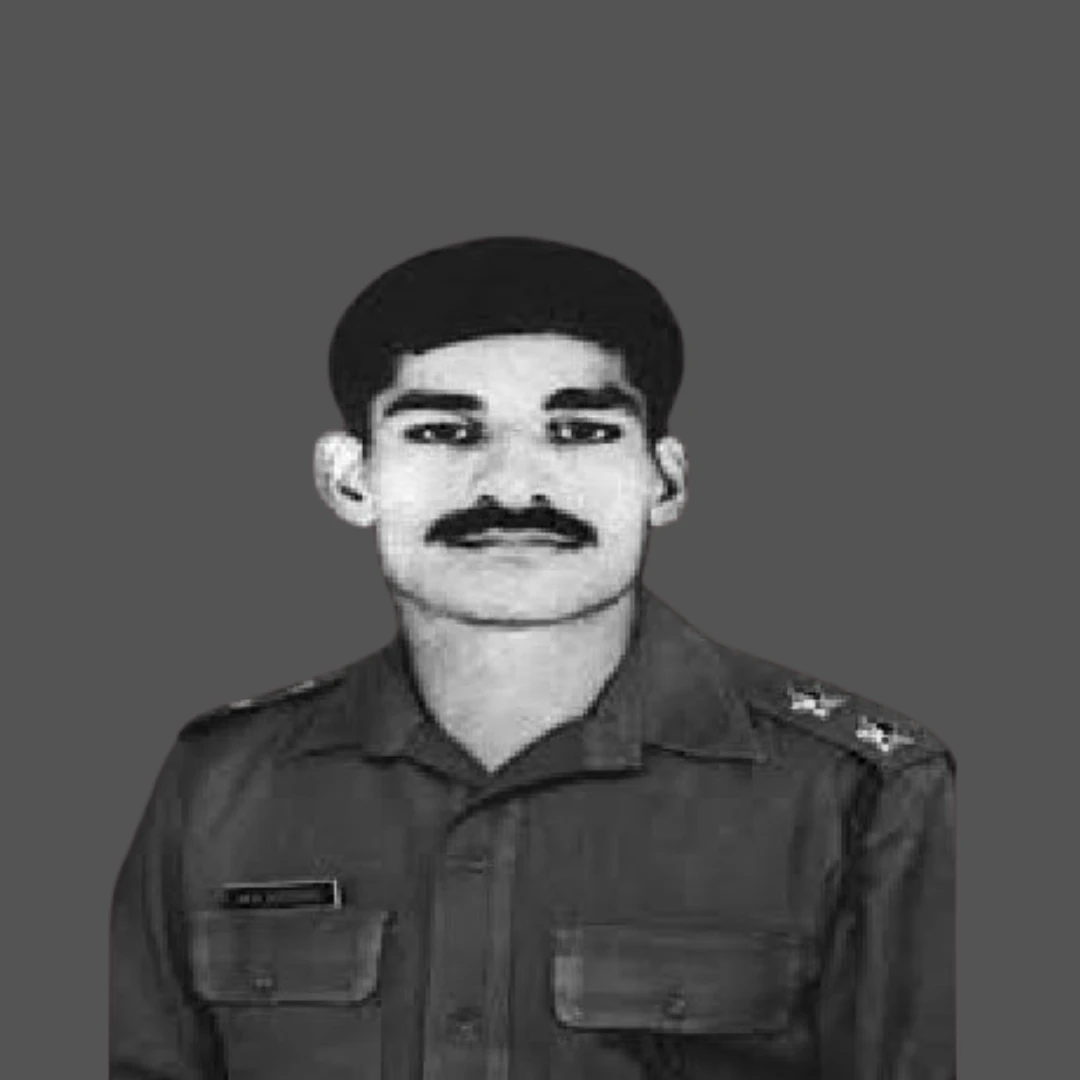
  • Col Santosh Babu MVC Biography: Age, Family, Wife, Children, Army Career, Galwan Martyrdom & Maha Vir Chakra

    Col Santosh Babu MVC Biography: Age, Family, Wife, Children, Army Career, Galwan Martyrdom & Maha Vir Chakra

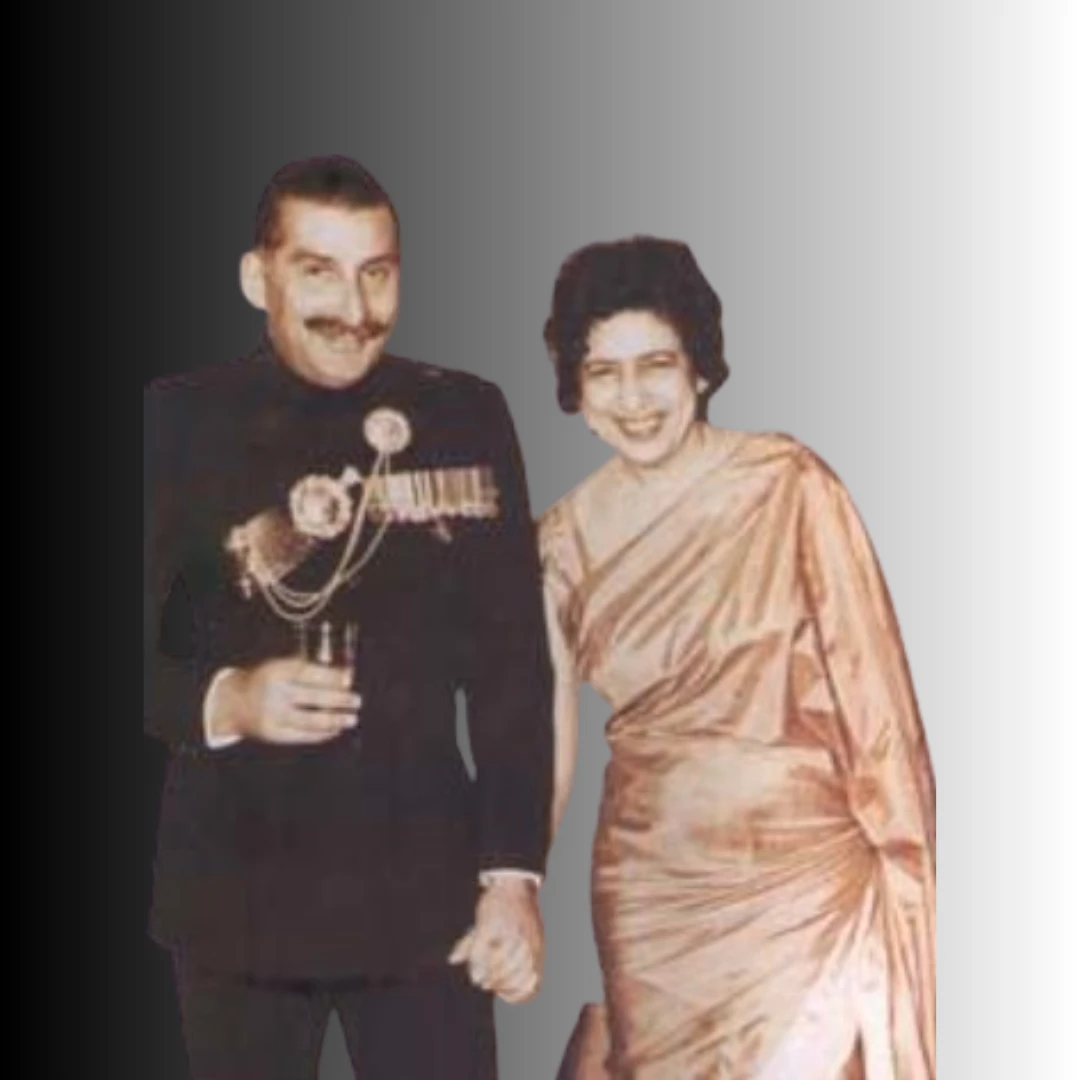
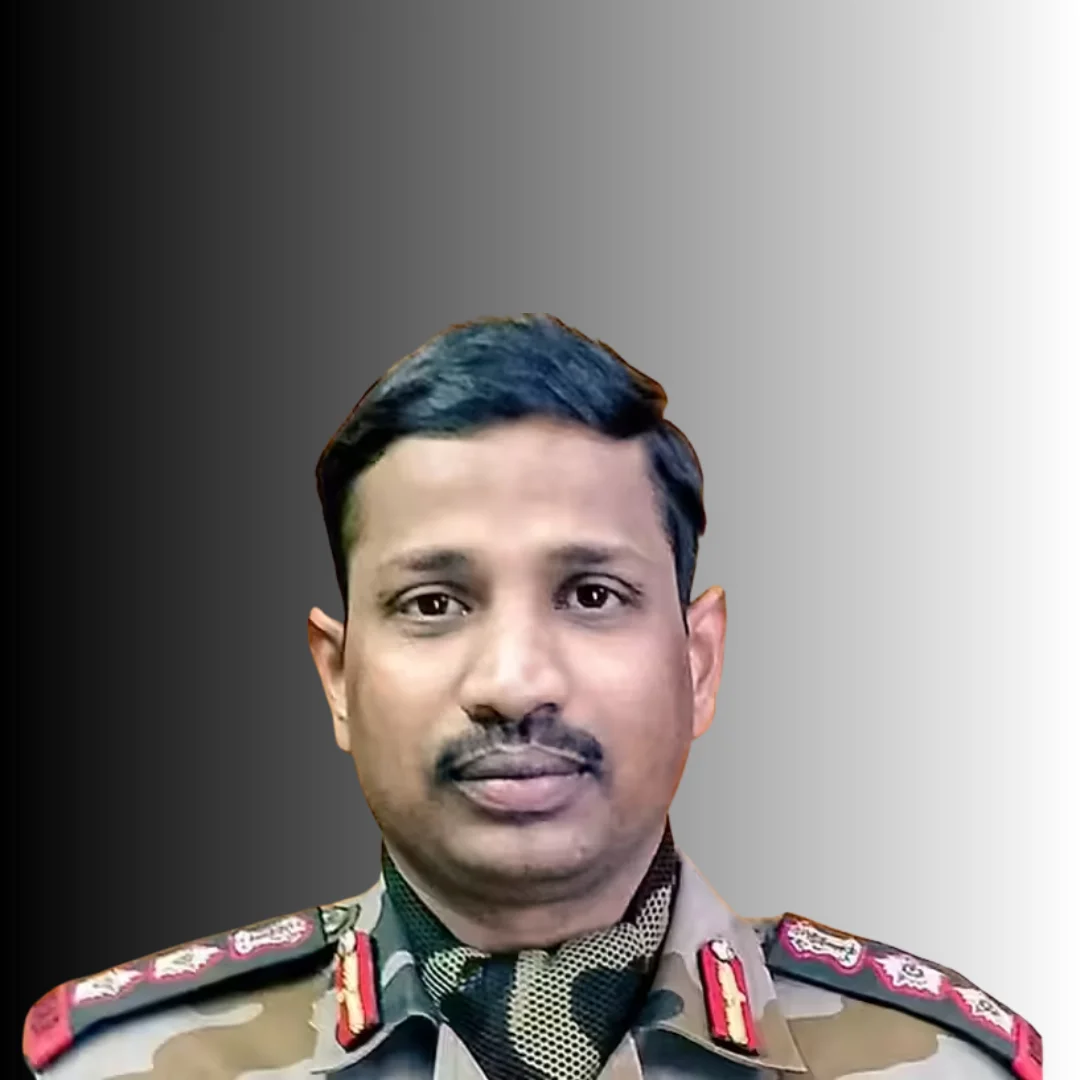
    Colonel Bikkumalla Santosh Babu MVC was a brave Indian Army officer whose name became closely associated with courage, leadership and sacrifice after the Galwan Valley clash of June 2020. He served as the Commanding Officer of the 16th Battalion, The Bihar Regiment, and was leading his troops during the violent confrontation between Indian and Chinese forces in eastern Ladakh. Colonel Santosh Babu was killed in action on the night of 15 June 2020 while leading his soldiers. For his exceptional courage, leadership and devotion to duty, he was awarded the Maha Vir Chakra posthumously, India’s second-highest wartime gallantry award. His journey from Suryapet in Telangana to becoming a Colonel in the Indian Army is remembered as an inspiring story of discipline, determination and service to the nation.

    Who Was Colonel Santosh Babu?

    Colonel Santosh Babu was an Indian Army officer who commanded the 16 Bihar Regiment during the 2020 India-China border crisis. He had more than 15 years of military experience and had served in different operational and professional assignments before taking command of his battalion. His career included service in Jammu and Kashmir, a United Nations peacekeeping assignment in the Democratic Republic of the Congo and an instructional role at the National Defence Academy. He became particularly well known after the Galwan Valley clash, where he led his troops from the front despite the extremely dangerous circumstances.

    Santosh Babu Biography Overview

    Biography DetailsInformation
    Full NameColonel Bikkumalla Santosh Babu
    Commonly Known AsColonel Santosh Babu
    Date of Birth13 February 1983
    BirthplaceSuryapet, Telangana
    NationalityIndian
    ProfessionIndian Army Officer
    RankColonel
    Regiment16 Bihar Regiment
    NDA105th Course
    Army Commission10 December 2004
    WifeSantoshi
    ChildrenAbhigna and Anirudh
    Major Service AreasJammu & Kashmir, Congo, Ladakh
    Command16 Bihar Regiment
    Date of Martyrdom15 June 2020
    Place of MartyrdomGalwan Valley, Eastern Ladakh
    Age at Death37 years
    Gallantry AwardMaha Vir Chakra, Posthumous

    Santosh Babu Age and Birth Details

    Colonel Santosh Babu was born on 13 February 1983 in Suryapet, Telangana. He was 37 years old when he was killed during the Galwan Valley clash in June 2020. His birthplace, Suryapet, later became an important centre for tributes to the Army officer. People from the town gathered to pay their final respects when his mortal remains were brought back to Telangana. His life story is particularly remembered in Telangana because he rose from a local family background to one of the most respected military positions in the country.

    Colonel Santosh Babu Caste

    There is no need to assign an unverified caste identity to Colonel Santosh Babu. Reliable public military and government records focus on his service, military career, leadership and gallantry, rather than his caste. Therefore, his caste should not be stated as a confirmed biographical fact unless supported by an authoritative source. His legacy is primarily connected with his contribution to the Indian Army and his sacrifice at Galwan.

    Santosh Babu Full Name and Nickname

    His full name is Colonel Bikkumalla Santosh Babu.

    He is commonly referred to as:

    • Colonel Santosh Babu
    • Col. Santosh Babu
    • B. Santosh Babu
    • Colonel Bikkumalla Santosh Babu
    • Col Santosh Babu MVC

    A separate official childhood nickname is not widely documented in reliable public records, so unofficial names should not be presented as confirmed facts.

    Santosh Babu Family and Parents

    Colonel Santosh Babu was the son of Bikkumalla Upender and Bikkumalla Manjula. His father was associated with the banking sector and later retired, while his mother remained closely involved with the family. The family was based in Suryapet, Telangana. His parents were devastated by his death but publicly expressed pride in their son’s service and sacrifice. Contemporary reports described the family as proud that he had given his life serving the country. The loss was especially significant because Santosh Babu was the only son of his parents.

    Colonel Santosh Babu Childhood & Early Life

    Santosh Babu grew up in Suryapet and developed an interest in a disciplined career at an early age. He studied at Sri Saraswathi Shishumandir School in Luxettipet during his early school years before moving to Sainik School Korukonda. His education at Sainik School became an important step toward his military career. The environment at the school introduced him to discipline, physical training, leadership and the values associated with military service. His academic journey eventually took him to the National Defence Academy and later the Indian Military Academy.

    Colonel Bikkumalla Santosh Babu Height & Physical Stats

    Physical DetailInformation
    HeightNot officially verified
    WeightNot reliably documented
    Eye ColourNot officially documented
    Hair ColourNot officially documented
    Age at Martyrdom37 years
    Physical FitnessTrained Indian Army Officer

    Col Santosh Babu MVC Schooling – Sainik School Korukonda

    Sainik School Korukonda played an important role in Santosh Babu’s development. He studied at the school in Andhra Pradesh and completed his schooling there before moving toward professional military training. Sainik School provided him with an environment focused on academics, discipline, leadership and preparation for defence services. His association with the institution continued even after he joined the Army. The school later remembered him as one of its distinguished alumni. His journey from Sainik School Korukonda to NDA and eventually to the rank of Colonel demonstrates how strongly his early education shaped his career.

    B. Santosh Babu NDA and Indian Military Academy

    After completing his schooling, Santosh Babu joined the National Defence Academy. He was part of the 105th NDA Course. After completing his NDA training, he proceeded to the Indian Military Academy in Dehradun for further military training. His military education prepared him for the responsibilities of an Indian Army officer. He was eventually commissioned into the Indian Army on 10 December 2004. This marked the beginning of a military career that would later take him to several challenging operational environments.

    Santosh Babu Matter in Telugu

    Colonel Bikkumalla Santosh Babu was a brave Indian Army officer from Suryapet, Telangana. He served as the Commanding Officer of the 16 Bihar Regiment and became widely known for his leadership during the Galwan Valley clash in June 2020. Born on 13 February 1983, Santosh Babu completed his education at Sainik School Korukonda before joining the National Defence Academy. He later trained at the Indian Military Academy and was commissioned into the Indian Army in 2004. During his military career, he served in different operational areas and also participated in a United Nations peacekeeping mission in the Democratic Republic of the Congo. In December 2019, he took command of the 16 Bihar Regiment. A few months later, he was deployed in eastern Ladakh during a period of serious tension along the India-China border.

    On the night of 15 June 2020, Santosh Babu led his soldiers during the Galwan Valley confrontation. Despite sustaining serious injuries, he continued to lead and control his troops. He was killed during the confrontation at the age of 37. For his exceptional courage and leadership, he was awarded the Maha Vir Chakra posthumously. His journey from Suryapet to becoming a Colonel in the Indian Army continues to inspire young people across Telangana and India.

    Col. Santosh Babu Indian Army Mein Joining

    Colonel Santosh Babu was commissioned into the Indian Army on 10 December 2004. He joined the 16 Bihar Regiment, beginning a military career that would eventually take him through several demanding assignments. During his service, he gained experience in operational areas and developed the leadership skills required to command troops. His career was not limited to frontline deployment. He also served as an instructor and took part in an international peacekeeping mission. These experiences helped prepare him for the responsibilities he later carried as a battalion commander.

    Santosh Babu Military Career & Postings

    Santosh Babu served in several challenging assignments during his military career. His service included operational experience in Jammu and Kashmir and a deployment with the United Nations peacekeeping mission in the Democratic Republic of the Congo. He also served as an instructor at the National Defence Academy.

    His career therefore included a combination of:

    • Field operations
    • Counter-insurgency experience
    • International peacekeeping
    • Military instruction
    • Command responsibilities

    By the end of his career, he had developed extensive professional experience and had risen to the rank of Colonel.

    Colonel Bikkumalla Santosh Babu 16 Bihar Regiment

    The 16 Bihar Regiment was the regiment with which Colonel Santosh Babu’s military career was closely associated. He was commissioned into the regiment in 2004 and later became its Commanding Officer. He took command of the battalion in December 2019, just months before the Galwan Valley clash. As Commanding Officer, he was responsible for leading his soldiers and making operational decisions in one of the most strategically sensitive areas along the India-China border. His leadership during the Galwan confrontation became the defining chapter of both his career and the regiment’s modern history.

    UN Peacekeeping Mission in Congo

    One of the important but less widely discussed parts of Santosh Babu’s career was his service in the Democratic Republic of the Congo as part of a United Nations peacekeeping mission. UN peacekeeping assignments expose military personnel to complex environments involving security operations, humanitarian concerns and cooperation with forces from different countries. Santosh Babu gained valuable international operational experience during this assignment. His Congo deployment was another important stage in the development of the leadership qualities that later became evident during his command in eastern Ladakh.

    Awards & Gallantry

    The most prestigious award associated with Colonel Santosh Babu is the Maha Vir Chakra. The award was given to him posthumously for exceptional bravery during the Galwan Valley clash. The official citation recognised his leadership and courage during the confrontation. Despite sustaining serious injuries, he continued directing his troops and remained at the forefront of the operation. His actions demonstrated exceptional courage under extreme circumstances.

    B. Santosh Babu Colonel Rank

    Santosh Babu had reached the rank of Colonel by the time he took command of the 16 Bihar Regiment. Achieving the rank required years of military service, professional training and leadership experience. As a Colonel and Commanding Officer, he carried responsibility for the battalion and the soldiers serving under him. His leadership during the Galwan clash later became the central reason for his posthumous Maha Vir Chakra.

    Galwan Valley Role

    The Galwan Valley confrontation took place in eastern Ladakh during a period of heightened India-China border tensions. Colonel Santosh Babu was leading the 16 Bihar Regiment during the operation. According to the gallantry citation, he personally planned and organised the operation and briefed his troops before moving into the area. The situation subsequently escalated into a close-quarters confrontation. The official account records that the opposing soldiers used sharp weapons and heavy stone pelting. Despite being seriously injured, Colonel Babu continued exercising command and control. His decision to remain at the front and continue leading his soldiers became a major part of his gallantry citation.

    How Did Colonel Santosh Babu Die?

    Colonel Santosh Babu was killed during the Galwan Valley clash on the night of 15 June 2020. The confrontation involved Indian and Chinese troops in eastern Ladakh and developed into close physical combat. According to the official gallantry citation, Colonel Babu suffered serious injuries but continued leading his troops. He eventually succumbed to his injuries during the confrontation. His death at the age of 37 made him one of the most prominent Indian military figures associated with the Galwan Valley clash.

    Col Santosh Babu MVC 15 June 2020 Martyrdom

    15 June 2020 became the defining date of Colonel Santosh Babu’s legacy. The Galwan Valley clash resulted in the deaths of Indian soldiers, including the commanding officer of the 16 Bihar Regiment. Colonel Babu’s sacrifice received national attention because he was leading his troops when the confrontation occurred. The Indian Army and the Government of India later formally recognised his courage through the Maha Vir Chakra. His name was also remembered by his educational institutions and military fraternity.

    Santosh Babu Wife and Children
    Santosh Babu Wife and Children
    Santosh Babu Wife and Children

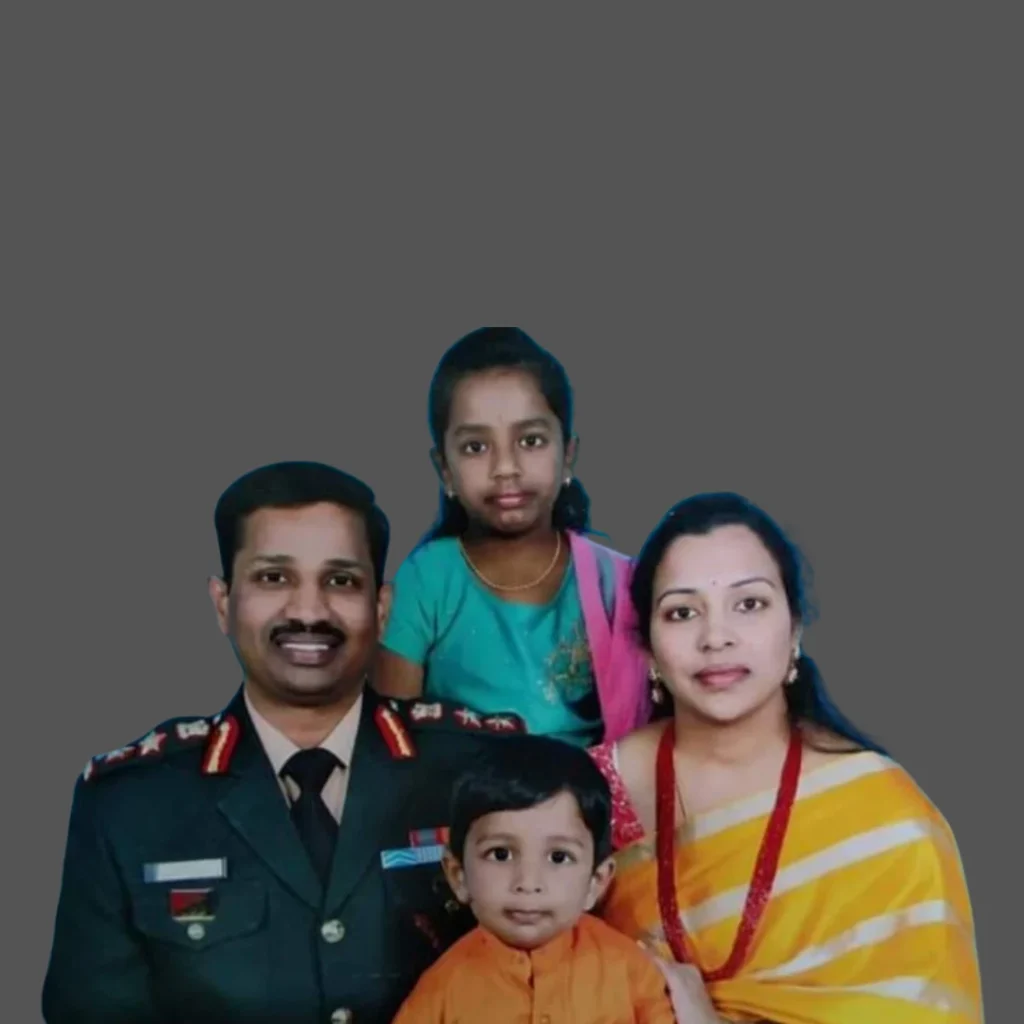
    Colonel Santosh Babu was married to Santoshi.

    The couple had two children:

    • Daughter – Abhigna
    • Son – Anirudh

    Contemporary reports stated that his wife and children were living in Delhi at the time of his death. His family travelled to Telangana after his mortal remains were brought back. The loss was particularly difficult for his wife and young children, who had to face the sudden death of a husband and father.

    Santosh Babu Wife & Family After His Death

    Following Colonel Santosh Babu’s martyrdom, his wife Santoshi became closely associated with his public legacy. Reports stated that the Telangana government provided support to the family and later appointed her as a Deputy Collector in the state’s revenue department. His children have also remained an important part of public remembrance of his sacrifice. The story of his family highlights the personal cost behind a soldier’s service and sacrifice.

    Maha Vir Chakra

    The Maha Vir Chakra (MVC) is India’s second-highest wartime gallantry award. Colonel Bikkumalla Santosh Babu was awarded the Maha Vir Chakra posthumously. The official government record lists him as: IC-64405M Colonel Bikkumalla Santosh Babu, 16th Battalion, The Bihar Regiment (Posthumous). The award recognised his exceptional courage and leadership during the Galwan Valley clash. His family later received the honour on his behalf. The Maha Vir Chakra became the highest formal recognition of the courage he displayed during his final operation.

    Colonel Santosh Babu Regiment

    Colonel Santosh Babu belonged to the 16 Bihar Regiment of the Indian Army. The regiment was an important part of his entire military journey. He joined the regiment after receiving his commission and eventually rose to become its Commanding Officer. His final posting with the regiment placed him in eastern Ladakh during the 2020 border crisis. The regiment’s role in the Galwan confrontation and the sacrifice of its soldiers remain important parts of its military history.

    Col Santosh Babu MVC Last Rites

    After his death, Colonel Santosh Babu’s mortal remains were brought back to Telangana. They were received with military honours before being taken to his native Suryapet. His final rites were conducted with full military honours. Large numbers of people gathered to pay their respects to the fallen officer. For the people of Suryapet, the funeral was not only a military ceremony but also a deeply emotional moment for the family and community.

    Memorials and Tributes

    Colonel Santosh Babu has been remembered through several tributes. The National Defence Academy honoured him by including his name in its Hut of Remembrance, recognising his sacrifice as an alumnus. His school, Sainik School Korukonda, has also remembered him as a distinguished former student. In Telangana, public commemorations have continued to honour his contribution and sacrifice. His name is now strongly associated with courage, military leadership and the Galwan Valley clash.

    Santosh Babu Story

    The story of Colonel Santosh Babu began far away from the high-altitude battlefield of Ladakh. He grew up in Suryapet, Telangana, and received his early education before entering Sainik School Korukonda. His next steps took him to the National Defence Academy and Indian Military Academy. After joining the Indian Army in 2004, he served in different operational environments and gained experience through field assignments, peacekeeping and military instruction. In December 2019, he took command of the 16 Bihar Regiment. Only a few months later, he found himself leading troops during a serious confrontation in Galwan Valley. On the night of 15 June 2020, his leadership was tested under extraordinary circumstances. He remained with his soldiers even after being seriously injured and continued to exercise command. His final act of leadership became the defining chapter of his life.

    Santosh Babu Movie

    Colonel Santosh Babu’s story and the Galwan Valley clash have attracted considerable attention from the Indian film industry. Salman Khan’s war drama was initially announced under the title Battle of Galwan. The project drew public interest because it was connected to the real events of the 2020 Galwan Valley clash. However, the film should not automatically be treated as a documentary account of Colonel Santosh Babu’s life. A cinematic story based on real events can contain fictionalised characters, scenes and narrative elements. In March 2026, the film was officially renamed Maatrubhumi: May War Rest in Peace. The title change generated renewed public discussion about the movie and its connection with the Galwan events.

    Santosh Babu Movie Controversy

    Most of the controversy associated with Colonel Santosh Babu in popular culture has been connected to the proposed film based on the Galwan Valley events. The original title Battle of Galwan led many people to associate the movie directly with the real-life battle and Colonel Santosh Babu. The project was later renamed Maatrubhumi: May War Rest in Peace. Because the film is a cinematic interpretation of events, readers should distinguish between the documented military record of Colonel Santosh Babu and the fictional elements that may appear in the movie. The real Colonel Santosh Babu’s life should be understood through military records, government announcements and credible historical reporting rather than through a film alone.

    Interesting Facts About Santosh Babu

    • Colonel Santosh Babu was born in Suryapet, Telangana.
    • Santosh Babu studied at Sainik School Korukonda.
    • Col Santosh Babu MVC was part of the 105th NDA Course.
    • Col Santosh Babu was commissioned into the Indian Army in 2004.
    • B. Santosh Babu belonged to the 16 Bihar Regiment.
    • Santosh Babu served in the Democratic Republic of the Congo as part of a UN peacekeeping mission.
    • Col Santosh Babu MVC also served as an instructor at the National Defence Academy.
    • Santosh Babu became Commanding Officer of the 16 Bihar Regiment in December 2019.
    • B. Santosh Babu was only 37 years old when he died.
    • Col Santosh Babu was awarded the Maha Vir Chakra posthumously.
    • Santosh Babu was married to Santoshi.
    • He had two children, Abhigna and Anirudh.
    • His name was included in the NDA Hut of Remembrance.
    • His final military assignment was in eastern Ladakh.
    • His sacrifice became one of the most remembered stories from the 2020 Galwan Valley clash.

    Why Is Colonel Santosh Babu Remembered?

    Colonel Santosh Babu is remembered not only because he died in the Galwan Valley clash but because of the way he performed his duty. As a Commanding Officer, he had responsibility for the soldiers under his command. During the confrontation, he remained at the forefront and continued leading despite serious injuries. His conduct demonstrated the qualities expected from a military leader: courage, responsibility, discipline and commitment to his troops. His posthumous Maha Vir Chakra formally recognised these qualities.

    Santosh Babu Legacy

    Colonel Santosh Babu’s legacy can be understood through several aspects of his life.

    Military Legacy

    He is remembered within the Indian Army for his leadership and courage as the Commanding Officer of 16 Bihar Regiment.

    Educational Legacy

    His journey from Sainik School Korukonda to NDA and eventually to the rank of Colonel has made his story inspirational for students interested in joining the armed forces.

    Family Legacy

    His wife and two children remain an important part of his personal story and public remembrance.

    Telangana Legacy

    Suryapet and the wider Telangana community continue to remember him as a son of the state who sacrificed his life while serving the country.

    National Legacy

    His name has become closely associated with the Galwan Valley clash and the sacrifices made by Indian soldiers during the 2020 border crisis.

    Controversy Around Colonel Santosh Babu

    There is no major established personal controversy surrounding Colonel Santosh Babu’s military career. Most controversy connected with his name has emerged around media coverage and the cinematic portrayal of the Galwan Valley events. Another issue is the circulation of unverified information about his personal life, including claims about caste, height, nicknames and other private details. A reliable biography should distinguish between documented facts and claims that cannot be independently verified. His military service and gallantry award remain well documented through official records.

    FAQs

    Who was Colonel Santosh Babu?

    Colonel Bikkumalla Santosh Babu was an Indian Army officer and Commanding Officer of the 16 Bihar Regiment who was killed during the Galwan Valley clash in June 2020.

    When was Santosh Babu born?

    He was born on 13 February 1983 in Suryapet, Telangana.

    How old was Santosh Babu when he died?

    He was 37 years old when he was killed in the Galwan Valley clash.

    When did Santosh Babu join the Indian Army?

    He was commissioned into the Indian Army on 10 December 2004.

    Which regiment did Santosh Babu belong to?

    He belonged to the 16 Bihar Regiment, officially listed as the 16th Battalion, The Bihar Regiment.

    What was Santosh Babu’s rank?

    He was a Colonel and was serving as the Commanding Officer of 16 Bihar Regiment when he died.

    Where did Colonel Santosh Babu die?

    He died during the Galwan Valley clash in eastern Ladakh.

    How did Colonel Santosh Babu die?

    He was killed during the close-quarters confrontation between Indian and Chinese troops on the night of 15 June 2020. According to his official gallantry citation, he continued leading his troops despite sustaining serious injuries.

    Which award did Santosh Babu receive?

    He received the Maha Vir Chakra posthumously for his exceptional courage and leadership during the Galwan Valley clash.

    Who was Santosh Babu’s wife?

    His wife was Santoshi.

    How many children did Santosh Babu have?

    He had two children, a daughter named Abhigna and a son named Anirudh.

    Where did Santosh Babu study?

    He studied at Sainik School Korukonda, followed by the National Defence Academy and Indian Military Academy.

    Was Santosh Babu an NDA alumnus?

    Yes. He was part of the 105th NDA Course and later also served as an instructor at the National Defence Academy.

    Did Santosh Babu serve in Congo?

    Yes. He served in the Democratic Republic of the Congo as part of a United Nations peacekeeping mission.

    What is Santosh Babu’s caste?

    His caste is not reliably established in authoritative public military records, so it should not be presented as confirmed information.

    Is Battle of Galwan a Santosh Babu biopic?

    The Salman Khan project is based on the broader Galwan Valley events. It should not be treated as a factual documentary of Colonel Santosh Babu’s entire life.

    What is the new name of Battle of Galwan?

    The film was renamed Maatrubhumi: May War Rest in Peace in March 2026.

    Conclusion

    Colonel Bikkumalla Santosh Babu MVC remains one of the most respected Indian Army officers associated with the Galwan Valley clash. His journey began in Suryapet, Telangana, continued through Sainik School Korukonda, the National Defence Academy and the Indian Military Academy, and eventually led him to command the 16 Bihar Regiment. His military career included field service, international peacekeeping and instructional responsibilities. By December 2019, he had taken command of the 16 Bihar Regiment and was serving in eastern Ladakh during a period of intense border tension. On the night of 15 June 2020, he led his soldiers during the Galwan Valley confrontation. Despite suffering serious injuries, he continued to lead his men until his final moments. His sacrifice was recognised with the Maha Vir Chakra posthumously, India’s second-highest wartime gallantry award. Beyond military honours, Santosh Babu is remembered as a son, husband, father, officer and leader. His story continues to inspire young Indians and remains an enduring example of courage, leadership, duty and sacrifice.

    Also, Read About:

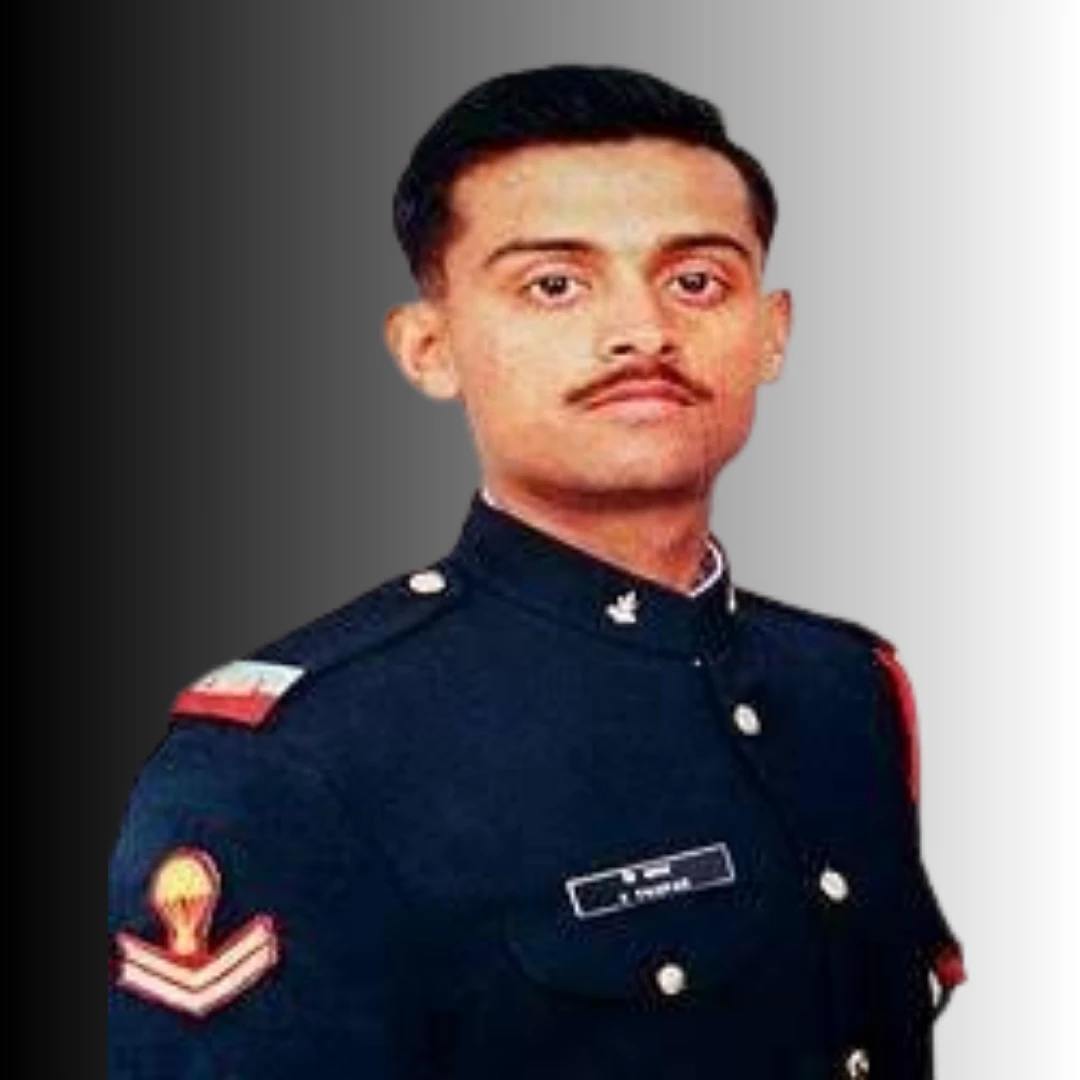
  • Captain Vijyant Thapar Biography: Early Life, Age, Army Career, Kargil War, Vir Chakra, Last Letter, Legacy & More

    Captain Vijyant Thapar Biography: Early Life, Age, Army Career, Kargil War, Vir Chakra, Last Letter, Legacy & More

    Captain Vijyant Thapar was one of the brave young officers of the Indian Army whose name became closely associated with courage and sacrifice during the Kargil War of 1999. Born into a military family, he developed a strong desire to join the Army at a very young age. His childhood dream eventually became a reality when he was commissioned as an Army officer. Although his military career lasted only a few months, Vijyant experienced some of the most challenging combat conditions during the Kargil conflict. As an officer of 2 Rajputana Rifles, he first served in Kashmir and later took part in the operations to recapture strategic heights in the Drass sector.

    He played an important role in the battles around Tololing and later led his platoon during the difficult assault on Knoll. He continued leading his men despite intense enemy fire and serious injuries. He was eventually killed during the operation at the age of just 22. For his exceptional courage, determination and leadership, Captain Vijyant Thapar was awarded the Vir Chakra posthumously. However, his story is not remembered only because of his battlefield bravery. He was also known for his kindness, disciplined lifestyle and compassion toward people affected by violence. One of the most touching parts of his life was his relationship with a young Kashmiri girl named Ruksana. His concern for her continued until his final moments and became an important part of his legacy.

    Who Was Captain Vijyant Thapar?

    Captain Vijyant Thapar was an Indian Army officer who served with the 2 Rajputana Rifles during the Kargil War. He was born on 26 December 1976 in Naya Nangal, Punjab, and grew up in a family where military service was deeply respected. His father, Colonel V. N. Thapar, was an Army officer, and Vijyant was influenced by his father’s life from an early age. He wanted to follow the same path and dreamed of becoming an Army officer. After completing his education, he entered the Indian Military Academy in Dehradun. His training prepared him for the physical and mental challenges of military life. He was commissioned into the Indian Army in December 1998 and joined 2 Rajputana Rifles. His first posting took him to Gwalior, but the battalion soon moved to Kashmir for counter-insurgency operations. In 1999, the unit was deployed to the Kargil-Drass sector as part of Operation Vijay.

    Captain Vijyant Thapar Biography Overview

    Biography DetailInformation
    Full NameCaptain Vijyant Thapar
    NicknameRobin
    Date of Birth26 December 1976
    BirthplaceNaya Nangal, Punjab
    Age at Death22 Years
    FatherColonel V. N. Thapar
    MotherTripta Thapar
    BrotherVijender Thapar
    ProfessionIndian Army Officer
    RankCaptain
    Regiment2 Rajputana Rifles
    CommissionedDecember 1998
    Major ConflictKargil War, 1999
    OperationOperation Vijay
    Key BattlesTololing and Knoll
    Gallantry AwardVir Chakra, Posthumous
    Marital StatusUnmarried
    ChildrenNone
    Date of Martyrdom29 June 1999
    Age at Martyrdom22 Years

    Captain Vijyant Thapar Age, Date of Birth & Birthplace

    Captain Vijyant Thapar was born on 26 December 1976 in Naya Nangal, Punjab. He spent his childhood in a military environment because his father was associated with the Indian Army. He was only 22 years old when he was killed during the Kargil War. At such a young age, he had already taken on responsibilities that demanded exceptional maturity and courage. His life demonstrates how quickly a young officer could be exposed to the realities of combat during the Kargil conflict. Within months of receiving his commission, Vijyant was leading soldiers in one of India’s most difficult mountain operations.

    Vijyant Thapar Early Life and Childhood

    Vijyant grew up watching his father live the disciplined life of an Army officer. The military environment around him had a powerful influence on his personality and ambitions. From childhood, he was fascinated by the Army uniform. Family memories describe how he would wear his father’s peaked cap, carry his cane and march around as if he were already an officer. These were not merely childhood games for Vijyant. As he grew older, his interest in the Army became a genuine ambition. He wanted to earn the uniform and serve the country. His early years helped shape the discipline, confidence and determination that later became visible during his military career.

    Family Background of Captain Vijyant Thapar

    Captain Vijyant Thapar came from a family with a strong connection to military service. His father, Colonel V. N. Thapar, was an experienced Army officer and one of the strongest influences on his son’s life. Vijyant grew up understanding that military service involved much more than wearing a uniform. It required discipline, sacrifice, courage and responsibility. His mother was Tripta Thapar, while his brother was Vijender Thapar. After Vijyant’s martyrdom, his family played an important role in preserving his memory. His father especially dedicated considerable effort to sharing his son’s story and explaining the values that shaped his short but remarkable life.

    Vijyant Thapar Height, Weight and Physical Appearance

    Exact official records regarding Captain Vijyant Thapar’s height and weight are not widely available. Some profiles mention approximate physical measurements, but they should not be treated as definitive. What is clear is that Vijyant took his physical fitness seriously. He maintained a disciplined routine, paid attention to his diet and regularly exercised. As an infantry officer, physical strength and endurance were essential. The difficult terrain of Kashmir and Kargil demanded soldiers who could remain active for long periods under extreme conditions. His commitment to fitness was therefore not simply a personal habit. It was an important part of preparing himself for military responsibilities.

    His Dream of Joining the Indian Army

    Vijyant wanted to join the Indian Army from an early age. His father became his role model, and military service gradually became the central ambition of his life. He understood that becoming an officer required hard work and discipline. Instead of giving up when the process became demanding, he continued working toward his goal. His selection for military training marked an important step toward fulfilling the dream he had carried since childhood. The transformation from a boy wearing his father’s Army cap to a real commissioned officer is one of the most memorable aspects of his life story.

    Captain Vijyant Thapar Education and Training at IMA Dehradun

    Vijyant eventually entered the Indian Military Academy in Dehradun, where he underwent rigorous military training. The academy prepared him for the responsibilities of commanding soldiers. Training involved physical conditioning, military skills, discipline, leadership development and the ability to remain calm under pressure. Vijyant performed well during his training and successfully completed the requirements to become an Army officer. His time at IMA was particularly important because it converted his childhood dream into a professional military career.

    Captain Vijyant Thapar Military Career and Commissioning

    Captain Vijyant Thapar was commissioned into the Indian Army in December 1998. His commissioned career was extremely short. Within a few months, he moved from the training environment into active operational service. He joined 2 Rajputana Rifles and initially served at Gwalior. The battalion later moved to Kashmir, where he gained experience in counter-insurgency operations. This early operational exposure helped him understand the realities of military service before he was sent to the Kargil battlefield.

    Joining 2 Rajputana Rifles

    The 2 Rajputana Rifles became the unit with which Captain Vijyant Thapar’s name would forever be associated. After joining the battalion, Vijyant quickly became part of its operational environment. The unit’s move to Kashmir provided him with an opportunity to work closely with experienced soldiers and officers. He learned how to operate in difficult terrain and how to deal with unpredictable threats. The bonds he developed with his men during this period became especially important when he later led them during the Kargil operations.

    Captain Vijyant Thapar Life as a Young Army Officer

    Vijyant was known for being active, disciplined and comfortable around his troops. He enjoyed outdoor activities and sports and often spent time observing or participating in activities within the battalion. He was described as kind-hearted, considerate and economical in his personal habits. He did not separate himself from the everyday life of his soldiers. His approachable personality helped him develop trust and familiarity within the unit. This relationship became particularly valuable during the Kargil War when his men had to follow him into extremely dangerous situations.

    Vijyant Thapar’s Personality and Lifestyle

    Captain Vijyant Thapar had a disciplined and principled personality. He took physical fitness seriously and worked hard to maintain himself in good condition. He also developed an interest in religion early in life and wanted to live according to strong personal values. At the same time, he had a compassionate personality. He was sensitive to the suffering of people around him and did not hesitate to help those who were struggling. His relationship with Ruksana remains the clearest example of his softer side.

    Posting in Kashmir and Anti-Insurgency Operations

    Before the Kargil War, Vijyant served with his battalion in Kashmir during counter-insurgency operations. The posting exposed him to the dangers of active military operations. Unlike routine training, these duties required soldiers to remain prepared for sudden encounters and unpredictable threats. Vijyant reportedly experienced intense encounters during this period and once described to his mother how he survived a situation in which numerous rounds had been fired at him. Kashmir also became the place where he developed his special relationship with Ruksana.

    Vijyant Thapar and the Story of Ruksana

    The story of Ruksana provides a deeply human side to Captain Vijyant Thapar’s biography. Ruksana was a young Kashmiri girl who suffered a terrible personal tragedy when her father, Mohammad Akbar, was killed by militants in front of her. The experience affected her so deeply that she reportedly stopped speaking. Vijyant came to know about the child through her relatives. Instead of simply expressing sympathy, he began making an effort to connect with her. He and his orderly, Sepoy Jagmal Singh Shekhawat, would visit her whenever they had the opportunity. They brought sweets and toffees and gradually earned her trust. Over time, the relationship became meaningful to both of them. Vijyant wanted to help the child overcome her trauma and hoped that she would be able to continue her education. He also contributed money to help her family. The most remarkable part of the story is that Ruksana remained in his thoughts even when he was preparing for his final battle.

    Kargil War and Operation Vijay

    The Kargil War of 1999 began after Indian forces discovered that Pakistani soldiers and infiltrators had occupied strategic heights along the Line of Control. The Indian Army launched Operation Vijay to recapture the occupied positions. The Drass-Kargil region was extremely difficult for military operations. Indian troops had to climb steep and exposed mountain slopes while facing artillery, machine-gun fire and enemy positions located at higher elevations. 2 Rajputana Rifles was given important operational responsibilities in the region. For Captain Vijyant Thapar, this was the moment when his training, courage and leadership were put to their greatest test.

    Battle of Tololing

    Tololing was one of the most important objectives during the early stages of the Kargil War. On 11 June 1999, 2 Rajputana Rifles was given the task of capturing the Tololing feature. The position was heavily defended and difficult to approach. Indian soldiers had to move carefully through challenging mountain terrain while facing enemy fire. During the night of 12 June, Captain Vijyant Thapar led his platoon toward an enemy position known as the Barbad Bunker. Capturing this position helped the Indian troops continue their advance. Tololing was eventually captured on 13 June 1999 and became one of the significant early victories for the Indian Army during Operation Vijay.

    Battle of Knoll, Three Pimples and Lone Hill

    After the success at Tololing, 2 Rajputana Rifles was assigned another difficult operation involving Three Pimples, Knoll and Lone Hill. The attack began on the night of 28 June 1999. The terrain was extremely challenging. The ridge was narrow, sharp and exposed, leaving the attacking soldiers with limited protection. Heavy artillery fire and enemy machine-gun positions made the advance even more dangerous. Vijyant’s platoon moved forward despite the difficult conditions. Several soldiers were killed or wounded during the operation, but the attack continued. The young officer remained focused on the objective and his responsibility toward his men.

    Vijyant Thapar’s Leadership During the Knoll Assault

    The assault on Knoll became the most important chapter of Vijyant’s military career. Enemy machine-gun positions were preventing the Indian troops from advancing. Vijyant recognised that these positions had to be dealt with if the attack was to succeed. The situation became even more difficult after his company commander, Major P. Acharya, was killed. Vijyant did not allow the loss to stop the operation. He continued moving forward with his men. During the battle, he helped organise the evacuation of wounded soldiers and rallied troops who had been affected by the intense fighting. He then personally led the attack against the enemy position. Even after suffering serious injuries, he continued advancing and encouraged his men to follow him. His actions demonstrated the type of leadership expected from an officer taking responsibility, remaining with his soldiers and leading from the front.

    Martyrdom of Captain Vijyant Thapar

    Captain Vijyant Thapar was killed during the assault on Knoll on 29 June 1999. He was advancing against enemy positions when he was struck by enemy fire. He was only 22 years old. His death came just a few months after he had been commissioned into the Army, making the sacrifice particularly poignant. His men continued the attack after his death and eventually captured the objective. Vijyant’s final moments became a lasting example of courage and leadership during the Kargil War.

    Vir Chakra Award and Citation

    Captain Vijyant Thapar was awarded the Vir Chakra posthumously for his bravery during the Knoll operation. His gallantry was recognised because he continued leading his troops despite intense enemy fire and serious injuries. He helped organise the evacuation of casualties, rallied his platoon and personally led the assault against the enemy machine-gun position. His determination encouraged his soldiers to continue the attack even under extremely difficult circumstances. The award therefore recognised his leadership and courage as well as his supreme sacrifice.

    Captain Vijyant Thapar Last Letter to His Family

    Captain Vijyant Thapar’s final letter is one of the most emotional parts of his biography. He wrote the letter shortly before leaving for his final operation. The letter showed that he understood the dangers of the mission but remained calm and focused. His thoughts were not limited to his own safety. He remembered his family, his comrades, charitable causes and Ruksana. He specifically asked his parents to continue helping Ruksana and to support charitable work. The letter offers a rare glimpse into the personality of the young officer at a moment when he knew that he might not return.

    Vijyant Thapar’s Concern for Ruksana

    Ruksana remained in Vijyant’s thoughts until the end of his life. He knew that the young girl had already experienced tremendous suffering and wanted her education and future to remain secure. In his final letter, he asked his parents to continue sending financial assistance to Ruksana. After his death, his father honoured this request and continued helping her. This became one of the most meaningful examples of Vijyant’s compassion and showed that his sense of duty extended beyond military responsibilities.

    Captain Vijyant Thapar Family After His Martyrdom

    Vijyant’s death was a devastating loss for his family. His father, Colonel V. N. Thapar, understood the risks of military service because of his own Army career, but losing a son at the age of 22 was still an immense personal tragedy. His parents and brother continued remembering him and preserving his story. His father later shared Vijyant’s life experiences with others and continued fulfilling his son’s request to help Ruksana. Through the family’s efforts, Vijyant’s memory remained alive long after the Kargil War ended.

    Tribute by His Father Colonel V. N. Thapar

    Colonel V. N. Thapar’s tribute to his son reflects both immense pride and deep personal grief. He remembered Vijyant as a young officer who faced extraordinary challenges with courage and dedication. For his father, Vijyant’s actions represented the highest ideals of military service. At the same time, the loss was deeply personal. The pride associated with a son’s sacrifice could never completely remove the pain of losing him at such a young age. His father’s continued efforts to share Vijyant’s story helped introduce later generations to the values that shaped the young officer.

    Captain Vijyant Thapar Love Story

    There is considerable curiosity about Captain Vijyant Thapar’s romantic life, but reliable public information about his personal relationship is limited. His final letter contains a personal reference that has led to interest in his love life. However, there is not enough verified information to create a detailed romantic story without entering the territory of speculation. It is therefore more appropriate to focus on the relationships that are clearly documented. Vijyant shared a deep bond with his parents and brother, developed strong relationships with his fellow soldiers and formed a special emotional connection with Ruksana. These relationships provide a more complete understanding of his personality than unverified romantic claims.

    Captain Vijyant Thapar Wife & Kids

    Captain Vijyant Thapar was unmarried at the time of his death. He did not have a wife or children. He was only 22 years old when he was killed during the Kargil War and had been an Army officer for only a few months. His immediate family included his parents and brother. Therefore, information circulating online about a wife or children should not be considered reliable unless supported by credible evidence.

    Captain Vijyant Thapar’s Legacy

    Captain Vijyant Thapar’s legacy is based on both his military courage and his personal character. On the battlefield, he demonstrated exceptional leadership by remaining at the front with his men even when the situation became extremely dangerous. His actions during the Knoll assault showed that he was willing to accept the same risks that he expected his soldiers to face. Away from the battlefield, his relationship with Ruksana revealed his compassionate nature. He cared about the future of a child who had suffered because of violence and wanted his family to continue helping her even after his death. This combination of courage and compassion has made Vijyant’s story particularly memorable.

    Vijyant Thapar Book

    The most well-known book about his life is Vijyant at Kargil: The Biography of a War Hero, written by his father Colonel V. N. Thapar and Neha Dwivedi. The book explores his childhood, family background, education, military training, service in Kashmir and experiences during the Kargil War. It also presents a more personal portrait of Vijyant and describes the qualities that shaped him before he became a Kargil hero. The book is valuable because it presents Vijyant not only as a soldier but also as a son, brother, friend and compassionate human being. A Hindi edition titled Kargil Mein Vijyant: Ek Yoddha Ki Jeevani is also available for readers interested in his story in Hindi.

    Vijyant Thapar Movie

    There is no widely established major feature film exclusively dedicated to the complete life of Captain Vijyant Thapar. His story has been discussed through documentaries, interviews and programmes related to the Kargil War. It is important to distinguish between films about the broader Kargil conflict and a dedicated biographical movie about Vijyant. For readers who want detailed information about his individual life, the book Vijyant at Kargil provides a much more comprehensive account.

    Last Letter of Captain Vijyant Thapar

    Captain Vijyant Thapar’s last letter remains one of the most powerful parts of his legacy. Written shortly before his final operation, it reflects a young officer who understood the danger surrounding him but remained composed. He thought about his parents and family, his fellow soldiers, charitable causes and Ruksana. His request that his parents continue supporting Ruksana became particularly meaningful after his death because his family fulfilled that responsibility. The letter is remembered because it reveals the person behind the uniform and shows how much thought Vijyant gave to others even during the final moments of his life.

    Captain Vijyant Thapar Death Reason

    Captain Vijyant Thapar died due to enemy fire during the assault on Knoll in the Kargil War. His platoon was attacking heavily defended enemy positions in the Drass sector as part of Operation Vijay. The troops faced intense machine-gun and artillery fire while moving across difficult mountain terrain. Vijyant continued leading his men despite suffering serious injuries and ultimately succumbed to his battlefield injuries. He was only 22 years old. His courage during this operation resulted in his being awarded the Vir Chakra posthumously.

    Lesser-Known Facts About Captain Vijyant Thapar

    • Captain Vijyant Thapar was fondly known as Robin by his family.
    • Vijyant Thapar developed an interest in the Indian Army when he was still a child.
    • As a child, he would wear his father’s peaked cap, carry his cane and imitate an Army officer.
    • Vijyant belonged to a family with a strong military background.
    • His commissioned Army career lasted only a few months before the Kargil War.
    • Vijyant Thapar maintained a disciplined lifestyle and took physical fitness seriously.
    • Captain Vijyant Thapar enjoyed outdoor activities and sports during his time with the battalion.
    • Captain Vijyant was known for being kind-hearted, considerate and simple in his personal habits.
    • During his Kashmir posting, he developed a special bond with Ruksana.
    • Vijyant Thapar and Sepoy Jagmal Singh visited Ruksana and brought her sweets and toffees.
    • Vijyant wanted Ruksana to receive an education and contributed toward helping her family.
    • Thapar remembered Ruksana in the letter he wrote before his final operation.
    • Vijyant Thapar asked his parents to continue supporting Ruksana after his death.
    • Captain Vijyant Thapar continued leading his men during the Knoll assault despite being seriously injured.
    • Captain Vijyant was awarded the Vir Chakra posthumously for his courage and leadership.
    • Vijyant Thapar was only 22 years old when he made the supreme sacrifice.
    • His father later continued helping Ruksana in accordance with Vijyant’s final wish.
    • His life was documented in the biography Vijyant at Kargil: The Biography of a War Hero.

    Why Captain Vijyant Thapar’s Story Still Matters

    The story of Captain Vijyant Thapar remains relevant because it represents more than military sacrifice. His actions during the Knoll assault demonstrate the importance of leadership in extreme circumstances. He remained with his men, accepted the same risks and continued the mission despite being seriously wounded. His relationship with Ruksana demonstrates another form of courage—the courage to care. He saw the suffering of a child and tried to make her life better. Even when preparing for his final battle, he remembered her future and asked his family to continue helping her. His life therefore brings together courage, discipline, leadership, compassion and responsibility.

    Conclusion

    Captain Vijyant Thapar’s life was brief, but his contribution and legacy remain significant. Born into a military family, he developed a passion for the Indian Army from childhood and worked hard to achieve his dream of becoming an officer. After completing his training at the Indian Military Academy, he was commissioned in December 1998 and joined 2 Rajputana Rifles. His early service in Kashmir gave him valuable operational experience before his battalion moved to the Kargil sector. During the battles of Tololing and Knoll, Vijyant demonstrated remarkable courage and leadership. His final operation at Knoll became the defining moment of his career. He continued leading his men despite intense enemy fire and serious injuries.

    He was killed at the age of 22 and was awarded the Vir Chakra posthumously for his exceptional bravery. Yet his legacy is not limited to his military achievements. His concern for Ruksana, his affection for his family and the thoughts expressed in his final letter reveal a compassionate young man behind the uniform. Captain Vijyant Thapar’s story continues to remind us that true heroism involves not only courage in the face of danger but also compassion, responsibility and the willingness to put others before oneself.

    Also, Read About:

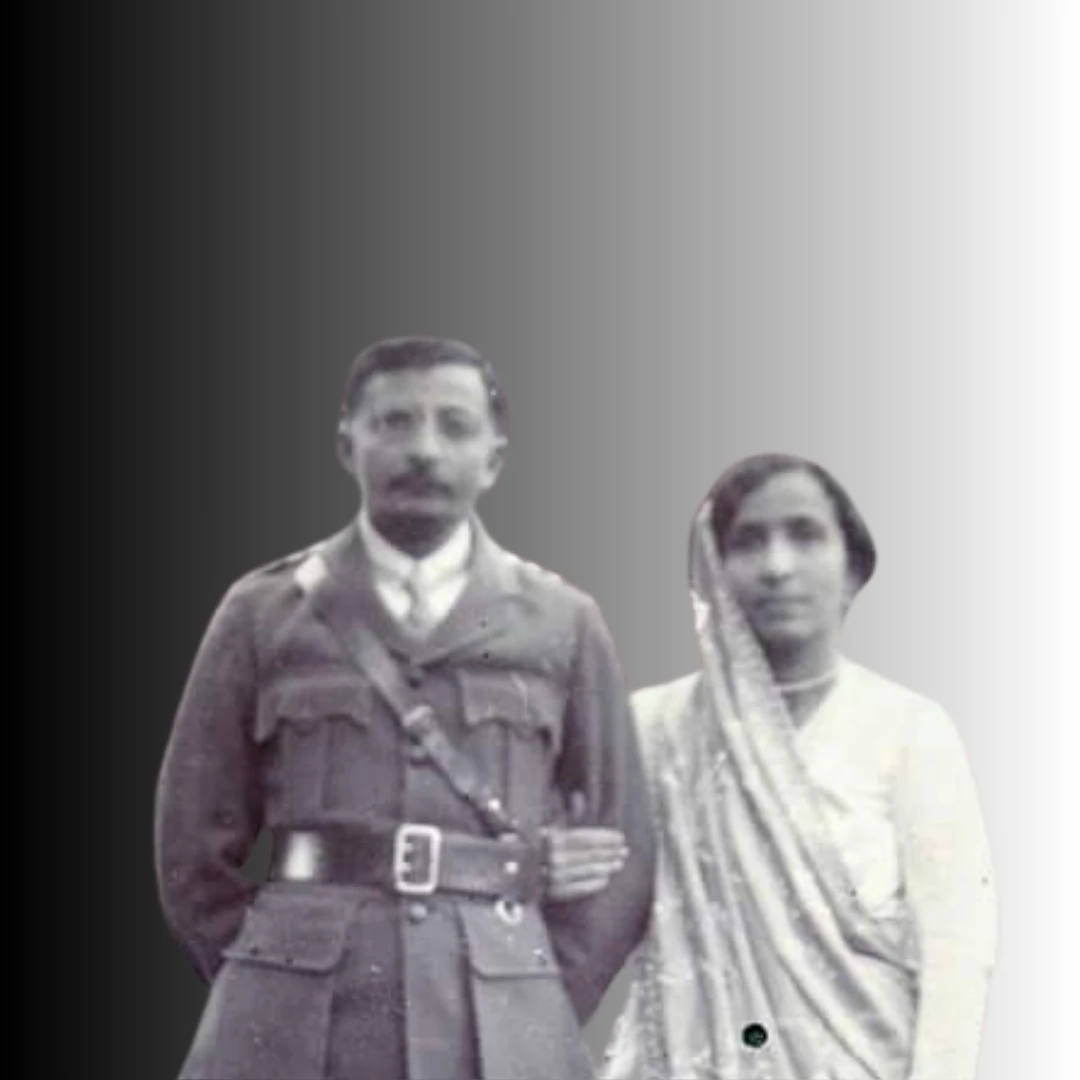
  • Heerabai Manekshaw Biography: Early Life, Family, Children, Parsi Heritage & Sam Manekshaw Connection

    Heerabai Manekshaw Biography: Early Life, Family, Children, Parsi Heritage & Sam Manekshaw Connection

    Heerabai Manekshaw is best known as the mother of Field Marshal Sam Manekshaw, one of India’s most respected military leaders. While Sam Manekshaw became a legendary figure in the Indian Army, his mother Heerabai lived a comparatively private life and remained away from the public spotlight. Very little detailed information about Heerabai’s personal life is available in the public domain. However, historical accounts of Sam Manekshaw’s childhood provide important information about her family, husband, children, Parsi heritage and connection with the Manekshaw family’s early life in Amritsar. Heerabai was married to Hormusji Manekshaw, a doctor, and the couple had six children. Their family had roots in Gujarat and eventually settled in Amritsar, Punjab. It was there that Sam Manekshaw was born in 1914. Although Heerabai did not have a public career of her own, her place in the Manekshaw family makes her an important part of the story behind India’s first Field Marshal.

    Who Was Heerabai Manekshaw?

    Heerabai Manekshaw was the wife of Hormusji Manekshaw and the mother of six children, including Sam Manekshaw. Her name appears in accounts describing the early family life of the future Field Marshal. Unlike her famous son, Heerabai did not become a public personality. Consequently, most information available about her comes from biographies and historical accounts related to Sam Manekshaw and the Manekshaw family. Some records also refer to Sam’s mother as Hilla or Hilla Mehta, which means that variations of her name can be found in historical material. Because detailed personal records are limited, information about her exact birth date, education, career and death should be treated carefully. Her importance is primarily connected with her family and the environment in which Sam and his siblings grew up.

    Heerabai Manekshaw Biography Overview

    Biography DetailInformation
    NameHeerabai Manekshaw
    Alternate NameHilla / Hilla Mehta in some accounts
    CommunityParsi
    HusbandHormusji Manekshaw
    Husband’s ProfessionDoctor
    Family RootsValsad, Gujarat
    Family SettlementAmritsar, Punjab
    ChildrenSix
    Famous SonSam Manekshaw
    Sam Manekshaw’s Birth3 April 1914
    Sam’s BirthplaceAmritsar
    Known ForMother of Field Marshal Sam Manekshaw
    Independent CareerNot reliably documented
    Exact Birth DateNot reliably documented
    Exact Death DateNot reliably documented

    Heerabai Manekshaw Age & Birth Details

    Heerabai Manekshaw’s exact date of birth is not reliably documented in the major publicly available historical sources. Therefore, an exact age should not be presented as confirmed information. Most biographies focus on her son Sam Manekshaw rather than providing detailed records of Heerabai’s own life. What is well established is that she was married to Hormusji Manekshaw and was the mother of six children. Sam Manekshaw was born on 3 April 1914 in Amritsar. His birth and childhood became important milestones in the history of the Manekshaw family because he later became one of India’s most distinguished military officers.

    Heerabai Manekshaw Early Life & Family Background

    Heerabai’s family background was connected with the Parsi community and the Manekshaw family’s roots in Gujarat. The family had an association with Valsad, a city in present-day Gujarat with a long-established Parsi population. Her husband, Hormusji Manekshaw, was a doctor. His profession played an important role in the family’s movement and settlement. The family had plans connected with Lahore, but circumstances during Heerabai’s pregnancy eventually changed their journey. The family stopped in Amritsar and eventually decided to remain there. This decision became historically significant because Sam Manekshaw was born in the city and spent his early years there. Hormusji later established his medical practice in Amritsar, providing the family with a stable professional and educational environment.

    Heerabai Manekshaw and Her Parsi Heritage

    Heerabai’s Parsi heritage is an important part of the Manekshaw family story. The Parsis are followers of Zoroastrianism whose ancestors migrated from Persia to India many centuries ago. Over generations, Parsi communities became particularly established in Gujarat and Maharashtra. The Manekshaw family’s Gujarat connection reflects this wider Parsi history. When the family moved to Punjab, it retained its Parsi identity while becoming part of the social and cultural environment of Amritsar. Sam Manekshaw grew up in this setting before eventually joining the military. His Parsi background remained an important part of his identity throughout his life and is frequently mentioned in accounts of his family history.

    Heerabai Manekshaw Children & Sam Manekshaw Connection

    Heerabai and Hormusji Manekshaw had six children. Sam Manekshaw was their fifth child and third son. The children followed different professional paths. Their father’s medical profession influenced the family’s environment, and medicine became an important part of the family’s professional tradition. Sam’s younger brother Jami Manekshaw also became a doctor and later served in the Indian Air Force. He eventually reached the rank of Air Vice Marshal, making him another distinguished member of the Manekshaw family. Sam chose a different career path. He eventually joined the military and developed a remarkable career that took him from the British Indian Army to the highest levels of independent India’s armed forces.

    Heerabai Manekshaw Life in Amritsar

    Amritsar holds an important place in Heerabai’s family story. The Manekshaw family had been travelling toward Lahore, but they eventually remained in Amritsar because of circumstances surrounding Heerabai’s pregnancy and childbirth. Hormusji established his medical practice in the city, and the family developed its home and professional life there. Sam Manekshaw was born in Amritsar on 3 April 1914. He spent his early years surrounded by his parents and siblings before moving on to formal education and eventually military training. Although there are not many detailed accounts of Heerabai’s everyday life in Amritsar, the city clearly became an important part of the family’s history.

    Field Marshal Sam Manekshaw Mother Connection With India’s First Field Marshal

    Heerabai’s most important historical connection is through her son Sam Manekshaw. Sam began his military career during the period of British rule and became part of the first group of cadets at the Indian Military Academy. His career later included service during the Second World War and several major conflicts involving India. He eventually became Chief of the Army Staff and played a major leadership role during the 1971 India-Pakistan War. Under his leadership, the Indian Army conducted a successful military campaign that contributed to the creation of Bangladesh. His strategic approach, confidence and leadership style made him one of the most recognizable military figures in India. In 1973, Sam Manekshaw became the first Indian Army officer to receive the rank of Field Marshal. This achievement permanently connected the Manekshaw family with India’s military history and also made Heerabai widely remembered as the mother of the country’s first Field Marshal.

    Heerabai Manekshaw’s Husband Hormusji Manekshaw

    Hormusji Manekshaw was a doctor and an important figure in the early history of the Manekshaw family. His medical profession influenced the family’s lifestyle and future. After the family settled in Amritsar, he established his medical practice and pharmacy. His career also created a professional environment for his children. Medicine later became part of the career path of his son Jami, who became a doctor before serving in the Indian Air Force. Hormusji’s professional background also helps explain why the family moved between different parts of India. His plans and career eventually brought the family to Amritsar, where Sam Manekshaw was born.

    Her Role as Sam Manekshaw’s Mother

    There are limited reliable first-hand accounts describing Heerabai’s parenting style or specific conversations between her and Sam. Therefore, popular stories about their personal relationship should not be presented as established facts unless supported by reliable evidence. What is known is that Heerabai was the mother of six children and was part of the household in which Sam spent his formative years. Sam grew up in a Parsi family where education and professional careers were important. His father was a doctor, and several members of the family later pursued professional careers. Sam initially considered medicine but eventually chose the military. His decision changed the direction of his life and ultimately led him to become India’s first Field Marshal. Heerabai’s role is therefore best understood through her position within the family that provided the early environment for Sam’s development.

    Manekshaw Family Legacy

    The Manekshaw family’s legacy extends beyond Sam Manekshaw. Hormusji was a doctor, while members of the next generation entered medicine, engineering, education and military service. Sam became the most famous member of the family because of his long and distinguished military career. His younger brother Jami also achieved a notable position in the Indian Air Force. The family story reflects the journey of a Parsi family that moved from Gujarat to Punjab and established itself in a new social environment. Heerabai was an important part of this family structure. Although she remained away from public life, her connection with six children and the wider Manekshaw household places her within an important family chapter of modern Indian history.

    Heerabai Manekshaw’s Importance in Sam Manekshaw’s Story

    The biographies of famous leaders generally focus on their achievements, while the people around them during childhood receive much less attention. Heerabai is one such figure. Before Sam Manekshaw became a military commander, he was a young boy growing up in an Amritsar household with his parents and siblings. His family background included Parsi heritage, a medical father, six siblings and a professional environment that valued education and career development. These circumstances formed an important part of his early life. It would be inappropriate to attribute Sam’s later achievements directly to specific lessons from Heerabai without reliable evidence. However, she was unquestionably part of the family environment in which his formative years were spent.

    Heerabai Manekshaw and the Gujarat Connection

    The Manekshaw family’s connection with Gujarat is an important part of its history. Valsad was associated with the family’s earlier roots before the move toward Punjab. This connection also reflects the wider history of Parsi communities in India. Parsi families established themselves in Gujarat over many generations and later spread to other cities because of professional and economic opportunities. The Manekshaw family’s move to Punjab eventually brought them to Amritsar, where Sam was born. Thus, Sam’s early identity was shaped by a combination of Gujarati Parsi heritage and the Punjabi environment in which he grew up.

    Lesser-Known Facts About Heerabai Manekshaw

    • Heerabai Manekshaw’s name appears in different forms in historical accounts, including Hilla or Hilla Mehta.
    • Heerabai belonged to the Parsi community and had a family connection with Gujarat.
    • The Manekshaw family’s roots were associated with Valsad before the family moved toward Punjab.
    • Her husband, Hormusji Manekshaw, was a doctor.
    • Heerabai and Hormusji had six children.
    • Sam Manekshaw was the fifth child and third son in the family.
    • The family eventually settled in Amritsar, where Sam was born.
    • Her younger son Jami Manekshaw also had a distinguished career in military medicine and the Indian Air Force.
    • Heerabai remained largely outside public life, unlike her famous son.
    • Her exact date of birth is not reliably documented in major public historical records.
    • Her exact date of death is also not consistently documented in reliable public sources.
    • Her son Sam Manekshaw became India’s first Field Marshal, giving the Manekshaw family a permanent place in Indian military history.

    FAQs

    Who was Heerabai Manekshaw?

    Heerabai Manekshaw was the wife of Hormusji Manekshaw and the mother of six children, including Field Marshal Sam Manekshaw.

    Was Heerabai Manekshaw Sam Manekshaw’s mother?

    Yes. Heerabai is identified as Sam Manekshaw’s mother in historical accounts of his family and childhood.

    Who was Heerabai Manekshaw’s husband?

    Her husband was Hormusji Manekshaw, a doctor who established his professional life in Amritsar.

    How many children did Heerabai Manekshaw have?

    Heerabai and Hormusji Manekshaw had six children. Sam Manekshaw was their fifth child.

    Where did the Manekshaw family come from?

    The family’s roots were associated with Valsad in Gujarat. The family later moved toward Punjab and eventually settled in Amritsar.

    What was Heerabai Manekshaw’s community?

    Heerabai was part of the Parsi community, and the Manekshaw family had strong Parsi roots.

    Where was Sam Manekshaw born?

    Sam Manekshaw was born in Amritsar on 3 April 1914.

    Was Heerabai Manekshaw a public figure?

    No. Heerabai largely remained away from public attention. Most available information about her comes from historical accounts of the Manekshaw family.

    When was Heerabai Manekshaw born?

    Her exact date of birth has not been reliably established in widely available historical records.

    When did Heerabai Manekshaw die?

    A consistently documented date of death is not widely available in reliable public sources, so an exact date should not be stated without stronger evidence.

    Who was Sam Manekshaw?

    Sam Manekshaw was a senior Indian Army officer who served as Chief of the Army Staff and played a major role during the 1971 India-Pakistan War. He later became India’s first Field Marshal.

    What was Sam Manekshaw’s nickname?

    Sam Manekshaw was popularly known as Sam Bahadur, a nickname that became strongly associated with his military career and personality.

    Conclusion

    Heerabai Manekshaw may not have enjoyed the public recognition received by her son, but she remains an important part of the Manekshaw family’s history. As the wife of Hormusji Manekshaw and mother of six children, she belonged to a Parsi family whose roots were connected with Gujarat and whose later life became closely associated with Amritsar. The family’s decision to remain in Amritsar became particularly significant because Sam Manekshaw was born there in 1914. From this beginning, he went on to build one of the most remarkable military careers in Indian history. Sam Manekshaw eventually became Chief of the Army Staff and played a crucial role during the 1971 war. In 1973, he became the first Indian Army officer to attain the rank of Field Marshal. Heerabai’s own biography remains less documented because she lived away from public life. For that reason, the most accurate account of her life should focus on the verified family history rather than unsupported personal anecdotes. Her legacy is ultimately connected with the Manekshaw family and especially with Sam Manekshaw, whose name continues to hold a prominent place in India’s military history.

    Also, Read About:

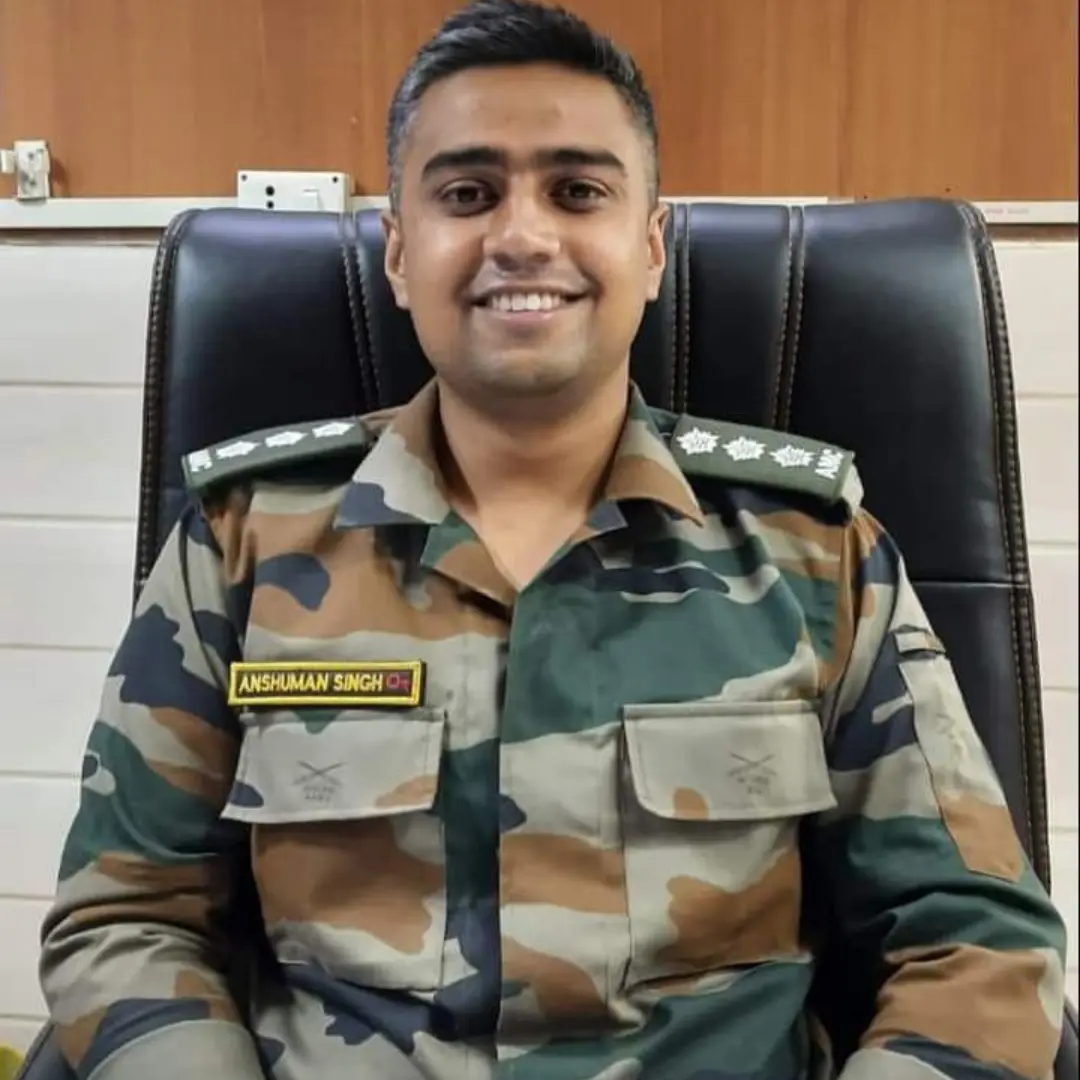
  • Captain Anshuman Singh Biography: Age, Family, Education, Army Career, Siachen, Wife, Kirti Chakra, Legacy & More

    Captain Anshuman Singh Biography: Age, Family, Education, Army Career, Siachen, Wife, Kirti Chakra, Legacy & More

    Captain Anshuman Singh was a brave Indian Army medical officer whose life became an inspiring example of courage, duty and sacrifice. He served in the Army Medical Corps and was posted to the challenging Siachen region, where military personnel work under extremely harsh weather and high-altitude conditions. Despite being a medical officer, he displayed extraordinary courage during an emergency that ultimately cost him his life.

    Captain Anshuman Singh was commissioned into the Indian Army Medical Corps in March 2020. Before joining the Army, he studied at Rashtriya Military School, Chail, and later pursued medical education at the Armed Forces Medical College (AFMC), Pune. His journey combined military discipline with medical training and eventually took him to one of the world’s most difficult military environments.

    On July 19, 2023, a major fire broke out at the Chandan area in Siachen. Captain Anshuman immediately responded to the emergency and helped rescue several personnel trapped in a smoke-filled shelter. He later attempted to retrieve medicines and essential medical equipment from a burning medical shelter but became trapped when the fire spread rapidly. His extraordinary bravery was later recognized with the Kirti Chakra, awarded posthumously.

    Who Was Captain Anshuman Singh?

    Captain Anshuman Singh was an Indian Army Medical Corps officer and Army medical officer who served with 26 Punjab during his Siachen deployment. His primary responsibility was to provide medical assistance to soldiers serving in an extremely demanding operational environment. His work required medical expertise, discipline and the ability to respond quickly to emergencies.

    His final act of bravery made him widely known across India. When a fire broke out at the Chandan area, he did not remain in a safe location. Instead, he moved towards the danger and helped rescue soldiers who were trapped inside a smoke-filled shelter. He later went back towards the burning medical shelter to recover essential supplies, putting his own life at tremendous risk.

    Captain Anshuman’s story is remembered because his actions reflected both sides of his profession. He was a doctor committed to saving lives and an Army officer committed to protecting his fellow personnel. His sacrifice eventually earned him one of India’s highest peacetime gallantry honours.

    Captain Anshuman Singh Biography Overview

    CategoryDetails
    Full NameCaptain Anshuman Singh
    Birth Year1997
    BirthplaceBardiha Dalpat, Deoria, Uttar Pradesh
    ProfessionIndian Army Medical Officer
    Army BranchArmy Medical Corps
    RankCaptain
    Service NumberMS-20323K
    SchoolRashtriya Military School, Chail
    Medical CollegeArmed Forces Medical College, Pune
    CommissionedMarch 19, 2020
    Unit26 Punjab
    PostingChandan Complex, Siachen
    OperationOperation Meghdoot
    WifeSmriti Singh
    Date of MartyrdomJuly 19, 2023
    Age at Martyrdom26 Years
    AwardKirti Chakra, Posthumous

    Captain Anshuman Singh Age and Birth Details

    Captain Anshuman Singh was born in 1997 in Bardiha Dalpat village of Deoria district in Uttar Pradesh. He grew up in a family that had a connection with the Indian Army, as his father, Subedar Ravi Pratap Singh, was an Army veteran. This background gave him an early understanding of discipline, responsibility and military life.

    He was the youngest among three siblings and spent his early years in Uttar Pradesh before moving towards a military-oriented education. His schooling at Rashtriya Military School, Chail, played an important role in shaping his interest in the armed forces.

    Captain Anshuman was only 26 years old when he lost his life in the Siachen fire. Although his life was short, he had already completed his medical education, joined the Army Medical Corps and served in a challenging operational environment.

    Captain Anshuman Singh Family Background & Parents

    Captain Anshuman Singh was born to Subedar Ravi Pratap Singh and Manju Singh. His father had served in the Indian Army, giving the family a close connection with military service. Anshuman was the youngest of three children and had an elder brother and an elder sister.

    His father’s military background influenced the environment in which Anshuman grew up. Discipline, dedication and respect for the armed forces were familiar values in his family. His decision to attend a military school and later become an Army medical officer reflected his own interest in serving the country.

    After Captain Anshuman’s martyrdom, his parents became an important part of his public legacy. His mother, Manju Singh, later received the Kirti Chakra awarded to her son along with his wife, Smriti Singh. The award ceremony became a deeply emotional moment for the family and the nation.

    Captain Anshuman Singh Cast

    There is no reliable official information confirming Captain Anshuman Singh’s caste. His surname, Singh, cannot be used to determine caste because the surname is commonly used by people belonging to different communities and regions.

    Therefore, any claim about his caste should be treated carefully unless it is supported by an authentic family or government record. A factual biography should focus on his education, family background, Army career, bravery and contribution rather than publishing an unverified caste identity.

    Captain Anshuman Singh Education & Rashtriya Military School

    Captain Anshuman Singh studied at Rashtriya Military School, Chail, in Himachal Pradesh. These schools are known for providing students with a disciplined environment and preparing them for careers that can include service in the armed forces. His time at the institution became an important part of his early development.

    During his school years, Anshuman developed an interest in military service while also concentrating on his academic education. Rather than pursuing a traditional civilian medical career, he eventually chose a path that would allow him to become both a doctor and an Army officer.

    His education at Rashtriya Military School laid the foundation for the next stage of his journey. After completing his schooling, he moved towards medical education and eventually entered the Armed Forces Medical College in Pune.

    Captain Anshuman Singh at AFMC Pune

    Captain Anshuman Singh pursued his medical education at the Armed Forces Medical College (AFMC), Pune. AFMC is one of India’s prominent institutions for military medical education and trains doctors who can later serve in the armed forces.

    At AFMC, Anshuman prepared himself for a career that combined medicine with military responsibilities. As an Army doctor, he would not only be responsible for treating patients but could also be required to work alongside soldiers in field and operational environments.

    His medical training became particularly important when he was later posted to Siachen. In such a difficult environment, doctors have to remain prepared for emergencies involving injuries, illnesses and conditions associated with extreme altitude and weather.

    Captain Anshuman Singh Army Career

    Captain Anshuman Singh began his commissioned military career after joining the Army Medical Corps. He was commissioned as an officer on March 19, 2020, and subsequently served as a medical officer in the Indian Army.

    His career took him into an environment where medical officers had to work closely with soldiers deployed in operational areas. His association with 26 Punjab and later deployment to Siachen placed him in a demanding location where medical readiness was extremely important.

    Although his military career lasted only a few years, Captain Anshuman’s final assignment became the defining chapter of his service. The courage he displayed during the Siachen fire eventually brought him national recognition and a posthumous gallantry award.

    When Did Captain Anshuman Singh Join the Indian Army?

    Captain Anshuman Singh was commissioned into the Army Medical Corps on March 19, 2020. This marked the official beginning of his career as a commissioned officer in the Indian Army. After receiving his commission, he began working as a medical officer and took on responsibilities related to the health and medical welfare of military personnel. His career eventually took him to a forward location in Siachen. His time in the Army was relatively short, but his contribution during the final emergency demonstrated the level of responsibility and courage he had developed as a military officer.

    Captain Anshuman Singh as an Army Medical Officer

    As an Army Medical Officer, Captain Anshuman Singh was responsible for providing medical care to soldiers. This role becomes particularly demanding in remote military locations where access to large hospitals and advanced medical facilities can be limited. In Siachen, his medical responsibilities were connected with soldiers serving in an environment affected by extreme cold, high altitude and difficult terrain. Maintaining medical supplies and being ready for emergencies were therefore important parts of his duties. During the fire, his actions showed how seriously he took his responsibility. He first helped soldiers escape from danger and later tried to retrieve medicines and essential medical equipment from the burning medical shelter.

    Captain Anshuman Singh Unit & Posting

    Captain Anshuman Singh served as a medical officer associated with 26 Punjab and was posted at the Chandan Complex in the Siachen region. His deployment was connected with Operation Meghdoot, India’s military presence in the Siachen area. Serving at such a location requires personnel to operate under difficult environmental conditions. Medical officers are especially important because soldiers stationed at extreme altitudes can face serious health emergencies and require immediate medical attention. Captain Anshuman’s posting ultimately became the location of his final act of bravery. During the fire, he responded immediately, helped trapped personnel and later attempted to recover essential medical supplies.

    Captain Anshuman Singh Siachen Posting

    Captain Anshuman Singh’s Siachen posting was one of the most challenging stages of his military career. Siachen is known for extreme altitude, freezing temperatures, strong winds and difficult terrain, making daily life demanding even for highly trained personnel. As a medical officer, Anshuman had an important responsibility towards the soldiers serving at the post. He had to remain prepared for medical emergencies and ensure that necessary medicines and equipment were available. The tragic fire of July 19, 2023, changed the course of his life. His response to the emergency demonstrated that his sense of responsibility went beyond his regular medical duties and extended to protecting the lives of his fellow soldiers.

    Captain Anshuman Singh and Operation Meghdoot

    Captain Anshuman Singh was serving at the Chandan Complex under Operation Meghdoot. Operation Meghdoot is India’s military operation associated with maintaining its presence in the Siachen Glacier region. The operation involves personnel working in one of the world’s highest military environments. Soldiers and officers posted there have to deal with extreme weather, challenging terrain and the logistical difficulties associated with high-altitude deployment. Captain Anshuman was serving there in his capacity as a medical officer. His final act of service occurred during a major fire at the Chandan area, where he showed exceptional courage while attempting to protect and assist other personnel.

    What Happened to Captain Anshuman Singh in Siachen?

    On July 19, 2023, a major fire broke out at the Chandan area in Siachen. Captain Anshuman Singh heard the emergency call and immediately came out of his Fibre Glass Hut to assess the situation. He found that an adjacent Fibre Glass Hut had filled with smoke and that personnel were trapped inside. Instead of waiting for the situation to become safer, he moved towards the affected shelter and helped four to five people escape from the dangerous area. After helping them reach safety, he noticed that the Medical Investigation Shelter had also caught fire. The shelter contained medicines and important medical equipment, so he went towards it to retrieve the supplies. Strong winds caused the flames to spread rapidly, eventually trapping him inside the shelter.

    Captain Anshuman Singh’s Last Mission

    Captain Anshuman Singh’s final mission began as an emergency response to a fire rather than a planned military operation. When he realized that personnel were trapped in a smoke-filled shelter, he immediately focused on getting them out of danger. He successfully helped several personnel escape and directed them towards safety. However, the emergency was not over because the Medical Investigation Shelter had also become engulfed in flames. Captain Anshuman decided to enter the burning shelter to retrieve essential medicines and medical equipment. The fire intensified rapidly because of strong winds, leaving him unable to escape. His final actions reflected both his medical responsibility and his commitment to his fellow soldiers.

    Captain Anshuman Singh’s Bravery and Sacrifice

    Captain Anshuman Singh demonstrated extraordinary courage during the Siachen fire. He knowingly entered an extremely dangerous situation to rescue fellow personnel and later risked his life again while trying to recover medical supplies. His bravery was especially significant because he was serving as a medical officer. His professional duty was to save and treat lives, and even during the emergency, his actions remained focused on protecting and helping others. His sacrifice was eventually recognized with the Kirti Chakra, awarded posthumously. The honour reflected the exceptional courage and determination he displayed while responding to the life-threatening fire.

    How Captain Anshuman Singh Saved the Lives of His Fellow Soldiers

    When the fire broke out, several personnel were trapped inside an affected Fibre Glass Hut. The shelter was filled with smoke, creating a serious threat to everyone inside. Captain Anshuman moved towards the shelter and helped four to five personnel escape. He directed them towards a safer location so that they could move away from the flames and smoke. His decision to enter the dangerous area gave those personnel an opportunity to survive. Instead of prioritizing his own safety, he focused on getting his fellow soldiers out of immediate danger.

    Captain Anshuman Singh Death

    Captain Anshuman Singh died on July 19, 2023, during the fire at the Chandan area in Siachen. He was only 26 years old at the time of his death. After helping several personnel escape, he returned towards the Medical Investigation Shelter to retrieve essential medicines and medical equipment. The strong winds caused the fire to spread rapidly, and the shelter eventually became engulfed in flames. Rescue efforts were made, but Captain Anshuman could not be brought out alive. His death became a deeply painful loss for his family, fellow soldiers and everyone who had known him during his education and military career.

    Captain Anshuman Singh Martyrdom

    Captain Anshuman Singh’s martyrdom is remembered because he placed the safety of other personnel before his own. His first response was to rescue people trapped inside the smoke-filled shelter, and he later attempted to recover important medical supplies from the burning shelter. His sacrifice also highlights the risks faced by medical officers serving with the armed forces. Although their primary responsibility is medical care, they can be exposed to the same dangers faced by soldiers during emergencies in operational areas. Captain Anshuman’s story therefore represents courage on multiple levels. He served as a doctor, lived as an Army officer and ultimately gave his life while attempting to save others.

    Why Was Captain Anshuman Singh Awarded the Kirti Chakra?

    Captain Anshuman Singh was awarded the Kirti Chakra posthumously for his exceptional courage during the Siachen fire. His actions included rescuing four to five personnel and attempting to retrieve essential medicines and medical equipment from a burning shelter. The Kirti Chakra is India’s second-highest peacetime gallantry award. It is given for exceptional acts of courage and sacrifice performed away from direct battlefield combat. In July 2024, Captain Anshuman’s wife Smriti Singh and mother Manju Singh received the Kirti Chakra on his behalf. The award ceremony at Rashtrapati Bhavan became an important moment in remembering his service and sacrifice.

    Captain Anshuman Singh’s Wife Smriti Singh

    Captain Anshuman Singh was married to Smriti Singh, whom he had known for several years before their marriage. The couple married in February 2023, only a few months before his tragic death in Siachen. After his martyrdom, Smriti became one of the most recognizable members of Captain Anshuman’s family. Her appearance at the Kirti Chakra ceremony alongside his mother reflected the personal loss behind the military honour. Smriti has also spoken publicly about Anshuman and their relationship, giving people a glimpse into his life away from the Army. Her memories have helped present him not only as a decorated officer but also as a son, husband and young man with dreams for the future.

    Captain Anshuman Singh and Smriti Singh Love Story

    Captain Anshuman Singh and Smriti Singh had known each other for several years before they got married. Their relationship began during their college years and gradually developed into a long-term partnership. According to Smriti’s public recollections, their relationship continued for years before they finally married in February 2023. Their story became widely known because of the short period they spent together as a married couple before Anshuman’s deployment and subsequent martyrdom. The personal side of their relationship made Captain Anshuman’s story even more emotional for the public. Behind his military identity was a young husband who had plans for his future with Smriti but lost his life only months after their marriage.

    Captain Anshuman Singh Family After His Martyrdom

    Captain Anshuman Singh’s martyrdom left a deep impact on his parents, wife and siblings. His family had to cope with the loss of a young son and husband while also dealing with the public attention that followed his gallantry award. His mother Manju Singh and wife Smriti Singh later represented the family during the presentation of his Kirti Chakra. Their presence at the ceremony served as a reminder of the personal sacrifice behind every military honour. The family has also been involved in discussions concerning posthumous benefits and provisions for the families of fallen soldiers. These matters are separate from Captain Anshuman’s gallantry award, which was given specifically in recognition of his courage during the Siachen fire.

    Captain Anshuman Singh’s Legacy

    Captain Anshuman Singh’s legacy is built around courage, duty, compassion and sacrifice. His journey from Rashtriya Military School to AFMC Pune and then the Army Medical Corps demonstrates how a medical professional can dedicate his skills to military service. His actions in Siachen remain the strongest part of his legacy. He did not hesitate to enter danger when other personnel needed help, even though he understood the risks involved. For young people, his story provides an example of combining professional education with national service. For the Indian Army and medical community, his sacrifice remains a reminder of the responsibilities accepted by officers who serve in difficult operational environments.

    Captain Anshuman Singh Movie

    At present, there is no confirmed major feature film or officially announced biopic specifically based on Captain Anshuman Singh’s life. His story has been widely covered in news reports, interviews, tribute videos and other media content, but these should not be confused with an officially released movie. Because Captain Anshuman’s story has received widespread public attention, there may be interest in making a film or documentary about his life in the future. However, any information about a proposed movie should be confirmed through an official announcement before mentioning its title, cast, director or release date. For readers searching for a Captain Anshuman Singh movie, the most accurate information is therefore that no major officially confirmed biopic is currently available.

    Captain Anshuman Singh Lesser-Known Facts

    • Captain Anshuman Singh was born in 1997 in Deoria, Uttar Pradesh.
    • His father, Subedar Ravi Pratap Singh, was an Army veteran.
    • Captain Anshuman Singh was the youngest among three siblings.
    • Anshuman Singh studied at Rashtriya Military School, Chail.
    • Captain Anshuman completed his medical education at AFMC Pune.
    • Anshuman was commissioned into the Army Medical Corps on March 19, 2020.
    • His service number was MS-20323K.
    • Anshuman Singh served as a medical officer with 26 Punjab.
    • Captain Anshuman was posted at the Chandan Complex in Siachen.
    • His deployment was associated with Operation Meghdoot.
    • Captain Anshuman Singh rescued four to five personnel during the fire.
    • He died while attempting to retrieve medical supplies.
    • Captain Anshuman was only 26 years old at the time of his martyrdom.
    • Anshuman Singh received the Kirti Chakra posthumously.
    • His wife Smriti Singh and mother Manju Singh received the award on his behalf.

    FAQs

    Who was Captain Anshuman Singh?

    Captain Anshuman Singh was an Indian Army Medical Corps officer who served as a medical officer with 26 Punjab. He was martyred during a fire incident in Siachen on July 19, 2023, after helping rescue several personnel.

    What was Captain Anshuman Singh’s age?

    Captain Anshuman Singh was 26 years old when he died during the Siachen fire.

    When was Captain Anshuman Singh born?

    He was born in 1997 in Bardiha Dalpat village of Deoria district, Uttar Pradesh.

    Where did Captain Anshuman Singh study?

    He studied at Rashtriya Military School, Chail, and later pursued medical education at the Armed Forces Medical College, Pune.

    When did Captain Anshuman Singh join the Indian Army?

    He was commissioned into the Army Medical Corps on March 19, 2020.

    What was Captain Anshuman Singh’s profession?

    He was an Army medical officer and doctor serving in the Indian Army Medical Corps.

    Which unit did Captain Anshuman Singh serve with?

    He served as a medical officer associated with 26 Punjab during his Siachen deployment.

    Where was Captain Anshuman Singh posted?

    He was posted at the Chandan Complex in the Siachen region under Operation Meghdoot.

    How did Captain Anshuman Singh die?

    He died during a major fire at the Chandan area in Siachen on July 19, 2023. After helping rescue several personnel, he attempted to retrieve medicines and medical equipment from a burning shelter but became trapped when the fire spread rapidly.

    Conclusion

    Captain Anshuman Singh’s life was short, but his journey reflected dedication, discipline and an extraordinary commitment to service. From Rashtriya Military School, Chail, to AFMC Pune and eventually the Army Medical Corps, he followed a path that combined medical knowledge with his desire to serve the nation. His final moments in Siachen became the defining chapter of his life. When a fire threatened his fellow personnel, he moved towards the danger and helped rescue several people. He then attempted to retrieve essential medicines and medical equipment, ultimately losing his own life when the rapidly spreading fire trapped him. The Kirti Chakra awarded to Captain Anshuman Singh after his death recognizes the courage he demonstrated during that emergency. However, his legacy goes beyond a medal. He is remembered as a young doctor, Army officer, son and husband whose final actions reflected the highest ideals of courage, duty and selfless service.

    Also, Read About:

  • Lieutenant Ram Prakash Roperia Biography: Life, Army Career, Operation Blue Star and Ashoka Chakra

    Lieutenant Ram Prakash Roperia Biography: Life, Army Career, Operation Blue Star and Ashoka Chakra

    Lieutenant Ram Prakash Roperia was a brave officer of the Indian Army whose name became associated with exceptional courage during Operation Blue Star in June 1984. Serving with the 26th Battalion of the Madras Regiment, he demonstrated remarkable leadership while commanding his men during one of the most difficult military operations of his short career. Despite coming under intense fire, he repeatedly led his soldiers toward a heavily defended position and continued his mission even after suffering serious injuries.

    Roperia’s military career lasted only a few years, but his actions during his final operation established a lasting legacy. He was serving as the officiating Officer Commanding of ‘C’ Company, 26 Madras, when his unit was tasked with securing a strongly fortified building within the Golden Temple complex in Amritsar. His determination to lead from the front and his refusal to abandon the mission despite repeated setbacks ultimately earned him India’s highest peacetime gallantry award, the Ashoka Chakra, posthumously.

    Who Was Lieutenant Ram Prakash Roperia?

    Lieutenant Ram Prakash Roperia was an Indian Army officer belonging to the Madras Regiment. He was associated with 26 Madras and had developed a reputation for discipline, courage and leadership. Born in the Hisar region of Haryana, he studied at Sainik School Kunjpura before pursuing higher education in agriculture. His educational journey was followed by military training and his commissioning into the Indian Army in December 1981.

    Roperia’s most significant contribution came during Operation Blue Star in June 1984. At the time, he was serving as the officiating Officer Commanding of ‘C’ Company. His company was given the challenging task of securing the first floor of a heavily defended building, and Roperia personally led repeated attempts to reach the position. His actions during the operation eventually resulted in his receiving the Ashoka Chakra after his death.

    Lieutenant Ram Prakash Roperia Biography Overview

    CategoryDetails
    Full NameLieutenant Ram Prakash Roperia
    RankLieutenant
    Service NumberIC-39994
    RegimentThe Madras Regiment
    Battalion26 Madras
    BirthplacePali village, Hisar region, Haryana
    Birth DateCommonly reported as 10 June 1959
    SchoolSainik School Kunjpura
    Higher EducationB.Sc. (Hons.) Agriculture
    Commissioned19 December 1981
    Company‘C’ Company, 26 Madras
    Major OperationOperation Blue Star
    Place of OperationAmritsar, Punjab
    Year of Martyrdom1984
    Gallantry AwardAshoka Chakra
    Award StatusPosthumous

    Lieutenant Ram Prakash Roperia Early Life and Childhood

    Lieutenant Ram Prakash Roperia spent his early years in Haryana and grew up in an environment that valued education, discipline and hard work. His early schooling began at a village school before he moved to Sainik School Kunjpura. The institution played an important role in shaping many young students who later pursued careers in the armed forces, and Roperia was among its notable alumni.

    His school years helped develop qualities that later became important in his Army career. He was interested in studies as well as physical activities and sports. The disciplined environment of Sainik School Kunjpura provided him with early exposure to military-style training, leadership and physical fitness.

    Lieutenant Ram Prakash Roperia Birth and Hometown

    Ram Prakash Roperia is commonly reported to have been born on 10 June 1959 in Pali village in the Hisar region of Haryana. Some institutional records have listed his birth date as 9 June 1959, creating a small discrepancy between available sources. For this reason, his birth date should preferably be presented with this qualification rather than treating one date as completely undisputed.

    His association with Haryana remained an important part of his identity. Pali village is remembered in connection with his life and military service, particularly because he later became one of the region’s notable recipients of the Ashoka Chakra.

    Lieutenant Ram Prakash Roperia Family Background

    Ram Prakash Roperia was the son of Shri Bhal Singh. Public records about his family are relatively limited because he lived and served before the widespread availability of digital biographies and social media. Most reliable accounts focus on his education, military career, bravery during Operation Blue Star and posthumous gallantry award rather than providing extensive details about his private family life.

    His family later became connected with his national recognition when the Ashoka Chakra was awarded to him posthumously. His father is reported to have received the honour on his behalf, representing the family at the time of the award ceremony.

    Lieutenant Ram Prakash Roperia Education

    Roperia began his education in his local area before joining Sainik School Kunjpura. The school provided him with an academically disciplined environment and introduced him to physical training and military-oriented activities. His time at the institution became an important foundation for his later decision to pursue a career connected with national service.

    After completing his schooling, he continued his education in agriculture and obtained a B.Sc. (Hons.) in Agriculture. His academic background is noteworthy because he had the opportunity to pursue a civilian professional career but ultimately chose the Indian Army.

    Lieutenant Ram Prakash Roperia Interest in Agriculture and Studies

    Before entering military service, Ram Prakash Roperia studied agriculture at university level. Agriculture was an important field of education, particularly for students from rural backgrounds, and his academic choice reflected a practical professional direction. However, his subsequent decision to enter the Army took his career in a completely different direction.

    His education nevertheless remained part of his broader personality. He combined academic preparation with the discipline and physical development he had received at Sainik School Kunjpura. These qualities later became valuable during his military service.

    Why Did Ram Prakash Roperia Join the Indian Army?

    There is no widely available authenticated interview in which Roperia personally explained the exact reason for choosing the Army. However, his education at Sainik School Kunjpura appears to have played an important role in exposing him to military life and developing an interest in service.

    The disciplined environment of the school, combined with physical training, leadership activities and exposure to military traditions, created a natural foundation for an armed forces career. After completing his higher education, Roperia chose to pursue military service and eventually received his commission in the Indian Army.

    Lieutenant Ram Prakash Roperia Military Career

    Ram Prakash Roperia’s military career began in the early 1980s after he completed the required military training. He was commissioned into the Indian Army on 19 December 1981 and became part of the 26th Battalion of the Madras Regiment. As a young officer, he began building experience in infantry service before eventually taking on significant responsibility during Operation Blue Star.

    His Army career was relatively short, but his progression demonstrated the confidence placed in him by his superiors. By the time of Operation Blue Star, he was serving as the officiating Officer Commanding of ‘C’ Company, 26 Madras. This position placed him directly in charge of men during a highly dangerous operation.

    Commissioning into the Indian Army

    Lieutenant Ram Prakash Roperia was commissioned into the Indian Army on 19 December 1981. He joined the 26th Battalion of the Madras Regiment and began his professional career as an infantry officer.

    His commissioning marked the beginning of a military career that would unfortunately last only a few years. Despite the short duration of his service, he eventually found himself leading soldiers during one of the most challenging operations undertaken by the Army during that period.

    The Madras Regiment

    The Madras Regiment is one of the oldest and most distinguished infantry regiments of the Indian Army. It has a long history of military service and has participated in numerous campaigns and operations.

    Roperia served with this regiment through the 26 Madras battalion. His final actions during Operation Blue Star became an important part of the battalion’s military history and contributed to his lasting reputation as a courageous young officer.

    Lieutenant Ram Prakash Roperia 26 Madras Battalion

    The 26th Battalion of the Madras Regiment, commonly known as 26 Madras, was among the Army units involved in Operation Blue Star in June 1984. The battalion was given difficult responsibilities inside the Golden Temple complex, where heavily fortified positions created significant tactical challenges.

    Roperia was associated with ‘C’ Company and was serving as its officiating Officer Commanding during the crucial phase of the operation. His company was assigned the task of securing the first floor of a strongly defended building, an objective that required soldiers to advance under intense fire.

    Lieutenant Ram Prakash Roperia Rank and Responsibilities

    Roperia held the rank of Lieutenant and was serving as the officiating Officer Commanding of ‘C’ Company during Operation Blue Star. For a young officer, this represented a considerable level of responsibility because he was required to lead soldiers during an extremely dangerous operation.

    His responsibilities included directing his men toward the assigned objective and helping maintain coordination during the assault. Instead of remaining behind his troops, Roperia personally participated in the most dangerous movements, demonstrating the leadership style that later became central to his Ashoka Chakra citation.

    Lieutenant Ram Prakash Roperia Operation Blue Star

    Operation Blue Star was an Indian Army operation conducted in June 1984 at the Golden Temple complex in Amritsar. The operation was launched against heavily armed militants who had established fortified positions within the complex.

    The operation presented unusual challenges for the Army because the troops had to fight through strongly defended positions in a highly sensitive religious complex. Soldiers faced automatic weapons, fortified locations and difficult movement conditions. Lieutenant Roperia’s final action occurred during the night of 5/6 June 1984.

    Lieutenant Ram Prakash Roperia’s Role in Operation Blue Star

    During the operation, ‘C’ Company of 26 Madras was assigned the task of securing the first floor of a heavily defended building. The approaches to the first floor were exposed to automatic and machine-gun fire, making the assault extremely dangerous.

    Roperia personally took responsibility for leading his men toward the objective. After several attempts were stopped by heavy fire, he did not abandon the mission. Instead, he called for volunteers and led another attempt himself, demonstrating extraordinary personal courage.

    The Mission at the Golden Temple Complex

    The primary objective of Roperia’s company was to secure the first floor of the designated building. The position was protected by hostile fire, and the approaches were difficult to cross safely.

    The first three attempts to reach the first floor were unsuccessful because of intense machine-gun fire. Roperia then called for volunteers and personally led a fourth attempt with Naib Subedar K. G. Koshy. Their determination eventually allowed them to reach the first floor.

    His Courage and Leadership Under Fire

    Roperia’s actions during the assault demonstrated a willingness to share the risks faced by his soldiers. Instead of directing the operation from a protected position, he repeatedly placed himself at the front of the assault.

    After three unsuccessful attempts, he personally led the fourth attempt. His example encouraged his men to continue advancing, and the group eventually reached the first floor and began clearing the fortified position.

    His leadership became particularly important after the first floor was secured. He continued to direct his men and attempted to establish contact with another company positioned on the ground floor.

    The Final Assault

    After the first floor was secured, Roperia and his men needed to establish contact with ‘D’ Company on the ground floor. To accomplish this, he moved toward the staircase and personally led his men.

    When he opened the staircase door, he came under fire. According to the official gallantry citation, he responded by throwing two hand grenades and entering the staircase. A wounded militant subsequently fired at him, causing serious injuries to his shoulder and neck.

    Despite being wounded, Roperia returned fire and killed the person who had shot him. He then continued down the staircase and successfully established contact with ‘D’ Company.

    Injuries During the Operation

    During the staircase assault, Roperia suffered serious bullet injuries to his shoulder and neck. The injuries caused significant blood loss, but he continued to perform his responsibilities rather than immediately withdrawing from the operation.

    His ability to continue despite serious wounds became one of the most important elements of the official account of his bravery. He eventually reached the ground floor and established contact before his condition deteriorated.

    Last Moments and Martyrdom

    After reaching the ground floor, Roperia collapsed because of severe exhaustion and blood loss. He was evacuated to hospital for medical treatment, but his injuries were too serious and he eventually died.

    His martyrdom occurred in June 1984 during the operation in Amritsar. He was only around 24 years old, bringing a premature end to the career of an officer who had already demonstrated exceptional leadership despite his young age.

    Lieutenant Ram Prakash Roperia Cause of Death

    Lieutenant Ram Prakash Roperia died from the serious injuries he sustained during Operation Blue Star. The official citation records wounds to his shoulder and neck and notes that he later collapsed because of excessive blood loss and exhaustion.

    Although he was evacuated to hospital, medical treatment could not save his life. His death was a direct consequence of the injuries sustained while leading his men during the assault.

    Ashoka Chakra Award

    Lieutenant Ram Prakash Roperia was awarded the Ashoka Chakra posthumously for his exceptional bravery during Operation Blue Star. The Ashoka Chakra is India’s highest peacetime gallantry award and is presented for conspicuous bravery or supreme courage in situations outside conventional warfare.

    His award recognized not just one act but a series of courageous decisions made during the operation. His repeated attempts to reach the objective, personal leadership under machine-gun fire and determination to continue fighting after being wounded were central to the recognition.

    Why Was He Awarded the Ashoka Chakra?

    Roperia was awarded the Ashoka Chakra because he displayed exceptional courage and leadership while facing extremely heavy enemy fire. After three attempts to reach the first floor had failed, he personally led another attempt with volunteers.

    Once the position was reached, he continued leading his men in clearing the area. Later, while trying to establish contact with another company, he entered a staircase under fire, used grenades and continued fighting even after being seriously wounded. His determination to complete the mission despite his injuries demonstrated extraordinary devotion to duty.

    Gallantry Citation and Acts of Bravery

    The official gallantry citation records that Roperia was serving as the officiating Officer Commanding of ‘C’ Company during the operation. It describes how three attempts to reach the first floor failed under heavy machine-gun fire before Roperia personally led the fourth attempt.

    The citation further records that he reached the first floor with Naib Subedar K. G. Koshy and helped clear the position. He later led his men toward the staircase to establish contact with ‘D’ Company. After coming under fire, he used two hand grenades, suffered serious injuries and still returned fire before completing his immediate mission.

    His conduct was ultimately recognized as an outstanding example of personal valour, leadership and devotion to duty.

    Lieutenant Ram Prakash Roperia Wife & Children

    Reliable public records do not provide sufficiently verified information about Lieutenant Ram Prakash Roperia’s wife or children. Most available biographies focus on his parents, education, military career, Operation Blue Star and Ashoka Chakra citation.

    Because his life predates the extensive digital documentation available today, many aspects of his private life were never widely published. Therefore, unverified names or claims regarding his wife and children should not be presented as established facts.

    Legacy of Lieutenant Ram Prakash Roperia

    Lieutenant Ram Prakash Roperia left behind a military legacy that is much larger than the length of his service. His actions during Operation Blue Star demonstrated the importance of personal courage and leadership, particularly when an officer is required to lead soldiers through extreme danger.

    His story is often remembered as an example of leading from the front. He did not ask his men to undertake a risk that he was unwilling to face himself. Instead, he repeatedly joined the assault and continued his responsibilities even after suffering serious injuries.

    Memorials and Recognition

    Roperia continues to be remembered through military records, gallantry award histories and the institutions connected with his education. Sainik School Kunjpura, where he studied, recognizes him among its distinguished alumni who received national gallantry awards.

    His Ashoka Chakra remains the most prominent official recognition of his service. His name also appears in historical accounts and records relating to Operation Blue Star and the soldiers who lost their lives during the operation.

    Lieutenant Ram Prakash Roperia’s Military Legacy

    The military legacy of Lieutenant Roperia can be understood through three qualities: courage, leadership and devotion to duty. His courage was demonstrated by repeatedly advancing toward a heavily defended position, while his leadership was visible in his decision to personally lead his men after earlier attempts had failed.

    His devotion to duty was perhaps most evident after he was wounded. Instead of immediately seeking evacuation, he continued the mission and established contact with another company. His conduct remains an example of the responsibilities and sacrifices associated with military leadership.

    Interesting Facts About Lieutenant Ram Prakash Roperia

    • Lieutenant Ram Prakash Roperia served with the 26th Battalion of the Madras Regiment.
    • Ram Prakash Roperia was an alumnus of Sainik School Kunjpura.
    • Before joining the Army, he studied agriculture and earned a B.Sc. (Hons.) in Agriculture.
    • Ram Prakash was commissioned into the Indian Army on 19 December 1981.
    • Roperia was serving as the officiating Officer Commanding of ‘C’ Company during Operation Blue Star.
    • His company made three unsuccessful attempts to reach the first floor before he personally led a fourth attempt.
    • Lieutenant Ram Prakash Roperia continued fighting after suffering serious injuries to his shoulder and neck.
    • Ram Prakash Roperia used two hand grenades during the staircase assault.
    • Lieutenant Ram established contact with ‘D’ Company despite his serious condition.
    • Lieutenant Ram Prakash Roperia was awarded the Ashoka Chakra posthumously for his extraordinary bravery.
    • His Army service lasted only a few years, but his actions made his name part of India’s military gallantry history.
    • Sainik School Kunjpura continues to recognize him among its distinguished gallantry award-winning alumni.

    FAQs

    Who was Lieutenant Ram Prakash Roperia?

    Lieutenant Ram Prakash Roperia was an Indian Army officer of 26 Madras, The Madras Regiment. He was awarded the Ashoka Chakra posthumously for exceptional bravery during Operation Blue Star in 1984.

    When was Lieutenant Ram Prakash Roperia born?

    He is commonly reported to have been born on 10 June 1959 in Pali village in the Hisar region of Haryana. However, some institutional records list 9 June 1959.

    Which regiment did Lieutenant Ram Prakash Roperia serve in?

    He served with The Madras Regiment and was part of its 26th Battalion, commonly known as 26 Madras.

    When was Lieutenant Ram Prakash Roperia commissioned?

    He was commissioned into the Indian Army on 19 December 1981.

    What was Lieutenant Roperia’s role in Operation Blue Star?

    He was serving as the officiating Officer Commanding of ‘C’ Company, 26 Madras. His company was tasked with securing the first floor of a strongly defended building.

    How did Lieutenant Ram Prakash Roperia die?

    He suffered serious injuries to his shoulder and neck during the assault and later collapsed because of severe blood loss and exhaustion. He was evacuated to hospital but died from his injuries.

    Why did Lieutenant Ram Prakash Roperia receive the Ashoka Chakra?

    He received the Ashoka Chakra posthumously for exceptional courage, leadership and devotion to duty during Operation Blue Star.

    What did Lieutenant Roperia study?

    He studied agriculture and completed a B.Sc. (Hons.) in Agriculture.

    Which school did Lieutenant Roperia attend?

    He attended Sainik School Kunjpura in Haryana.

    Was Lieutenant Ram Prakash Roperia married?

    Reliable publicly available sources do not provide verified information about his wife or marital status.

    Did Lieutenant Ram Prakash Roperia have children?

    No reliable public source has been identified that confirms the names or details of his children.

    What was Lieutenant Roperia’s service number?

    His Army service number was IC-39994.

    What is Lieutenant Ram Prakash Roperia remembered for?

    He is primarily remembered for his exceptional bravery and leadership during Operation Blue Star, where he repeatedly led his men toward a heavily defended position despite intense fire and continued his mission after being seriously wounded.

    Conclusion

    Lieutenant Ram Prakash Roperia’s story is a powerful chapter in the military history of India. From his early education at Sainik School Kunjpura and his studies in agriculture to his commissioning into the Madras Regiment, his journey reflected discipline, ambition and a commitment to public service.His defining moment came during Operation Blue Star in June 1984. As the officiating Officer Commanding of ‘C’ Company, 26 Madras, he faced a heavily defended position where three earlier attempts had failed. Instead of stepping back, he personally led another attempt with volunteers and eventually reached the first floor.

    His courage continued even after he was seriously wounded. He fought back, continued moving through the building and established contact with another company before eventually collapsing from blood loss and exhaustion. He was evacuated to hospital but could not survive his injuries.The posthumous award of the Ashoka Chakra recognized the exceptional courage and leadership he displayed during those final moments. Although his Army career was short, his actions ensured that his name would remain associated with courage, sacrifice and leadership.

    Lieutenant Ram Prakash Roperia’s legacy is therefore not measured by the number of years he served, but by the extraordinary example he set during his final mission. His life remains a reminder of the risks undertaken by soldiers and officers in the service of the nation and of the profound responsibility carried by those who lead others in moments of extreme danger.

    Also, Read About:

  • Kyoko Jaishankar: Biography, Age, Family, Career, Marriage Net Worth & More

    Kyoko Jaishankar: Biography, Age, Family, Career, Marriage Net Worth & More

    Kyoko Jaishankar is a Japanese-origin personality who is best known as the wife of Dr. S. Jaishankar, India’s External Affairs Minister. Although her husband has spent several decades in Indian diplomacy and politics, Kyoko has maintained a comparatively private life and rarely appears in the mainstream media.

    Her story is interesting because it connects two different cultures. She was born in Japan and later became part of an Indian diplomatic family after marrying S. Jaishankar. Her association with Japan is also connected to an important period of her husband’s diplomatic career.

    Kyoko has generally stayed away from political debates, interviews and public controversies. As a result, information about her personal life is more limited than information available about her husband. Still, her marriage, Japanese heritage, family life and occasional public appearances have generated considerable public interest.

    Who Is Kyoko Jaishankar?

    Kyoko Jaishankar, also known as Kyoko Somekawa Jaishankar, is a Japanese-origin personality and the wife of S. Jaishankar. Her husband is a former Indian Foreign Secretary and a senior diplomat who later entered politics and became India’s External Affairs Minister.

    Kyoko met S. Jaishankar when he was serving as an Indian diplomat in Japan. Their relationship eventually developed into marriage, bringing together Japanese and Indian cultural backgrounds.

    Unlike many spouses of senior politicians, Kyoko has not created a highly visible public profile. She has largely remained focused on her family and has appeared publicly only on selected social, diplomatic and cultural occasions.

    Kyoko Jaishankar Wiki and Bio

    ParticularDetails
    Full NameKyoko Somekawa Jaishankar
    Popular NameKyoko Jaishankar
    Date of BirthJanuary 9, 1962
    Age64 years as of 2026
    BirthplaceTokyo, Japan
    NationalityJapanese
    HeritageJapanese
    HusbandS. Jaishankar
    ChildrenArjun Jaishankar
    FamilyPart of the wider Jaishankar family
    Known ForWife of S. Jaishankar
    ProfessionNot extensively documented publicly
    ResidenceIndia
    Public ProfileLow-key and private

    Kyoko Jaishankar Age & Birth Details

    Kyoko Jaishankar was born on January 9, 1962, in Tokyo, Japan. Based on her reported date of birth, she is 64 years old in 2026.

    An interesting detail about Kyoko and S. Jaishankar is that they reportedly share the same birthday, January 9. This has occasionally attracted attention when their personal lives are discussed.

    Despite her age and association with a prominent political family, Kyoko has kept most details about her private life away from the public domain.

    Kyoko Jaishankar Birthplace and Early Life

    Kyoko Jaishankar was born in Tokyo, Japan, and has Japanese roots. Her early life was connected with Japanese culture and society before she later became associated with India through her marriage.

    Very little reliable information is available about her childhood, parents, siblings or early family environment. Kyoko has never developed the kind of public biography in which every stage of childhood and education is documented.

    Her Japanese upbringing is nevertheless an important part of her identity. It later became especially relevant because she met S. Jaishankar while he was serving as an Indian diplomat in Japan.

    Kyoko Jaishankar Height, Weight and Physical Appearance

    Kyoko Jaishankar’s exact height and weight have not been officially established through reliable public information. Various figures may appear online, but they should not be treated as confirmed unless supported by a trustworthy source.

    She is generally seen in formal and elegant clothing during public appearances. Her style reflects a combination of simplicity and cultural sophistication.

    Physical FeatureDetails
    HeightNot officially confirmed
    WeightNot officially confirmed
    Hair ColourDark
    Eye ColourNot reliably documented
    Body MeasurementsNot publicly available
    AppearanceElegant and graceful
    Public StyleFormal and traditional

    Because Kyoko maintains a private life, detailed information about her physical appearance is not widely available.

    Kyoko Jaishankar Family Background

    Kyoko Jaishankar Family Background
    Kyoko Jaishankar Family Background

    Kyoko comes from a Japanese background, but detailed information about her parents and immediate family has not been widely disclosed. Her family background became more publicly interesting after her marriage to S. Jaishankar because she became part of a family closely connected with Indian diplomacy and public service.

    S. Jaishankar himself comes from a distinguished Indian intellectual and diplomatic background. His father, K. Subrahmanyam, was a respected strategic affairs expert and journalist. Through her marriage, Kyoko became part of the wider Jaishankar family while also maintaining her Japanese cultural identity.

    Kyoko Jaishankar Education

    Kyoko Jaishankar’s educational background has not been extensively documented in reliable public sources. There is no widely established record that clearly confirms the names of her schools, colleges or universities.

    This is one of the areas where online biography websites sometimes provide different claims. Since these details are not consistently supported, it is safer to avoid presenting a particular educational qualification as an established fact.

    Her husband, in contrast, has a well-documented academic background and studied political science at Jawaharlal Nehru University before joining the Indian Foreign Service.

    Kyoko Jaishankar Nationality and Japanese Heritage

    Kyoko Jaishankar is of Japanese nationality and heritage. Her Japanese background is one of the most distinctive parts of her public identity.

    Her connection with Japan is especially significant because S. Jaishankar spent an important part of his diplomatic career there. He served at the Indian Embassy in Tokyo during the late 1990s, a period during which he met Kyoko.

    After her marriage, Kyoko became closely connected with Indian society while retaining her Japanese roots. Her life therefore represents a personal connection between two countries that share strong diplomatic and economic relations.

    Kyoko Jaishankar Career and Professional Life

    Kyoko Jaishankar does not have a widely documented independent professional career. She is primarily known publicly because of her marriage to S. Jaishankar and her connection with India’s diplomatic community.

    There is limited reliable information about any separate business, government position or corporate career held by her. She has also not pursued a public-facing political career alongside her husband.

    Her life has instead remained largely private. As the wife of a career diplomat, she was naturally exposed to international environments, diplomatic gatherings and social events associated with overseas postings.

    How Did Kyoko Jaishankar Meet S. Jaishankar?

    Kyoko Jaishankar met S. Jaishankar in Japan, during one of the most important periods of his diplomatic career. S. Jaishankar was posted to Tokyo and served as the Deputy Chief of Mission at the Indian Embassy in Japan from 1996 to 2000. During this period, he met Kyoko Somekawa.

    Their relationship developed privately, and the couple eventually decided to marry. Unlike celebrity relationships, their courtship was not extensively covered by the media, so only limited details about their early relationship are publicly available. Their meeting in Japan later became an important part of both their personal story and the public interest surrounding Kyoko.

    Kyoko Jaishankar and S. Jaishankar Marriage

    Kyoko Jaishankar became S. Jaishankar’s second wife. Their marriage brought together an Indian diplomat and a woman of Japanese origin. At the time of their relationship, Jaishankar was already building a distinguished diplomatic career. He later served as India’s ambassador to several important countries and eventually became Foreign Secretary.

    The couple continued their family life through Jaishankar’s various international postings and later through his transition from diplomacy into Indian politics. When S. Jaishankar became External Affairs Minister in 2019, his public profile increased significantly. Despite this increased attention, Kyoko continued to maintain a relatively private lifestyle.

    Kyoko Jaishankar’s Life as a Diplomat’s Wife

    Being married to a career diplomat meant that Kyoko’s life was connected with international travel, diplomatic communities and different cultures. S. Jaishankar served in several countries during his career, including Japan, the United States and China. His postings required frequent movement and interaction with government officials, diplomats and international communities.

    Diplomatic families often participate in formal receptions, cultural programmes and social gatherings. Kyoko’s occasional appearances have been viewed in this context. However, she did not seek an independent public role. Her presence has generally remained connected with family and diplomatic social life rather than political campaigning.

    Kyoko Jaishankar Children and Family

    Kyoko and S. Jaishankar have a son named Arjun Jaishankar. S. Jaishankar also has two children, Dhruva Jaishankar and Medha Jaishankar, from his first marriage. This means that S. Jaishankar has three children in total. Kyoko became part of a blended family after her marriage to him.

    Family MemberRelationship
    S. JaishankarHusband
    Arjun JaishankarSon with Kyoko
    Dhruva JaishankarSon from first marriage
    Medha JaishankarDaughter from first marriage
    Shobha JaishankarFirst wife of S. Jaishankar

    Kyoko has generally avoided discussing her children’s private lives in detail. This has helped the family maintain a relatively low profile despite S. Jaishankar’s prominent political position.

    S. Jaishankar’s First Marriage and Kyoko Jaishankar

    Before marrying Kyoko, S. Jaishankar was married to Shobha Jaishankar. His first marriage was an important part of his early personal life and family history. S. Jaishankar and Shobha had two children, Dhruva and Medha. Shobha later passed away after battling cancer.

    Following her death, S. Jaishankar married Kyoko. Their marriage marked the beginning of a new chapter in his personal life while his diplomatic career continued to progress. Kyoko subsequently became the mother of Arjun, making the Jaishankar family a blended family with children from both marriages.

    Kyoko Jaishankar’s Life Away From the Media

    One of the most notable aspects of Kyoko Jaishankar’s life is her decision to remain away from constant media attention. Although her husband is frequently featured in newspapers, television programmes and political discussions, Kyoko rarely gives interviews or comments on public affairs.

    She has not attempted to build a celebrity image around her husband’s political position. Instead, she has maintained a quieter presence and appears publicly only on selected occasions. This privacy also explains why many details about her personal interests, education and professional life remain difficult to verify.

    Kyoko Jaishankar Net Worth

    Kyoko Jaishankar’s exact individual net worth is not publicly established. Some websites publish estimated figures for her wealth, but online estimates can vary considerably and often do not explain the financial information behind those numbers.

    S. Jaishankar has made financial disclosures as a public representative, and such documents can provide information about declared family assets at specific points in time. However, these disclosures should not automatically be interpreted as Kyoko’s current personal net worth.

    Therefore, it is more accurate to state that Kyoko Jaishankar’s individual net worth has not been officially disclosed.

    Her family’s financial position is associated with S. Jaishankar’s long career in diplomacy and public service, but that alone cannot be used to calculate a precise personal net-worth figure for Kyoko.

    Kyoko Jaishankar’s Lifestyle and Public Appearances

    Kyoko generally maintains a private and sophisticated lifestyle. Her public appearances are relatively limited compared with those of other spouses of prominent political figures. When she appears alongside S. Jaishankar, she is usually dressed in formal or traditional clothing. Her appearance often reflects a balance between her Japanese heritage and her long association with Indian society.

    She has been seen at selected diplomatic, cultural and social occasions. However, she does not regularly participate in political events or public campaigns. Her low-key approach has helped her remain largely outside the daily media cycle despite her husband’s prominent position.

    Kyoko Jaishankar Hobbies and Favourite Things

    Kyoko Jaishankar has not publicly shared a detailed list of her hobbies, favourite foods, books, films or brands. Because she maintains a private lifestyle, many such details available online are difficult to verify.

    Her Japanese cultural background and long association with India suggest that she has experienced both cultures closely. Her life as the spouse of a diplomat has also exposed her to international travel and different social environments.

    Family life appears to be an important part of her private identity, although she rarely discusses personal matters publicly.

    Interesting Facts About Kyoko Jaishankar

    • Kyoko Jaishankar’s birth name is generally reported as Kyoko Somekawa.
    • Kyoko Jaishankar was born in Japan and has Japanese heritage.
    • Her reported date of birth is January 9, 1962.
    • Kyoko and S. Jaishankar reportedly share the same birthday.
    • Jaishankar met S. Jaishankar while he was serving in Japan.
    • Kyoko Jaishankar is S. Jaishankar’s second wife.
    • Kyoko and S. Jaishankar have a son named Arjun.
    • S. Jaishankar has two other children from his first marriage.
    • Kyoko generally stays away from political debates and media interviews.
    • Her independent professional career is not extensively documented.
    • Her life represents a personal connection between Japanese and Indian cultures.
    • Jaishankar has remained relatively private despite her husband’s high-profile political career.

    Why Is Kyoko Jaishankar Famous?

    Kyoko Jaishankar is primarily famous because she is the wife of S. Jaishankar, one of India’s most prominent diplomats and politicians. Her Japanese heritage is another major reason for public interest. The fact that she met Jaishankar during his diplomatic assignment in Japan adds another interesting dimension to her story.

    S. Jaishankar spent decades in Indian diplomacy before becoming Foreign Secretary and later entering politics. His appointment as India’s External Affairs Minister brought even greater public attention to his family. Kyoko, however, has chosen a different path. Rather than becoming a political celebrity, she has maintained a quiet presence and generally stayed away from the media.

    FAQs

    Who is Kyoko Jaishankar?

    Kyoko Jaishankar is a Japanese-origin personality best known as the wife of S. Jaishankar, India’s External Affairs Minister.

    What is Kyoko Jaishankar’s full name?

    Her name is generally reported as Kyoko Somekawa Jaishankar.

    When was Kyoko Jaishankar born?

    She is reported to have been born on January 9, 1962.

    How old is Kyoko Jaishankar in 2026?

    Kyoko Jaishankar is 64 years old in 2026, based on her reported date of birth.

    Where was Kyoko Jaishankar born?

    She was born in Tokyo, Japan.

    What is Kyoko Jaishankar’s nationality?

    Kyoko is of Japanese nationality and heritage.

    Who is Kyoko Jaishankar’s husband?

    Her husband is Dr. S. Jaishankar, India’s External Affairs Minister and a former Indian Foreign Service officer.

    How did Kyoko Jaishankar meet S. Jaishankar?

    They met in Japan while S. Jaishankar was serving as an Indian diplomat in Tokyo.

    Is Kyoko Jaishankar S. Jaishankar’s first wife?

    No. Kyoko is S. Jaishankar’s second wife. His first wife was Shobha Jaishankar.

    How many children does S. Jaishankar have?

    S. Jaishankar has three children: Dhruva, Medha and Arjun.

    Conclusion

    Kyoko Jaishankar is a Japanese-origin personality whose life became closely connected with India through her marriage to S. Jaishankar. Her Japanese heritage, relationship with a senior Indian diplomat and private approach to public life have made her an interesting subject for readers researching the personal side of India’s diplomatic community.

    Born in Tokyo, Kyoko met S. Jaishankar during his diplomatic assignment in Japan. Their relationship eventually developed into marriage, and they later became parents to their son, Arjun. S. Jaishankar’s family also includes his two children from his first marriage.

    While S. Jaishankar has spent decades in public service and is now one of India’s most recognizable political figures, Kyoko has remained largely outside the spotlight. She has generally avoided interviews, political debates and unnecessary media attention.

    Her story is therefore different from that of a conventional celebrity or political personality. Kyoko is best understood as a private individual whose life has been shaped by Japanese heritage, family, international exposure and her relationship with one of India’s leading diplomats.

    Read More:

    Lieutenant Ram Prakash Roperia Biography: Life, Army Career, Operation Blue Star and Ashoka Chakra

    Captain Anshuman Singh Biography: Age, Family, Education, Army Career, Siachen, Wife, Kirti Chakra, Legacy & More

    Heerabai Manekshaw Biography: Early Life, Family, Children, Parsi Heritage & Sam Manekshaw Connection

  • Charulatha Remesh Biography: Age, Family, Education, Career, Sanju Samson Wife, Love Story, Marriage, Net Worth & More

    Charulatha Remesh Biography: Age, Family, Education, Career, Sanju Samson Wife, Love Story, Marriage, Net Worth & More

    Charulatha Remesh is an Indian entrepreneur who is widely known as the wife of Indian cricketer Sanju Samson. Although her name became more familiar to cricket fans after her marriage to the Kerala-born cricketer, Charulatha has her own educational and professional background. She has generally maintained a private life and does not frequently appear in the media despite being married to a well-known sports personality.

    Charulatha was raised in Thiruvananthapuram, Kerala, and completed her early education in the city. She later studied Chemistry at Mar Ivanios College and pursued higher studies in Human Resources. Interestingly, Mar Ivanios College also played an important role in her personal life because that is where she and Sanju Samson reportedly studied together and became acquainted.

    Her relationship with Sanju Samson began during their college years, long before he became one of India’s recognized international cricketers. Their relationship reportedly started with a Facebook friend request and gradually developed into a serious relationship. After being together for several years, the couple married in a private ceremony in Kovalam on December 22, 2018.

    Who Is Charulatha Remesh?

    Charulatha Remesh is an entrepreneur from Thiruvananthapuram, Kerala, who is best known publicly as Sanju Samson’s wife. Unlike many celebrity spouses, she has generally preferred to stay away from unnecessary media attention and has maintained a relatively private personal life.

    Her identity is not limited to her marriage. Charulatha has a strong academic background, having studied Chemistry at the undergraduate level and Human Resources at the postgraduate level. Recent reports describe her professionally as an entrepreneur, although detailed information about her private business activities is not widely available.

    Charulatha also became part of Sanju Samson’s journey at a very early stage. She knew him when he was still developing his cricket career, which makes their relationship different from many celebrity relationships that begin after a person becomes famous.

    Charulatha Remesh Biography Overview

    ParticularDetails
    Full NameCharulatha Remesh
    ProfessionEntrepreneur
    Birth DateOctober 19
    Birth Year1995, as reported by several recent sources
    BirthplaceThiruvananthapuram, Kerala, India
    HometownThiruvananthapuram, Kerala
    NationalityIndian
    SchoolArya Central School
    GraduationB.Sc. in Chemistry
    CollegeMar Ivanios College
    Higher StudiesHuman Resources
    Higher Education InstituteLoyola College of Social Sciences
    FatherB. Remesh Kumar
    MotherRajasree Remesh
    HusbandSanju Samson
    Marriage DateDecember 22, 2018
    Marriage PlaceKovalam, Kerala
    Known ForWife of Sanju Samson and entrepreneur

    Charulatha Remesh Age, Birthday and Birth Details

    Charulatha Remesh celebrates her birthday on October 19. Recent biographical reports identify her birth year as 1995 and her birthplace as Thiruvananthapuram, Kerala. If the 1995 birth year is used, she is 30 years old in 2026.

    However, Charulatha has kept most of her personal information away from the public spotlight. Because of this, some details about her age and birth information have appeared differently across online biographies. The most consistently reported details are her October 19 birthday and her Kerala connection.

    Sanju Samson was born on November 11, 1994. Based on the commonly reported 1995 birth year for Charulatha, she is approximately one year younger than her husband.

    Sanju Samson Wife Age Difference

    Sanju Samson Wife Age Difference
    Sanju Samson Wife Age Difference

    Sanju Samson was born on November 11, 1994, while Charulatha Remesh is widely reported to have been born on October 19, 1995. Based on these dates, there is roughly a one-year age difference between the couple, with Charulatha being younger.

    The age gap is relatively small, and the two were already acquainted during their college years. Their relationship developed gradually while both were pursuing their respective goals, with Sanju concentrating on cricket and Charulatha focusing on her education.

    Charulatha Remesh Height, Weight & Physical Appearance

    Charulatha Remesh is known for her simple and elegant appearance. She has occasionally appeared in photographs with Sanju Samson at family occasions, cricket-related events and other important moments.

    Various online profiles have published estimates of her height and other physical measurements, but these figures have not been officially confirmed by Charulatha. For that reason, it is more appropriate to describe her appearance generally rather than present unverified measurements as exact facts.

    Physical FeatureDetails
    HeightReported around 5 feet 1 inch
    Hair ColourBlack
    Eye ColourDark/Black
    AppearanceSimple and elegant
    NationalityIndian

    Charulatha Remesh Early Life

    Charulatha Remesh spent her early life in Thiruvananthapuram, Kerala. She grew up in an educated family environment and completed her schooling in the same city. Her childhood remained largely away from public attention, and there was little media interest in her life before her relationship with Sanju Samson became known.

    She attended Arya Central School before moving to higher education. Her academic journey later took her to Mar Ivanios College, where she studied Chemistry. Her early years therefore focused strongly on education rather than public appearances or entertainment-related activities.

    Charulatha’s early life also coincided with Sanju Samson’s developing cricket career. While Sanju was working toward becoming a professional cricketer, Charulatha was building her own academic foundation. Their paths eventually crossed at college and led to a relationship that continued for several years.

    Charulatha Remesh Family Background

    Charulatha comes from a family based in Thiruvananthapuram. Public reports describe her family as educated and professionally established. Her father has been identified as B. Remesh Kumar, while her mother is reported to be Rajasree Remesh.

    Her family has largely stayed away from the public spotlight. Even after Charulatha married one of India’s popular cricketers, her relatives have generally maintained a private life. This is one reason why detailed information about her wider family is limited in reliable public sources.

    Charulatha’s family background also received attention because her marriage to Sanju brought together two different religious backgrounds. Sanju is Christian, while Charulatha is Hindu, and their marriage was solemnized under the Special Marriage Act.

    Charulatha Remesh Parents

    Charulatha Remesh Father

    Charulatha’s father is reported to be B. Remesh Kumar, who has been associated with Mathrubhumi as a chief news editor. His professional background in journalism means that Charulatha grew up in a family connected with education, media and professional life.

    Although her father’s profession has been reported by several sources, Charulatha herself has not made her family background a major part of her public identity. She has generally preferred to let her own education and professional interests remain separate from her husband’s celebrity status.

    Charulatha Remesh Mother

    Her mother is reported as Rajasree Remesh, who has been associated with LIC India. Like other members of Charulatha’s family, she has maintained a low public profile.

    The limited public information about her parents reflects Charulatha’s overall approach to privacy. She rarely discusses personal family matters publicly, so most available information comes from biographical reports rather than extensive interviews.

    Charulatha Remesh Sister

    Some biographical profiles identify Charulatha’s sister as Megha Raiphi. However, detailed and independently verified information about her sister’s education, profession and personal life is limited.

    Since Charulatha’s family members are not public figures in the same way as Sanju Samson, information about them should be presented carefully. There is no need to fill gaps with speculation when reliable public information is unavailable.

    Charulatha Remesh Education

    Education has played an important role in Charulatha Remesh’s life. She completed her schooling in Thiruvananthapuram before joining Mar Ivanios College for higher education. Her undergraduate studies were focused on Chemistry, giving her a science-based academic background.

    After completing her graduation, she continued her education in Human Resources. Reports identify Loyola College of Social Sciences as the institution where she pursued her postgraduate studies in Human Resources. This combination of science and management-oriented education provides an interesting foundation for her later professional life.

    Her academic qualifications also show that her career interests developed independently of her husband’s cricket career. Even though she later became known publicly as Sanju Samson’s wife, she had already completed substantial higher education and developed her own professional direction.

    Charulatha Remesh College Life

    Charulatha’s college life is particularly important because it was during this period that she met Sanju Samson. Both studied at Mar Ivanios College in Thiruvananthapuram, although they were pursuing different academic interests.

    Reports state that Sanju studied BA English while Charulatha studied B.Sc. Chemistry. Their college connection eventually became the starting point of their relationship. At that time, Sanju was working hard to establish himself in cricket, while Charulatha was focused on her education.

    According to reports, their relationship began with a Facebook friend request from Sanju. They started communicating and gradually became close. What began as an ordinary college friendship eventually developed into a serious relationship that lasted for several years before marriage.

    Charulatha Remesh Career Journey

    Charulatha Remesh is professionally described as an entrepreneur. Her career has received much less media coverage than Sanju Samson’s cricket career, partly because she has chosen to keep her professional activities private.

    Her postgraduate education in Human Resources provides her with a management-oriented academic background. However, the exact nature of her private business ventures, company ownership, revenue and investments has not been comprehensively disclosed through reliable public sources.

    For this reason, online claims about specific companies or large financial figures should be treated carefully unless they are supported by official or highly reliable information. Recent reports consistently identify her as an entrepreneur but provide limited details about the businesses she operates.

    What Does Charulatha Remesh Do?

    Charulatha Remesh works as an entrepreneur and has built a professional identity outside her husband’s cricket career. She is not known primarily as an actor, television personality or full-time social-media influencer.

    Her professional life has remained relatively private, which makes it difficult to provide a detailed list of her businesses or exact sources of personal income. Recent reports describe her as someone who manages her own professional activities while maintaining a low-profile lifestyle.

    Her public identity is therefore a combination of entrepreneurship, education, family life and her long-standing association with Sanju Samson. She has not attempted to make her husband’s fame the only focus of her own career.

    Charulatha Remesh as an Entrepreneur

    Charulatha’s entrepreneurial career is one of the lesser-known aspects of her biography. While many details about her business activities remain private, her professional identity as an entrepreneur has been repeatedly mentioned in recent reports.

    Her academic background in Chemistry and Human Resources gives her a combination of scientific and organizational knowledge. The Human Resources qualification is particularly relevant to business because it involves areas such as people management, organizational development and workplace administration.

    Charulatha has also largely avoided the traditional celebrity-influencer route. She does not appear to rely heavily on public endorsements or constant promotional appearances, which is consistent with her preference for maintaining a private life.

    Charulatha Remesh Husband & Marriage Life

    Charulatha Remesh Husband & Marriage Life
    Charulatha Remesh Husband & Marriage Life

    Charulatha Remesh and Sanju Samson

    Charulatha Remesh and Sanju Samson have been together since their college days. Their relationship began at a time when Sanju was still developing his cricket career and had not yet reached the level of national fame he enjoys today.

    Their long relationship is one of the most notable aspects of Charulatha’s public biography. She knew Sanju before his IPL success and international cricket career, and their relationship continued as his professional responsibilities grew.

    The couple married in 2018 after being together for several years. Their wedding was deliberately kept intimate, with close relatives and friends attending the ceremony.

    Charulatha Remesh and Sanju Samson Love Story

    Charulatha and Sanju’s love story began during their college years in Thiruvananthapuram. Both were studying at Mar Ivanios College, and their friendship gradually became stronger over time.

    According to reports, Sanju sent Charulatha a friend request on Facebook. They began chatting regularly, and their conversations eventually turned into a close friendship and then a romantic relationship. The couple managed to keep their relationship private for several years.

    Their relationship continued while Sanju’s cricket career progressed. He moved from being a promising Kerala cricketer to an IPL player and eventually an India international, while Charulatha continued her education and professional journey.

    How Did Charulatha Remesh Meet Sanju Samson?

    Charulatha Remesh met Sanju Samson at Mar Ivanios College in Thiruvananthapuram. They were college mates, with Sanju pursuing BA English and Charulatha studying B.Sc. Chemistry according to a 2018 Times of India report.

    Their first major interaction reportedly happened through Facebook, when Sanju sent Charulatha a friend request. After she accepted it, the two began talking and gradually developed a close bond.

    The relationship eventually became serious, but the couple did not publicly reveal it for several years. Sanju announced his relationship and upcoming marriage publicly in 2018, surprising even some people who knew him personally.

    Charulatha Remesh Marriage

    Charulatha Remesh married Sanju Samson on December 22, 2018, in Kovalam, Kerala. The wedding was a simple and private ceremony attended by close relatives and friends.

    The couple’s marriage was solemnized under the Special Marriage Act. Reports at the time noted that Sanju is Christian while Charulatha is Hindu, and both families gave their blessings to the marriage.

    Their decision to have a small wedding reflected their preference for keeping their personal life away from excessive publicity. The ceremony reportedly included only around 30 people from both families and close friends.

    Charulatha Remesh Wedding Details

    Wedding DetailInformation
    BrideCharulatha Remesh
    GroomSanju Samson
    Wedding DateDecember 22, 2018
    Wedding LocationKovalam, Kerala
    Wedding TypePrivate and intimate ceremony
    GuestsClose relatives and friends
    Marriage LawSpecial Marriage Act
    Relationship Before MarriageAround five years, according to reports
    ReceptionHeld later at Girideepam Convention Centre

    The wedding took place at a resort in Kovalam on December 22, 2018. Contemporary reports described it as a simple ceremony attended by a small group of family members and close friends. A reception was held later for friends and members of the cricket community.

    Charulatha Remesh and Sanju Samson Married Life

    After marriage, Charulatha and Sanju have continued to maintain a relatively private family life. Their relationship occasionally becomes visible through photographs and social-media posts, particularly around important cricket moments and personal celebrations.

    Charulatha has been associated with Sanju during different phases of his cricket career, including periods of success and professional challenges. Their relationship began before his fame, so she has been part of his journey from his early cricketing years.

    The couple’s approach to married life is noticeably different from many celebrity relationships. They do not regularly put every aspect of their personal life into the public domain, allowing them to maintain a degree of privacy despite Sanju’s high-profile career.

    Does Charulatha Remesh Have Children?

    There is no reliable public confirmation of children belonging to Charulatha Remesh and Sanju Samson in the information currently available. The couple has generally kept their family matters private, so publicly documented information about their plans or personal decisions regarding children is limited.

    Because this is a private part of their life, unverified claims about children or future family plans should be avoided. The safest description is that there has been no widely confirmed public announcement establishing that the couple has children.

    Charulatha Remesh Net Worth

    Charulatha Remesh’s exact net worth is not publicly verified. Several websites may publish estimated figures, but there is no reliable financial disclosure that establishes a definite amount.

    Her professional identity as an entrepreneur means that she may have income from business activities, but the size of those businesses and her personal assets are not publicly documented in sufficient detail.

    Therefore, it would be misleading to give a precise net-worth figure simply because it appears on a biography website. Sanju Samson’s cricket earnings should also not be added to Charulatha’s personal wealth because the two have separate professional and financial identities.

    Charulatha Remesh Income Sources

    Charulatha’s publicly reported professional income is primarily connected with her entrepreneurial activities. Her Human Resources education also provides a professional foundation for management and business-related work.

    She may have other personal investments or financial interests, but these have not been publicly documented in enough detail to establish them as confirmed income sources. For this reason, estimates of her annual earnings should be treated cautiously.

    Her husband’s cricket income is separate from her own earnings. Sanju Samson’s professional cricket contracts, IPL salary and endorsements belong to his career and should not automatically be counted as Charulatha’s income.

    Charulatha Remesh Lifestyle

    Charulatha Remesh is known for maintaining a comparatively private and understated lifestyle. Despite being married to a popular international cricketer, she has not turned her personal life into a constant media presence.

    She occasionally appears with Sanju in photographs and social-media posts, especially during important celebrations or cricket-related moments. However, she generally avoids excessive publicity and keeps many details of her daily life private.

    Her lifestyle reflects a balance between family, professional interests and supporting her husband. This relatively low-profile approach has become one of the most recognizable features of her public personality.

    Charulatha Remesh Social Media

    Charulatha Remesh has a presence on social media, particularly Instagram, where she occasionally shares photographs and personal moments. Her posts have included pictures with Sanju Samson and glimpses of important occasions in their life.

    Her social media activity is different from that of a full time influencer. She generally uses these platforms to share selected personal moments rather than constantly promote commercial products.

    Her online presence has also attracted attention from cricket fans because of her support for Sanju during important moments in his career. Recent media coverage has highlighted her posts celebrating his achievements and milestones.

    Charulatha Remesh Hobbies and Interests

    Public information about Charulatha’s hobbies is limited because she does not frequently discuss her personal routine in interviews. Some biographical profiles associate her interests with activities such as travelling, reading and listening to music.

    She has also been seen spending time with Sanju and travelling during different phases of his cricket career. However, a complete and officially confirmed list of her hobbies is not available.

    Her private approach means that fans generally learn about her interests through occasional social-media posts rather than regular interviews or public appearances.

    Interesting Facts About Charulatha Remesh

    • Charulatha Remesh is from Thiruvananthapuram, Kerala.
    • Charulatha studied at Arya Central School before pursuing higher education.
    • Remesh completed her B.Sc. in Chemistry from Mar Ivanios College.
    • Charulatha Remesh later pursued postgraduate studies in Human Resources.
    • Sanju Samson and Charulatha were college mates at Mar Ivanios College.
    • Their relationship reportedly began after Sanju sent Charulatha a Facebook friend request.
    • The couple remained together for several years before getting married.
    • Charulatha and Sanju married on December 22, 2018.
    • Their wedding took place in Kovalam, Kerala.
    • The wedding was attended by a small group of family members and close friends.
    • Their marriage was solemnized under the Special Marriage Act.
    • Charulatha is professionally described as an entrepreneur.
    • Sanju Samson Wife has generally maintained a private life despite being married to a famous cricketer.
    • Her father is reported as B. Remesh Kumar, associated with Mathrubhumi.
    • Her mother is reported as Rajasree Remesh, associated with LIC India.
    • Charulatha knew Sanju before he became an established international cricket star.
    • Her academic background combines Chemistry and Human Resources.
    • Charulatha has occasionally used social media to share supportive messages and photographs involving Sanju.

    Charulatha Remesh and Sanju Samson Relationship Timeline

    Year/PeriodRelationship Milestone
    College YearsCharulatha and Sanju met at Mar Ivanios College
    College PeriodSanju reportedly sent Charulatha a Facebook friend request
    Following PeriodTheir friendship developed into a romantic relationship
    Around Five YearsThe couple remained together before marriage
    September 2018Sanju publicly announced his relationship and marriage plans
    December 22, 2018Charulatha and Sanju married in Kovalam
    After MarriageThe couple continued their private married life
    Recent YearsCharulatha has continued supporting Sanju during his cricket journey

    The relationship timeline demonstrates that Charulatha was part of Sanju Samson’s life well before his biggest cricketing achievements. Their relationship developed during college and continued through the different stages of his professional career.

    FAQs

    Who is Charulatha Remesh?

    Charulatha Remesh is an Indian entrepreneur who is widely known as the wife of Indian cricketer Sanju Samson. She has an academic background in Chemistry and Human Resources and generally maintains a private lifestyle.

    Who is Sanju Samson’s wife?

    Sanju Samson’s wife is Charulatha Remesh. The couple were college mates and married in Kovalam, Kerala, on December 22, 2018.

    When did Charulatha Remesh and Sanju Samson get married?

    Charulatha Remesh and Sanju Samson got married on December 22, 2018, in an intimate ceremony in Kovalam, Kerala.

    Where did Charulatha Remesh study?

    Charulatha completed her schooling in Thiruvananthapuram and studied B.Sc. Chemistry at Mar Ivanios College. She later pursued postgraduate studies in Human Resources at Loyola College of Social Sciences.

    What did Charulatha Remesh study?

    She studied Chemistry at the undergraduate level and later pursued Human Resources for higher studies.

    What is Charulatha Remesh’s profession?

    Charulatha Remesh is described in recent reports as an entrepreneur. Details about her specific business ventures remain private.

    How did Sanju Samson meet Charulatha Remesh?

    They reportedly met while studying at Mar Ivanios College in Thiruvananthapuram. Their relationship reportedly began after Sanju sent Charulatha a Facebook friend request.

    How long did Charulatha and Sanju date before marriage?

    Reports commonly state that the couple were together for around five years before getting married in 2018.

    What is Charulatha Remesh’s father’s name?

    Her father is reported to be B. Remesh Kumar, who has been associated with Mathrubhumi as a chief news editor.

    What is Charulatha Remesh’s mother’s name?

    Her mother is reported as Rajasree Remesh, who has been associated with LIC India.

    Does Charulatha Remesh have a sister?

    Some biographical profiles identify her sister as Megha Raiphi, although detailed publicly verified information about her sister is limited.

    What is Charulatha Remesh’s age?

    Recent reports commonly list her birth date as October 19, 1995. Based on that reported date, she is 30 years old in 2026.

    What is the age difference between Sanju Samson and Charulatha Remesh?

    Based on their commonly reported birth years, Charulatha is approximately one year younger than Sanju Samson.

    What is Charulatha Remesh’s net worth?

    Her exact personal net worth is not publicly verified. Online estimates should therefore be treated as unofficial rather than confirmed financial information.

    Does Charulatha Remesh have children?

    There is no reliable public confirmation establishing that Charulatha Remesh and Sanju Samson have children. The couple generally keeps their family matters private.

    Is Charulatha Remesh an entrepreneur?

    Yes. Recent reports describe Charulatha as an entrepreneur, although details about her specific business activities are limited.

    Where did Charulatha Remesh and Sanju Samson get married?

    They got married at a private ceremony in Kovalam, Kerala, on December 22, 2018.

    Why is Charulatha Remesh famous?

    She is primarily known as the wife of Indian cricketer Sanju Samson. She has also attracted attention for her own educational background, entrepreneurial career and long-standing relationship with Sanju.

    Conclusion

    Charulatha Remesh has built a public identity that goes beyond being the wife of a famous cricketer. She comes from Thiruvananthapuram, completed her education in Kerala and developed an academic background that includes Chemistry and Human Resources. Her professional identity is associated with entrepreneurship, although she has kept the details of her business activities private.

    Her relationship with Sanju Samson is one of the most interesting parts of her life story. The two met as college students at Mar Ivanios College when Sanju was still developing his cricket career. Their friendship reportedly began through Facebook and eventually grew into a relationship that lasted for several years.

    The couple married on December 22, 2018, in a simple ceremony in Kovalam attended by close family members and friends. Their marriage was solemnized under the Special Marriage Act, and both families gave their blessings to the union.

    Even after becoming associated with one of India’s popular cricketers, Charulatha has continued to maintain a relatively private lifestyle. She occasionally shares personal moments and supports Sanju’s cricket journey, but she has not allowed celebrity attention to become the entire focus of her identity.

    Overall, Charulatha Remesh’s biography reflects a combination of education, entrepreneurship, family values and a long-standing relationship that began before Sanju Samson became a major cricketing name. Her preference for privacy also makes it important to distinguish verified information from the many unconfirmed claims found online.

    Also, Read About:

  • Mira Kulkarni Husband, Biography, Age, Education, Children, Family, Career, Forest Essentials, Net Worth & More

    Mira Kulkarni Husband, Biography, Age, Education, Children, Family, Career, Forest Essentials, Net Worth & More

    Mira Kulkarni is one of India’s best-known entrepreneurs in the luxury beauty and Ayurveda industry. She is the founder of Forest Essentials, a brand that transformed traditional Ayurvedic beauty practices into a modern luxury experience.

    Her journey is especially remarkable because she did not begin with a conventional business background or a large corporate investment. She started experimenting with handmade candles and soaps and gradually developed the idea of creating high-quality Ayurvedic beauty products for modern consumers. Forest Essentials was founded around the beginning of the millennium with a small investment and a very small team.

    Over the years, Mira Kulkarni built Forest Essentials into a globally recognised Indian luxury beauty brand. The company attracted the attention of The Estée Lauder Companies, which first invested in the business in 2008 and increased its stake to 49% in 2020. In March 2026, Estée Lauder announced an agreement to acquire the remaining stake, subject to regulatory approvals.

    Her story is not only about business growth. It is also a story of personal challenges, reinvention, creativity, persistence and the ability to identify an opportunity before it became a mainstream market.

    Who Is Mira Kulkarni?

    Mira Kulkarni is an Indian entrepreneur, author and the founder of Forest Essentials. She is closely associated with the development of the luxury Ayurveda category in India’s beauty and personal care market.

    She studied Fine Arts at Stella Maris College in Chennai and had long-standing interests in painting, natural products, plants and herbal culture. Her connection with the Tehri Garhwal region of Uttarakhand also exposed her to traditional Ayurvedic knowledge and local herbs.

    Rather than copying conventional Western beauty products, Kulkarni wanted to create products that combined the principles of Ayurveda with modern textures, fragrances, packaging and luxury presentation.

    That approach eventually became the foundation of Forest Essentials.

    Mira Kulkarni Biography Overview

    ParticularDetails
    Full NameMira Kulkarni
    ProfessionEntrepreneur, Author
    Known ForFounder of Forest Essentials
    BrandForest Essentials
    IndustryLuxury Beauty, Skincare, Ayurveda
    Birth YearAround 1955–1956
    AgeAround 70 years in 2026
    EducationFine Arts
    CollegeStella Maris College, Chennai
    NationalityIndian
    Marital StatusWidowed/separated; later lived as a single mother
    ChildrenTwo
    SonSamrath Bedi
    DaughterDivya
    Company FoundedForest Essentials
    Approximate Initial Investment₹2 lakh, according to widely reported accounts
    HeadquartersNew Delhi, India
    BookEssentially Mira: The Extraordinary Journey Behind Forest Essentials
    Business SectorBeauty, Wellness and Luxury Ayurveda

    Mira Kulkarni Age, Early Life & Birth Details

    Mira Kulkarni has maintained a relatively private personal life, so detailed information about her childhood and exact birth date is not widely available.

    She grew up with an exposure to creativity and natural living. Her interest in painting and Fine Arts later became an important part of her approach to branding and aesthetics.

    Her association with the Tehri Garhwal region was also significant. The area is known for its connection with Ayurveda, medicinal plants and traditional knowledge. This environment helped develop her interest in herbs, oils and traditional beauty preparations.

    Her early experiences eventually influenced the philosophy behind Forest Essentials: products should not only work effectively but should also offer an enjoyable and refined experience.

    Mira Kulkarni Education & Qualifications

    Mira Kulkarni studied Fine Arts at Stella Maris College in Chennai.

    Her education was not directly related to business management, cosmetics or corporate strategy. Instead, her Fine Arts background gave her a strong foundation in creativity, visual presentation and aesthetics.

    This creative perspective later became visible in Forest Essentials’ product design, packaging, stores and overall brand identity. Her story is therefore an interesting example of how entrepreneurial success does not always come from a traditional business degree.

    Mira Kulkarni Family Background

    Mira Kulkarni has kept many aspects of her family background away from the public spotlight.

    She has spoken and written about the influence of her parents and the difficult period following their deaths. According to accounts associated with her memoir, she lost both parents by the age of 28 and subsequently had to raise her two children as a single mother.

    Her personal experiences played an important role in shaping her independent approach to life and business.

    Today, her family is also connected with Forest Essentials. Her son Samrath Bedi has held a leadership role in the company and was identified as executive director in connection with the 2026 Estée Lauder transaction.

    Mira Kulkarni Height, Weight & Physical Appearance

    Detailed and reliable public information about Mira Kulkarni’s height and weight is not available.

    Because these measurements have not been consistently reported by authoritative sources, it would be misleading to publish specific figures as confirmed facts.

    Physical FeatureDetails
    HeightNot publicly verified
    WeightNot publicly verified
    Eye ColourBrown
    Hair ColourBrown
    AppearanceElegant and understated
    StyleOften associated with traditional Indian clothing and a simple luxury aesthetic

    Mira Kulkarni Husband, Marriage & Personal Life

    Mira Kulkarni married at a young age. Her memoir describes a difficult period in her personal life, followed by separation and the responsibility of raising two children. After losing her parents while still relatively young, she found herself managing the responsibilities of single parenthood. Her experiences during this period later became an important part of Essentially Mira.

    Rather than allowing these circumstances to permanently define her life, she eventually redirected her energy toward creativity and entrepreneurship. This transition became the starting point for the next major chapter of her life.

    Personal details about her former husband are not extensively documented through reliable primary sources, so unsupported claims about his identity or profession should be avoided.

    Mira Kulkarni Childrens

    Mira Kulkarni has two children. Her son Samrath Bedi is associated with Forest Essentials and has held a senior leadership position in the company. Her daughter Divya has also been associated with the brand’s creative side in several profiles.

    Mira’s family journey is closely linked to the story she tells in Essentially Mira, where she discusses her experience as a single mother and the challenges she faced while rebuilding her life.

    Family MemberInformation
    Samrath BediSon; Executive Director at Forest Essentials
    DivyaDaughter; associated with the brand’s creative work

    Mira Kulkarni Career Journey

    Mira Kulkarni’s career did not follow the traditional path of a corporate executive.

    Her entrepreneurial journey began through creative activities such as handmade candles and soaps. What initially appeared to be a personal creative interest gradually developed into a commercial opportunity.

    She noticed that traditional Ayurvedic products were often effective but did not always provide the texture, fragrance, packaging and overall experience expected by modern luxury consumers.

    This observation became the foundation for her business idea.

    Mira Kulkarni Career Timeline

    Year/PeriodCareer Milestone
    Early yearsDeveloped interests in Fine Arts, natural products and herbal culture
    Around 2000Began building Forest Essentials
    Early 2000sStarted with handmade soaps and candles
    2002Hyatt Regency became an important early institutional customer
    2004Forest Essentials expanded its retail presence
    2007–2008Estée Lauder became interested in the company
    2008Estée Lauder made its first investment
    2020Estée Lauder increased its stake to 49%
    2022Mira published Essentially Mira
    2026Estée Lauder announced an agreement to acquire the remaining stake

    The dates of some early retail milestones vary across published accounts, but the broad trajectory is consistently documented.

    Entrepreneurial Journey

    Mira Kulkarni’s entrepreneurial journey is unusual because Forest Essentials was not initially conceived as a conventional large-scale business. She began by experimenting with natural ingredients and handmade products. The early products were shared with friends and family, and the positive response encouraged her to think commercially.

    One of her most important insights was that Ayurveda did not necessarily have to be positioned as a mass-market or medicinal category. It could also be presented as a sophisticated lifestyle experience. This became the central idea behind the phrase “Luxurious Ayurveda.”

    How She Started Forest Essentials

    Forest Essentials emerged from Mira Kulkarni’s interest in natural ingredients, Ayurveda and handmade products. Reports describe the early business as being started with a very small investment, commonly reported at around ₹2 lakh, and a tiny team. The first products included handmade soaps and candles.

    Instead of competing with inexpensive mass-market products, Kulkarni concentrated on quality, natural ingredients, attractive presentation and a premium customer experience. She worked with traditional Ayurvedic practitioners and modern biochemists to develop formulations that retained Ayurvedic principles while making the products easier and more pleasant for contemporary consumers to use.

    Forest Essentials Early Growth

    The early growth of Forest Essentials was largely driven by product quality and word of mouth. One of the important breakthroughs came when Hyatt Regency Delhi became an early institutional customer. The hotel liked the products and eventually introduced them as amenities.

    This gave the young company credibility within the luxury hospitality industry.

    Forest Essentials subsequently expanded its product portfolio into areas such as:

    • Skincare
    • Haircare
    • Bath and body products
    • Massage oils
    • Body polishes
    • Fragrances
    • Wellness products
    • Makeup

    The company also developed relationships with luxury hotel groups and spas.

    Mira Kulkarni and Ayurveda

    Ayurveda is at the heart of Mira Kulkarni’s business philosophy. However, her approach was different from traditional mass-market Ayurvedic products.

    She wanted to combine:

    • Traditional Ayurvedic knowledge
    • Natural ingredients
    • Modern formulation techniques
    • Attractive textures
    • Refined fragrances
    • Luxury packaging
    • High-quality manufacturing
    • Premium retail experiences

    Her objective was to make Ayurveda feel relevant to modern luxury consumers.

    Forest Essentials therefore positioned itself between traditional Indian wellness knowledge and contemporary international beauty culture.

    Mira Kulkarni & Estée Lauder Partnership

    The relationship between Mira Kulkarni and The Estée Lauder Companies became one of the biggest turning points in Forest Essentials’ history.

    Leonard Lauder became interested in Forest Essentials after receiving some of its products. A meeting between Lauder and Kulkarni followed, and the relationship eventually resulted in an investment in the company.

    Estée Lauder initially invested in Forest Essentials in 2008. The investment was important not simply because of the capital involved, but because it provided international credibility and strategic expertise. By 2020, Estée Lauder had increased its stake to 49%.

    2026 Estée Lauder Acquisition

    In March 2026, Estée Lauder announced an agreement to acquire the remaining approximately 51% stake in Forest Essentials.

    The transaction is subject to regulatory approvals, and the company said it was expected to close in the second half of 2026. Financial terms were not disclosed.

    Importantly, the announced arrangement states that Mira Kulkarni will continue overseeing the brand, while Forest Essentials will remain headquartered in New Delhi. Samrath Bedi will also continue in a leadership role.

    Forest Essentials Global Expansion

    Forest Essentials gradually expanded beyond India. The company entered international markets while maintaining its Indian identity and manufacturing ecosystem. Its international strategy has included direct retail and selected distribution channels. In 2022, Forest Essentials opened a standalone store in London’s Covent Garden, marking an important international retail milestone.

    The brand’s global appeal comes from its combination of Indian heritage and luxury presentation. Instead of removing its Indian identity for international customers, Forest Essentials has largely used Ayurveda, Indian ingredients and traditional rituals as part of its luxury positioning.

    The 2026 Estée Lauder transaction is expected to provide additional international scale and distribution capabilities.

    Business Success & Wealth

    Mira Kulkarni’s business success comes primarily from her ownership and leadership in Forest Essentials and the broader company structure associated with the brand. The business has grown from a small operation into a major Indian prestige beauty company. Forbes India described Forest Essentials in 2025 as a debt-free billion-dollar luxury beauty company and reported that Kulkarni was 69 at the time.

    However, it is important to distinguish between company valuation, company revenue and an individual’s personal net worth. They are not the same thing. The exact amount Mira Kulkarni personally owns or earns is not publicly disclosed in a comprehensive audited personal wealth statement.

    Building a ₹10,000 Crore Business Empire

    Mira Kulkarni is frequently described in Indian media as the entrepreneur behind a business empire worth around ₹10,000 crore. Such figures generally refer to the estimated value or scale associated with Forest Essentials rather than a verified personal bank balance. Therefore, the ₹10,000 crore figure should be treated as a media-reported business valuation/enterprise estimate, not as confirmed personal wealth.

    The 2026 Estée Lauder transaction is particularly important because the acquisition amount was not publicly disclosed. Consequently, it is not appropriate to calculate Mira Kulkarni’s exact wealth from the deal without additional financial information.

    Awards & Recognition

    Mira Kulkarni has received substantial recognition for her contribution to Indian business and luxury beauty. She appeared repeatedly on Fortune India’s Most Powerful Women in Business rankings.

    For example, Fortune India ranked her:

    YearFortune India Rank
    201422
    201529
    201631
    201725
    201822
    201923
    202045
    202140

    Her recognition has largely focused on entrepreneurship, leadership and her role in establishing luxury Ayurveda as a distinct category.

    Mira Kulkarni as an Entrepreneur

    Mira Kulkarni’s entrepreneurial philosophy is based heavily on patience and brand consistency. Instead of rapidly expanding through every available retail channel, she historically preferred controlling how customers experienced Forest Essentials. This approach influenced the company’s decision to build its own stores rather than immediately pursuing mass distribution.

    Her strategy can be summarised in five principles:

    1. Protect product quality
    2. Stay connected to the brand’s heritage
    3. Control the customer experience
    4. Invest in research and development
    5. Grow without compromising the brand identity

    Fortune India has also highlighted the importance Kulkarni placed on R&D and her decision to maintain the company’s distinct strategy.

    Book – Essentially Mira

    Mira Kulkarni documented her personal and entrepreneurial journey in her book Essentially Mira: The Extraordinary Journey Behind Forest Essentials.

    The book was published by HarperCollins in 2022.

    Book DetailInformation
    TitleEssentially Mira
    Full TitleEssentially Mira: The Extraordinary Journey Behind Forest Essentials
    AuthorMira Kulkarni
    PublisherHarperCollins India
    PublicationJune 17, 2022
    GenreBiography/Memoir
    Pages244
    LanguageEnglish
    ISBN9789354895272

    The memoir covers her childhood, marriage, personal struggles, experience as a single mother and the development of Forest Essentials.

    It provides a much more personal perspective on the woman behind the brand than conventional business profiles.

    Mira Kulkarni Net Worth & Income Sources

    Mira Kulkarni’s exact current net worth is not officially disclosed. Some Indian media publications have reported an estimated net worth of approximately ₹1,290 crore, but this should be treated as a media estimate rather than a confirmed figure.

    Her potential sources of wealth and income include:

    Income SourceDetails
    Forest EssentialsPrimary source of entrepreneurial wealth
    Equity/OwnershipValue associated with her ownership interest in the business
    Business InterestsInterests connected with the company and its parent structure
    Executive CompensationCompensation associated with her leadership role
    Book RoyaltiesPossible income from Essentially Mira
    InvestmentsPersonal investments, if any, are not publicly documented in detail

    Mira Kulkarni Assets & Luxury Collection

    Mira Kulkarni is known more for understated luxury than for displaying an extravagant lifestyle. Public profiles have mentioned her preference for elegant Indian clothing and classic luxury accessories.

    Her reported preferences have included:

    • Cotton sarees
    • Silk and cashmere
    • Classic Hermès bags
    • Diorissimo perfume
    • Elegant and understated accessories

    These details should be viewed as lifestyle preferences reported in older interviews rather than as a complete inventory of her personal assets. Information about her private homes, cars, jewellery and other personal assets is not sufficiently documented through reliable public sources to provide a verified list.

    Mira Kulkarni Hobbies and Favourite Things

    Mira Kulkarni’s interests have traditionally reflected her creative and natural-product background.

    Hobbies and Interests

    • Painting and Fine Arts
    • Ayurveda
    • Natural plants
    • Herbal culture
    • Handmade products
    • Traditional Indian textiles
    • Beauty and wellness
    • Product development
    • Reading and writing

    Her Fine Arts background appears to have strongly influenced the visual identity and sensory presentation of Forest Essentials.

    Mira Kulkarni Social Media Profile

    Mira Kulkarni has traditionally maintained a low public profile compared with many contemporary entrepreneurs.

    There is no consistently documented, widely recognised personal social-media account that can safely be presented as her official profile.

    Forest Essentials itself maintains an active digital presence, where the brand shares product launches, beauty education, Ayurveda-related content and company updates.

    For this reason, readers should be careful with social-media accounts using Mira Kulkarni’s name unless they are clearly verified or connected to the company.

    Interesting Facts About Mira Kulkarni

    Here are some lesser-known and interesting facts about Mira Kulkarni:

    1. Mira Kulkarni studied Fine Arts rather than business administration.
    2. Forest Essentials began with handmade products rather than a large corporate product line.
    3. The business was built around the concept of luxury Ayurveda.
    4. Hyatt Regency Delhi became an important early institutional customer.
    5. Estée Lauder first invested in Forest Essentials in 2008.
    6. Estée Lauder increased its holding to 49% in 2020.
    7. Mira documented her life story in Essentially Mira.
    8. Her son Samrath Bedi has held a senior leadership position at Forest Essentials.
    9. She has repeatedly appeared in Fortune India’s Most Powerful Women rankings.
    10. In 2026, Estée Lauder announced an agreement to acquire the remaining stake in Forest Essentials, subject to regulatory approvals.

    Conclusion

    Mira Kulkarni’s story is an example of how a small creative idea can develop into a major business when combined with patience, product quality and a clear understanding of consumers.

    She did not build Forest Essentials by simply selling traditional Ayurvedic products. Her bigger achievement was changing the way Ayurveda could be presented to the luxury consumer.

    From handmade soaps and candles to a globally recognised luxury beauty brand, her journey represents decades of experimentation and brand building.

    The relationship with Estée Lauder added another major chapter to that story. After first investing in Forest Essentials in 2008 and increasing its stake to 49% in 2020, Estée Lauder announced in March 2026 that it had agreed to acquire the remaining stake, subject to regulatory approvals. Mira Kulkarni is expected to continue overseeing the brand, keeping its leadership and operational roots in India.

    For aspiring entrepreneurs, perhaps the most important lesson from Mira Kulkarni’s career is that success does not always come from starting big. Sometimes, it begins with a small idea, a strong personal belief and the patience to develop that idea without losing its original identity.

    FAQs

    Who is Mira Kulkarni?

    Mira Kulkarni is an Indian entrepreneur and the founder of Forest Essentials, a luxury Ayurvedic beauty and skincare brand.

    What is Mira Kulkarni famous for?

    She is best known for creating Forest Essentials and helping establish luxury Ayurveda as a major category in India’s beauty industry.

    What is Mira Kulkarni’s educational qualification?

    She studied Fine Arts at Stella Maris College in Chennai.

    When did Mira Kulkarni start Forest Essentials?

    Forest Essentials was established around 2000. Some published accounts differ on whether specific early commercial and retail milestones occurred in 2000, 2001 or 2002, but the company consistently traces its origins to the beginning of the millennium.

    How much money did Mira Kulkarni invest initially?

    Widely reported accounts put the initial investment at around ₹2 lakh, although older reports have cited different figures depending on which stage of the company’s early development they describe.

    Is Mira Kulkarni married?

    Mira Kulkarni married young and later became a single mother of two children. Her memoir discusses this part of her life in detail.

    How many children does Mira Kulkarni have?

    She has two children, including her son Samrath Bedi, who has held a senior leadership position at Forest Essentials.

    What is Mira Kulkarni’s net worth?

    Some media reports have estimated her net worth at around ₹1,290 crore, but there is no publicly verified official figure for her current personal net worth.

    Is Forest Essentials owned by Estée Lauder?

    Estée Lauder first invested in Forest Essentials in 2008 and increased its stake to 49% in 2020. In March 2026, it announced an agreement to acquire the remaining stake, subject to regulatory approvals.

    What book did Mira Kulkarni write?

    She wrote Essentially Mira: The Extraordinary Journey Behind Forest Essentials, published by HarperCollins in 2022.

    What is the main idea behind Forest Essentials?

    The brand combines traditional Ayurvedic knowledge with modern luxury, contemporary product textures, fragrances, packaging and a premium customer experience.

    Is Mira Kulkarni still associated with Forest Essentials?

    Yes. Under the terms announced in 2026, Mira Kulkarni is expected to continue overseeing the brand even as Estée Lauder moves toward acquiring the remaining stake.

    Where is Forest Essentials headquartered?

    Forest Essentials is headquartered in New Delhi, and the announced 2026 transaction states that its headquarters will remain there.

    What makes Mira Kulkarni’s story inspirational?

    Her journey combines personal setbacks, single parenthood, creative experimentation and entrepreneurship. She transformed a small handmade-product venture into one of India’s most recognised luxury Ayurveda brands.

    Also, Read:

  • Sam Bahadur Wife: Silloo Manekshaw Biography, Age, Family, Love Story, Death & More

    Sam Bahadur Wife: Silloo Manekshaw Biography, Age, Family, Love Story, Death & More

    When people search for Sam Bahadur wife, they are usually referring to Silloo Manekshaw, the wife of Field Marshal Sam Manekshaw. Although Sam Manekshaw became one of India’s most celebrated military leaders, Silloo had her own interesting identity as an artist, painter, homemaker and social worker.

    Born as Silloo Bode, she grew up in an educated family and developed an early interest in art and culture. She later studied at Elphinstone College and Sir J.J. School of Art in Mumbai. Painting remained one of her important interests throughout her life.

    Silloo met Sam Manekshaw in Lahore in 1937. Their first meeting eventually turned into a relationship, and the couple married on 22 April 1939. They remained together for more than six decades and had two daughters, Sherry Batliwala and Maja Daruwala.

    Her life was closely connected with the Indian Army because of Sam’s military career, but she also created her own identity through painting, family life and charitable activities, particularly in Coonoor.

    Who Was Sam Bahadur Wife Silloo Manekshaw?

    Silloo Manekshaw was the wife of Field Marshal Sam Manekshaw and an accomplished artist and painter. Her maiden name was Silloo Bode.

    She spent much of her life supporting her family while also pursuing her creative interests. Her paintings were displayed in the homes where the Manekshaw family lived.

    Silloo was also known for her involvement in community welfare. During her years in Coonoor, she became associated with charitable activities and worked to help people from economically weaker backgrounds.

    Her personality was reportedly strong and independent. She was not simply a silent supporter of her famous husband. Family accounts describe her as someone who could support Sam while also openly disagreeing with him when necessary.

    Silloo Manekshaw Full Name

    Silloo Manekshaw’s birth name was Silloo Bode.

    After her marriage to Sam Manekshaw, she became known as Silloo Manekshaw. Her name is sometimes written as Siloo Manekshaw, but Silloo is the spelling commonly used in biographies and family accounts. She became publicly recognised through her connection with Sam Manekshaw, but her own interests in art and social work were important parts of her life.

    Sam Bahadur Wife Silloo Bode Age, Date of Birth & Birthplace

    Silloo Manekshaw was born in 1911 in Amritsar, Punjab. Publicly available biographical information does not consistently establish an exact day and month of her birth.

    She lived for approximately 90 years and died in 2001.

    Sam Bahadur Wife Silloo Bode Biography Overview

    Personal DetailsInformation
    Full NameSilloo Bode
    Married NameSilloo Manekshaw
    Birth Year1911
    BirthplaceAmritsar, Punjab
    HusbandSam Manekshaw
    Marriage Date22 April 1939
    ProfessionArtist and Painter
    ChildrenSherry Batliwala and Maja Daruwala
    Death Date13 February 2001
    Age at DeathAbout 90 Years
    Reported Cause of DeathLung Cancer

    Sam Bahadur Wife Early Life

    Silloo Bode was born in Amritsar in 1911. Information about her childhood and parents is relatively limited, so many detailed claims about her early family life are not firmly documented.

    She grew up during a period when educational opportunities for women were not as extensive as they are today. Despite the social limitations of that era, she received a good education and later pursued her interest in art. Her creative personality developed at an early stage. She enjoyed painting, reading and cultural activities, interests that remained part of her life even after marriage. Her education and artistic background later helped her establish an identity beyond being known simply as the wife of a senior Army officer.

    Education Background of Sam Bahadur Wife Silloo Manekshaw

    Silloo Manekshaw was an educated woman with a strong interest in the arts. She studied at Elphinstone College in Mumbai and later attended Sir J.J. School of Art.

    Her education at an art institution played an important role in developing her artistic abilities. Painting became one of her favourite pursuits, and she continued creating artwork throughout her life. She was also known as a keen reader. Her interests extended beyond art, and she maintained a cultured and active lifestyle.

    Sam Bahadur Wife Silloo Manekshaw Family Background

    Detailed information about Silloo’s parents and wider family is not widely available. A significant part of her early story is connected with her sister, whom she visited in Lahore. During that visit, Silloo attended a social gathering where she met Sam Manekshaw.

    Her sister’s husband was connected with the British Indian Army, which also brought Silloo into a social environment where she eventually met Sam. After marriage, Silloo became part of the Manekshaw family and later raised two daughters with Sam.

    Silloo Bode and Sam Manekshaw Love Story

    The love story of Silloo Bode and Sam Manekshaw began in Lahore in 1937.

    Silloo was visiting her sister and brother-in-law when she attended a dinner gathering. Sam Manekshaw was also present at the event. The two young people met and soon developed an interest in each other. Sam was already known for his confident personality and charm, while Silloo was an educated and creative young woman.

    Their relationship progressed quickly, and within two years they decided to marry. Their marriage later became one of the most memorable personal stories associated with the life of Sam Manekshaw.

    Silloo Bode and Sam Manekshaw Marriage & Wedding Details

    Silloo Bode and Sam Manekshaw married on 22 April 1939 in Bombay. At that time, Sam was still a relatively young Army officer. His career would later take him through some of the most important military events of India’s history.

    Marriage to an Army officer meant that Silloo had to adjust to frequent postings, periods of separation and the uncertainty associated with military service. Despite these challenges, the couple remained together for more than 60 years.

    Their relationship was marked by affection, humour and mutual understanding. Silloo was also known for having a strong personality and expressing her opinions openly.

    Silloo Bode Life as an Army Wife

    Silloo’s life changed considerably after marrying Sam Manekshaw. Sam’s military career required him to spend long periods away from home. He served in different locations and eventually rose through the ranks to become one of India’s most respected military commanders.

    During his military assignments, Silloo managed family responsibilities and raised their children. She also became part of the wider Army community. She interacted with military families and participated in welfare and social activities.

    Her life demonstrated the less visible responsibilities often carried by military spouses. While Sam focused on his professional duties, Silloo helped maintain stability within their family. She also continued her own interests instead of giving up her identity after marriage.

    Sam Bahadur & Silloo Bode Children – Sherry Batliwala and Maja Daruwala

    Sam Manekshaw and Silloo Manekshaw had two daughters: Sherry Batliwala and Maja Daruwala.

    Sherry Batliwala

    Sherry Batliwala is the elder daughter of Sam and Silloo Manekshaw.

    She grew up in a military household where her father’s career involved frequent transfers and demanding responsibilities. Her family life was influenced by both her father’s military background and her mother’s artistic personality.

    Maja Daruwala

    Maja Daruwala is the younger daughter of Sam and Silloo Manekshaw.

    She later became a lawyer and human rights advocate. Her professional journey was quite different from her father’s military career but reflected the family’s emphasis on education and public service.

    The two daughters grew up in a household that combined military discipline with a strong appreciation for art, culture and education.

    Silloo Manekshaw Career as an Artist and Painter

    Art was one of the most important personal interests in Silloo Manekshaw’s life.

    Her education at Sir J.J. School of Art helped develop her skills as a painter. She continued painting after her marriage, and her artwork became a visible part of the Manekshaw family’s homes.

    Painting gave Silloo an independent creative identity. She was not dependent on her husband’s career to define her interests. Her artistic work was also connected with charitable activities. She used her creativity to support fundraising efforts and social causes. Her interest in art remained an important part of her personality throughout her life.

    Sam Bahadur Wife Social Work & Welfare Activities

    Sam Bahadur wife Silloo Manekshaw was involved in several welfare activities, particularly during her years in Coonoor. She showed concern for people who needed financial or medical assistance. Her social position gave her access to people and resources that could be used to support charitable initiatives.

    She was also involved in activities connected with military families and community welfare. Her approach to social work was practical. Rather than simply attending social events, she used her time and skills to support causes that she considered important.

    Charitable Clinic in Coonoor

    One of the most remembered aspects of Silloo Manekshaw’s social work was her association with a charitable clinic in Coonoor. The clinic provided assistance to people who could not easily afford medical care.

    Silloo developed a strong connection with the local community in Coonoor. Her charitable efforts helped her earn respect among people beyond the military circle. Her contribution to community welfare is an important part of her legacy because it shows that her public life was not limited to being Sam Manekshaw’s wife.

    Silloo Manekshaw Relationship With Sam Manekshaw

    Silloo and Sam Manekshaw shared a relationship based on affection, friendship and mutual respect. Sam was known for his strong personality, humour and confidence. Silloo also had a firm personality and was comfortable expressing her opinions.

    According to accounts from their family, Silloo could be both Sam’s strongest supporter and his toughest critic. This balance was an important feature of their relationship. She supported his career but did not hesitate to tell him when she disagreed with something. Their relationship continued through the difficult periods of military service, professional pressures and family responsibilities.

    Silloo’s Role in Sam’s Personal Life

    Sam Manekshaw’s military career eventually made him a national figure. However, inside his family, he was simply a husband and father. Silloo played an important role in maintaining this personal side of his life. She helped raise their daughters and managed family responsibilities while Sam handled his military duties. She also provided emotional support during difficult periods of his career.

    As Sam became increasingly famous, Silloo continued to maintain her own interests in painting, reading and social work. She therefore remained an individual with her own identity rather than becoming completely defined by her husband’s achievements.

    House “Stavka” in Coonoor

    Stavka was the famous Coonoor home associated with Sam and Silloo Manekshaw. The family acquired the property in the early 1960s, and Silloo played an important role in developing the house. The bungalow became especially significant after Sam’s retirement from active military service.

    Silloo’s artistic personality could be seen in the home’s design and interiors. Her interest in aesthetics helped create a warm and distinctive family environment. Stavka eventually became a symbol of the couple’s later years and their connection with Coonoor.

    Sam Bahadur Wife in Movie

    The story of Sam Manekshaw and his wife was brought to a much wider audience through the 2023 Hindi film Sam Bahadur.

    The movie focused primarily on Sam Manekshaw’s military career, but Silloo’s character was also important because she showed the personal side of the legendary officer. The film explored their relationship alongside important moments from Sam’s professional journey.

    Silloo Manekshaw in Sam Bahadur Movie

    In Sam Bahadur, Silloo Manekshaw is shown as an important part of Sam’s personal life. The film presents their relationship from their early years through different stages of Sam’s military career.

    Silloo’s character adds a personal and emotional dimension to the story. Her presence helps show the contrast between Sam’s public responsibilities and his life away from the battlefield.

    However, viewers should remember that Sam Bahadur is a feature film. Some scenes and conversations are presented for cinematic storytelling and should not automatically be treated as exact historical records.

    Sanya Malhotra as Silloo Manekshaw

    Sanya Malhotra portrayed Silloo Manekshaw in Sam Bahadur. Vicky Kaushal played Sam Manekshaw, while the film was directed by Meghna Gulzar.

    Sanya’s performance introduced Silloo’s character to a much larger audience. Her role highlighted the warmth, confidence and personal strength associated with Sam’s wife. The film helped generate renewed public interest in Silloo Manekshaw and her real-life story.

    Is Sam Bahadur Wife Alive?

    No, Silloo Manekshaw is not alive. She died on 13 February 2001. She was approximately 90 years old at the time of her death. Sam Manekshaw survived his wife by more than seven years. He died on 27 June 2008.

    Sam Bahadur Wife Death Date & Reason

    Silloo Manekshaw died on 13 February 2001. Her cause of death has been reported as lung cancer.

    She was around 90 years old when she passed away. Her death marked the end of the life of a woman who had spent more than six decades as Sam Manekshaw’s wife while also developing her own identity as an artist and social worker.

    Sam Bahadur Wife Death, Age at Death & Legacy

    Silloo Manekshaw died in 2001 at approximately 90 years of age. Her legacy is much broader than her connection with Sam Manekshaw.

    She was an artist, painter, mother, Army wife and community worker. Her charitable activities in Coonoor are particularly important because they connected her with local residents and people who needed support. She also played an important role in the Manekshaw family and helped create a stable home environment during Sam’s long military career.

    After her death, Sam continued to live with the memories of their long marriage. The couple’s association with Coonoor and their home Stavka remained an important part of their family story.

    Silloo’s story received renewed attention after the release of Sam Bahadur, introducing her to people who may not have known about her during her lifetime.

    Interesting Facts About Sam Bahadur Wife Silloo Manekshaw

    • Silloo Manekshaw was born as Silloo Bode.
    • Sam Bahadur Wife was born in 1911.
    • Her birthplace was Amritsar, Punjab.
    • Silloo Manekshaw met Sam Manekshaw in Lahore in 1937.
    • Silloo Bode married Sam Manekshaw on 22 April 1939.
    • Sam Bahadur Wife studied at Elphinstone College.
    • Silloo also studied at Sir J.J. School of Art.
    • Sam Manekshaw wife was a talented artist and painter.
    • Silloo Manekshaw and Sam Manekshaw had two daughters.
    • Her daughters were Sherry Batliwala and Maja Daruwala.
    • Silloo Bode was involved in charitable activities in Coonoor.
    • Sam Bahadur Wife was associated with a charitable clinic serving people in need.
    • Silloo Manekshaw played a role in developing the Manekshaw family’s Coonoor home, Stavka.
    • Sam Manekshaw wife was known for having an independent and strong personality.
    • Sanya Malhotra played Silloo in the film Sam Bahadur.
    • Silloo Manekshaw died on 13 February 2001.
    • Silloo Bode was approximately 90 years old at the time of her death.
    • Her reported cause of death was lung cancer.

    FAQs

    Who was Sam Bahadur’s wife?

    Sam Bahadur, the popular name of Field Marshal Sam Manekshaw, was married to Silloo Manekshaw.

    What was Silloo Manekshaw’s maiden name?

    Her maiden name was Silloo Bode.

    When did Silloo Manekshaw marry Sam Manekshaw?

    Silloo Bode married Sam Manekshaw on 22 April 1939.

    How did Silloo Manekshaw meet Sam Manekshaw?

    Silloo met Sam Manekshaw at a social gathering in Lahore in 1937 while she was visiting her sister.

    What was Silloo Manekshaw’s profession?

    Silloo was an artist and painter. She also participated in social and charitable activities.

    How many children did Sam Manekshaw and Silloo have?

    Sam and Silloo Manekshaw had two daughters, Sherry Batliwala and Maja Daruwala.

    Who played Silloo Manekshaw in Sam Bahadur?

    Sanya Malhotra played the role of Silloo Manekshaw in the 2023 film Sam Bahadur.

    Is Silloo Manekshaw alive?

    No. Silloo Manekshaw died on 13 February 2001.

    How old was Silloo Manekshaw when she died?

    She was approximately 90 years old when she died.

    What was Silloo Manekshaw’s cause of death?

    Her cause of death has been reported as lung cancer.

    Where was Silloo Manekshaw born?

    She was born in Amritsar, Punjab, in 1911.

    Where did Sam and Silloo Manekshaw have their famous home?

    Their well-known home was Stavka in Coonoor, Tamil Nadu.

    Was Silloo Manekshaw an artist?

    Yes. Silloo studied art and was a talented painter. Her paintings were also displayed in the homes of the Manekshaw family.

    What was Silloo Manekshaw known for apart from being Sam Manekshaw’s wife?

    She was known for her art, painting, family life, social work and charitable activities, especially in Coonoor.

    Conclusion

    Silloo Manekshaw was much more than the wife of Field Marshal Sam Manekshaw. Born as Silloo Bode, she grew into an educated and creative woman who built her life around art, family and service to others.

    Her relationship with Sam began in Lahore in 1937 and continued for more than six decades. During their marriage, she supported her husband through the demanding realities of military life while raising their two daughters and maintaining her own interests.

    Her work as an artist and her charitable activities in Coonoor added another important dimension to her life. She became respected not only within the Manekshaw family but also among people in the community.

    Although the film Sam Bahadur brought renewed attention to her story, Silloo Manekshaw’s real-life legacy extends beyond cinema. She remains remembered as an artist, mother, social worker and the strong woman who shared a remarkable life with one of India’s most famous military leaders.

    Also, Read About:

  • Girija Tickoo Biography: Age, Family, Husband, Career, Death and The Kashmir Files Connection

    Girija Tickoo Biography: Age, Family, Husband, Career, Death and The Kashmir Files Connection

    Girija Tickoo was a Kashmiri Pandit woman whose name became associated with the violence faced by members of the Kashmiri Pandit community during the insurgency in Kashmir in 1990. She worked as a laboratory assistant at a school in the Kashmir Valley and was reportedly living away from the Valley after the situation deteriorated.

    Her death in June 1990 became one of the most disturbing stories associated with the period. Years later, her story received wider public attention after the release of The Kashmir Files in 2022. The film’s character Sharda Pandit is widely described as being partly inspired by Girija Tickoo and partly by other real incidents.

    Because many details about Girija Tickoo’s private life are not documented through strong primary sources, some biographical information available online should be treated cautiously. The following article separates commonly reported details from information that remains uncertain.

    Who Was Girija Tickoo?

    Girija Tickoo was a Kashmiri Pandit woman from Jammu and Kashmir who worked as a laboratory assistant in a school in the Kashmir Valley. She belonged to a community that experienced large-scale displacement during the armed insurgency that intensified around 1989–1990.

    According to biographical sources, she was born in 1969 and was only 21 years old when she died in June 1990. Reports about her life describe her as a working woman who had been forced to live away from the Valley because of the deteriorating security situation.

    Her name later became particularly well known because of the extreme violence associated with her killing and the similarities between aspects of her story and the Sharda Pandit character in The Kashmir Files.

    Girija Tickoo Biography Overview

    Biography DetailInformation
    Full NameGirija Tickoo
    Also Reported AsGirija Tikoo
    Birth Date15 February 1969
    BirthplaceArigam, Bandipora, Jammu and Kashmir
    Age at Death21 Years
    CommunityKashmiri Pandit
    ProfessionLaboratory Assistant
    WorkplaceReportedly a government school in Kashmir
    Marital StatusMarried
    HusbandGirdhari Lal Tickoo
    BrotherSatish Raina
    Date of Death25 June 1990
    Year of Death1990
    Known ForBeing a victim of violence during the Kashmir insurgency
    Popular Culture ConnectionSharda Pandit in The Kashmir Files

    The basic biographical details above are reported by online biographical sources, but information about her private life is considerably less documented than information about the circumstances surrounding her death.

    Girija Tickoo Age and Birth Details

    Girija Tickoo was reportedly born on 15 February 1969 in Arigam, in the Bandipora area of Jammu and Kashmir. Based on this reported birth date, she was approximately 21 years old at the time of her death in June 1990.

    She belonged to a Kashmiri Pandit family. Her early life was spent in Kashmir before the political and security environment in the Valley changed dramatically during the late 1980s and early 1990s.

    There is limited reliable public documentation about her childhood, schooling and early personal experiences. Therefore, claims about those aspects should not be presented as established facts without supporting evidence.

    Girija Tickoo Family Bacground

    Girija Tickoo reportedly came from a Kashmiri Pandit family. Her family background became particularly important because the events of 1989–1990 forced many Kashmiri Pandit families to leave their homes in the Valley.

    Available biographical sources identify Satish Raina as her brother and Girdhari Lal Tickoo as her husband. Some online sources also report that she had children, but detailed independent documentation about them is limited.

    Much of the information circulating online about her family comes from secondary biographies rather than publicly available official records. It is therefore better to distinguish confirmed information from reported information.

    Girija Tickoo Parents and Siblings

    Very little reliable information is publicly available about Girija Tickoo’s parents.

    Her brother is commonly identified as Satish Raina in biographical sources. However, the names and detailed background of her parents are not consistently documented across reliable public sources.

    This lack of information is important because several websites repeat the same family details without providing independent evidence. A responsible biography should avoid filling these gaps with speculation.

    Girija Tickoo Husband and Married Life

    Girija Tickoo was married to Girdhari Lal Tickoo, according to biographical sources. Reports identify him as being from the Bandipora area of Jammu and Kashmir.

    Details about their marriage, including the date of marriage, length of their married life and their day-to-day relationship, are not extensively documented in credible public records.

    Some secondary sources state that Girija Tickoo had children, including a son and a daughter, but this information is not supported by enough independent public documentation to provide extensive details about them.

    Girija Tickoo Education Qualification

    There is no sufficiently documented public record giving detailed information about Girija Tickoo’s school and college education.

    Her professional work as a laboratory assistant indicates that she had the necessary education and training for employment in a school environment. However, the name of the institution where she studied and details about her qualifications are not consistently reported.

    For this reason, specific claims about her educational degrees should be treated cautiously unless supported by an original record or reliable contemporary report.

    Girija Tickoo Career Journey

    Girija Tickoo worked in the education sector in Kashmir. She is generally described as a laboratory assistant, although some online biographies have also described her as a librarian.

    The most consistent information is that she worked at a government school in the Kashmir Valley. Her professional life was therefore connected with education rather than politics or militant activity.

    Her career was interrupted by the worsening security environment in Kashmir around 1990. Like many other Kashmiri Pandits, she was reportedly living away from the Valley when the events leading to her death took place.

    Girija Tickoo as a School Laboratory Assistant

    Girija Tickoo is most frequently described as a laboratory assistant at a government school.

    Some sources specifically identify the institution as Government Girls Higher Secondary School in Trehgam. However, because online biographies vary in the exact description of her position and workplace, this detail should be regarded as reported rather than absolutely established.

    Her occupation is significant because it shows that her life before the tragedy was that of an ordinary working woman. Her story is remembered today primarily because of what happened to her during the violence of 1990, rather than because she held any political position.

    What Happened to Girija Tickoo?

    According to accounts that have circulated about her death, Girija Tickoo had left the Kashmir Valley amid the deteriorating security situation. She was later reportedly persuaded to return to Kashmir after being told that conditions had improved and that she could collect her salary from her workplace.

    Reports state that she was abducted in June 1990 and subjected to sexual violence before being killed.

    The most widely repeated accounts describe her body as having been cut with a saw. This particular detail later became one of the most recognizable elements connecting her story with the Sharda Pandit sequence in The Kashmir Files.

    Because the surviving public documentation about the incident is limited and many later accounts are secondary, individual details should be distinguished from facts independently established through official records.

    Girija Tickoo Death and Date of Death

    Girija Tickoo reportedly died on 25 June 1990 at the age of 21.

    Her death occurred during a period of intense militant violence and mass displacement in Kashmir. The early 1990s witnessed the departure of a large number of Kashmiri Pandits from the Valley amid threats, killings and insecurity.

    Her death subsequently became one of the cases frequently mentioned when discussing violence against Kashmiri Pandits during this period.

    Girija Tickoo Case: What Happened in 1990?

    The Girija Tickoo case is generally described as an abduction, sexual assault and murder that occurred during the violent phase of the Kashmir insurgency.

    According to accounts repeated in later publications, she had been away from Kashmir after the displacement of Kashmiri Pandits. She was reportedly contacted and encouraged to return, allegedly on the pretext of collecting her salary. She was subsequently abducted and killed.

    The most disturbing part of the account concerns the manner of her killing. Reports say that she was subjected to sexual violence and that her body was cut with a saw.

    The story became widely known decades later, particularly after the release of The Kashmir Files. However, it is important not to confuse later cinematic representations with the complete historical record of the original case.

    Girija Tickoo and the Kashmir Insurgency

    Girija Tickoo’s death occurred against the background of the Kashmir insurgency, which intensified dramatically around the end of the 1980s.

    The period witnessed militant attacks, political instability, targeted killings and the eventual large-scale displacement of Kashmiri Pandits from the Valley. Thousands of families left their homes and moved primarily toward Jammu and other parts of India.

    The experiences of Kashmiri Pandits during this period remain deeply contested in political and historical discussions. At the same time, the violence affected different communities, and the broader history of the insurgency includes killings and human-rights abuses involving Kashmiri Muslims as well.

    Understanding Girija Tickoo’s story therefore requires placing it within the larger history of violence and displacement rather than viewing it only through a later film adaptation.

    Girija Tickoo Connection With The Kashmir Files

    Girija Tickoo is strongly connected with Sharda Pandit, a character in the 2022 Hindi film The Kashmir Files.

    The film, directed by Vivek Agnihotri, deals with the displacement and suffering of Kashmiri Pandits during the Kashmir conflict. The character Sharda Pandit is not presented as a literal biographical representation of Girija Tickoo.

    Instead, available accounts indicate that Sharda’s character combines elements from more than one real-life incident. The violence shown against Sharda has been widely linked to the reported killing of Girija Tickoo.

    Is Girija Tickoo’s Story Shown in The Kashmir Files?

    Partly, yes.

    The film does not feature a character officially named Girija Tickoo. Instead, the character Sharda Pandit, portrayed by Pallavi Joshi, contains elements associated with Girija Tickoo’s story.

    The sequence involving Sharda and the mechanical saw is particularly associated with accounts of Girija Tickoo’s killing. However, the complete storyline surrounding Sharda Pandit is fictionalized and combines details from different real events.

    This distinction is important. Saying that Sharda Pandit is simply “Girija Tickoo” would oversimplify the relationship between the historical case and the film.

    What Is True About Girija Tickoo’s Story?

    Several broad elements of Girija Tickoo’s story are consistently reported:

    • She was a Kashmiri Pandit woman.
    • She worked in a school in Kashmir.
    • She was reportedly living away from the Valley amid the violence of 1990.
    • She returned to Kashmir after reportedly being told that the situation had improved.
    • She was abducted in June 1990.
    • Reports describe sexual violence against her.
    • She was murdered.
    • Her killing has been linked to the violence experienced by Kashmiri Pandits during the insurgency.
    • Her story later became associated with Sharda Pandit in The Kashmir Files.

    However, the film should not be treated as a documentary reconstruction of her entire life or death.

    The distinction between history and cinema is especially important because The Kashmir Files combines several real incidents and presents them within a fictional narrative.

    Girija Tickoo Family After Her Death

    Public information about what happened to every member of Girija Tickoo’s family after her death is limited.

    Her husband, Girdhari Lal Tickoo, and her brother, Satish Raina, are mentioned in secondary biographical accounts. Some sources also report that she had children, but detailed information about their later lives is not consistently available.

    The lack of extensive public documentation may also reflect the private nature of the family’s life after the tragedy.

    For a sensitive historical subject such as this, it is preferable not to repeat unverified claims about surviving relatives.

    Girija Tickoo in Popular Culture

    Girija Tickoo became much more widely known after the release of The Kashmir Files in 2022.

    Before the film, her story was primarily discussed in accounts concerning the violence and displacement of Kashmiri Pandits. The movie brought the incident to a much larger national audience.

    The film’s Sharda Pandit sequence became one of its most discussed scenes. Critics and commentators, however, have emphasized that the film combines multiple historical incidents and fictional elements rather than presenting a strict documentary account.

    Consequently, Girija Tickoo’s real-life story and Sharda Pandit’s fictional storyline should be discussed separately.

    Girija Tickoo Interesting Facts

    • Girija Tickoo was reportedly only 21 years old when she died.
    • She was associated with the education sector and is most commonly described as a school laboratory assistant.
    • Her reported date of birth is 15 February 1969.
    • Her reported date of death is 25 June 1990.
    • Her story became widely known outside Kashmir decades after her death.
    • The character Sharda Pandit in The Kashmir Files is associated with more than one real-life incident, including the reported killing of Girija Tickoo.
    • Girija Tickoo’s case is remembered in discussions about the violence experienced by Kashmiri Pandits during the 1990 period.
    • Publicly available information about her parents, education and detailed married life remains limited.
    • Different online sources sometimes describe her profession as librarian or laboratory assistant, although laboratory assistant is the more commonly reported description.
    • Her story illustrates the importance of distinguishing real historical victims from fictionalized film characters.

    Girija Tickoo Timeline

    Year/DateEvent
    15 February 1969Girija Tickoo was reportedly born in Arigam, Bandipora, Jammu and Kashmir
    1980sShe grew up and worked in Kashmir
    Before 1990She worked in the school education system as a laboratory assistant
    1989–1990Kashmir experienced a major escalation in militancy and violence
    Early 1990Large numbers of Kashmiri Pandits left the Valley
    June 1990Girija Tickoo reportedly returned to Kashmir after being told the situation had improved
    25 June 1990Girija Tickoo was reportedly abducted and murdered
    2022The Kashmir Files brought a dramatized version of a similar incident to a large audience
    After 2022Girija Tickoo’s name became increasingly discussed in public conversations about the Kashmiri Pandit exodus

    FAQs

    Who was Girija Tickoo?

    Girija Tickoo was a Kashmiri Pandit woman who worked as a laboratory assistant at a school in Kashmir. She was killed during the violence surrounding the Kashmir insurgency in June 1990.

    When was Girija Tickoo born?

    Girija Tickoo was reportedly born on 15 February 1969 in Arigam, Bandipora, Jammu and Kashmir.

    How old was Girija Tickoo when she died?

    She was reportedly 21 years old when she died in June 1990.

    When did Girija Tickoo die?

    Her reported date of death is 25 June 1990.

    What was Girija Tickoo’s profession?

    She is most commonly described as a laboratory assistant at a school in Kashmir. Some secondary sources have described her as a librarian, which is why her profession is sometimes reported differently.

    Who was Girija Tickoo’s husband?

    Her husband is identified in secondary biographical sources as Girdhari Lal Tickoo.

    Who was Girija Tickoo’s brother?

    Her brother is commonly identified as Satish Raina.

    How did Girija Tickoo die?

    Accounts of her case state that she was abducted, subjected to sexual violence and murdered in June 1990. Reports further describe the use of a saw in the killing.

    Is Sharda Pandit based on Girija Tickoo?

    Sharda Pandit’s character is widely understood to incorporate elements from Girija Tickoo’s story along with another real-life case. Therefore, Sharda Pandit should not be treated as a one-to-one portrayal of Girija Tickoo.

    Is Girija Tickoo directly shown in The Kashmir Files?

    No. The film does not have a character named Girija Tickoo. The character Sharda Pandit incorporates elements associated with her story.

    Is The Kashmir Files a documentary about Girija Tickoo?

    No. The Kashmir Files is a drama film. It uses real historical incidents as inspiration but combines them with fictional characters and a constructed storyline.

    Why is Girija Tickoo remembered?

    She is remembered as one of the victims associated with the violence faced by Kashmiri Pandits during the insurgency in 1990. Her story also gained renewed attention after The Kashmir Files.

    Conclusion

    Girija Tickoo’s life was brief, but her story became part of the larger history of the violence and displacement that transformed Kashmir in the early 1990s. She was reportedly a young Kashmiri Pandit woman who worked in a school and was only 21 when she was killed in June 1990.

    Her name became especially prominent after The Kashmir Files presented the fictional character Sharda Pandit, whose story contains elements associated with Tickoo’s reported fate. The film helped bring the incident to a wider audience, but it is important to remember that a cinematic portrayal is not the same as a complete historical record.

    The most responsible way to understand Girija Tickoo’s story is to acknowledge the documented and widely reported facts while clearly identifying details that remain uncertain. Her story remains a painful part of the history of Kashmir’s insurgency and the displacement of Kashmiri Pandits.

    Also, Read About: